New National Standards for Power Batteries Take Effect: The 'No Fire' Rule Sparks Cost 'Tug-of-War' as Industry Focus
 07/20 2026
 479
479
On July 1, 2026, two mandatory national standards for electric vehicles (EVs)—namely, the Safety Requirements for Traction Batteries in Electric Vehicles (GB 38031—2025) and the Safety Requirements for Electric Vehicles (GB 18384—2025)—will come into force simultaneously. Hailed by the industry as the 'strictest-ever battery safety regulations,' these standards elevate the safety requirements for thermal runaway in power batteries. The previous requirement of a 'five-minute warning before fire' has been upgraded to 'no fire or explosion during at least two hours of observation after thermal runaway.' Additionally, several rigorous testing items have been introduced, including bottom impact tests and safety evaluations after 300 fast-charging cycles.
With the new regulations now in place, industry discussions have broadened beyond technical safety to encompass how automakers will distribute the increased compliance costs, whether there will be price fluctuations in the entry-level commuter vehicle market, and whether consumers are willing to pay more for enhanced safety features. Leading companies can mitigate cost pressures through economies of scale, while brands targeting the low-price segment lack bargaining power and face potential survival crises.
▍Compliance 'Exam' Accelerates Industry Consolidation
The introduction of the new national standards has triggered significant industry differentiation. Contemporary Amperex Technology Co. Limited (CATL) and BYD were among the first to announce that all their products had successfully passed the new national standard tests. BYD's Blade Battery and Blade Flash Battery achieved full compliance as early as May 2025. By the end of June, 16 automakers had officially declared that their batteries met the standards, including all models from XPENG, ZEEKR, VOYAH, Geely, BYD, Great Wall Motors, GAC Toyota's bZ4X series, Dongfeng Nissan's N7, EXEED Star's Star Epoch ET, and Leapmotor. CCTV also highlighted GAC Toyota's bZ4X and bZ3 as the first models to achieve compliance.
In contrast to the composure of leading companies, smaller battery manufacturers and some automakers of low-end models are grappling with severe challenges. Industry estimates indicate that retrofitting power batteries to meet the new standards will result in a 15%-20% increase in the comprehensive cost per unit of electricity. When passed on to vehicle manufacturing, this translates to a cost increase of RMB 4,000 to 6,500 per vehicle. These costs encompass not only the redesign and validation expenses for battery pack structural components, thermal insulation materials, BMS (Battery Management System), and high-voltage relays but also fixed investments in production line retrofits, laboratory construction, and full-chain traceability system setup. The additional cost pressures are nearly impossible to fully transfer through terminal pricing.
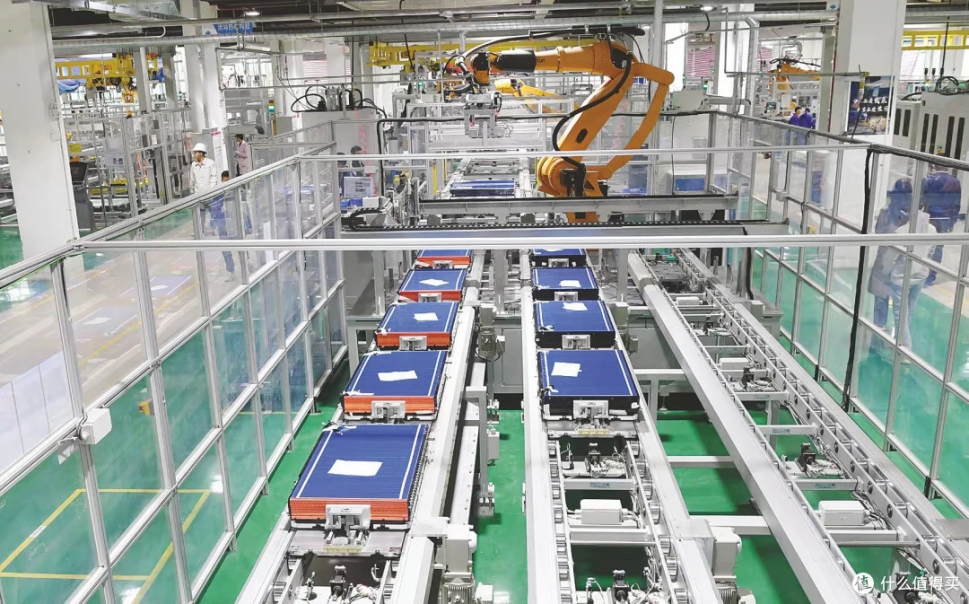
The industry generally anticipates that the new standards will expedite the exit of 30%-40% of small and medium-sized battery cell manufacturers. Multiple automakers have begun revising their supply chain strategies in response to the new standards, with mainstream automakers (such as HIMA, Li Auto, XPENG, etc.) adopting a 'diversified and decentralized' supply system. While ensuring all suppliers meet the new standards, they are also incorporating second- and third-tier suppliers like Gotion High-Tech, CALB, and Sunwoda to implement an 'A-point primary supply + B-point secondary supply' strategy. This approach not only mitigates the risk of supply disruptions from a single supplier but also facilitates cost control through internal price comparisons.
The question of who ultimately bears the rising costs has emerged as another focal point. Some automakers opt to absorb a portion of the costs to maintain market competitiveness. Brands like BYD and Geely have explicitly stated they will not raise prices but will offset cost increases through economies of scale and technological optimization. Others have adopted a phased adjustment strategy, offering both old and new standard-compliant models during the transition period to provide consumers with choices while allowing time for technological upgrades.
Currently, compliance cost pressures are being passed along the 'materials—power battery companies—automakers' chain. Against the backdrop of the new standards, smaller battery companies face higher compliance costs, significantly accelerating industry consolidation. However, equating 'second- and third-tier' companies with 'imminent exit' overestimates the speed of market consolidation. Some small and medium-sized battery manufacturers can sidestep direct competition in the passenger vehicle market by shifting to sectors like energy storage, two-wheelers, and specialty vehicles, indicating that market consolidation will not occur overnight.
Nevertheless, the industry consensus is that, in the long run, the reasonable pass-through of compliance costs is inevitable, and consumers will pay a certain premium for higher safety standards, although competition will keep the premium within a reasonable range.
▍Safety Standards Rise, but Concerns Persist
The implementation of the new national standards has made comparisons between different technical routes more tangible.
The lithium iron phosphate (LFP) route exhibits inherent thermal stability advantages under the new standards. BYD's Blade Battery, a representative of this route, was the first to pass the industry-benchmark 5mm steel needle puncture test, showing no open flame or smoke and only rising to 30-60 degrees Celsius, significantly lower than the over 500 degrees Celsius observed with ternary lithium batteries after puncture. BYD's second-generation Blade Battery extends thermal runaway protection time from the national standard's two hours to over 24 hours. In bottom impact testing, BYD claims its second-generation Blade Battery passed tests 10 times more stringent than the national standard. For the same 100kWh capacity, Blade Batteries weigh about 12% less than ternary lithium batteries.
CATL, meanwhile, has pursued a different technical path. Its Qilin Battery achieves thermal runaway protection through structural innovation and material system optimization. Zeekr, an automaker, became one of the first new energy vehicle companies to meet the new power battery standards, with its Qilin Battery-equipped models included. Wu Kai, CATL's chief scientist, stated that after the new standards' implementation, 'the self-ignition rate of Chinese new energy vehicles will be an order of magnitude lower than that of fuel vehicles.'
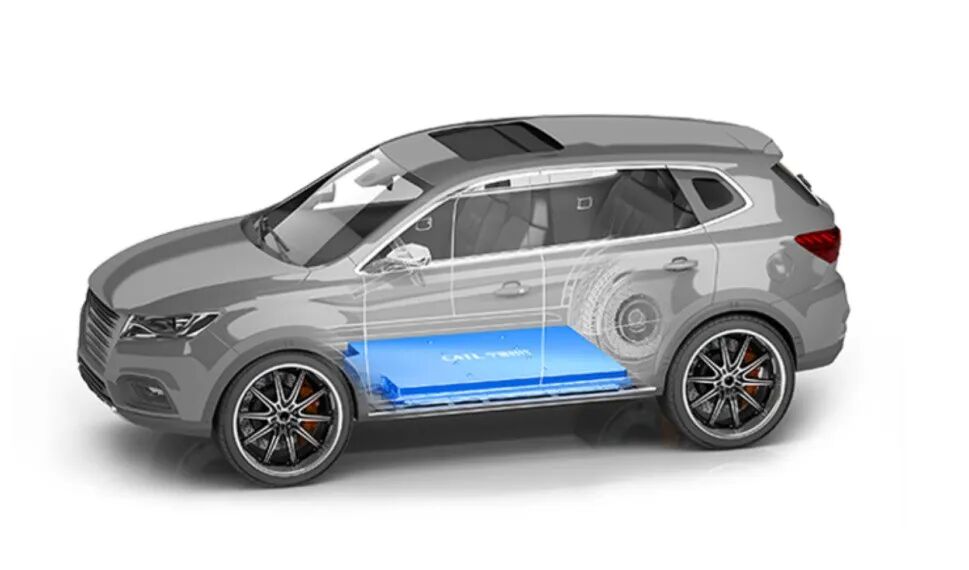
From an industry trend perspective, the new standards are shifting R&D focus from solely pursuing energy density to prioritizing safety performance. Iterations in liquid batteries concentrate on thermal insulation, heat dissipation, and explosion-proof technologies, while the industrialization of semi-solid and all-solid-state batteries is accelerating. New technologies like solid-state batteries and sodium-ion batteries are entering a window of opportunity for commercialization.
For consumers, the most direct impact of the new standards is raising the safety baseline for batteries across the market. In the past, concerns about spontaneous combustion, fires caused by bottom impacts, and explosions during long-term fast charging were major worries when purchasing a vehicle. With the mandatory standards in place, a three-tier active protection system covering cells, separators, thermal management systems, and the vehicle itself is theoretically expected to significantly reduce accident probabilities.
It should be noted that the new standards primarily apply to newly produced and newly approved electric vehicle products and do not require retroactive compliance for existing models. This means consumers can use the new standards as a safety reference when purchasing new vehicles, but already-roadworthy existing models are not bound by these standards.
However, whether the improved safety standards can truly alleviate consumer concerns about EV spontaneous combustion remains a question that only time can answer. Battery quality verification cycles are lengthy, with potential defects often emerging only after three to five years of vehicle use. If smaller second- and third-tier battery brands go out of business, who will support vehicle owners? Performance degradation issues like range loss, slower charging, and capacity reduction are not currently classified as 'defects' under legal definitions.
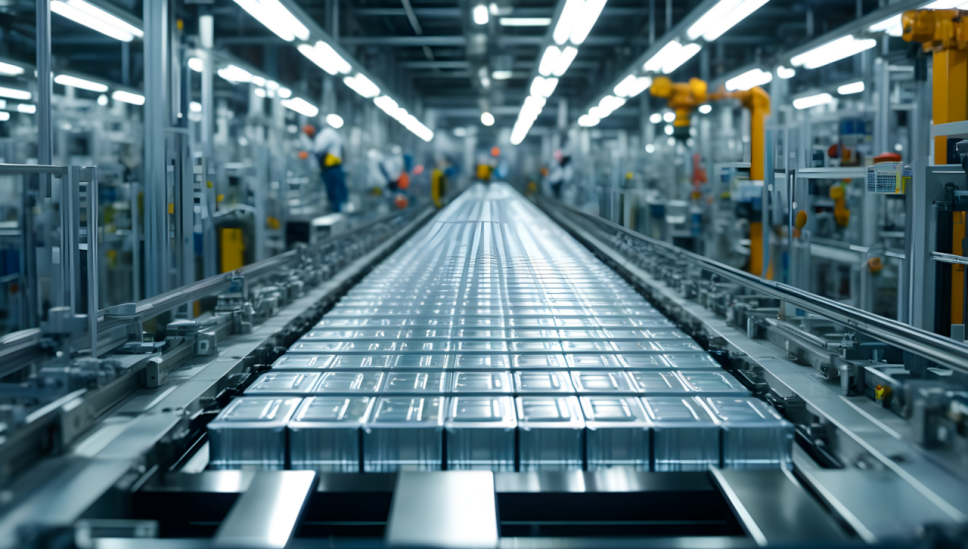
According to Cheshi Ruijian, most brands have already completed technical upgrades for their models, with all newly available models meeting the new national standards. Data from the China Passenger Car Association shows that retail sales of new energy passenger vehicles are expected to reach 1.05 million units in June 2026, up 10.5% month-on-month, with a penetration rate of approximately 63.6%. Market data indicates that the new standards have not yet had a significant short-term inhibitory effect on consumer demand.
The shift from 'five-minute escape' to 'two hours without fire' represents more than just a technical upgrade—it imposes stringent requirements from the product design stage. This hard threshold has already demonstrated its impact in the first week of implementation: Leading companies leverage it as a competitive advantage, mid-tier companies balance profits against compliance, and smaller companies face transformation or exit. In the short term, the new standards pose a compliance 'exam' for the industry; in the long term, they serve as an 'accelerator' for industrial upgrading. However, the direction and pace of this 'acceleration' depend on each company's specific choices regarding technology, costs, and the market.
Layout 丨 Yang Shuo Image Sources: Qianku.com, BYD, CATL
-
![]()
After Three Attempts to List on the Hong Kong Stock Exchange, Has Yonyou Finally Broken Free from Its Painful Transition?
-
![]()
Qianwen Powers Apple’s AI: Alibaba Secures Its ‘Doubao Moment’ with iPhone Integration
-
![]()
JD Marches West, Pinduoduo Ventures East: The Clandestine Struggle for China’s Supply Chain Dominance
-
![]()
GAC Honda Secures 10-Year Contract Renewal: Debunks Merger Rumors, Unites for Market Breakthrough | Mirror Pro
-
![]()
Analysis of BBA Service Reputation Index in the First Half of 2026: Terminal Services Under Pressure
-
Observation of AI Business Models: From Token-Based Payment to Outcome-Based Payment
-
Observations on AI Business Models: From Token-Based Payment to Outcome-Based Payment
-
SpaceX Market Insight: The $1 Trillion 'Fireworks' Fizzle Out, Marking the Start of the Super IPO Gamble