Why Chinese Domestic Brands Are Embracing the Supercar Race Despite Its Unprofitable Nature
 07/22 2026
 421
421
Lead | Introduction
Against the backdrop of China's automotive industry undergoing comprehensive electrification and accelerated globalization, domestic brands are increasingly venturing into the high-performance sports car sector, igniting a 'brand elevation' trend. However, this endeavor is a marathon that necessitates breakthroughs at multiple levels.
Produced by | This article is produced by Heyan Yueche Studio
Written by | Zhang Dachuan
Edited by | He Zi
Full text: 2178 characters
Estimated reading time: 4 minutes
In recent years, Chinese domestic brands have been making significant strides in the high-performance sports car arena, sparking a wave of 'supercar building enthusiasm.' BYD has unveiled the Yangwang U9, SAIC MG has introduced the Cyberster, and GAC Aion has released the SSR. Great Wall Motor's Chairman, Wei Jianjun, has publicly disclosed that the brand is in the process of developing a supercar. Meanwhile, automakers such as XPENG and Xiaomi are also hinting at plans for high-performance models, with the Denza Z emerging as a new representative model under this trend.
△A wave of 'supercar building enthusiasm' has swept through the industry.
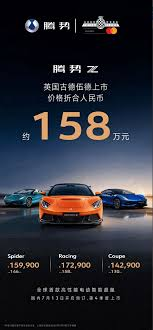
The Denza Z made its global debut at the Goodwood Festival of Speed in the UK, with the entry-level hardtop version priced at approximately RMB 1.3 million. As Denza and BYD's first pure electric sports car, the new model comes in three versions: hardtop, soft-top convertible, and track performance. It is equipped with BYD's core Easy Three-Square technology, boasting a combined three-motor output of 1,180 kW (1,604 horsepower), achieving 0-100 km/h acceleration in just 1.96 seconds and a top speed of 350 km/h. The vehicle also incorporates cutting-edge features such as steer-by-wire, Yunchan-M, and a full steer-by-wire chassis, marking BYD's significant effort to expand overseas and elevate its brand positioning.
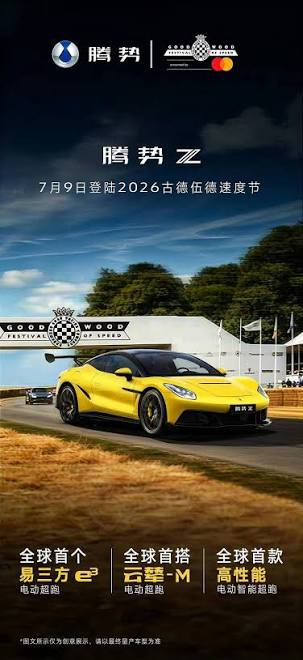
△The Denza Z made its global debut at the Goodwood Festival of Speed in the UK.
Why Are Domestic Brands Flocking to Build Supercars?
High-performance sports cars represent a niche market in China, so why are domestic brands flocking to launch supercar products now?
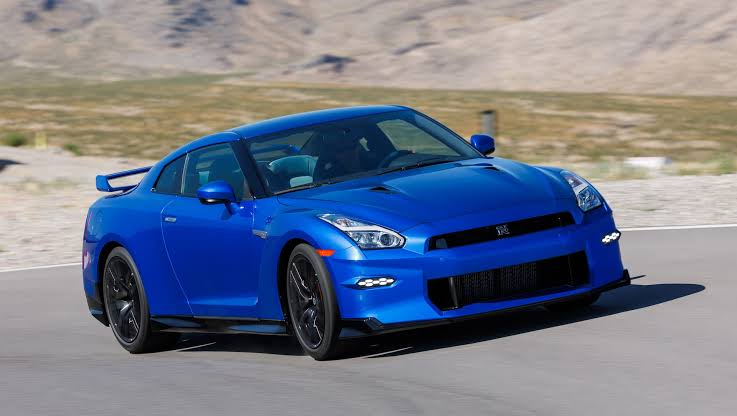
This trend is closely tied to how electrification has significantly lowered the barriers to developing high-performance models. Fuel-powered supercars rely on long-accumulated expertise in engines, transmissions, and chassis technologies. Brands like Ferrari, Porsche, and Nissan GT-R have spent decades refining their core hardware, creating technical barriers that are extremely difficult to overcome in the short term. In contrast, electric motors inherently offer instant high torque. When paired with multi-motor all-wheel drive and torque vectoring, achieving sub-2-second 0-100 km/h acceleration is no longer exclusive to overseas supercars. Models like the Yangwang U9 and Aion SSR achieve extreme performance through multi-motor platforms, while the Xiaomi SU7 Ultra competes at the Nürburgring with over 1,000 horsepower, demonstrating that Chinese brands have mastered top-tier high-performance vehicle manufacturing capabilities.
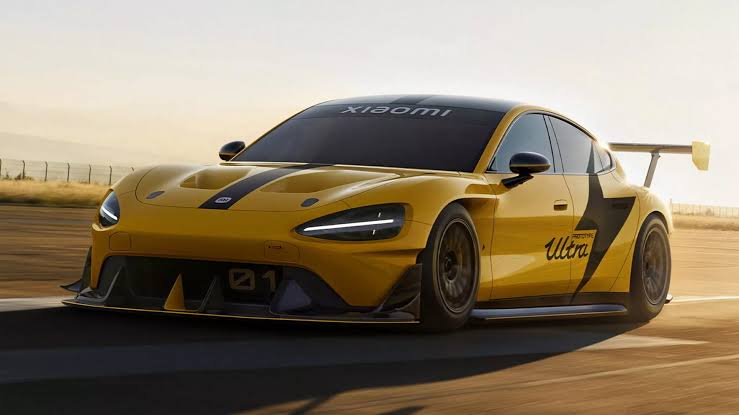
△The Xiaomi SU7 Ultra competes at the Nürburgring with over 1,000 horsepower.
Moreover, sports cars serve as a strategic tool for elevating brand positioning. Flagship sports cars may have minimal sales volumes, but they can reshape a brand's high-end perception—a model already validated by overseas automakers. The Lexus LFA, Nissan GT-R, Mercedes-AMG GT, and Audi R8 all established technical benchmarks through their performance flagships. Domestic brands rely on sports cars to break free from the 'affordable commuter car' label and achieve brand elevation.
△Although flagship sports cars have low sales volumes, they can reshape a brand's high-end perception.
Additionally, domestic consumption upgrades have created a demand for differentiated competition. Today's young car buyers increasingly value handling, design, and emotional value, while mainstream family cars suffer from severe homogenization. Iconic flagship models have become key to brand differentiation. The inherent 'halo effect' of sports cars can generate positive perceptions of the brand as a whole, indirectly benefiting high-volume sedans and SUVs. Take the Yangwang U9, for example—its value lies not in limited sales but in proving to the market that domestic brands possess the complete system capabilities to build world-class high-performance vehicles.
The Drawbacks of the Supercar Boom
While launching supercars allows domestic brands to showcase technology and aid brand elevation, the rush to enter this space harbors multiple risks.
Commercially, sports cars are high-investment, low-return projects. Developing a new model requires billions of yuan in investment for exclusive (proprietary) chassis, lightweight materials, high-performance powertrains, aerodynamics development, and rigorous testing. However, with a niche audience and annual sales often in the thousands of units, it is difficult to amortize these enormous costs, making profitability nearly impossible without subsidies from high-volume family cars. Automakers with weak financial reserves that enter this space rashly will find sports cars becoming a heavy cost burden.
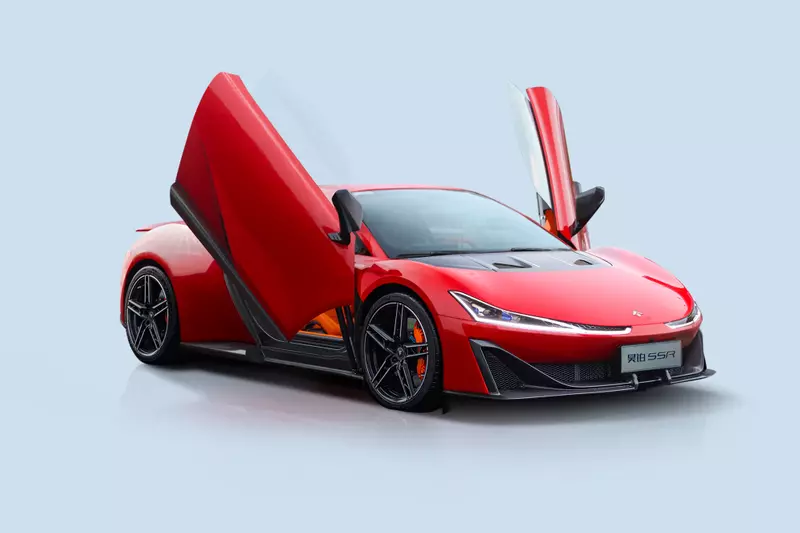
△Sports cars cater to a niche audience and are essentially projects that 'lose money to gain attention'.
At the industry level, there is a risk of falling into a mere focus on specifications. Electrification has lowered the barriers to high performance, leading many automakers to compete solely on horsepower, acceleration, and lap times while neglecting the chassis tuning, driving feel, brand culture, and long-term technical accumulation that define classic sports cars. If sports cars are treated merely as marketing gimmicks rather than platforms for technical refinement, the result will be performance electric vehicles with impressive acceleration data but lacking core substance and long-term value.
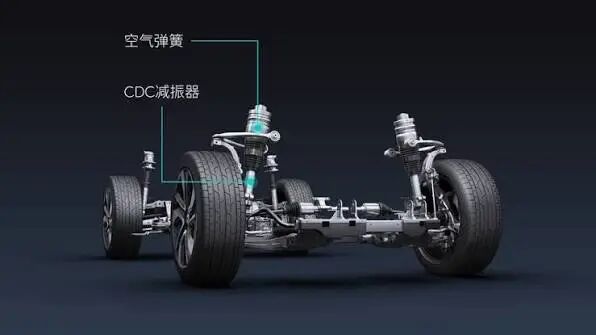
△Chassis tuning for sports cars requires long-term technical accumulation.
For the industry to develop healthily, a differentiated approach is needed rather than everyone following the trend of building supercars. Companies like BYD, MG, and Great Wall, which possess global scale and strong R&D capabilities, are suited to using sports cars as technological flagships to break into overseas high-end markets. Most other automakers should avoid blindly following suit and instead allocate resources to core technologies like chassis systems, intelligent driving, and batteries that benefit a wider range of models. While sports cars can elevate a brand's ceiling, an automaker's long-term competitiveness ultimately depends on the market strength of its mainstream models and sustained self-developed capabilities.
Can Supercars Become a Key Symbol of Chinese Automakers' Globalization?
Leveraging the dividends of new energy development, Chinese automakers are accelerating their overseas expansion, with high-performance sports cars emerging as a critical tool in the brand globalization process.
For overseas markets, flagship sports cars that rival or surpass overseas marques in performance are far more effective in shaping brand image than low-price strategies, with the SAIC MG Cyberster serving as a prime example. This model inherits the brand's sports car heritage, helping MG build a complete brand narrative in Europe and move beyond mere price competition. Now, multiple Chinese brands are competing on the Nürburgring, tackling hardcore technologies like high-performance chassis, carbon fiber bodies, and aerodynamics. Sports cars are no longer just standalone models but core vehicles for automakers to showcase technology and elevate brand positioning globally.
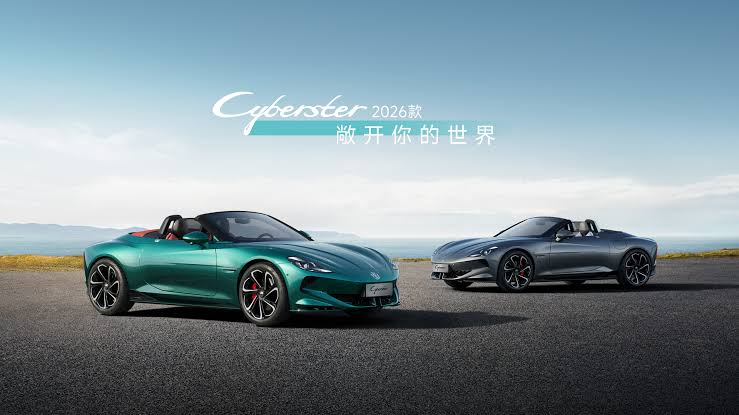
△Chinese automakers expanding overseas need a high-performance sports car to build awareness among international consumers.
Behind this boom lies a comprehensive leap in China's automotive capabilities. A decade ago, domestic brands, limited by resources, could only focus on high-volume family cars and lacked the capacity to invest in costly, low-profit sports car projects. Today, automakers like BYD, Geely, Great Wall, and Xiaomi have sufficient financial reserves to undertake billion-yuan flagship R&D investments. Coupled with an influx of overseas high-performance R&D talent and a mature domestic supply chain for batteries, electric motors, lightweight materials, intelligent chassis systems, and chips, China has formed a complete industrial ecosystem for building world-class pure electric supercars. Thus, this wave of sports car development is not short-term marketing hype but a natural outcome of the domestic automotive industry's comprehensive upgrades in capital, talent, technology, and supply chains.
Commentary
The collective enthusiasm of domestic brands for building sports cars marks an important transition in China's automotive industry from scale-driven proliferation to technological sophistication and global breakthroughs. Leveraging mature three-electric supply chains, intelligent chassis technologies, and talent reserves, domestic automakers have broken the long-standing performance vehicle monopoly held by overseas brands. The unique brand halo of sports cars not only differentiates products domestically and supports high-volume models but also aids brand globalization by escaping low-price competition and establishing high-end market recognition. However, the sports car segment is not universally accessible; its high investment and low returns demand substantial financial and technical thresholds. A model of merely stacking power specifications while neglecting technical accumulation will only produce performance electric vehicles with impressive data but lacking substance.
(This article is original to Heyan Yueche and may not be reproduced without authorization.)
-
When Cost-Effectiveness Falters, Mobile Phone Sub-brands Engage in a Survival Showdown
-
![]()
Automotive-Grade Fragrance Generator: Safety as the Foundation, Pleasant Aroma as the Norm
-
![]()
Tengjing Technology’s Revenue Projected to Soar by Over 50% in First Half of 2026!
-
![]()
Insta360 Ramps Up 'Bundling' with Upstream Optical Supply Chain with 110 Million Yuan in Related Procurement
-
![]()
Following NIO and CATL’s Footsteps, Guangzhou Nurtures Another Billion-Dollar Unicorn
-
![]()
No Choice for Mobile Phone Companies | Waves
-
![]()
From Jiyue to Li Auto and Saido: The Expedition of AI Cars Has Just Begun | Business Wave
-
![]()
Why Chinese Domestic Brands Are Embracing the Supercar Race Despite Its Unprofitable Nature