Following NIO and CATL’s Footsteps, Guangzhou Nurtures Another Billion-Dollar Unicorn
 07/22 2026
 421
421
Source | YuanMedia
After Shein, Guangzhou is witnessing another unicorn, Sprint, making a beeline for the capital market.
Recently, Aodong New Energy Technology Co., Ltd. (hereinafter referred to as 'Aodong New Energy') filed its listing application with the Main Board of the Hong Kong Stock Exchange, with CMB International serving as its sponsor.
The prospectus discloses that in 2025, Aodong New Energy's operational revenue from battery swap stations hit RMB 680 million, securing the third spot among battery swap service providers, trailing only NIO and CATL.
Some time ago, the Hurun Research Institute unveiled the 'Global Unicorn Index 2026,' listing 24 companies from Guangzhou with a combined valuation surpassing RMB 800 billion. Guangzhou ranks fifth nationwide in terms of the number of unicorns, roughly on par with the combined total of Japan and South Korea (25).
Among these, in addition to industry giants like Shein and GAC Aion, Aodong New Energy is also featured. As a representative new energy enterprise in Guangzhou, it is headquartered on Huangpu Innovation Avenue and boasts a valuation of approximately RMB 12 billion.
Aodong New Energy is owned by Cai Dongqing, Chairman of Alpha Group, the creator of national-level IPs such as 'Pleasant Goat and Big Big Wolf' (hereinafter referred to as 'Pleasant Goat'), 'Balala the Fairies,' and 'Armor Hero.'
Now, he is on the verge of realizing a new energy version of the 'Auldey Twin Drill' battery-powered four-wheel drive cars.
01.
Is the Battery Swap Model Feasible?
Recently, the Zhongchuang Kehang battery explosion incident has sparked widespread online discussions. In fact, when the market debates energy replenishment solutions for new energy vehicles—supercharging versus battery swapping—it often perceives them as mutually exclusive choices.
Since the inception of new energy vehicles, automakers and manufacturers have generally leaned towards supercharging and extended-range solutions, while the battery swap model has yet to gain mainstream acceptance. The issue doesn't lie in a lack of market demand but rather in the substantial upfront investment costs.
The heaviest investment in battery swapping isn't in the stations themselves but in the management and operation of battery asset packages.
Take NIO, which is fully committed to the battery swap business. As of April 2026, it has poured over RMB 18 billion into charging and swapping infrastructure, establishing 3,812 battery swap stations and over 28,000 charging units, with cumulative battery swap services exceeding 100 million times. Battery swap stations account for about 70% of this investment.
NIO's first-generation battery swap stations, equipped with 5 batteries, cost approximately RMB 3.5 million each. Now, in its fourth-generation stations, with 23 batteries, the total cost hovers around RMB 4 million. Battery investment costs have surged from 15% to 62.5% of the total.
NIO's battery swap business has long been viewed as a 'bleeding point.' After enduring tough times, by the fourth quarter of 2025, Wuhan Weineng, NIO's battery asset operation company, finally turned a profit.
This indicates that NIO's battery swap business model is nearing viability.
However, considering the overall data, NIO's battery swap stations break even when each station averages 60-100 swaps per day. Currently, the national average stands at around 27 swaps per station per day, suggesting a situation where '20% are profitable, and 80% are loss-making.'
NIO's battery swap services primarily cater to low-frequency private vehicles.
Theoretically, vehicles in specific scenarios, such as operational vehicles and heavy-duty trucks, are better suited for the battery swap model. According to China Insights Consultancy, operational vehicles, light trucks, and heavy trucks average 14, 5.5, and 9 swaps per week, respectively, compared to just 1.5 swaps per week for private vehicles.
CATL has also set its sights on the battery swap market, targeting private vehicles, operational vehicles, and heavy trucks. By the end of June 2026, it had established 2,000 chocolate battery swap stations for passenger vehicles and over 300 Qiji swap stations for operational vehicles.
However, high-frequency vehicle usage poses a significant challenge to long-cycle life battery design, leading to incidents like the Zhongchuang Kehang battery explosion.
At its core, the question is whether battery quality can withstand the severe challenges of battery degradation and thermal management design under high-intensity usage.
02.
Venturing into the Operational Vehicle Market
Aodong New Energy's battery swap business zeroes in on the operational vehicle sector.
Founded in 2016, Aodong New Energy initially entered the taxi market, launching the 'Taxi Battery Swap 100 Stations Plan' in Beijing. In its third year, it secured Pre-A and A round investments totaling RMB 400 million from NIO Capital.
Subsequently, strategic investors such as Guangzhou Financial Holdings Group, Guangzhou Development District Group, and Yueshang Venture Capital joined, along with investment companies led by Cai Dongqing's brother, Cai Xiaodong. Aodong New Energy relocated its registration from Shanghai's Lingang New Area to Guangzhou's Huangpu Zhongxin Knowledge City and later moved to the Alpha Cultural and Creative Center.
To date, Aodong New Energy has completed 8 rounds of financing, raising approximately RMB 3.05 billion from investors including SoftBank Energy, Brolon Capital, Huatuo Capital, Chunyang Capital, Enze Fund, KIP Capital, Samsung Venture Investment, and Yimi Fund.
In the 2022 B+++ round, Aodong New Energy's share price reached RMB 12.55, valuing the company at approximately RMB 11.94 billion.
With capital support, Aodong New Energy has prioritized R&D, independently developing a snap-fit chassis battery swap technology that enables the fastest 20-second swaps for passenger vehicles and 40-second swaps for heavy trucks. Since 2022, it has gradually shifted to a light-asset operation model, focusing on battery swap station operational services.
The sector is a blue ocean, but as an independent third-party service provider targeting operational vehicles, Aodong New Energy's service chain is relatively passive compared to NIO. It lacks direct commercial ties with user groups and must single-handedly educate the market.
Shedding weight is actually a more prudent path.
Currently, battery swap vehicles face the challenge of 'high frequency but low volume.'
In 2025, the battery swap industry reached a market size of RMB 18.5 billion, with a compound annual growth rate of 64.5% over the past five years. However, battery swap vehicles accounted for only about 5.7% of new energy vehicle sales, totaling 32,000 units. Meanwhile, the number of battery swap vehicles reached 415,000 by the end of the year.
Expanding the market is more crucial than frantically building battery swap stations. Aodong New Energy has actively sought partnerships with automakers, currently collaborating with 16 mainstream OEMs, including GAC, FAW, Dongfeng, Changan, and SAIC, to jointly develop over 30 battery swap models.
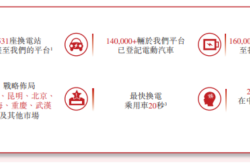
By the end of April 2026, Aodong New Energy operated 531 battery swap stations in cities like Changchun, Kunming, Beijing, Shanghai, Chongqing, and Wuhan, with over 140,000 registered vehicles and over 160,000 connected batteries. Its self-owned battery swap stations decreased from 321 in 2023 to 214.
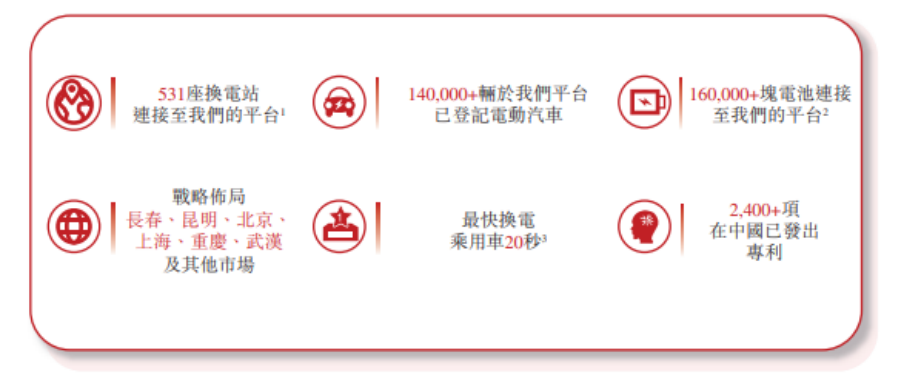
Screenshot sourced from the prospectus
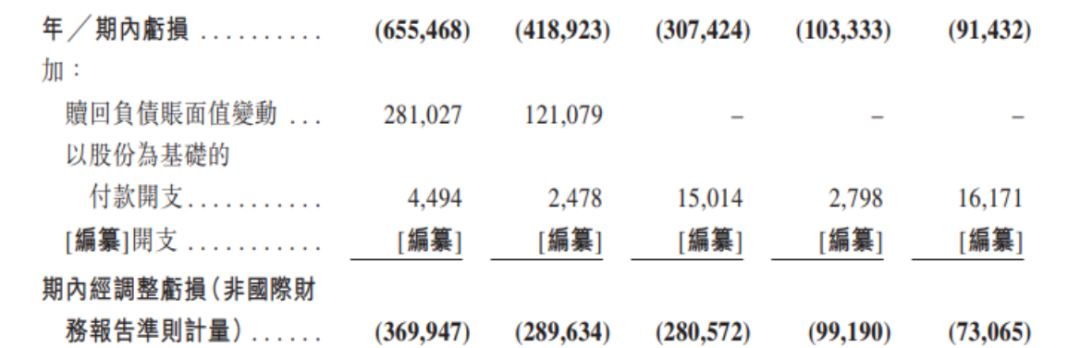
Shedding weight naturally led to a significant revenue decline, but the company's profitability and cash flow saw positive effects.
Aodong New Energy's revenue decreased from RMB 1.16 billion in 2023 to RMB 680 million in 2025. By April 2026, it achieved a gross profit turnaround, with adjusted net loss further reduced and operating cash flow netting RMB 10.873 million, compared to -RMB 55.191 million in the same period last year.
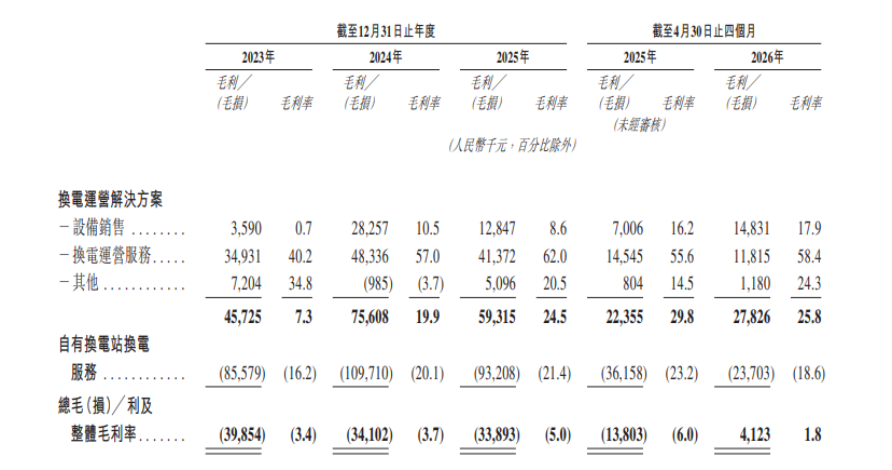
Screenshot sourced from the prospectus
This suggests that Aodong New Energy, targeting the operational vehicle battery swap market, is also on the brink of success.
03.
The New Energy Version of 'Auldey Twin Drill'
After a decade of diligent efforts, Cai Dongqing's new energy version of the 'Auldey Twin Drill' is nearly complete.
Back in 2016, Alpha Group boasted national-level IPs like 'Pleasant Goat,' 'Blast Master,' 'Balala the Fairies,' 'Armor Hero,' and 'Super Wings,' expanding from children's animation and toys into online literature, film investment, all-age animation, live entertainment, games, and infant products.
According to Cai Dongqing's vision, Alpha Group aimed to become an 'Eastern Disney' pan-entertainment empire.
Replacing batteries for 'Auldey Twin Drill' four-wheel drive cars was a childhood memory for nearly every post-90s generation. The battery swap sector shares similarities with replacing batteries for 'four-wheel drive cars,' but the investment costs are vastly different.
Within just two years, Alpha Group's pan-entertainment expansion strategy suffered a major setback. After 2021, it gradually divested non-core businesses like gaming and film investment, returning to its roots in 'animation IP + toys.'
Despite strategic contractions since 2022, focusing on recreating classic IP animated films like 'Super Wings' and 'Pleasant Goat,' developing animations and toys for 'Armor Hero' and 'Blast Master,' and launching the trendy toy brand 'Wandian Infinite' based on classic IPs, Alpha Group has continued to alternate between losses and profits.
In 2025, Alpha Group reported revenue of RMB 2.47 billion and net profit of RMB 70 million, achieving a turnaround.
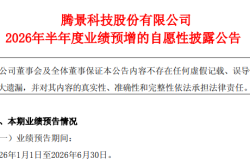
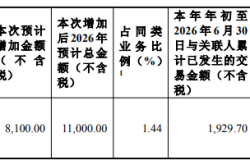
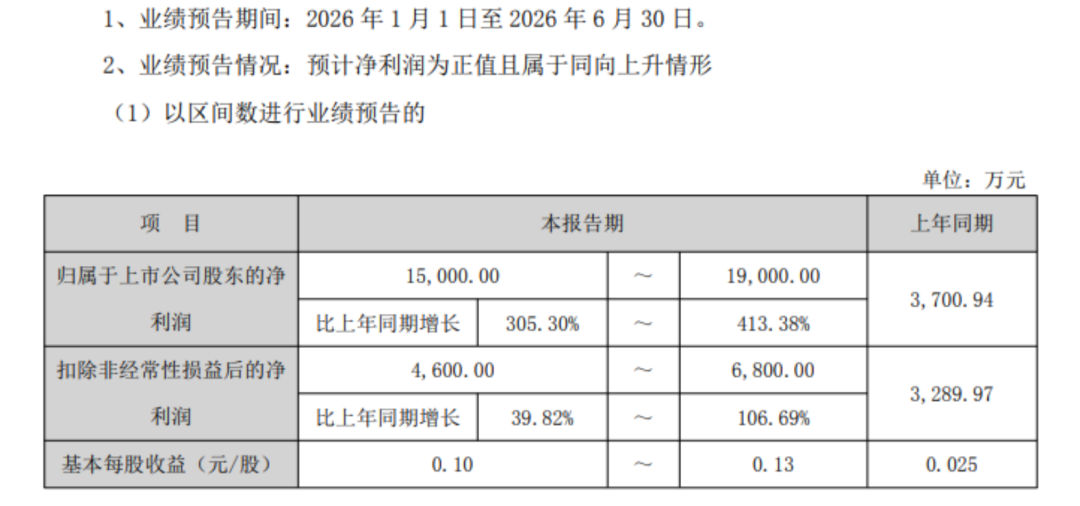
In the first half of 2026, the company's operational fundamentals continued to improve, with projected revenue of RMB 150-190 million and adjusted net profit of RMB 46-68 million, representing year-over-year growth of at least 305% and 39.8%, respectively.
Screenshot sourced from corporate announcements
However, this performance growth primarily stemmed from overseas infant business tax refunds and investment gains from participating funds, collectively generating approximately RMB 88 million in profit.
Also in May 2026, Alpha Group doubled down on trendy toys, evolving the 'Wandian Infinite' brand and launching a new original artist lifestyle brand, MIEMIE WORLD, along with a 'Pleasant Goat' IP trendy toy plan.
In Alpha Group's plans, the new brand will focus on original IPs and artists, targeting global markets. The 'Pleasant Goat' IP will develop a full range of products, including plush toys and fashion accessories, tied to the Chinese zodiac year, with a major film planned for the 2027 Year of the Goat.
According to the Hurun Rich List, in 2025, Cai Dongqing's family wealth stood at RMB 17.5 billion, ranking 370th. A decade earlier, their wealth was RMB 25 billion, ranking 70th.
For Cai Dongqing, both Aodong New Energy and Alpha Group are at critical junctures. Whether his wealth can return to its peak depends on this year.
Note: Article materials are sourced from official reports and public information. Opinions are for reference only. Some images are sourced from the internet; please notify us for removal if there is any infringement.
-
When Cost-Effectiveness Falters, Mobile Phone Sub-brands Engage in a Survival Showdown
-
![]()
Automotive-Grade Fragrance Generator: Safety as the Foundation, Pleasant Aroma as the Norm
-
![]()
Tengjing Technology’s Revenue Projected to Soar by Over 50% in First Half of 2026!
-
![]()
Insta360 Ramps Up 'Bundling' with Upstream Optical Supply Chain with 110 Million Yuan in Related Procurement
-
![]()
Following NIO and CATL’s Footsteps, Guangzhou Nurtures Another Billion-Dollar Unicorn
-
![]()
No Choice for Mobile Phone Companies | Waves
-
![]()
From Jiyue to Li Auto and Saido: The Expedition of AI Cars Has Just Begun | Business Wave
-
![]()
Why Chinese Domestic Brands Are Embracing the Supercar Race Despite Its Unprofitable Nature