Geely Streamlines, BYD Empowers: Who’s Vulnerable, Who’s Positioned for Success?
 08/05 2026
 461
461
The Chinese automotive market in 2026 presents a counterintuitive landscape, challenging conventional expectations.
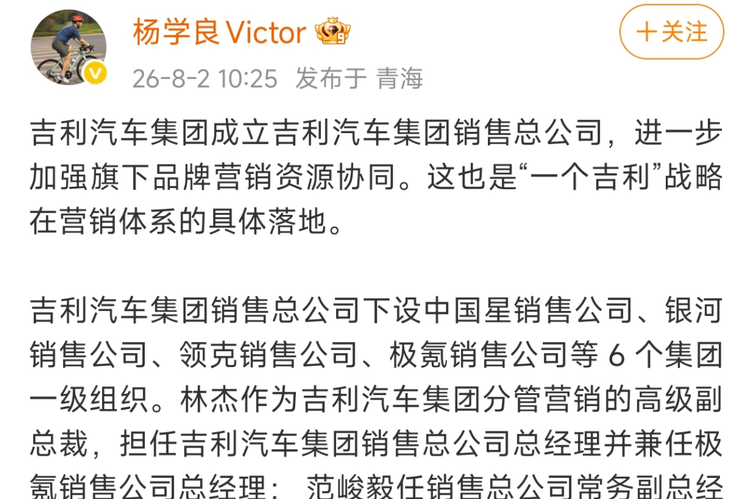
On August 2, Yang Xueliang, Senior Vice President of Geely Holding Group, officially unveiled on Weibo the establishment of Geely Automobile Group’s Sales Headquarters. Six first-tier sales entities—China Star, Galaxy, Lynk & Co, Zeekr, and others—were consolidated under this new umbrella, marking a complete overhaul of the previous market structure where multiple brands operated independently. Lin Jie, Senior Vice President of Geely Automobile Group overseeing marketing, was appointed General Manager of the Sales Headquarters and concurrently took charge of Zeekr Sales Company. Fan Junyi was named Executive Deputy General Manager, also serving as General Manager of Lynk & Co Sales Company and overseeing Galaxy Sales Company.
Concurrently, BYD embarked on its most significant organizational transformation to date. Its four major sub-brands—Wangchao (Dynasty), Ocean, Denza, and Fangchengbao (Formula Leopard)—were restructured into independent business units with separate financial accounting and self-sufficiency. The Group’s Engineering Academy was divided into five dedicated research institutes, each tailored to one of the five brands.
One streamlines, the other empowers.
I. Geely’s Streamlining: From “Diversified Portfolio” to “One Geely”
Geely’s streamlining is no abrupt shift.
In September 2024, Geely Holding Group issued the “Taizhou Declaration” in Taizhou, heralding a new era of strategic transformation. The declaration outlined five key initiatives: “strategic focus, strategic integration, strategic synergy, strategic stability, and strategic talent.” In essence, it signaled a transition from “horizontal expansion” to “internal consolidation.”
Over the following two years, Geely executed a series of strategic reductions: Geometry was integrated into Galaxy, Zeekr and Lynk & Co underwent strategic repositioning, and Zeekr was incorporated into Geely’s main entity for listing purposes. In January 2026, Geely further articulated its 2030 vision: “One Geely, Comprehensive Leadership.”
On June 13, 2026, Li Shufu, Chairman of Geely Holding Group, elaborated on the rationale behind “streamlining” at the Chongqing Auto Forum. He stated that Geely would “systematically shut down, merge, or transfer redundant entities under Geely Automobile Group Co., Ltd., pooling superior resources to fortify the core listed platform of Geely Automobile Holdings Co., Ltd.”
The context: While Geely’s multi-brand strategy was once its “breakthrough weapon,” as the industry shifted towards integration and R&D efficiency, the drawbacks of relatively small, fragmented brands operating independently—such as resource duplication and internal friction—became evident. Li Shufu’s vision is clear: through “pruning,” Geely aims to construct a modern corporate operating system characterized by clearer governance, well-defined responsibilities, and streamlined operations.
The establishment of the Sales Headquarters represents the culmination of this logic at the marketing front end.
In recent years, Geely’s brand structure has been rationalized, yet the marketing front end remained fragmented: each brand established its own channels, managed its own user data, and dispersed marketing budgets. The synergistic effects of multiple brands were significantly diluted at the front end. The new Sales Headquarters eliminates the previous fragmentation of brand sales companies.
Industry analysts highlight that the core logic of this model is “independent front-end operations with centralized back-end support.” Each brand retains autonomy in decision-making, but channels, user data, and service operations are integrated at the group level. As Geely officially stated: “This preserves each brand’s ability to stay attuned to the market and make swift decisions while facilitating resource sharing.”
This “unified yet decentralized” approach positions Zeekr, Lynk & Co, Galaxy, and China Star in their respective niches. Industry evaluations note that Geely avoids both rigid centralization and unchecked brand competition.
Geely’s decision to consolidate the sales front end at this juncture is driven by dual imperatives. Externally, the withdrawal of luxury brands creates prime channel locations that necessitate a group-level mid-platform to capitalize on, rather than allowing Galaxy, Lynk & Co, and Zeekr to compete and inflate prices. Internally, it aims to reduce redundant channel costs and user operation expenses across brands, redirecting savings towards global markets.
The impact of this integration is already evident in sales. In the first half of 2026, Geely Holding Group’s total sales reached 1,934,842 units, a record high for the same period. New energy vehicle (NEV) sales hit 1,100,893 units, up 10% year-on-year, with NEV penetration rising to 56.9%. Geely Automobile (0175.HK) sold 1,423,000 units in the first half, a slight year-on-year increase. According to CPCA data, Geely Automobile led China’s passenger vehicle domestic sales in the first half with 1,021,000 units, the only self-owned brand to surpass 1 million. Domestically, Geely topped the retail charts with 1,021,000 units in the first half of 2026.
The Geely brand remains the cornerstone, selling 187,000 units in June and 1.1 million in the first half. The Galaxy series led NEV sales with nearly 520,000 units in the first half and over 108,000 in June. The China Star series sold 580,580 units in the first half, securing its ninth consecutive year as China’s best-selling fuel passenger vehicle brand. Against a 20.2% decline in the overall market, Geely’s performance stands out.
II. BYD’s Empowerment: From “Centralized Support” to “Self-Reliance”
If Geely’s strategy is “tightening the fist,” BYD’s is “opening its hands.”
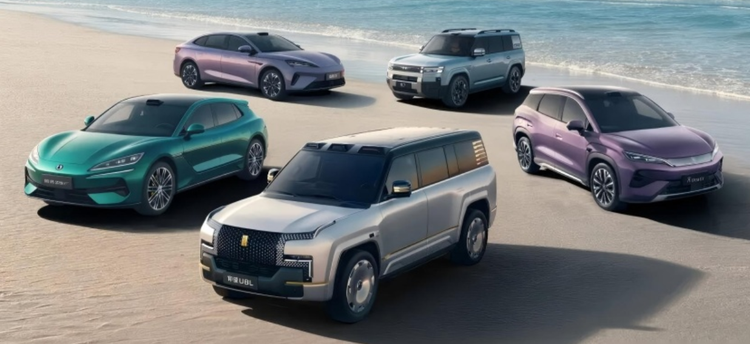
Reports indicate that BYD plans to make its sub-brands financially self-sufficient. BYD officially confirmed this, marking its most thorough “decentralization revolution” in over two decades—shifting from “engineers decide” to “market decides,” and from “group guarantees” to “self-reliance.”
The intensity of the reform is reflected in two key areas.
The first area targets financial mechanisms. The four sub-brands—Wangchao, Ocean, Denza, and Fangchengbao—will fully adopt independent accounting and financial self-sufficiency. Future utilization of the group’s R&D teams, shared production lines, and centralized procurement of components will all be separately billed and included in brand operating costs. Profits accrue to the brands, but losses must be borne independently; the group will no longer underwrite them. In essence, this breaks the “communal pot” model—previously, brands functioned like the group’s “sales branches,” focusing solely on sales without cost management; now, they resemble “independent subsidiaries,” accounting for the entire chain from product initiation to R&D investment and production sales. The premium brand Yangwang (U8) is temporarily excluded from this reform and continues to enjoy strategic resource allocation from the group.
The second area targets the R&D system. The original Group Engineering Academy was divided into five brand research institutes: Wangchao, Ocean, Fangchengbao, Denza, and Yangwang. Post-adjustment, the five brand research institutes are on par with the Engineering Academy. The Engineering Academy retreats to become a “technical mid-platform,” responsible solely for foundational technologies like Blade Battery, hybrid platforms, and electronic-electrical architectures. Brand research institutes take full charge of product definition, model planning, configuration decisions, and even pricing power.
The reform’s logic is clear: The unified R&D model maximized technology reuse and cost dilution during rapid expansion. However, as the brand matrix expanded and price ranges widened from 100,000 to 1 million yuan, drawbacks emerged. The most prominent issue was “product homogenization”—engineer-driven thinking led to different brands’ models resembling “Russian nesting dolls.” It was no secret that Wangchao and Ocean models at similar price points cannibalized each other’s sales. A deeper contradiction was “mismatched authority and responsibility”—brand sales heads were only KPI’d on sales volume without product definition rights or accountability for profitability.
Wang Chuanfu’s resolve to push this reform is evident in a widely cited remark. According to Car Observer, Wang Chuanfu has long held a clear business philosophy: “A subsidiary earning money through internal resources isn’t truly capable; only earning money independently in the open market demonstrates real ability.”
The urgency of this reform stems from stark figures.
In the first half of 2026, BYD sold 1,808,511 units, down 15.72% year-on-year. Cumulative sales in the first five months fell 20% year-on-year. Wangchao and Ocean networks sold 438,000 fewer units, a 22.5% decline. First-quarter net profit attributable to shareholders was 4.085 billion yuan, down 55%. The marginal effect of price-for-volume strategies continued to weaken.
BYD is not without bright spots. June sales exceeded 400,000 units for the first time, reaching 403,472. Fangchengbao was the sole growth driver, selling nearly 100,000 units in six months, up over 160%. Overseas markets are becoming the most certain growth source—June exports hit 175,300 units, with cumulative first-half overseas sales reaching 789,400 units, up 70.65% year-on-year. However, overseas growth cannot yet fill the gap left by the main brand’s decline.
Industry experts note that BYD’s reform is a short-term response to slowing sales growth, intensifying internal competition, and profitability pressures. Under the old model, brands overlapped in products and pricing, risking “internal wars” in the market. With financial self-sufficiency, brands gain autonomous decision-making power but must bear their own profitability performance. Long-term, brands may even pursue independent financing and spin-offs for listing.
III. Convergence in Divergence: Survival Strategies in the Mature Market Era
Geely streamlines, BYD empowers. These two diametrically opposed paths share a single objective: surviving in the mature market era.
In the first half of 2026, domestic passenger vehicle retail sales totaled 8.701 million units, a sharp 20.2% year-on-year decline. The industry is characterized by “shrinking totals and extreme differentiation.” Fuel vehicle retail sales plummeted 39% year-on-year, with industry profit margins at just 3.4%. The gap between top and mid-tier brands continues to widen.
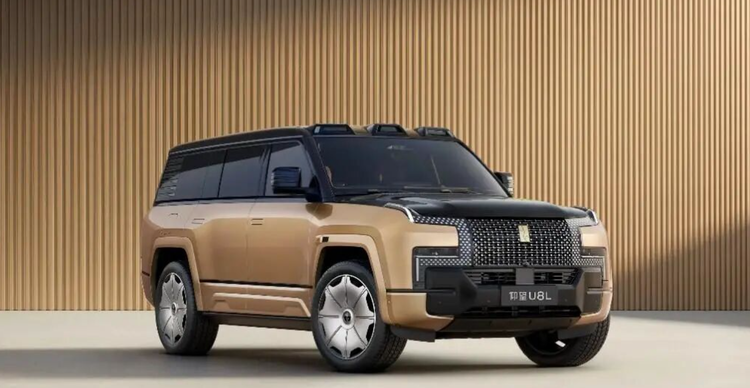
Against this backdrop, both “streamlining” and “empowerment” represent departures from old models.
Geely bids farewell to the fragmented model of “multi-brand independence.” In recent years, the Lynk Z10 and Zeekr 007 competed for the same customer base at similar price points. Before merger, R&D redundancy across smart driving, infotainment, three-electric systems, and vehicle architectures was estimated at 15–20%. The Sales Headquarters does not question the need for multiple brands but addresses how to prevent internal friction among them.
BYD bids farewell to the centralized “group guarantee” model. The unified Group Engineering Academy excelled in platform development. However, with brands now covering the full price spectrum from 70,000 to 1 million yuan, demand differences across categories and customer segments have grown. The efficiency shortcomings and synergy frictions of centralized coordination became apparent. Splitting brands and delegating R&D and operational authority became the core solution.
One streamlines, one empowers—both are survival strategies in the mature market era, merely choosing opposite directions.
But both paths face hurdles.
Geely’s integration challenge lies in: The four brands originally had independent IT systems, business processes, and assessment mechanisms. Deep back-end integration is no simple organizational merger but involves extensive process reengineering and standardization. Short-term issues like process misalignment and frontline execution difficulties are likely. More critically, after back-end resources are highly shared, whether Lynk & Co and Zeekr—brands emphasizing differentiation—can retain their edge within a unified system is a greater test.
BYD’s decentralization risk is whether brands can truly “support themselves” after independence. Growing premium brands like Fangchengbao and Denza may face greater survival pressure post-independence. Independent accounting means brand leaders must shift from “focusing only on sales” to “accounting for the entire chain”—a new demand on management team capabilities.
After Geely “streamlines,” the test is whether Zeekr and Lynk & Co can retain their edge in a unified system. After BYD “empowers,” the test is whether Fangchengbao and Denza can become self-sufficient.
Five years ago, the theme of China’s automotive industry was “expansion”—launching brands, building capacity, and capturing market share. Five years later, the theme is “efficiency”—integrating resources, activating organizations, and reducing costs.
Geely and BYD, one veering left, the other right. Who will go further in the mature market era’s knockout phase? No one can conclude prematurely. But one thing is certain: In growth markets, addition is key; in mature markets, subtraction is equally vital. The question is not “streamline or empower” but whether your organization can keep pace with market changes.
The interim outcomes of this strategic discourse are likely to be elucidated in their financial reports at the year's end. No matter what the results turn out to be, Geely and BYD have presented two disparate models that offer insights into the transformation of China's automotive industry.
-
![]()
Unveiling Yin Tongyue's 'No Involution' Stance: Chery's Strategic Maneuvers
-
STO Express Faces Scrutiny: Franchise Model’s Safety Gaps Under the Microscope
-
![]()
The Richest Woman is Going Public Again! Valued at 22.5 Billion, Building an 'Optical Empire' with Her Brother
-
![]()
Buying More GPUs is No Longer Enough: Divergence in Monetization Progress Among the Top Four Cloud Providers
-
![]()
Leapmotor Exceeds 100,000 Units, Li Auto Faces Three Straight Months of Decline: China’s Auto Market Competition Intensifies in the Second Half
-
![]()
Can NASA Discover Extraterrestrial Life? UK Invests £3 Million, but First Must Block Out Stars
-
![]()
Huawei Expands Computing Power Business into the Pig Farming Sector
-
![]()
Asian Dragon Receives a 'Makeover': Is FAW Toyota Using the 'Crown' as a Substitute Strategy?