German Cars: Once Dominant in China, Now Facing Challenges
 08/05 2026
 571
571
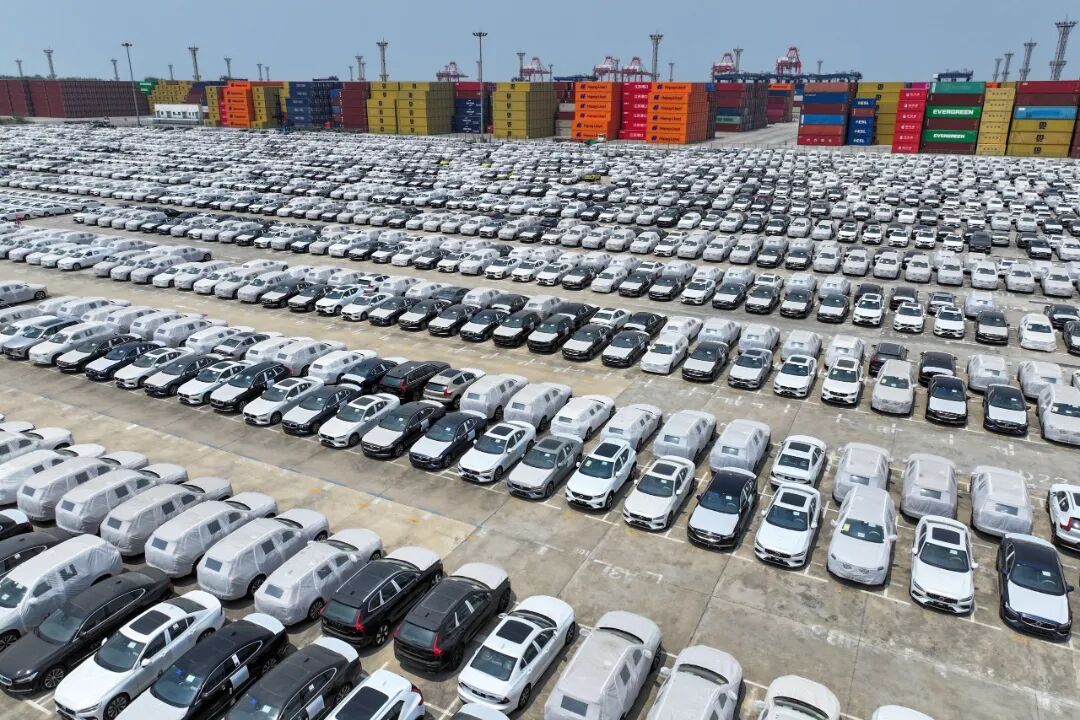
Lead
Introduction
"These German companies will endure, but their scale may shrink significantly compared to today."
Many domestic consumers may be unaware that, in January of this year, Mercedes-Benz celebrated its 140th anniversary at its global headquarters in Stuttgart. The highlight of the celebration was a handwritten document—the patent application for a "vehicle powered by a gas engine," submitted by engineer Karl Benz in 1886.
As The New York Times noted at the time, when Mercedes executives discussed this document, it was akin to venerating a sacred relic. Projected onto a large wall on campus, the scene resembled a pilgrimage more than a product launch.
No wonder—this patent not only established Germany as the birthplace of the automobile but also, over the past few decades, has sustained a near-religious industrial pride for the nation.
As is well known, cars have never been merely a mode of transportation for Germans. "They are a cornerstone of national identity, a living relic of the postwar economic miracle, and the most prestigious export of German engineering culture," remarked Holger Schmieding, chief economist at Berenberg Bank. Alongside chemicals and machinery, the automotive industry stands as one of Germany's three traditional pillars, dating back to the illustrious era of 19th-century engineers.
However, times have changed. Volkswagen, Mercedes-Benz, and BMW—these three titans are now trembling simultaneously. US tariffs, the growing pains of transitioning to electric vehicles, and fierce competition from Chinese firms are undermining the very foundations of German car manufacturing.
Not long ago, Volkswagen executives were compelled to discuss closing local factories, discontinuing classic models, and slashing tens of thousands of jobs. These topics were nearly unthinkable before, and the current crisis extends far beyond economics—it is eroding Germany's sense of self.
And all these troubles are inextricably linked to one country: China. Thirty years ago, China elevated German cars to the pinnacle of sales. Thirty years later, the same market is reshaping the destiny of German vehicles.
01 China Nurtured German Auto Giants
Back in the 1980s, when China opened its doors to the West, German automakers were among the first to seize the opportunity. To enter this vast and rapidly expanding market, foreign automakers had to form joint ventures with domestic partners.
For Volkswagen, Mercedes-Benz, and BMW, this arrangement was once incredibly lucrative. China offered near-limitless demand, and all Germans had to do was export technology and brands to reap continuous profits.
By 2019, China alone accounted for 37% of Volkswagen's global sales. Mercedes-Benz and BMW similarly relied on Chinese consumers to prop up half of their luxury car divisions. In those years, German cars in China were synonymous with status and quality—driving an Audi or Mercedes was itself a symbol of prestige.
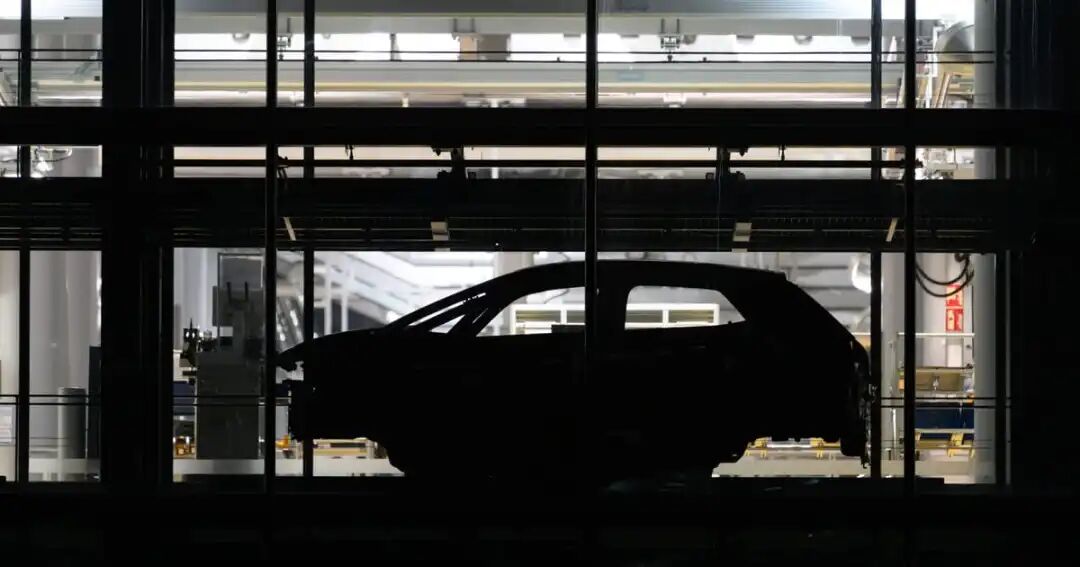
Of course, it must be acknowledged that while the Sino-foreign joint venture model delivered profits, it also facilitated technology transfer. Through decades of observation, learning, and investment, Chinese automakers gradually mastered every link, from supply chain management to vehicle integration.
When the electric revolution arrived, the gap quickly narrowed. Chinese automakers like BYD and Geely launched electric vehicles tailored to local preferences earlier than their German rivals. Meanwhile, domestic infrastructure expansion and purchase subsidies paved an accelerated path for local brands.
While German automakers remained infatuated with the precision and durability of internal combustion engines, Chinese companies were already focusing on smart screens, fast-charging batteries, and autonomous driving. What stung even more was that BAIC Group is now Mercedes-Benz's largest shareholder, holding nearly 10% of its stake. As many say, the former student has now become a capital and technology exporter.
The result was that German brands took a long time to deliver competitive electric products, by which point they were already far behind. Because once consumers taste something newer, brand loyalty shifts faster than expected.
Sales data from the first half of this year clearly reflects this reversal: Volkswagen's sales in China fell 26% year-on-year, Mercedes-Benz dropped 28%, and BMW fell 20%. Volkswagen Group CEO Blume candidly told employees: "Despite having better products, we cannot match the cost and pricing of Chinese export models."
Behind these words lies a harsh reality—China is no longer just a sales market for German cars; Chinese automakers have also become competitors on the same field. Data from the German Association of the Automotive Industry confirms this trend: since 2016, domestic car production in Germany has fallen 28%, and its global ranking has been surpassed by China, the US, Japan, and India, with South Korea and Mexico soon to follow.
Burdened by high energy costs, heavy taxes, and rigid labor rules that make layoffs difficult, analysts say Germany needs to do much more to boost competitiveness—or Europe does. So when German automakers decide to build new factories, they prefer locations like Hungary, Mexico, or China itself over Bavaria or Lower Saxony.
02 The Same Market Now Turns Against Them
What truly suffocates German automakers is that the rules of the game in the Chinese market are changing—and faster than anyone expected.
First, auto sales in China have peaked, and competition is becoming increasingly fierce. Dozens of local automakers have launched a new competitive model in the electric era. Unprecedented pressure has spawned a ruthless elimination mechanism, forcing rapid product iteration.
Reportedly, Chinese automakers take an average of just 18 months to launch a new model, while Western counterparts typically need two to three times longer. While Germans were still debating how to balance profits and job security, Chinese rivals had already completed two product cycles.
Meanwhile, Chinese automakers are turning their sights overseas. European consumers are happy to buy these cars—according to the latest data from the European Automobile Manufacturers Association (ACEA), Chinese car sales in the EU surged 63% in the first half of this year and are expected to grow from 338,000 units in 2025 to nearly 549,000 in 2026, accounting for about 10% of total EU car sales. In June, Chinese brands outsold Japanese brands in Western Europe for the first time in a single month.
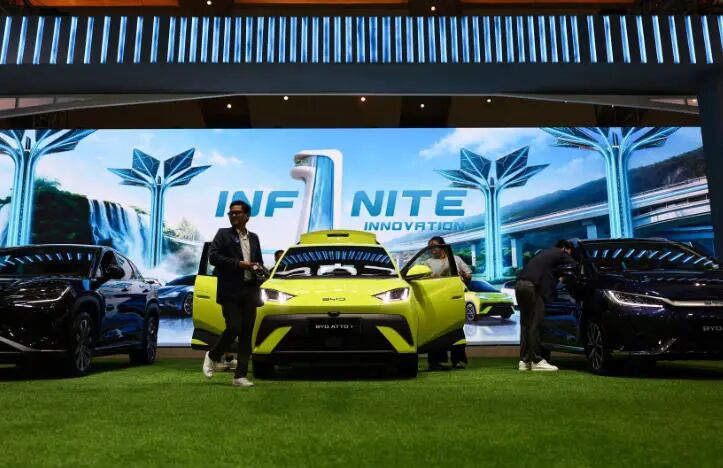
This wave of disruption isn't limited to German brands—it even hurts European automakers without a presence in China. Renault data shows its low-cost brand Dacia's sales fell 8% in the first half. Analyst Schmidt bluntly stated that Chinese EVs, with superior technology, are eating into Dacia's traditional turf.
Although the EU tries to block Chinese EV imports with tariffs, these don't cover plug-in hybrids—a segment where Chinese automakers still have profitable room to maneuver. Thus, Germans must consider a once-unthinkable solution: selling Chinese-made models directly in Europe.
This shift has prompted some European automakers to consider partnerships with Chinese companies. According to ACEA data, Stellantis (a French-Italian-American joint venture) formed a partnership with Chinese EV maker Leapmotor, whose sales soared from 7,701 units in the first half of 2025 to 48,261 this year.
Blume revealed to investors that Volkswagen might adopt a similar strategy. But this self-rescue approach comes with another concern: once Chinese-made cars with Volkswagen badges enter Wolfsburg showrooms, will consumers turn to even cheaper Chinese originals instead? Brand premium suddenly becomes a burden.
Moreover, the Alternative for Germany (AfD) party is exploiting auto workers' fears to gain votes. Party leader Weidel publicly claims that plunging profits and planned layoffs at giants like Volkswagen, Porsche, and Infineon prove Germany's "deindustrialization" has reached alarming levels. Merz urges voters not to be swayed by social media sentiment, but promises and warnings ring hollow against factory closures.
RBC analyst Narayan made a telling judgment: "These German companies will endure, but their scale may shrink significantly compared to today."
When Benz built the first automobile in his Mannheim workshop 140 years ago, he probably never imagined that the future of this industry would be decided not by Stuttgart's engineers but by programmers in Shenzhen and Shanghai—and by millions of ordinary Chinese consumers voting with their feet.
Editor-in-Chief: Yang Jing Editor: He Zengrong

THE END
-
![]()
Unveiling Yin Tongyue's 'No Involution' Stance: Chery's Strategic Maneuvers
-
STO Express Faces Scrutiny: Franchise Model’s Safety Gaps Under the Microscope
-
![]()
The Richest Woman is Going Public Again! Valued at 22.5 Billion, Building an 'Optical Empire' with Her Brother
-
![]()
Buying More GPUs is No Longer Enough: Divergence in Monetization Progress Among the Top Four Cloud Providers
-
![]()
Leapmotor Exceeds 100,000 Units, Li Auto Faces Three Straight Months of Decline: China’s Auto Market Competition Intensifies in the Second Half
-
![]()
Can NASA Discover Extraterrestrial Life? UK Invests £3 Million, but First Must Block Out Stars
-
![]()
Huawei Expands Computing Power Business into the Pig Farming Sector
-
![]()
Asian Dragon Receives a 'Makeover': Is FAW Toyota Using the 'Crown' as a Substitute Strategy?