This Year, Only Two Models Stand a Real Chance of Overtaking AITO M9
 08/05 2026
 383
383
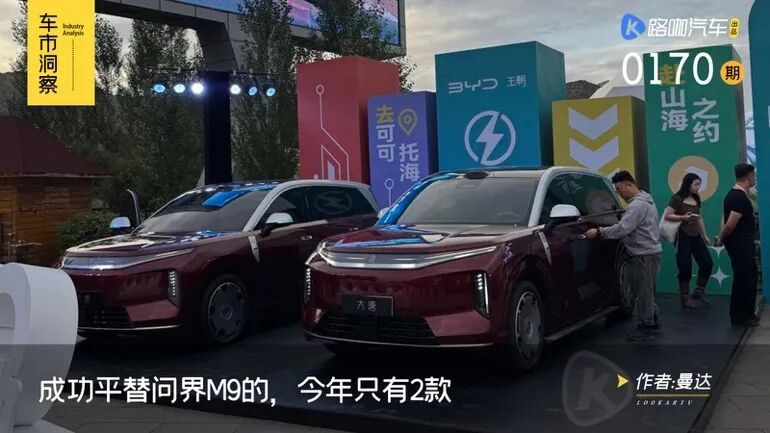
In July, the Chinese auto market displayed a fascinating paradox: a surge in new car models, yet a contraction in those truly propelling sales growth. Domestic passenger vehicle sales took a noticeable dip, with the traditional summer slump and reduced subsidies nudging the market back into a phase of "stock competition." The once-effective strategy of stimulating demand through frequent new car releases has begun to lose its luster.
However, a select few new models have managed to buck the trend this year, even reshaping the market landscape that had seemed so rigid. This is particularly evident in the fiercely competitive mid-to-large SUV segment, where high-end players like Li Auto, NIO, and AITO are facing unprecedented challenges.
Behind the Traditional Off-Season: The Auto Market's Dilemma of "More Equals Less"
This year's traditional summer slump in July was more pronounced than usual. According to retail sales data from the China Passenger Car Association, from July 1 to 26, nationwide passenger vehicle retail sales reached 1.123 million units, marking an 18% year-on-year decline and a 13% month-on-month drop. The entire market is expected to witness a significant downturn in July.
These figures underscore a common predicament faced by most automakers: the more they hype new car releases, the weaker the engine driving sales growth becomes. The phenomenon of "more new cars, yet fewer sales" indicates that the industry has fully entered a phase of cutthroat competition for existing market share.
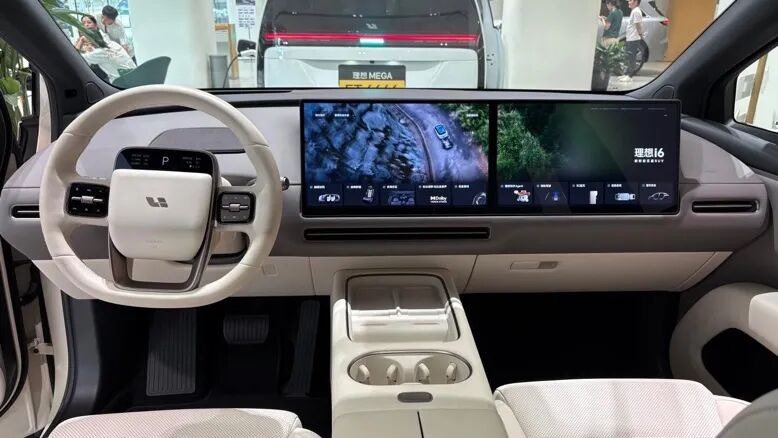
Take Li Auto as an example. In recent months, it has rolled out the all-new Li L9, L8, and L6 at an unprecedented pace, creating a seemingly flawless family SUV product lineup. However, July's sales failed to meet expectations, with both year-on-year and month-on-month declines. This suggests that the successive debuts of three heavyweight extended-range models have not yet achieved a "1+1+1>3" synergistic effect. The massive buzz generated by new car launches has not effectively expanded new market boundaries. In terms of sales structure, the relatively lower-priced Li i6 and L6 still dominate. The effectiveness of the "flood-the-market" strategy is now under scrutiny.
XPENG delivered over 38,000 units in July, achieving a slight year-on-year increase but showing signs of growth fatigue with a month-on-month decline. The highly anticipated all-new coupe SUV XPENG GX and the volume-focused MONA L03 failed to deliver the expected incremental sales during the critical ramp-up period in June and July. He Xiaopeng attributed this to "production capacity bottlenecks," which is indeed an objective challenge. However, a deeper issue may lie in the fact that the transition from launch to large-scale stable deliveries has not gone as smoothly as expected. In today's market, where information is highly transparent and consumer patience is limited, prolonged waiting periods can easily erode the initial enthusiasm for new models, leading to potential customer loss.
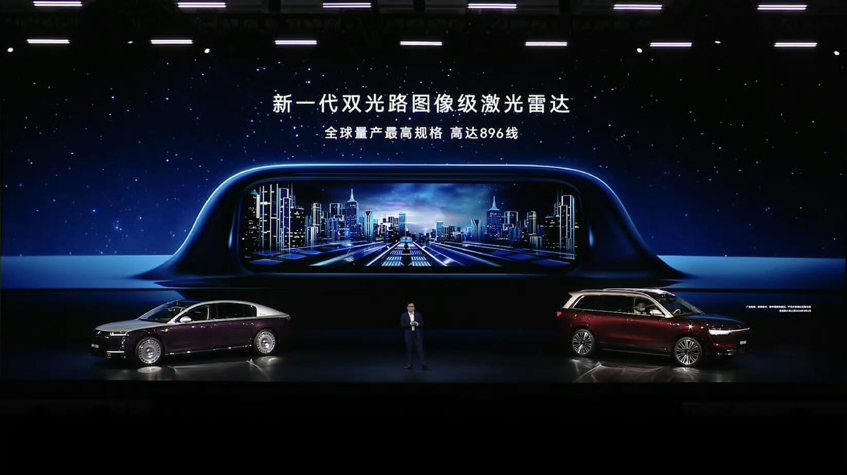
Since the beginning of this year, Seres has launched multiple facelifted or all-new models equipped with Huawei's latest 896-line LiDAR, boasting cutting-edge technology. However, its July sales stalled at 20,480 units, a 50.86% year-on-year decline. This indicates a rapid diminishing marginal effect of technology. Moreover, while the AITO M9 remains the flagship model and sales mainstay, this highlights that subsequent new models have failed to effectively carry forward the premium momentum established by the M9.
Even market leader BYD has not been spared. Behind its global sales exceeding 410,000 units in July, domestic market sales of nearly 240,000 units saw a slight year-on-year decline. Early this year, the launch of the second-generation Blade Battery and flash-charging technology drove a wave of growth, but "sweet troubles" soon followed. BYD officials admitted that this year's sales ceiling depends on battery production capacity.
Overall, while the reasons for different automakers' sales shortfalls may seem varied, they all point to the same outcome: new cars are no longer a guaranteed sales booster.
Behind this lies a shift in industry logic. The overall decline in the passenger vehicle market in July means the market pie itself is not growing. The traditional blockbuster strategy has lost its effectiveness. Frequent new car launches have instead fostered a widespread wait-and-see mentality, prolonging purchase decision cycles and weakening the conversion effect of new model launches.
In short, July's auto market has delivered a harsh lesson to all participants: the era of rapid iteration and dense product lineup expansion to claim market share has ended.
Fewer Than Five True Blockbusters, Yet...
However, if we extend our gaze to the first half of 2026, another phenomenon worthy of attention emerges: despite far more new model launches than in previous years, the vast majority have ultimately faded into obscurity upon release. Models that can truly carve out incremental space in the highly competitive market share striking commonalities.
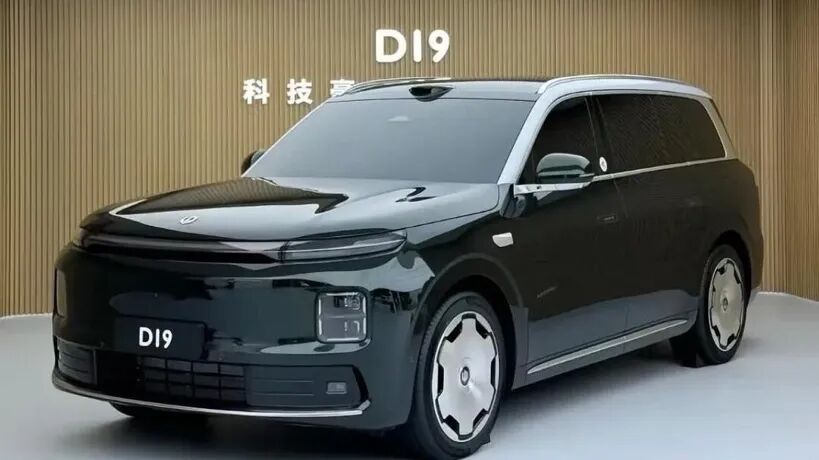
The most typical example is Leapmotor. In July, its overall sales surpassed 100,000 units, making it one of the biggest dark horses in this year's new energy market. However, a breakdown of its sales structure reveals that beyond the low-priced models originally tasked with driving volume, new models are also surging. The Leapmotor D19, launched in May, saw its deliveries climb steadily over three months, surpassing 10,000 units in July.
More importantly, the large SUV segment where the D19 competes is one of the most fiercely contested and rapidly evolving niches this year. For years, this market was dominated by high-end new energy models like the Li L9 and AITO M9. This year, the entire market logic has been upended. Among the new models ranking high in recent months, the Leapmotor D19, SAIC Volkswagen ID.ERA 9X, Wuling Huajing S, XPENG GX, and BYD Datang have quickly risen to the top.
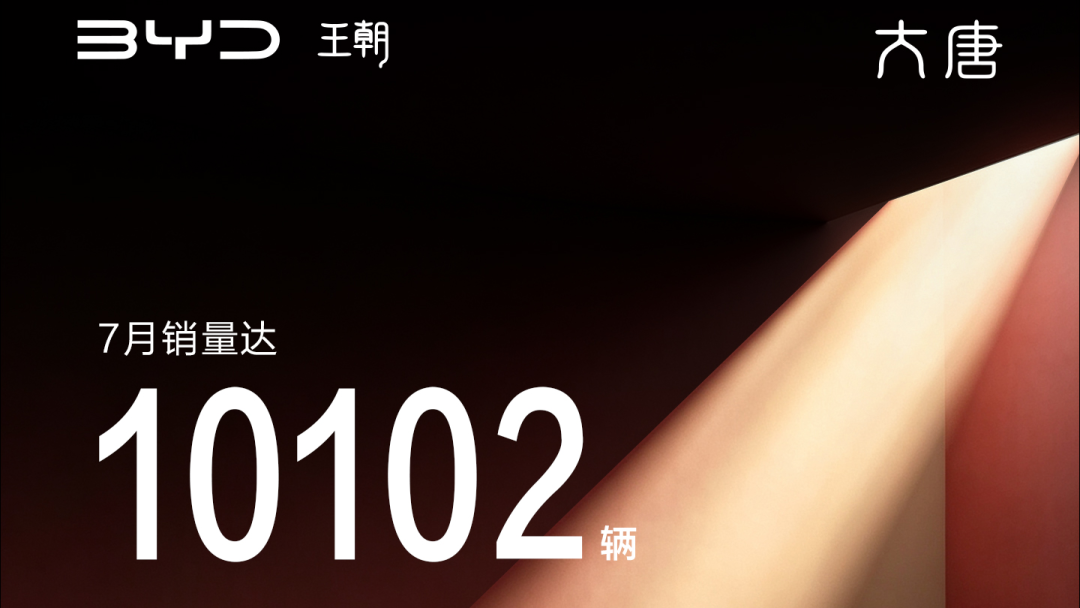
The most remarkable is the BYD Datang. This model, launched in June, officially announced that its July deliveries exceeded 10,000 units. In other words, it achieved a leap from 3,000 monthly sales to 10,000 in just one month. According to BYD insiders, orders for the Datang are already booked until the end of the year.
Meanwhile, Zeekr has demonstrated a completely different growth trajectory. In July, Zeekr delivered 35,837 units, a 111% year-on-year increase. Officials stated that flagship models Zeekr 9X and 8X continue to lead the market.
This illustrates a point: even in the highly mature new energy market, opportunities to redefine the market still exist as long as the product logic is disruptive enough.
This trend is not limited to new energy vehicles; similar cases are emerging in the fuel-powered vehicle (internal combustion engine vehicle) segment.
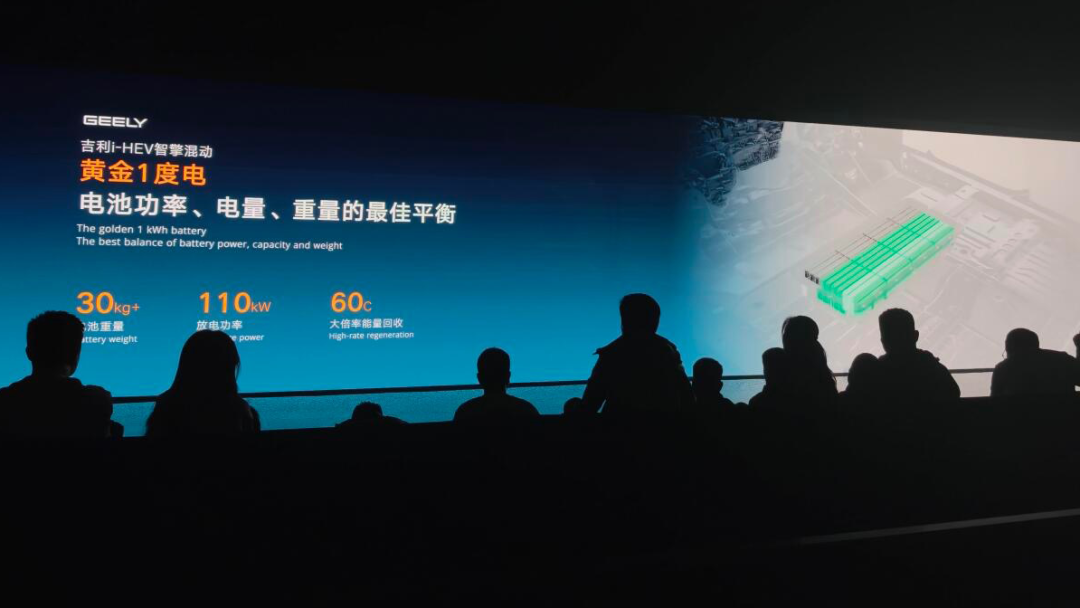
After Geely unveiled its latest HEV hybrid technology this year, it launched the Xingrui i-HEV and Xingyue L i-HEV smart hybrid models in April. Among them, the Xingyue L surpassed 15,000 units in June, overtaking the Boyue L to become one of the top sellers in the compact SUV segment.
This case warrants closer examination. In 2026, the overall fuel-powered vehicle (internal combustion engine vehicle) market remains in a state of continuous contraction. Many traditional fuel SUVs (fuel-powered SUVs) are seeing sales declines, making it difficult to merely maintain market share, let alone achieve growth. Yet, the Xingyue L has bucked the trend, primarily because it did not follow the "pure electric replacement for fuel" path. Instead, it rediscovered genuine demand for hybrids.
By incorporating electric and AI logic, the i-HEV has captured a group of consumers who remain hesitant about pure electric vehicles but are unwilling to return to traditional fuel-powered models. This is why the Xingyue L has found new users in a market that seemingly lacks growth potential.
Observing these true blockbusters collectively, they share a common trait: they do not simply "stack specifications" but redefine niche markets.
Over the past two years, Chinese automakers have made "refrigerators, TVs, and sofas" industry standards. However, when all brands adopt the same approach, consumers struggle to perceive genuine differentiation.
For instance, many believe the Leapmotor D19 and BYD Datang can challenge the AITO M9 simply by offering competitive pricing.
The BYD Datang and Leapmotor D19 have lowered prices while retaining spaciousness, comfort, and smart experiences, effectively expanding the overall market capacity.
The Zeekr 9X follows a similar logic. It does not merely replicate Li Auto or AITO but strikes a new balance between sportiness, luxury, and intelligence, attracting consumers who would not have considered large SUVs otherwise. This is why, amid a sea of "refrigerators, TVs, and sofas," only a few models stand out as blockbusters.
-
![]()
4.6 Billion Yuan! 301382 Clinches Major Computing Power Deal
-
![]()
Ruide Intelligence and Gudong Intelligence Forge Ahead in Strategic Partnership, Eyeing Trial Production at Intelligent Optics Base in Second Half of the Year!
-
![]()
Thriving Beyond Family Succession: An Optical Pioneer Blazes a Trail for Private Firms
-
![]()
Samsung China Takes Another Step Back
-
![]()
Samsung China Takes Another Strategic Retreat
-
![]()
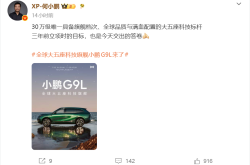
Xpeng Unveils New Large Five-Seater G9L, He Xiaopeng Claims It Outperforms 99% of Vehicles in the 300,000 RMB Price Range
-
Anthropic’s $10 Billion Multi-Year Compute Deal Unveiled
-
![]()
Bidding Adieu to the 'Wild West' Phase: What is the Competitive Edge of Lightning Warehouses?