Li Auto’s Biggest Risk Isn’t Financial Losses
 08/05 2026
 381
381
Strong Sales, Yet No Profitability: Where Does Li Auto’s Challenge Lie?
On May 28, Li Auto released its Q1 2026 financial report, revealing less-than-ideal figures: total revenue of RMB 23 billion, down 11.4% year-on-year, and a net loss attributable to the parent company of RMB 2.29 billion, marking a staggering 452.1% year-on-year decline. Many quickly pointed to the RMB 2.29 billion net loss, assuming Li Auto was in trouble—a conclusion that seemed plausible, as its gross margin also plummeted from 20.5% in the same period last year to just 7.9%. This marked the first time since its 2021 Hong Kong Stock Exchange listing that Li Auto’s quarterly gross margin fell to single digits.
Is Li Auto No Longer Profitable?
Gross margin is widely recognized as a core indicator in corporate financial reports. It directly reflects the profitability of a vehicle model or a company, while also serving as an indicator of brand premium and risk resilience. Generally, a higher gross margin signifies a stronger brand premium advantage, giving companies greater confidence when navigating industry uncertainties.
Since its listing, Li Auto has maintained a gross margin above 18%, thanks to its mid-to-high-end positioning. It has been widely recognized as the “most profitable new energy vehicle (NEV) maker” and the only leading new force brand achieving stable profitability and positive cash flow. Even amid past industry price wars and sluggish sales, its gross margin consistently stayed above 10%. The question arises: Why did the gross margin plummet so much this time? Did sales stall, or did costs spiral out of control?
The answer is neither—both occurred simultaneously.
Why Do We Say That? Let’s Examine Another Set of Data.
In Q1 2026, Li Auto delivered a cumulative 95,142 vehicles, up 2.5% year-on-year, securing the top spot among Chinese brands in the RMB 200,000+ NEV market. This shows that Li Auto’s sales did not stall; in fact, they improved compared to the same period last year.
The issue lies in its product mix. Li Auto’s past profit engine was its L-series extended-range models—L7, L8, and L9—which consistently maintained gross margins above 20%, serving as its “cash cows.” However, this year marks a concentrated model refresh for Li Auto’s L series. The industry norm would be to “sell old and new models side by side while clearing old inventory through price cuts,” sacrificing old-model pricing for short-term sales gains. However, Li Auto CEO Li Xiang made a counterintuitive decision—to voluntarily discontinue the old L-series models and refuse to slash prices for clearance.
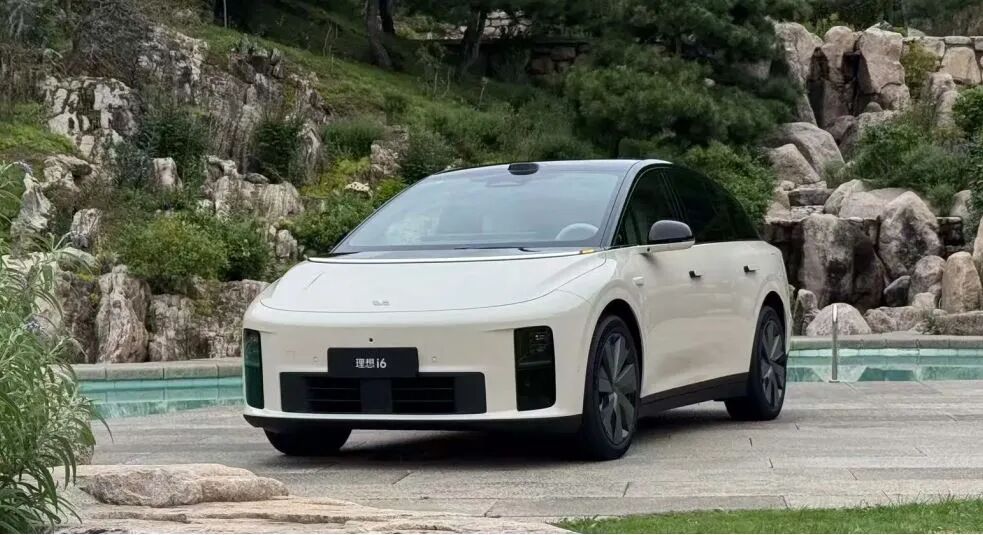
Some time ago, Li Auto’s official website stopped accepting new orders for the entire L9 lineup, while certain variants of the L7 and L8 also showed as “unavailable for purchase.” National dealerships only sold existing inventory, halting production once stocks were depleted. This was not a conventional pre-model-refresh inventory clearance but a complete cutoff of old-model supply. Consequently, in Q1 2026, the Li i6 accounted for nearly 60% of sales, while the L-series extended-range models—once the profit mainstay—saw sales plummet 64% year-on-year, with only 32,000 units delivered.
A critical context must be added here. The Li i6, priced starting at RMB 249,800, directly entered the core territory of the Model Y and Seres M7. Users in this price segment are extremely price-sensitive, naturally compressing brand premium space. In other words, the i6 is not unsellable, but its business model was never designed for high gross margins from the outset—its mission is to capture market share, defend the basic market position above RMB 200,000, and buy time for the L-series refresh. However, when the i6’s share reached 60%, it ceased to be a “transitional product” and became the “main product,” dragging down the company’s entire profit structure.
Placing This Logic in Industry Context Makes the Outcome Clearer.
In the same quarter, NIO reported a gross margin of 11.2%, XPeng Motors 14.3%, and Huawei-backed Seres maintained a relatively high per-unit profit with the M9’s high average selling price. Li Auto’s 7.9% gross margin no longer positions it as the “most profitable among new forces.” Li Xiang is not unaware of this cost, but he may be betting on a quarterly profit collapse in exchange for a gross margin rebound after the L-series refresh.
A ‘Muddled’ Account
Additionally, Li Auto’s Q1 financial report contains another “muddled account” easily overlooked by outsiders.
Starting January 1, 2026, NEV purchase tax policies were adjusted—shifting from full exemption to a 50% reduction, with a maximum tax relief of RMB 15,000 per vehicle. This policy rollback directly increased consumers’ vehicle purchase costs, with the most awkwardly positioned group being Li i6 users who placed orders in 2025 but took delivery in 2026.
However, Li Auto’s response was “ideal”—it voluntarily spent over RMB 500 million to cover the purchase tax difference for these users. Although this RMB 500 million expenditure directly eroded its already thin profit, it earned Li Auto widespread praise.
But this was not the greatest pressure. In Q1 2026, upstream raw materials such as batteries and automotive-grade memory chips collectively rose in price, with automotive-grade DRAM chip prices experiencing a historic surge. Consequently, per-unit storage-related costs increased by hundreds to thousands of RMB. Under cost pressure, nearly 20 automakers raised vehicle prices from March to May 2026, with per-unit increases generally exceeding RMB 2,000. Thus, Li Auto’s gross margin decline from 20.5% to 7.9% was not solely due to product mix changes. Narrowing product profitability, rising raw material costs, and a RMB 500 million one-time expenditure collectively squeezed profits into negative territory.
On the flip side, financial reports showed that as of Q1 2026 end, Li Auto’s cash reserves stood at RMB 94.3 billion (approximately USD 13.7 billion), maintaining a roughly RMB 100 billion funding scale for 10 consecutive quarters. Meanwhile, the company’s asset-liability ratio was only 51.2%, with interest-bearing debt accounting for just 15% of total liabilities.
This represents an extremely rare “high cash, low leverage” financial structure among new forces. In other words, amid widespread industry contraction and corporate financing struggles, Li Auto is one of the few companies not worrying about cash flow. It is not that it cannot afford losses but that it chooses to allocate funds toward longer-term goals.
However, the phrase “allocate funds toward longer-term goals” requires unpacking.
Li Tie, Li Auto’s CFO, stated bluntly during the financial report conference call: “Our Q1 gross margin reflected user-centric metrics related to Li i6 deliveries, raw material price fluctuations, and model refresh cycles. As deliveries rebound to drive economies of scale and our refreshed product portfolio gains traction, we expect profitability to gradually improve.”
More notably, Li Auto launched a USD 1 billion share repurchase program in March 2026. By May 26, it had completed USD 139.7 million worth of repurchases, achieving approximately 14% progress in two months. With Li Auto’s current market capitalization around HKD 180 billion (approximately USD 23 billion), the USD 1 billion repurchase represents about 4.3% of total market cap—a substantial commitment. While other automakers were busy with layoffs, retrenchment, and seeking financing, Li Auto chose to repurchase shares with real money. This move clearly signals management’s unwavering confidence in the brand’s long-term value.
People often say cash is a company’s moat, but the reality is—cash only becomes truly valuable when efficiently converted into technological barriers and brand premium. If gross margins fail to return to healthy levels over the next four to five quarters, capital markets will inevitably reevaluate the company’s valuation logic, creating irreversible negative impacts for automakers.
AI as a Monetization Strategy
Due to this short-term profitability-challenged financial report, outsiders generally perceive Li Auto as suffering severe losses and operational deceleration. However, stepping outside the traditional automaker evaluation framework and viewing Li Auto as an AI-heavy tech company reveals a remarkably clear operational logic.
First is the R&D front. In Q1 2026, Li Auto’s R&D expenditure reached RMB 2.7 billion, up 8.3% year-on-year. Notably, this marked the fifth consecutive quarter maintaining quarterly R&D investment near RMB 3 billion.
Under full-year plans, Li Auto’s total R&D investment will reach approximately RMB 12 billion, with half allocated to AI, covering foundational hardware architectures like inference chips and in-vehicle computing platforms, as well as intelligent software systems like autonomous driving large models—a figure even exceeding some automakers’ entire annual revenue.
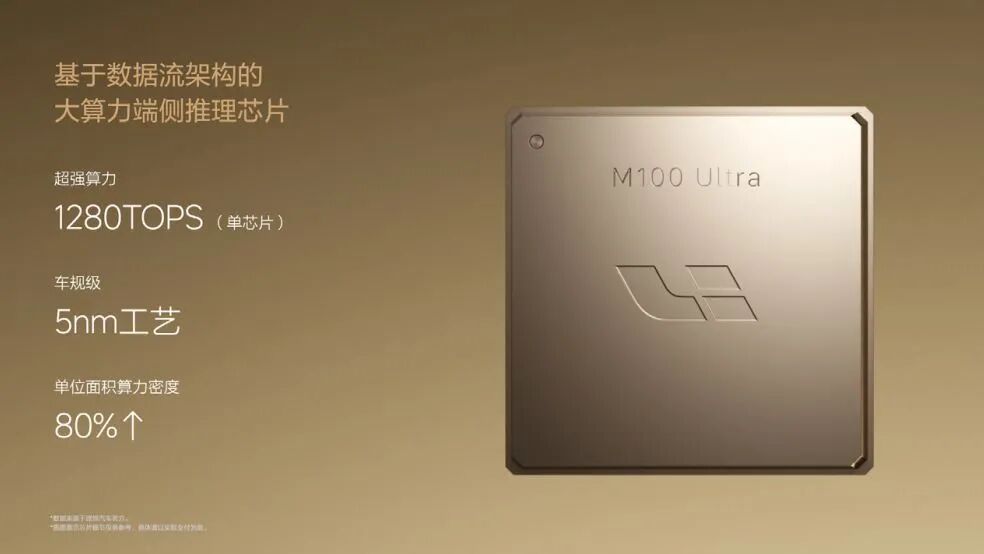
Li Xiang’s logic is straightforward: Only through self-developed chips integrated with large models can true technological barriers be established. Regarding chips, Li Auto spent four years developing the Mach M100. This 5nm automotive-grade chip, based on a dynamic dataflow architecture, delivers 1,280 TOPS of computing power with 82% utilization efficiency, once hailed by the industry as the world’s most powerful single-chip automotive-grade product.
However, chips are just the first half. Li Xiang believes all technologies validated in mass-produced vehicles—such as large models, perception systems, drive-by-wire chassis, and operating systems—can be directly repurposed for general-purpose humanoid robots in the next phase. He bluntly stated that future global companies simultaneously developing foundation models, chips, operating systems, and embodied AI will not exceed three, with Li Auto being one of them. Li Auto has already initiated projects in humanoid robots, with its first two-wheeled robot product expected to debut to the public by mid-2026.
Beyond this, Li Auto’s supercharger network construction is also accelerating. Its unparalleled charging experience has become a key source of positive reputation. As of Q1 2026 end, Li Auto had built over 2,800 supercharger stations, covering all prefecture-level cities nationwide. However, Li Auto’s superchargers are not merely energy replenishment infrastructure but also data entry points—each charging session accumulates real-world testing data for its intelligent driving system. This mirrors Tesla’s business logic—vehicles as terminals, data as assets, and AI as the monetization strategy.
The Real Risk Extends Beyond Mere Losses
If R&D represents a bet on the future, then the all-new Li L9 launched on May 15, 2026, is Li Auto’s answer to stabilizing its high-end market position and delivering on technological value.
The 2026 all-new L9 is priced between RMB 459,800 and RMB 509,800. As the L-series flagship, it not only represents Li Auto’s product strength benchmark but also serves as the core lever to optimize the current product mix and repair gross margins. The Livis variant marks the first full-stack mass production of embodied AI core technologies, including Li Auto’s self-developed chips, operating system, large models, and a “complete form” drive-by-wire chassis—an absolutely appealing “fashion item” for tech enthusiasts.
However, the L9 faces a far more brutal competitive environment than three years ago. The Seres M9 has stabilized its average selling price above RMB 500,000 with monthly sales consistently exceeding 10,000 units. NIO’s ES8 has defended its high-end battery-electric vehicle position with support from its battery swap network. Even the Xiaomi SU7 Ultra has carved out a niche in the RMB 500,000+ market. For the L9 to sustain profitability, mere “strong product strength” is insufficient—it must also convince users that “it is worth the price” in terms of brand perception. This is precisely what Li Auto most needs to repair after the i6’s success, all requiring market validation.
Currently, Li Auto stands at a critical strategic transition point. Despite fluctuations, its key strategic moves have generally achieved modest success. This brings us back to the core question: What is Li Auto’s biggest current issue?
Not the RMB 2.29 billion net loss—Li Auto can afford it. The real risk lies in sustained low gross margins. If the all-new L9 fails to sustain profitability, Li Auto risks devolving from a “high-premium brand” to a “volume-focused brand.” Once this perception takes hold, all brand equity built over the past three years could be devoured by price wars.
Therefore, over the next two quarters, more critical than financial report numbers will be whether the all-new L-series products can repair the profit structure, restoring per-unit average selling prices and gross margins to healthy levels. In late June, the all-new Li L8 will launch. In the second half of the year, the pure-electric flagship SUV i9 is scheduled for release and delivery, forming a complete high-end product matrix from extended-range to pure-electric vehicles. Whether these new models can restore Li Auto’s gross margins to normalcy will be the most crucial storyline in the second half of the year.
Li Tie forecasts a Q2 gross margin of 10%—an improvement from Q1’s 7.9% but still short of the 20% healthy threshold. A 10% margin indicates Li Auto is stemming the bleeding but far from recovered. Only by winning this battle can Li Auto’s narrative continue.

Image: Sourced from the Internet
Article: Auto Review
Layout: Auto Review
-
![]()
4.6 Billion Yuan! 301382 Clinches Major Computing Power Deal
-
![]()
Ruide Intelligence and Gudong Intelligence Forge Ahead in Strategic Partnership, Eyeing Trial Production at Intelligent Optics Base in Second Half of the Year!
-
![]()
Thriving Beyond Family Succession: An Optical Pioneer Blazes a Trail for Private Firms
-
![]()
Samsung China Takes Another Step Back
-
![]()
Samsung China Takes Another Strategic Retreat
-
![]()
Xpeng Unveils New Large Five-Seater G9L, He Xiaopeng Claims It Outperforms 99% of Vehicles in the 300,000 RMB Price Range
-
Anthropic’s $10 Billion Multi-Year Compute Deal Unveiled
-
![]()
Bidding Adieu to the 'Wild West' Phase: What is the Competitive Edge of Lightning Warehouses?