China's Version of Volkswagen-Toyota? Chinese Automobiles Under the 'Dual-Track System': BYD 'Vindicated'
 08/05 2026
 382
382
From being targeted in the 'anti-inner-roll' campaign in 2025 to achieving national 'major innovative achievements' in 2026, on par with the technology of the Long March 10B carrier rocket, BYD's fortunes are looking up.
Data shows that from January to July this year, BYD's cumulative sales reached 2.2277 million units, compared to 2.4902 million units in the same period last year, representing a year-on-year decrease of 10.54%. However, this does not overshadow its champion status.
BYD: The Latecomer That Overtakes
Due to the presence of joint ventures and imported vehicles, there are various ways to determine who holds the top spot in the Chinese auto market. However, when considering only independent brands, BYD has been China's leader since 2022 and continues to hold this position.
In 2022, BYD's annual sales reached 1.8685 million units, a year-on-year increase of 152.5%, surpassing Changan Automobile, Geely, Chery, and Great Wall Motors. It led second-place Geely by over 400,000 units, solidifying its position as China's top independent brand.
From 2023 to 2025, BYD's annual sales were 3.0244 million, 4.2721 million, and 4.6024 million units, representing year-on-year growth of 61.9%, 41.26%, and 7.73%, respectively. Prior to 2022, from 2019 to 2021, BYD's annual sales were 460,000, 420,000, and 730,000 units.
In comparison, Changan, Great Wall, and Geely each surpassed one million annual sales in 2015, 2016, and 2017, respectively, and have since maintained sales above one million units annually.
This means that BYD virtually overtook other leading independent brands overnight in 2022 and has since maintained a significant lead, becoming a class of its own.
The core reason for BYD's rapid growth is its ability to capitalize on the high-speed development of new energy vehicles. It entered the market early to independently develop key technologies such as power batteries, power semiconductors, drive motors, vehicle electronics, and DM plug-in hybrid systems. Through vertical integration, BYD produces nearly all automotive components in-house, except for tires and glass, significantly reducing production costs and giving its products strong market competitiveness.
Notably, BYD has focused on researching lithium iron phosphate (LFP) batteries rather than ternary lithium batteries. Recent market data shows that in 2021, LFP batteries surpassed ternary lithium batteries with a 52% market share. By 2025, LFP's market share had risen to 81.2%. While safety, cycle life, and lower costs are factors, the core reason lies elsewhere.
As early as the 2021 China Entrepreneurs Forum in Yabuli, BYD Chairman Wang Chuanfu expressed this viewpoint: 'Ternary lithium batteries require cobalt and nickel, metals that China lacks or has in limited supply.' 'We must avoid replacing oil dependence with dependence on cobalt and nickel.' 'Truly mass-market batteries must not rely on rare metals.'
Wang's philosophy aligns with his early focus on new energy vehicles. In 2017, on CCTV's 'Lecture Room,' he questioned: 'China imports 60% of its crude oil, with 60% of that passing through the South China Sea. Vehicles consume 60% of this oil. Without change, our oil security threshold will rise further. How can we break this cycle?' This is the core reason why BYD committed to new energy vehicles from the outset.
As of February 2026, ongoing conflicts between the U.S. and Iran have repeatedly threatened to shut down the Strait of Hormuz, disrupting about 30% of global seaborne oil shipments and causing worldwide oil shortages. This validates Wang's foresight.
Indeed, in 2026, Chinese new energy vehicles, represented by BYD, are being exported overseas at a rapid pace. Consulting firm AlixPartners predicts that China's vehicle exports will reach 10 million units in 2026, a 41% year-on-year increase, 2.5 times Japan's annual vehicle exports.
Taking BYD's cumulative sales from January to July as an example, its overseas export share was 969,200 units, accounting for 43.5% of total sales, with a year-on-year increase of 76%.
Internationally, Japanese actress Hirose Alice and 007 actor Daniel Craig were invited as brand ambassadors for BYD models, causing a sensation overseas and quickly trending on social media, highlighting BYD's popularity abroad. From this perspective, BYD, which became China's top brand in 2022, is poised to become a true international brand in 2026.
Vindicating BYD
On one hand, BYD quickly became the domestic market leader and is now catching up globally with peers like Chery, Geely, and Great Wall Motors, which had earlier overseas layouts during the fuel-powered vehicle (internal combustion engine vehicle) era. On the other hand, after the 'inner-roll' controversy in 2025, BYD, as the market leader with significant cost and first-mover advantages, faced unprecedented public pressure due to its rapid sales growth.
At BYD's shareholder meeting in December 2025, Wang Chuanfu stated, 'As the leading enterprise, we must set a good example. Being the leader, we can endure some bullying, but we must not bully others.' This statement reflects BYD's reality in 2024-2025 more than it serves as a guideline.
Data from October to December 2024 shows that BYD's monthly sales exceeded 500,000 units for three consecutive months, a first for the company. This marked BYD's entry into a high-growth phase, forming the basis for its initial 2025 sales target of 5.5 million units. However, in May 2025, an unexpected 'anti-inner-roll' storm disrupted market rhythms for many Chinese automakers, including BYD.
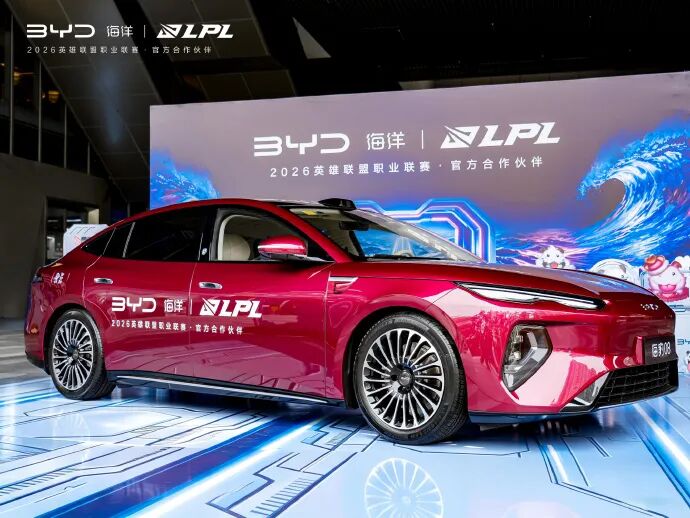
Consequently, BYD lowered its 2025 sales target and adjusted its market strategy. However, true 'inner-roll' in the Chinese auto market had not ended. Many automakers launched models directly competing with BYD at lower prices, but BYD could not retaliate. This is the true context behind Wang's statement about enduring bullying but not bullying others.
Indeed, 2025 data shows that BYD's annual sales reached only 4.6024 million units, a mere 7.73% year-on-year increase, far below initial expectations. Throughout 2025, although BYD's monthly sales exceeded 400,000 units in most months, none surpassed 500,000 units. However, that same year, BYD's pure electric vehicle sales surpassed Tesla's for the first time, reaching 2.2567 million units, making it the world's largest pure electric vehicle manufacturer.
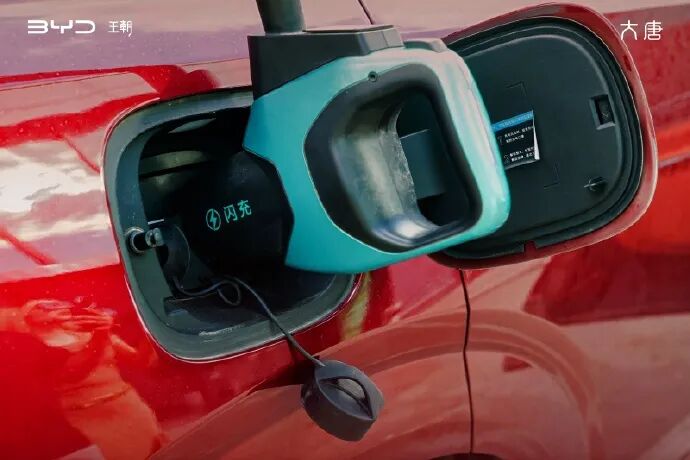
Entering 2026, BYD once again demonstrated its leadership. In March, BYD unveiled its second-generation Blade Battery and flash-charging technology, setting a new global record for the fastest charging speed in mass production—just 5 minutes to charge from 10% to 70%. This technology release reaffirmed BYD's market leadership.
After this technological leap, public criticism of BYD for 'low-price inner-roll' lost its basis.
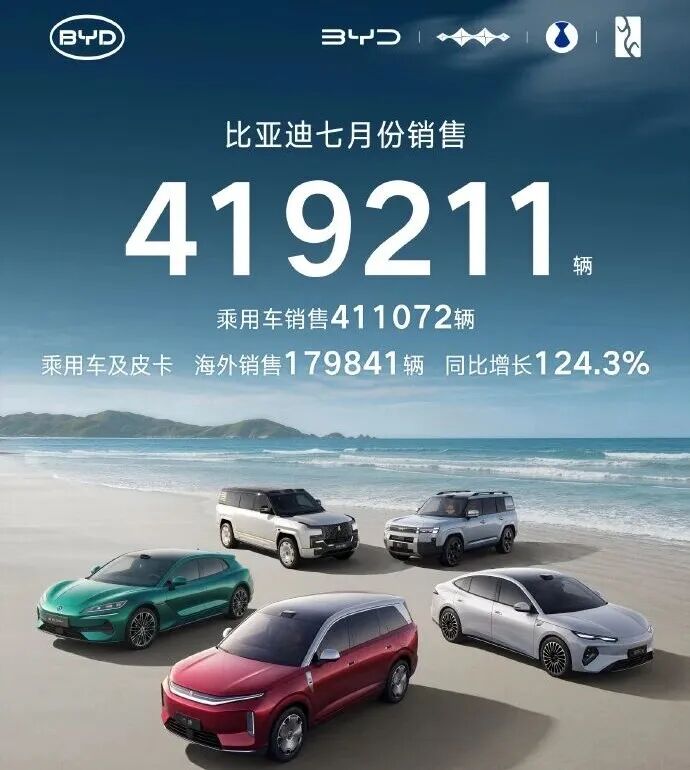
In April this year, BYD's monthly sales quickly rebounded to around 400,000 units, surpassing 400,000 units in June and July with 411,800 and 432,300 units, respectively. This was a key reason for BYD's rapid recovery of the cumulative sales crown from January to July this year.
On July 20, the State Council Information Office held a press conference to introduce industrial and information technology developments in the first half of 2026. During this conference, BYD's second-generation Blade Battery and megawatt flash-charging system were highlighted as 'major innovative achievements,' alongside national key projects like the Long March 10B carrier rocket.
From being targeted in the 'anti-inner-roll' campaign to becoming a national key project in 2026, this signifies that BYD has been 'vindicated' at the national level. Our view is that China needs a company like Toyota or Volkswagen, with annual sales exceeding 10 million units. But is that company BYD?
-
![]()
Unveiling Yin Tongyue's 'No Involution' Stance: Chery's Strategic Maneuvers
-
STO Express Faces Scrutiny: Franchise Model’s Safety Gaps Under the Microscope
-
![]()
The Richest Woman is Going Public Again! Valued at 22.5 Billion, Building an 'Optical Empire' with Her Brother
-
![]()
Buying More GPUs is No Longer Enough: Divergence in Monetization Progress Among the Top Four Cloud Providers
-
![]()
Leapmotor Exceeds 100,000 Units, Li Auto Faces Three Straight Months of Decline: China’s Auto Market Competition Intensifies in the Second Half
-
![]()
Can NASA Discover Extraterrestrial Life? UK Invests £3 Million, but First Must Block Out Stars
-
![]()
Huawei Expands Computing Power Business into the Pig Farming Sector
-
![]()
Asian Dragon Receives a 'Makeover': Is FAW Toyota Using the 'Crown' as a Substitute Strategy?