Farewell to 'One-Size-Fits-All': The Electric Vehicle Battery Industry Ushers in the Era of 'Scenario-Based Customization'
 08/07 2026
 573
573
Recently, CATL released its strongest-ever interim report: revenue reached RMB 276.917 billion, up 54.80% year-on-year; net profit hit RMB 43.284 billion, a 41.98% increase, equating to daily earnings of approximately RMB 240 million. During the same period, the industrialization of sodium-ion batteries accelerated, with successive client signings for sodium-ion products and securing a 5GWh energy storage order in Europe. The dual signals of performance and market penetration indicate that this global power battery leader is shifting from a 'one-chemistry-fits-all' approach to comprehensive 'scenario-based customization.' This transition marks a clear turning point for the global power battery industry, as the era of a single battery chemistry dominating the market has ended, replaced by a highly segmented, application-specific collaborative multi-chemistry paradigm.
▍From Point Breakthroughs to Systemic Competition
For a long time, the power battery industry has been embroiled in an ongoing debate between lithium iron phosphate (LFP) and ternary materials (NCM). LFP dominates the mass market with its cost advantages and safety performance, while NCM leads in high-end applications due to its energy density superiority. However, technological developments announced for 2026 clearly indicate that this either-or choice is being replaced by a diversified, 'choose-what-you-need' approach.
At CATL's Super Tech Day earlier this year, the company unveiled multiple technology routes simultaneously, covering lithium iron phosphate (Shenxing Ultra-Fast Charging Battery), ternary (third-generation Kirin Battery, Kirin Condensed Matter Battery), LFP+ternary (Xiaoyao Super Hybrid Battery), and sodium-ion (Na Xin Battery). Professor Wu Kai, an academician of the Chinese Academy of Engineering and CATL's Chief Scientist, emphasized at the event: 'Whether from the perspective of meeting diverse consumer demands or considering energy security and social development, the lithium battery industry must pursue collaborative development across multiple chemistry systems.'
Ali Adim, Head of Battery Research at Mobility Global, stated: 'The future of battery technology should belong to application-specific engineering rather than relying on hyper-optimized LFP battery packs solely for cost reduction.'
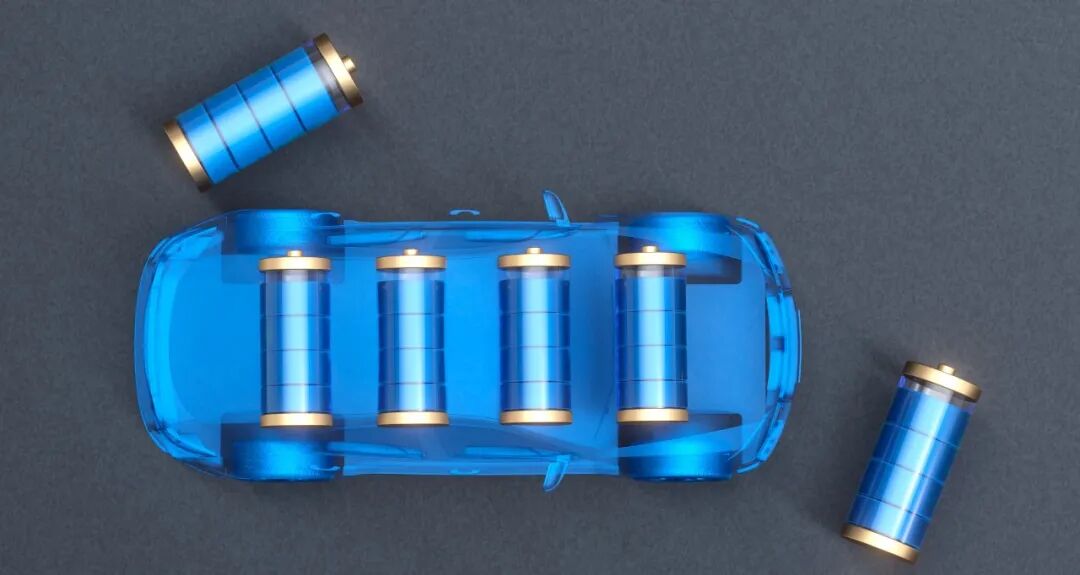
▍Embracing a Multi-Chemistry Future
According to Mobility Global's analytical framework, the power battery market is rapidly forming three distinct technological tiers:
In the ultra-high-end segment, semi-solid and all-solid-state batteries are moving from laboratories to mass production. These batteries promise extremely high energy density, enhanced safety, and ultra-long range.
In the high-end segment, high-nickel ternary systems, represented by CATL's third-generation Kirin Battery, focus on continuous optimization of performance and safety through innovations like thermal-electric separation.
In the mass market, LFP and sodium-ion batteries serve as the mainstay. Wu Kai pointed out that LFP is gradually approaching its theoretical energy density limit, making it more suitable for developing technologies centered on ultra-fast charging to achieve optimal balance. Sodium-ion batteries, meanwhile, hold broad prospects in high-temperature, extreme-cold mobility scenarios and energy storage applications.
▍The Economics of Energy Density: Long Range Redefines Cost Logic
For a long time, LFP has been considered the more economical choice due to the abundant and low-cost resources of iron and phosphorus, whereas NCM relies on expensive and volatile metals like nickel and cobalt. However, when the range threshold increases to 1,000 kilometers, this logic undergoes a fundamental shift.
CATL's third-generation Kirin Battery cell achieves an energy density of 280Wh/kg and a volumetric energy density of 600Wh/L, supporting 10C ultra-fast charging and delivering a range exceeding 1,000 kilometers. The 125kWh battery pack weighs just 625kg. To achieve the same range, an LFP battery pack would weigh over 880kg, resulting in a 255kg 'weight penalty.'
This 255kg difference triggers a chain reaction at the vehicle level—the chassis, suspension, and braking systems must be significantly reinforced, increasing structural costs. A heavier vehicle also means higher energy consumption, requiring LFP vehicles to have a larger total battery capacity than NCM vehicles to achieve the same range. This 'efficiency tax' further narrows LFP's initial cost advantage in raw material procurement.
This logic does not negate LFP's universal value. In the 500-600km range segment, advanced LFP solutions like BYD's Blade Battery offer excellent thermal safety, long cycle life, and low cost, making them the most cost-effective choice currently. However, when the range target climbs to 1,000 kilometers, high-nickel solutions provide a more pragmatic technological path. Pure electric vehicles targeting a 1,000km range are naturally positioned in the high-end market, where consumers have rigid demands for fast-charging capabilities and driving experience—demands that high-nickel systems precisely meet. Attempting to achieve 1,000km range with an LFP solution would lead to a significant increase in vehicle weight, potentially transforming a sedan or SUV into a 'commercial vehicle-like' product, which represents a hidden cost in product form.

According to Mobility Global's battery pricing model, for a 125kWh battery pack capable of 1,000km range, the cost difference between LFP and advanced high-nickel NCM is approximately $3,000 to $4,000. In the high-end market, this price gap can be fully offset by improvements in driving quality and reductions in maintenance costs. Mobility Global analyst Hugo Cruz further noted that, for the same range, switching to an NCM system can reduce battery pack weight by about 20-25% and required battery capacity by about 5-15%. Ali Adim summarized: 'Especially against the backdrop of significantly declining battery prices, OEMs will begin to prioritize technical attributes like energy density.'
▍Regional Policies Reshape the Global Landscape
The future of power batteries depends not only on technology itself but also heavily on regional policies. Mobility Global points out that in the North American market, high import tariffs on batteries and materials may undermine LFP's price competitiveness. In Europe, increasingly stringent recycling regulations could become a major obstacle to LFP deployment, as end-of-life disposal costs may offset its upfront cost advantages.
This implies that the global power battery market will exhibit a more complex regional differentiation pattern—different markets will choose diversified technological routes based on their policy orientations, resource endowments, and industrial foundations.
It is foreseeable that future competition in the power battery industry will shift from material competition to systemic competition, from point breakthroughs to full-scenario coverage. The debate will no longer revolve around 'which chemistry system is better' but rather focus on 'which system is more suitable for which scenario.'
Layout 丨 Zheng Li
Source 丨 Mobility Global
Image Source 丨 Qianku.com
-
![]()
BYD's Auto Overseas Expansion Review: 26 Months from 'Catching Up' to 'Advancing'
-
![]()
Are Commercial Rockets Progressing Due to Increased Girth?
-
![]()
From Imitation to Reinforcement: How Far Have End-to-End Large Models Come?
-
![]()
The Debate Between Autonomous Driving VLA and World Models: What Is It Really About?
-
![]()
Sealing the Deal: The Rationale Behind GAC Honda and SAIC-GM’s Early Joint Venture Renewals
-
Third-Party SIM Card Services Discontinued: Strategic Calculations of China Mobile, China Unicom’s Bold Move, and China Telecom’s Tactical Advancement
-
Investigation Launched 3 Days Prior to Listing Meeting! Urgent Withdrawal of RMB 3 Billion Financing Initiative
-
![]()
After Two Years of 'Big Smart,' Smart is Set to Launch Its 'Small Smart'