Analysis of Body Electrical Reputation Index in July 2026: Increasing Drawbacks of Electrification
 08/10 2026
 359
359
Recently, Qichemen.com released user feedback data for July 2026. In response, we have conducted a brief review and analysis of the reputation performance in the body electrical sector for that month.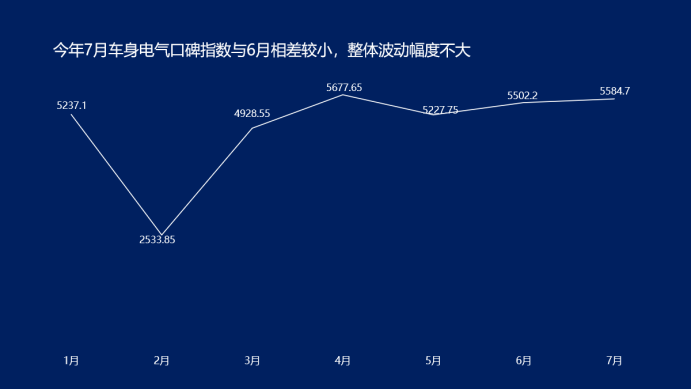
From a monthly trend perspective, the body electrical reputation index for July was 5,584.7, showing a slight increase from June but maintaining an overall stable fluctuation range. Generally, only February saw a significant decline, while April reached the year's peak at 5,677.65. Subsequently, the body electrical reputation index hovered within the 5,200-5,600 range.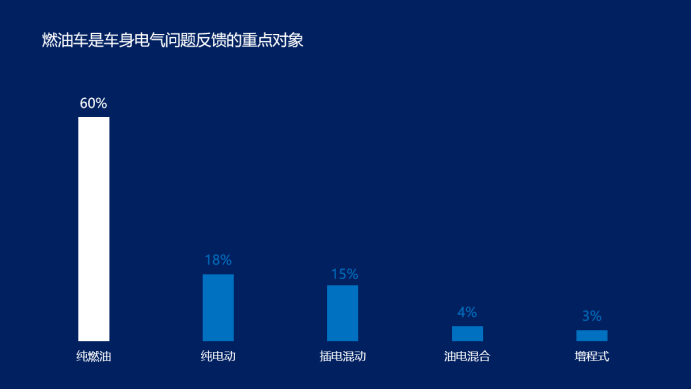
Analyzing the powertrain types of problematic models, fuel vehicles accounted for 60% as the primary source of body electrical issues. Feedback on problems with new energy vehicle models also cannot be overlooked. Among them, battery electric vehicles accounted for 18% of feedback, while plug-in hybrid vehicles accounted for 15%, with the combined feedback for both model types exceeding 30%. As the domestic new energy vehicle market's installed base expands annually, fault feedback related to the three electric systems (battery, motor, and electronic control) and onboard intelligent supporting equipment continues to increase, with new energy vehicles gradually becoming a new high-incidence category for body electrical issues.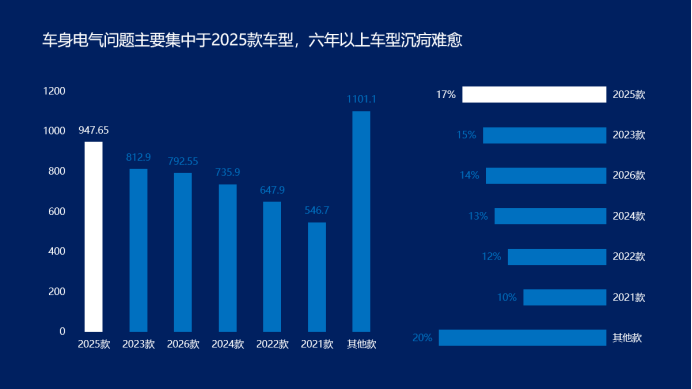
From the perspective of model year for problematic vehicles, models within four years and still under warranty represent a concentrated range of user feedback, with cumulative problem feedback accounting for 59%. Among them, the 2025 model year emerged as the one with the highest proportion of body electrical problem feedback. Problem feedback for the 2022-2023 model years, accounting for 22%, as well as for vehicles over six years old, also cannot be ignored, reflecting the technological iteration and aging challenges throughout a vehicle's entire lifecycle.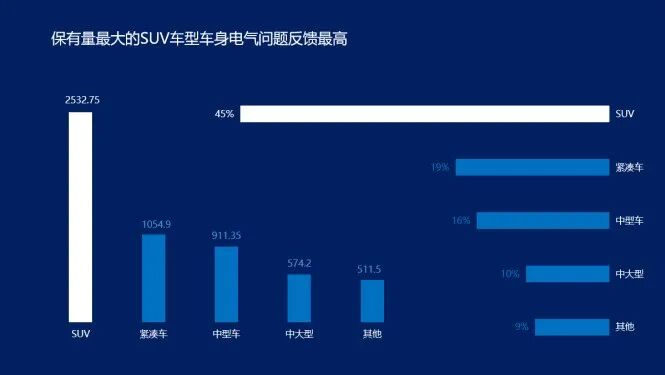
Looking at the classification of problematic models in terms of body electrical issues, SUV models, due to their leading installed base, have the highest rate of body electrical problem feedback, followed closely by compact and mid-size cars. Meanwhile, the proportion of related feedback for large and mid-large cars is also on the rise, indicating that quality issues in this market segment are gradually emerging.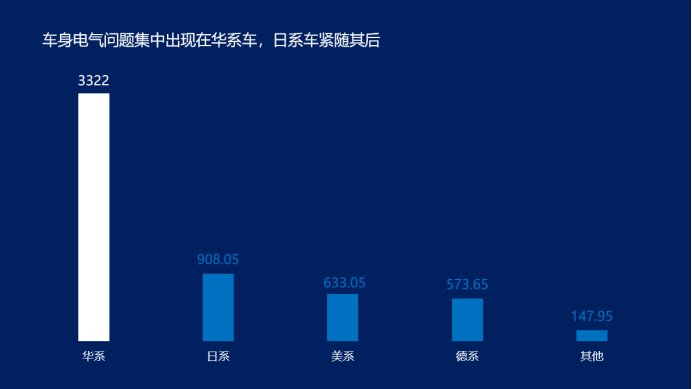
From the perspective of national vehicle brand distribution, Chinese-brand vehicles rank first with approximately 60% of feedback, closely related to the high penetration rate of electrification and intelligent configurations among local brands. While leading in technological application, this also brings more issues. Japanese vehicles rank second with 16.2% of feedback, with recurring dashboard cracking issues over the long term, compounded by recent new problems like component cracking, continuously driving up the body electrical reputation index for Japanese vehicles. German vehicles, despite having a higher installed base than American vehicles, perform better in terms of body electrical reputation index, while American vehicles are held back by persistent old issues like headlight cracking, becoming a significant factor dragging down their reputation.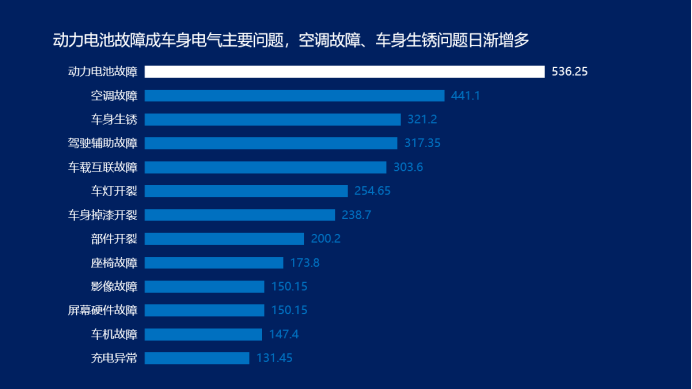
From the perspective of specific feedback issues, electrification, intelligence, and body issues emerged as the most frequently reported body electrical problems by users in July. Among them, power battery failures ranked first; air conditioning failures followed closely behind as the second most frequent issue. Additionally, recent feedback on body corrosion issues has been on the rise, with driving assistance failures also breaking into the top five problem feedback list.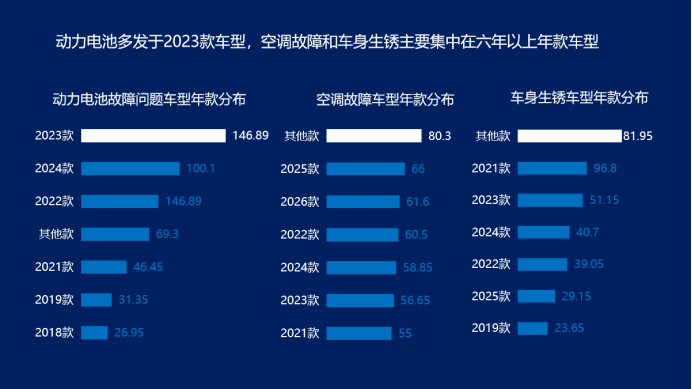
The model year distribution of specific issues shows that power battery failures are mainly concentrated in the 2023 model year, with Aion brand vehicles experiencing prominent battery bulging issues across multiple models. Related feedback for the 2022 and 2024 model years also cannot be ignored. Air conditioning failures and body rust are more commonly seen in models over six years old, with air conditioning compressor damage and multiple areas of body rust being the main manifestations.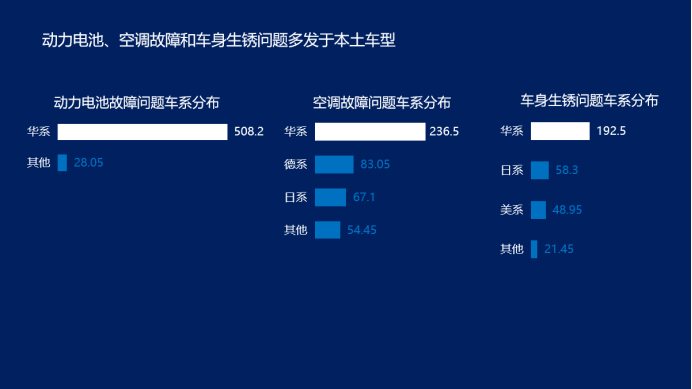
The top three high-frequency problem feedbacks are primarily concentrated in Chinese local brands. This is related to the large installed base of Chinese-brand vehicles but also exposes shortcomings in their quality control of the three electric systems, air conditioning components, and body anti-corrosion processes. Joint venture brands face relatively lower pressure in feedback for these three types of issues.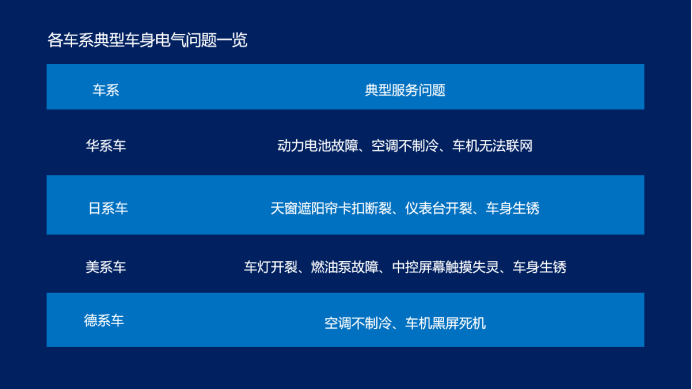
Based on the above data analysis, the following conclusions can be drawn:
In July, Chinese local automakers became the main contributors to body electrical fault feedback. Electrification and body-related faults were almost entirely concentrated in domestic brands, stemming from their early layout in the intelligent electric vehicle Track (track/field) and large installed base, as well as being influenced by the rapid implementation of new technologies and inconsistent quality control. Faults in overseas joint venture automakers lean more toward traditional hardware aging, with a very low proportion of complaints about new electric systems related to the three electric components. Meanwhile, fault stratification characteristics are clear, with significant differences in fault distribution across different vehicle ages, models, and energy types. Quality control for new energy vehicles remains a key focus for subsequent optimization. For more details, please visit Qichemen.com. (Images sourced from the internet, removed if infringing)
-
![]()
Why I'm Not Optimistic About Meituan?
-
![]()
Tencent Goes All In on WorkBuddy: The Battle for AI Office Entry Points Has Just Begun
-
![]()
950 Million Users Fail to Rescue Gemini
-
![]()
Weekly Stock Review | Auto Industry: Profit Margins Thinner Than Factory Work Pay, Thousands of Investors Caught Unawares
-
![]()
Kimi's Valuation Rockets to $50 Billion Amidst Frenzy of Secondary Share Sales! Who's Exiting, Who's Buying?
-
![]()
SAIC-GM Signs 20-Year Contract Extension, Yet Chevrolet Falters at Third Decade’s Dawn
-
![]()
Charging Costs Climb to Parity with Fueling, Will Electricity Prices Reach European Levels?
-
![]()
Tax and Fee Restructuring: The End of 'Special Perks' for Electric Vehicles?