Tax and Fee Restructuring: The End of 'Special Perks' for Electric Vehicles?
 08/10 2026
 491
491
'Equal Treatment for Fuel and Electric Vehicles' Accelerates Arrival
Currently, six out of every ten new vehicles sold are new energy models. This data indicates that the new energy vehicle (NEV) industry has fully transitioned from its initial growth phase, which relied on policy support and preferential tax treatment, to a new cycle of mature, market-driven development.
Accompanying this transformative shift in the industrial landscape, the differentiated tax system that was once suitable for the industry's early development is no longer appropriate. A tax and fee restructuring reform that encompasses the entire lifecycle of automobile production, purchase, and ownership is steadily advancing.
From the gradual phasing out of purchase tax incentives for NEVs at the beginning of this year, to the step-by-step implementation of consumption tax on power battery production, and the gradual reduction of vehicle and vessel tax exemptions, combined with academic proposals to include new energy vehicles in the scope of consumption tax collection, multiple tax adjustments are being steadily implemented in a phased manner.
The adjustments to taxes and fees related to NEVs have not adopted a one-size-fits-all approach. Instead, they employ a phased transition implementation plan to mitigate the impact on industrial transformation and end-user consumption. Thus, the controversial 'special perks' in NEV taxation are coming to an end.
Gradual Withdrawal of New Energy Support Policies
This tax and fee restructuring in the automotive industry spans the entire industrial supply chain and consumption sectors.
The first policy adjustment to be implemented is the vehicle purchase tax. Under the current rules, from 2026 to 2027, the purchase tax exemption for NEVs will be adjusted to a 50% reduction, with a cap of 15,000 yuan in tax reduction per vehicle. After 2028, relevant incentives may be completely phased out, with NEV passenger vehicles and fuel vehicles subject to the same purchase tax standards. This means that high-priced NEV models will be the first to feel the impact of tightening policies, with models priced over 300,000 yuan reaching the tax reduction cap, and the increase in vehicle purchase expenses will be directly reflected in end-user budgets.
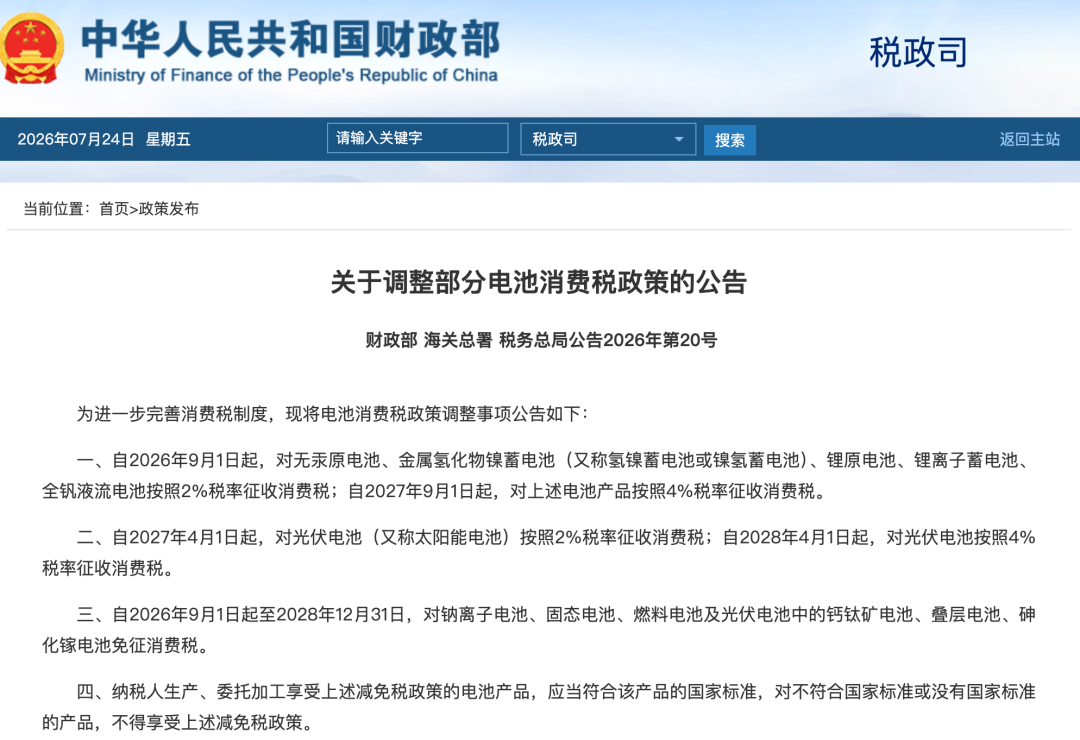
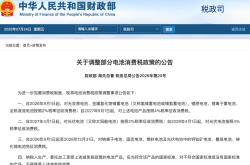
While policies on the consumption side are being steadily adjusted, tax reforms on the production side have already begun. According to the 'Announcement on Adjusting the Consumption Tax Policy for Certain Batteries' jointly issued by the Ministry of Finance, the General Administration of Customs, and the State Taxation Administration, starting from September 1, 2026, consumption tax will be reinstated for categories such as lithium-ion batteries, with an initial rate of 2%, rising to 4% from September 2027. It is important to note that this round of tax adjustments focuses on the upstream battery production sector, with the tax levied on power battery industrial products, not on new energy vehicles as a whole. Multiple institutions estimate that the corresponding increase in per-vehicle costs will be in the hundreds of yuan, which is unlikely to significantly alter end-user pricing in the short term. However, the policy's signaling effect far outweighs its short-term cost impact.
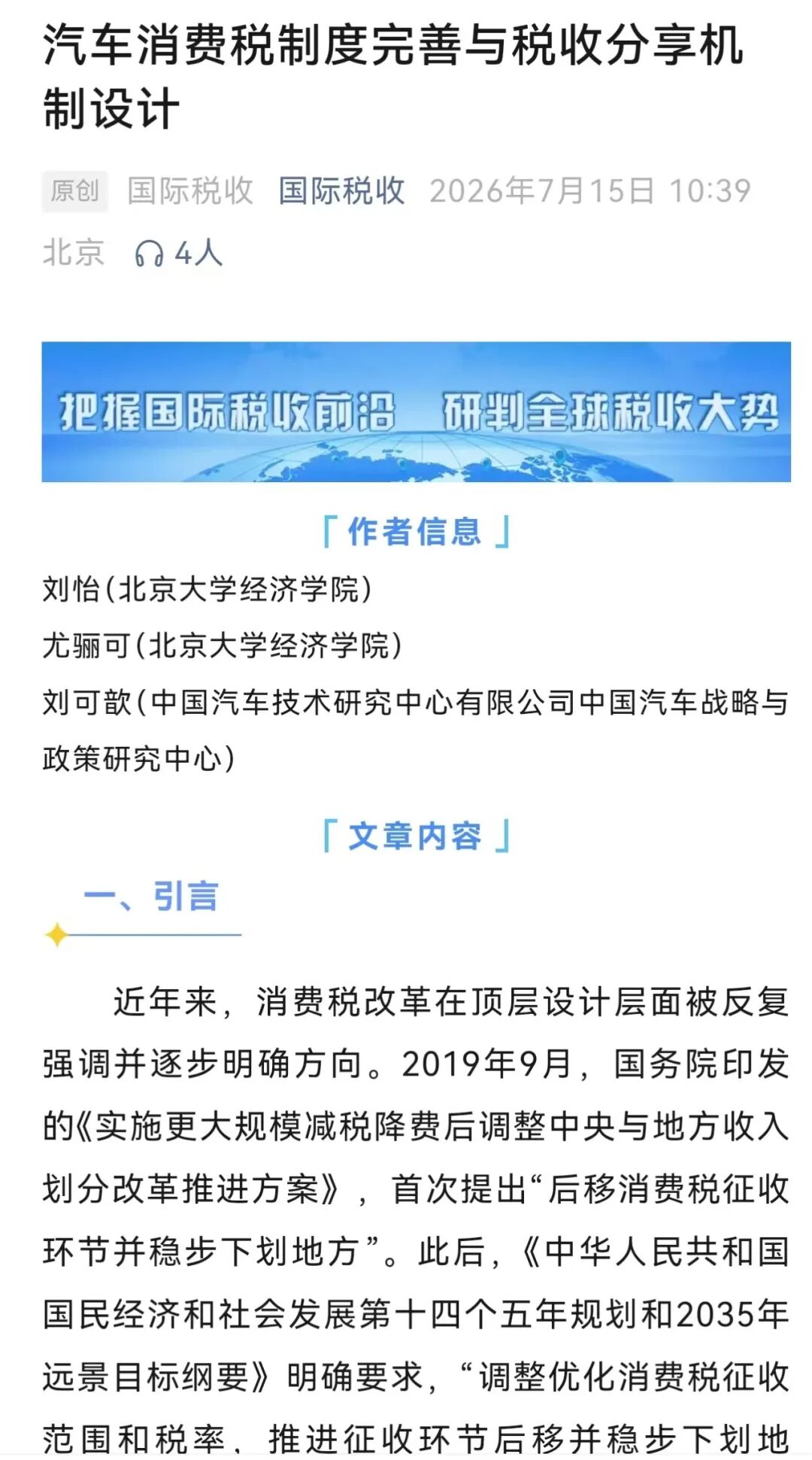
At the same time, a recent study published in a professional journal by Liu Yi's team from the School of Economics at Peking University suggests that new energy vehicles should be fully included in the 'passenger cars' category for consumption tax purposes. In addition to the current ultra-luxury NEV models priced over 900,000 yuan, ordinary NEV passenger vehicles would also be subject to taxation, with the new tax revenue allocated to local governments. This proposal aligns with the long-term direction of domestic consumption tax reform, which involves 'shifting the collection point downstream and allocating incremental revenue to local governments.' Currently, it remains a research recommendation in academic journals. If implemented, it would achieve uniformity in consumption tax policies for fuel and electric vehicles at the vehicle purchase stage.
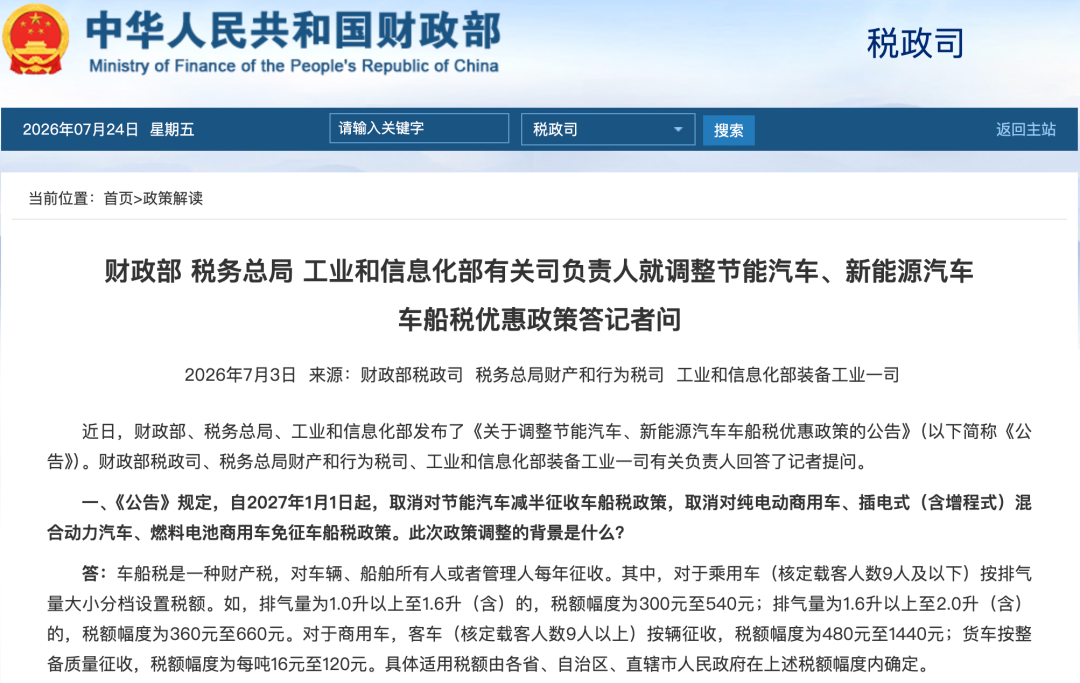
In terms of vehicle ownership, a clear timeline has been set for vehicle and vessel tax reform. A recent announcement by the Ministry of Finance, the State Taxation Administration, and the Ministry of Industry and Information Technology states that starting from January 1, 2027, the vehicle and vessel tax exemptions for plug-in hybrid (including extended-range) vehicles, fuel cell commercial vehicles, and battery electric commercial vehicles will be abolished, with full taxation based on displacement and vehicle type standards. Battery electric passenger vehicles, which do not fall under the scope of vehicle and vessel taxation, will not be required to pay this tax.
It is reported that for passenger vehicles (with a rated passenger capacity of 9 or fewer), tax amounts will be set in tiers based on displacement. For example, vehicles with a displacement of over 1.0 liter up to 1.6 liters (inclusive) will be subject to a tax of 300 to 540 yuan; vehicles with a displacement of over 1.6 liters up to 2.0 liters (inclusive) will have a tax range of 360 to 660 yuan. For commercial vehicles, buses (with a rated passenger capacity of more than 9) will be taxed per vehicle, with a tax range of 480 to 1,440 yuan; trucks will be taxed based on curb weight, with a tax range of 16 to 120 yuan per ton.
Cui Dongshu, head of the Passenger Car Market Information Joint Council at the China Automobile Dealers Association, stated: 'This adjustment to the energy-saving and new energy vehicle and vessel tax policies represents a symbolic step in the implementation of equal treatment for fuel and electric vehicles in China's automotive industry. It is also a key tax optimization as the new energy industry fully transitions from a policy-supported phase to a mature market-driven stage.'
'Equal Treatment for Fuel and Electric Vehicles' Is an Inevitable Outcome of Industrial Development
Behind the intensive implementation of multiple tax and fee reforms lies a fundamental transformation in the structure of China's automotive industry and the logic of public resource allocation.
In the first half of this year, the domestic retail penetration rate of new energy vehicles continued to reach record highs. Data shows that in June this year, the domestic retail penetration rate of new energy vehicles reached 62.8%, exceeding 60% for three consecutive months. NEVs have become the absolute mainstay of the automotive consumer market. The leapfrog growth in industrial scale has completely eroded the basis for the differentiated tax system between fuel and electric vehicles that has persisted for over a decade. Issues such as tax inequity and imbalanced allocation of public resources caused by the dual-track tax system have become increasingly prominent, compelling the industry to accelerate toward an era of 'equal treatment for fuel and electric vehicles.'
From the perspective of sustainable public finance development, the traditional road infrastructure maintenance model, which relies on fuel taxes, is no longer sustainable. For a long time, China's construction and maintenance funding for ordinary roads has been highly dependent on transfer payments from the central government's refined oil consumption tax. According to a report titled 'A Window to Solve the Funding Dilemma for Ordinary Road Maintenance' released by the Transportation Planning and Research Institute of the Ministry of Transport, transfer payments from the central refined oil consumption tax account for over 80% of the annual national expenditure on ordinary road maintenance (excluding major and medium repairs). However, with the rapid popularization of NEVs and the continuous decline in fuel vehicle sales, the tax base for refined oil consumption tax is shrinking, putting pressure on the fiscal funding for road maintenance. At the same time, the scale of China's road traffic network continues to expand, and the rigid costs of road operation and maintenance, equipment inspections, and pavement upkeep are rising annually, exacerbating the imbalance between fiscal revenues and expenditures.
The core controversy surrounding the dual-track tax system lies in the unequal distribution of rights and responsibilities in the use of public road resources and cost-sharing. The fuel costs of traditional fuel vehicles include various public fees such as road maintenance fees, fuel taxes, and education surcharges. Every time fuel vehicle owners refuel, they are indirectly paying for the construction, maintenance, and operation of public roads. In contrast, the usage costs for NEV users only include basic electricity fees, with no additional public tax or fee expenditures. Under the premise of using public road resources equally, NEV users have long enjoyed low-cost or even zero-cost resource dividends, which is currently the biggest cause of the 'fuel vs. electric vehicle dispute.'
Cui Dongshu wrote in an article: 'As NEVs become fully popularized, the adaptability of the traditional road tax and fee system, which relies on fuel, continues to weaken. Issues of tax fairness and sustainability are becoming increasingly prominent, which also aligns closely with the intuitive perceptions of ordinary people.' At the same time, due to their power batteries, NEVs generally have a higher curb weight than equivalent fuel vehicles. According to the axle load law in road engineering, vehicle weight and road surface damage are exponentially positively correlated, meaning NEVs cause higher actual wear and tear on roads.
In the early stages of industrial development, preferential tax and fee policies were crucial for cultivating the new energy sector, facilitating technological iteration, and promoting the implementation of 'dual carbon goals.' These policies effectively reduced corporate R&D and production costs as well as consumer purchase thresholds, rapidly expanding the scale of China's NEV industry. This has made China the global leader in terms of the most complete industrial chain, the largest market size, and the highest penetration rate for NEVs. However, as the industry enters a mature stage, the negative effects of differentiated support policies are gradually emerging, not only causing imbalances in market competition rules but also exacerbating contradictions in public finance and public resource allocation.
This comprehensive tax and fee restructuring is not a policy tightening for the new energy industry but rather an institutional adaptation and rule optimization after industrial maturity. Cui Dongshu stated: 'China is the world's largest NEV market in terms of scale, industrial chain completeness, and penetration rate. This tax reform not only concerns domestic livelihoods and industrial development but also holds global demonstration significance, as it explores a Chinese solution for global new energy transportation governance.'
-
![]()
Why I'm Not Optimistic About Meituan?
-
![]()
Tencent Goes All In on WorkBuddy: The Battle for AI Office Entry Points Has Just Begun
-
![]()
950 Million Users Fail to Rescue Gemini
-
![]()
Weekly Stock Review | Auto Industry: Profit Margins Thinner Than Factory Work Pay, Thousands of Investors Caught Unawares
-
![]()
Kimi's Valuation Rockets to $50 Billion Amidst Frenzy of Secondary Share Sales! Who's Exiting, Who's Buying?
-
![]()
SAIC-GM Signs 20-Year Contract Extension, Yet Chevrolet Falters at Third Decade’s Dawn
-
![]()
Charging Costs Climb to Parity with Fueling, Will Electricity Prices Reach European Levels?
-
![]()
Tax and Fee Restructuring: The End of 'Special Perks' for Electric Vehicles?