Rise and Decline: The Shrinkage of Entry-Level Commuter Cars and the Rise of Domestic Premium Brands
 08/10 2026
 497
497
In the first half of 2026, China's passenger car market entered a phase of overall downward adjustment. According to data from the China Passenger Car Association (CPCA), retail sales of domestic passenger vehicles reached 8.701 million units during this period, marking a year-on-year decrease of 20.2%. The entire industry is under pressure to grow. Amidst the overall market weakness, different price segments did not contract uniformly; instead, they displayed extreme polarization.
Sales in the entry-level market, priced below 50,000 yuan, nearly halved. Micro commuter cars, once popular in lower-tier markets, have experienced a collective decline. In contrast, the premium market, priced above 400,000 yuan, bucked the trend and strengthened, with new energy vehicle models achieving nearly 50% year-on-year growth.
▍The Shrinkage of the Micro Commuter Market
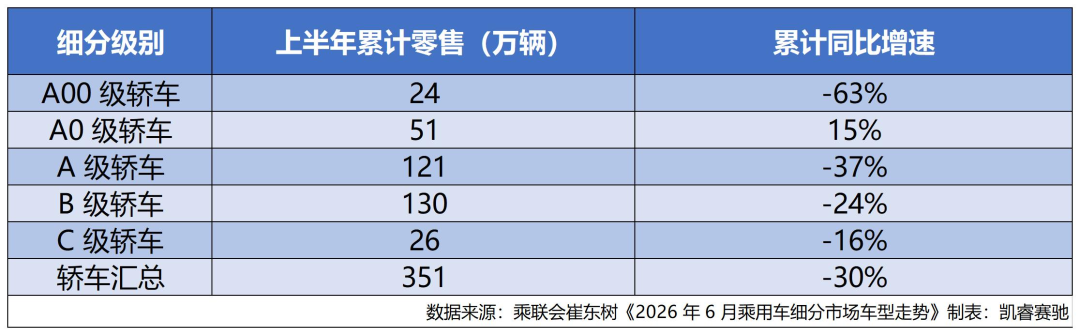
The A00-class entry-level market (vehicles priced below 50,000 yuan) was the hardest-hit segment in the first half of the year. CPCA data reveals that from January to June 2026, cumulative sales in this price range reached only 130,000 units, a 55% year-on-year decline. Its market share shrank from 2.8% in the same period of 2025 to 1.4%. From a segment perspective, retail sales of A00-class sedans totaled 240,000 units in the first half, a significant 63% year-on-year drop, with both new energy and fuel-powered models experiencing a comprehensive contraction.
However, the overall decline does not indicate weakness across the entire segment. On the contrary, the A00-class market has established a clear competitive hierarchy, with an industry landscape undergoing transformative changes. The core competitive logic has shifted from early "simple low-cost commuting" to "comprehensive product competitiveness." Within the sedan submarket, growth rates varied sharply across segments: entry-level microcars declined sharply, compact cars met upgraded demand with positive growth, and mid-to-high-end markets demonstrated stronger resilience.
The Wuling Hongguang MINI EV, once hailed as the "national commuter car," exemplifies these industry changes. At its peak, monthly sales exceeded 50,000 units, rapidly penetrating county, township, and urban short-distance commuting markets with its extremely low purchase threshold. By the first half of 2026, its sales plummeted nearly 60% year-on-year, marking the end of the era for traditional low-cost micro electric vehicles. Meanwhile, the BYD Seagull surpassed it with more balanced product competitiveness, becoming the new segment leader.
The primary reason for this decline is the withdrawal of policy incentives. Starting in 2026, China's new energy vehicle purchase tax exemption shifted from full exemption to a 50% reduction. For microcars priced between 30,000 and 50,000 yuan, the cost increase of several thousand yuan became significantly amplified. Simultaneously, "trade-in" subsidy rules were adjusted, changing from fixed amounts to vehicle-price-based percentages. A 40,000-yuan microcar now receives only a few thousand yuan in subsidies, sharply reducing policy stimulus. Entry-level consumers, who are highly price-sensitive, often alter their purchasing decisions due to minor cost increases.
Rising product costs and stricter compliance standards further squeezed the survival space for low-cost commuter cars. Since 2026, battery-grade lithium carbonate prices have rebounded notably, stabilizing at 190,000 yuan per ton, nearly doubling from the lows in the first quarter of 2025. Battery costs account for a far higher proportion of total microcar costs than in high-end models, making raw material price hikes more directly impactful. Meanwhile, domestic automotive safety and energy efficiency standards continue to upgrade, rendering past cost-control methods—such as simplified body structures, low-spec batteries, and reduced basic configurations—no longer viable. Automakers must now upgrade battery capacity, reinforce body structures, and optimize electronic control systems to meet new regulations, all of which drive up production costs.
With extremely thin profit margins per microcar, cost increases are difficult to absorb internally. Raising prices would eliminate their sole price advantage. Most low-end models thus face a dilemma: failure to update means non-compliance, while updates lead to unsustainable sales volumes. This explains the rapid phase-out of many older models.
Upgraded consumer demand is accelerating market restructuring. Early micro electric vehicles were sold primarily on being "cheap, licensable, and sufficient for short trips." However, as usage time extended, issues like rapid battery degradation and severe winter range loss emerged, making the actual usable range insufficient for daily commutes. Simultaneously, domestic travel demands continue to upgrade, with consumers increasingly valuing vehicles' adaptability to multiple scenarios.
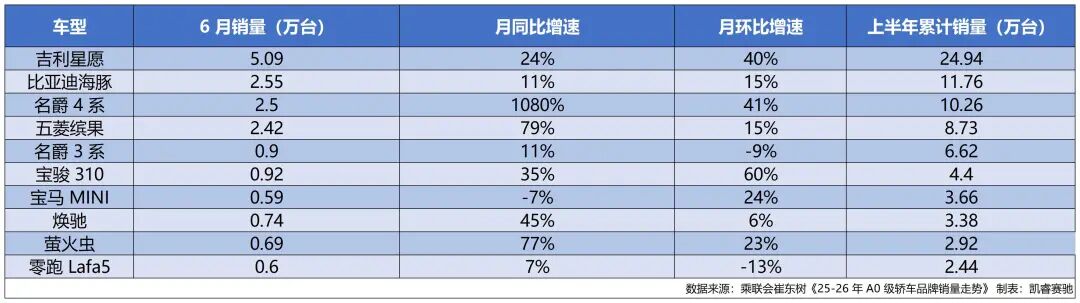
Demand has not disappeared but shifted. More budget-constrained consumers now slightly increase their budgets to opt for entry-level family cars priced around 100,000 yuan, offering longer range and larger space. A0-class sedans and SUVs have become the core replacement segments. Data shows that A0-class sedan retail sales grew 15% year-on-year in the first half of 2026, with models like the Geely Starry Wish and BYD Dolphin leading the segment through high cost-effectiveness. A0-class SUVs also rebounded strongly, with models like the Yuan UP and Bin Yue continuing to grow, clearly indicating consumption upgrades.
▍Domestic Brands' Ascent in the Premium Market
In stark contrast to the commuter market's slump, the premium market above 400,000 yuan maintained robust growth. CPCA data shows cumulative sales of 430,000 units in this segment in the first half of the year, a slight 1% year-on-year increase—the only price segment achieving positive growth. New energy vehicle performance stood out, with cumulative sales of 240,000 units, a 46% year-on-year surge, while traditional fuel vehicles in the same price range fell 27% to 190,000 units. Within the premium market, new energy penetration rose from 44% in 2025 to 56% in the first half of 2026, dominating the segment.
More notably, domestic brands broke through in the premium market, capturing a 59% share in the 400,000-yuan-plus segment, up 21 percentage points year-on-year, while traditional luxury brands' share dropped to 38%, a 21-point decline.
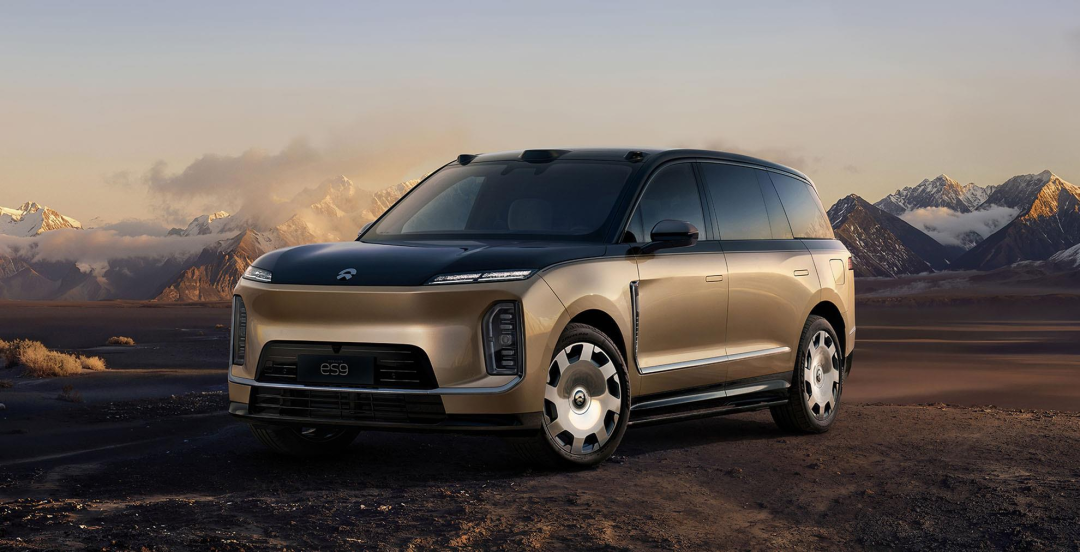
Domestic brands' foothold in the premium market relies first on comprehensive product upgrades. Shifting brand perceptions also played a crucial role. As new energy vehicles proliferate, consumer groups skew younger, altering purchasing attitudes. More buyers now prioritize actual product experience and technological sophistication over brand heritage and logos. Some domestic brands have built premium brand images through differentiated products or services. For example, NIO established a unique identity with its battery swap system and user services; Li Auto targeted family users with extended-range technology; Seres leveraged Huawei's technical backing for rapid growth. These brands have each found distinct premium pathways, gradually dismantling consumer stereotypes.
The delayed electrification transition of traditional luxury brands also created market space for domestic players. While BBA (BMW, Benz, Audi) and other luxury marques have launched electric models, they lag significantly behind Chinese brands in battery efficiency, smart cockpits, and autonomous driving capabilities. Meanwhile, luxury brands maintain premium pricing strategies from the fuel-car era, making their electric models overpriced relative to product strength. Data shows that Mercedes-Benz, BMW, and other brands saw varying sales declines in China in the first half of 2026, with most lost market share going to domestic premium brands. Consumer choices make clear that traditional luxury brands' premium value is rapidly eroding in the new energy era.
However, the 400,000-yuan-plus market remains limited in scale, with 430,000 units in the first half accounting for just 5% of the total passenger vehicle market. Premium growth cannot offset mid-to-low-end market contractions, nor does it represent the entire automotive landscape. Moreover, domestic premium brands' growth concentrates among a few leading firms; most brands still struggle to enter the premium segment, with internal differentiation equally pronounced.
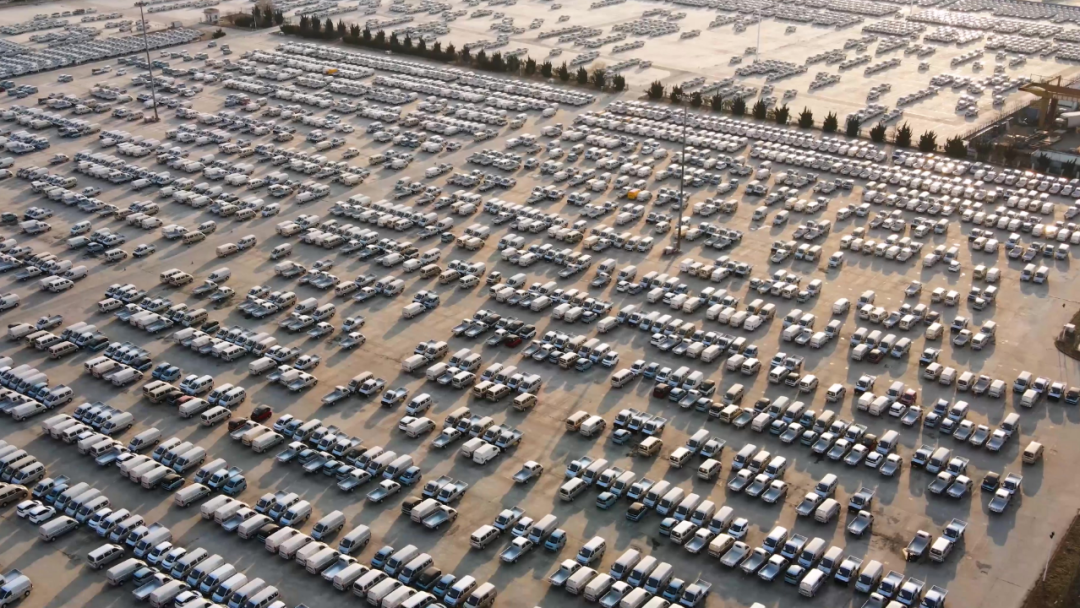
Overall, the polarization of China's automotive market in the first half of 2026 resulted from policy adjustments, evolving consumer demands, and industrial technological upgrades. The commuter market's contraction indicates that extreme low-cost product models can no longer meet current regulatory and consumer needs, signaling an end to the industry's early wild growth phase. The premium market's growth reflects how Chinese automotive brands' technological accumulations in electrification and intelligence are translating into market competitiveness.
This polarized landscape is unlikely to shift shortly. Market resources will further concentrate toward leading firms, while brands lacking technological depth and brand foundations will face sustained pressure. Domestic brands capable of truly establishing themselves in the premium market will remain limited to a few top players. For automakers, recognizing these structural changes and identifying their market positioning and technological paths holds more practical significance than blindly pursuing sales volume.
Layout 丨 Yang Shuo Image sources: Qianku.com, NIO
-
![]()
Proposed to Raise 955 Million Yuan through Private Placement! Huicheng Vacuum Boosts Localization of Ultra-Precision Optical Coating Equipment
-
![]()
Cash Flow Soars 13-Fold! What Major Strategic Move is Wuhan Five Square Optoelectronics Planning?
-
![]()
Leaked Design of vivo X500: Reverts to Circular Camera Module in Top-Left Corner, Pays Homage to Classic X90 Aesthetic
-
![]()
DeepSeek Shows Signs of Foraying into Code Agents, Launches WeChat Official Account Focused on Harness
-
![]()
Auto Companies Deny Claims That ‘Cooperation with Huawei Is Non-Essential’, as Huawei Transforms into a ‘Public Platform’
-
![]()
Starship to Independently 'Return to the Launch Tower': SpaceX's Ambitions Extend Beyond Rocket Building to Dominating Space Transportation
-
![]()
Starship Set to Independently 'Return to the Launch Tower': SpaceX is Revolutionizing Space Transportation, Not Just Building Rockets
-
![]()
Anthropic and OpenAI Face Off Against Deepseek