Can Leapmotor Sustain Its Leadership with a Low-Price Strategy?
 08/13 2026
 543
543
Automobiles, ranking second only to real estate in major consumer expenditures, serve as both an extension of personal identity and a symbol of technological prowess. In the automotive industry, being perceived as "cheap" has never been a viable long-term strategy.
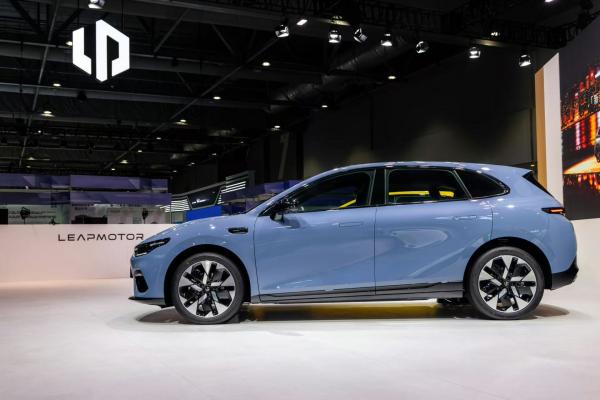
On August 12, Leapmotor unleashed a pricing bombshell.
The A05 was officially launched with a starting price of just RMB 63,900. At this price point, it might seem like an oversized "low-speed electric vehicle," yet it comes equipped with LiDAR, a Qualcomm 8650 chip, an 8295 cockpit system, a CLTC range of 510 kilometers, 16-minute 30%-80% charging, 43 advanced driver-assistance features, and an 88.4% interior space utilization rate—specs that would have led consumers to assume it was a RMB 150,000 model just three years ago.
Yet Leapmotor is offering it for RMB 63,900.
The news sparked an immediate uproar on social media. "How can others survive?" one comment asked. "Competitors are holding emergency meetings to revise their PPTs overnight," another remarked. "Is Leapmotor trying to drag NEV prices below RMB 50,000?" The comments flooded in.
This isn't Leapmotor's first market disruption. From relative obscurity in 2024 to its first full-year profit in 2025, and then to global deliveries of 110,000 units in the first quarter of 2026—with overseas sales surging 442% year-on-year—Leapmotor has carved out a niche in the fiercely competitive NEV market using a Uniqlo-inspired model of "low price, high specs."
However, behind the accolades and applause, a troubling signal is emerging: In the first quarter of 2026, Leapmotor's gross profit margin plummeted to 9.4%, a sharp 5.5 percentage point drop from 14.9% a year earlier. Net profit attributable to the parent company fell by RMB 390 million, ending three consecutive quarters of profitability. The average selling price per vehicle dropped to RMB 98,000, a near-two-year low.
Capital markets have long been skeptical of Leapmotor's low-price strategy. After the A05's launch, its stock performance remained lackluster, reflecting its true state once the initial hype faded.
High sales, but even higher losses. The "cost-effectiveness formula" that once made Leapmotor proud now appears to be reaching its limits.
To understand Leapmotor's journey, we must revisit the era when "new automotive forces" were synonymous with "bottomless money-burning."
While NIO, Li Auto, and XPeng competed in the premium market above RMB 300,000, Leapmotor chose a different path—targeting the lower end of the market. Founder Zhu Jiangming, with over 30 years of expertise in electronic engineering, embedded "self-research and self-manufacturing" into Leapmotor's DNA. Core components, accounting for 60% of the vehicle's cost, are self-developed and self-produced, including the three-electric systems (battery, motor, controller) and intelligent systems.
This allows Leapmotor to suppress costs to levels competitors can scarcely imagine. While others rely on suppliers for battery packs and motors, Leapmotor has achieved vertical integration from chips to electric drives. This "electronics factory mindset" gives it an edge in price wars that others lack.
In 2025, Leapmotor's full-year gross profit margin reached 14.5%, up sharply from 8.4% in 2024, with the fourth quarter hitting 15.0%. That was Leapmotor's heyday—sales neared 600,000 units, achieving full-year profitability for the first time. Its joint venture with Stellantis, "Leapmotor International," began operations, rapidly expanding overseas channels.
In 2026, Leapmotor set ambitious targets: 1 million units in annual sales and RMB 5 billion in net profit. In the first quarter, overseas sales reached 40,900 units, accounting for 37.1% of total sales, with a staggering 442% year-on-year growth. In Europe, Leapmotor registered 23,300 vehicles across 16 countries in the first quarter, up 726.5% year-on-year; in Italy, its pure EV market share reached 33.5%.
Suddenly, Leapmotor became the poster child for Chinese NEVs going global, a "dark horse" in capital markets, and synonymous with "true value" among consumers.
But behind the myth lies a shrinking profit margin.
The first-quarter 2026 financials sounded an alarm for Leapmotor's low-price strategy.
Gross profit margin stood at 9.4%, with vehicle gross margin around 7%. For every car sold, Leapmotor's gross profit may not even cover sales and administrative expenses. Net cash from operating activities was -RMB 6.61 billion in the first quarter, with a free cash flow deficit of RMB 7.4 billion.
Li Tengfei, Leapmotor's VP and CFO, explained on the earnings call that the margin decline had three main causes: a shift in product mix toward lower-priced B-series models, increased per-unit manufacturing costs due to lower capacity utilization, and reduced strategic cooperation business.
In simpler terms: To boost sales, Leapmotor sold more cheap cars, whose profits are razor-thin.
This is a classic "scale trap"—you assume higher sales will dilute costs, but when price wars reach their extreme, economies of scale are devoured by falling per-unit profits. Li admitted that Leapmotor currently loses about RMB 4,000 per vehicle.
Behind Leapmotor, raw material prices are also tightening. Prices of lithium carbonate, chips, and precious metals rose steadily in 2026. Li revealed that the company had stockpiled key raw materials last year, covering production needs for the first quarter, but this is not a sustainable solution. If raw material prices continue to rise in Q3-Q4, Leapmotor's gross margin will face significant pressure without raising terminal prices.
And Leapmotor's response? Continue cutting prices.
At RMB 63,900, the A05 is cheaper than many comparable internal combustion engine (ICE) vehicles. What next? RMB 50,000? RMB 40,000? When a LiDAR-equipped smart EV sells for roughly the price of an iPhone, we must ask: Is this a blessing of industrial progress, or the limit of cutthroat competition?
Leapmotor's overseas story sounds idyllic, but closer inspection reveals nuances.
In Q1 2026, Leapmotor sold 40,900 vehicles overseas, with explosive growth in Europe. But these sales still rely on a "good yet affordable" cost-effectiveness strategy. In Europe's RMB 150,000-200,000 price band, Leapmotor fills a gap left by local automakers in affordable EVs.
This echoes Japan's cars in the 1980s and Korea's in the 1990s, which also broke into Europe and the United States markets through cost-effectiveness. However, Toyota spent three decades turning "lean production" into a global standard, while Hyundai-Kia used design and quality to achieve brand upscaling. Both escaped the low-price quagmire and built brand premiums.
What about Leapmotor? Its European success owes much to Stellantis' channel support. Leveraging Stellantis' global network, Leapmotor established nearly 1,000 sales and service outlets in over 40 countries. In Spain, it plans local production via Stellantis' factories to bypass EU anti-subsidy tariffs of up to 37.6% on Chinese EVs.
This is indeed a clever overseas strategy. But the question remains: When European consumers walk into a Stellantis showroom, are they buying the "Leapmotor" brand or just "that cheap Chinese EV in Stellantis' channel"?
Contrast this with true overseas benchmarks: BYD sells its Blade Battery and DM-i technology in Europe; Geely relies on Volvo and Zeekr's brand portfolio; XPeng bets on intelligent driving; Chery has built a complete local R&D and manufacturing system overseas. Their core competitiveness lies in technology, brand, and product strength—not just price.
Leapmotor's overseas success currently reflects more "channel success" and "price success." If Stellantis' cooperation sours or EU tariffs tighten further, where is Leapmotor's brand moat?
On the Hong Kong Stock Exchange, Leapmotor's stock trend reveals capital markets' true attitude.
Despite record sales, its stock price hasn't surged accordingly. Investors cheer sales but also calculate its thinning profit margins.
The RMB 390 million loss in Q1 2026 makes the full-year RMB 5 billion net profit target seem unreachable. By Li's estimate, Q1 completed 11% of the sales target, requiring ~640,000 deliveries in H2 to hit 1 million units; for profit, it needs to bridge a ~RMB 5.4 billion gap to reach RMB 5 billion.
Caitong Securities noted in a report that Leapmotor faced overall operating pressure in Q1 but met expectations. Affected by weak industry demand in Q1, sales growth slowed, and the product mix shifted downward structurally, with C-series sales falling to 45.1% of the total, hurting both gross margin and ASP.
Guojin Securities attributed the Q1 margin decline to shifts in the vehicle product mix, insufficient scale effects, and low capacity utilization.
Investors understand that Leapmotor is now trading profit for scale, short-term losses for long-term space. This logic works when capital is abundant and the industry is expanding rapidly. But as the industry enters the "NEV 2.0 era"—with penetration exceeding 50%, growth slowing, and competition shifting from incremental to stock—can this scale-only logic hold?
An anonymous Hong Kong-listed fund manager told me: "Leapmotor's issue isn't whether it can sell cars, but whether it can make money. It's bleeding with every car sold. If price wars continue for two more years, how long can its RMB 30.6 billion cash reserves last? RMB 7.4 billion burned in Q1 alone."
This is no exaggeration. In January-February 2026, China's auto industry profit margin was just 2.9%, well below the 5.8% average for downstream industrial firms. When the entire industry is bleeding, Leapmotor's low-price strategy is no longer a breakthrough—it's mortgaging its future.
Let's shift our gaze from Leapmotor to the broader Chinese NEV industry.
By 2026, China's NEV penetration has surpassed 50%, shifting the market from "incremental competition" to "stock competition." The key competitive factors are no longer "who's cheaper" but "who has stronger technological barriers," "whose brand is more valuable," and "who can win the second half of intelligence."
BYD has its Blade Battery and full-industry-chain vertical integration; Huawei offers intelligent driving and ecosystem empowerment; Xiaomi leverages traffic and brand momentum; Li Auto excels in precise product definition and family-user mindshare; XPeng goes all-in on pure-vision intelligent driving; NIO builds moats with battery swapping and services.
What does Leapmotor have? Strong self-research capabilities and ruthless cost control, but these were core competitiveness in the "1.0 era"—now just entry tickets for the "2.0 era."
More critically, Leapmotor's brand image is being solidified as "cheap." With the A05 at RMB 63,900, the B-series as the sales mainstay, and the average selling price down to RMB 98,000, Leapmotor is becoming synonymous with "affordable cars" in consumers' minds. For a brand aiming for long-term growth, this is an invisible ceiling.
Li revealed that Leapmotor is planning a second brand priced above RMB 300,000, expected to launch in H2 2027. Meanwhile, its flagship MPV D99 will start presales in June, and the D19 model is pinned with high hopes to stabilize monthly sales at 10,000 units.
Whether these premium moves succeed will determine if Leapmotor can escape the "low-price trap." But the path to brand upscaling is never easy. Just look at Wuling Hongguang's struggles to elevate its "Silver Label" series—once consumer perceptions form, changing them is incredibly difficult.
Some call Leapmotor China's automotive Uniqlo—using extreme cost-effectiveness to let ordinary people enjoy technological progress. The metaphor seems apt at first, but selling clothes and selling cars follow two different logics.
Uniqlo succeeds globally by offering "fuss-free daily consumption choices." Cars are different. They are major purchases second only to real estate, extensions of identity, and symbols of technological prowess. In the auto industry, "cheap" has never been a sustainable label.
Moreover, Uniqlo's profits come from extreme supply chain management and scale effects, while Leapmotor's profits are being eroded.
Leapmotor once shone brightly. In just a few years, it grew from an obscure second-tier new force to an industry dark horse with 70,000 monthly sales and rapid overseas expansion. It proved that "Made in China" can suppress smart EV costs to world-shocking levels.
But that glory belongs to the past. In the NEV 2.0 era, China's auto industry needs brands, technology, innovation, and global operational capabilities—not endless price competition. Chery, Geely, BYD, and XPeng have proven with overseas success that Chinese cars can win global respect through product strength, not just "cheap."
Low prices can win temporary gains, but not lasting success. Leapmotor's next chapter—whether it can continue to lead—depends not on price tags but on whether it can tell a new story about brand, technology, and the future.
After all, no great company in automotive history has ever been enshrined in history for being "the cheapest."
-
Hot Topic | SpaceX Partners with NVIDIA AI Architecture, Paving the Way for New Growth in Space Computing
-
Bilibili's Capital Narrative: Meeting Market Expectations but Losing Its Own Identity
-
![]()
China Mobile Reports 538 Billion Yuan in Revenue for First Half of the Year, with 5G Subscribers Surpassing 687 Million
-
![]()
Domestic Wi-Fi Chips Usher in Prime Era
-
![]()
HONOR Unveils Robot Phone, Yet AI-Driven Smartphones Still Await Market Breakthrough
-
![]()
Jiemei Technology Splurges 915 Million Yuan, Making a Bold Move into Optical Ultra-Precision Equipment
-
![]()
Intensifying Investment in Advanced Coating Equipment: Landun Optoelectronics Aims to Secure Majority Stake in Lanchuang Technology
-
![]()
Honor’s Ambition Demands More Than a Gimbal-Equipped Phone