Nie Qiang Falls Short in Reviving Hongqi’s New Energy Dreams
 08/14 2026
 347
347
Introduction
FAW has reappointed its most market-savvy executive to Hongqi as the iconic national car brand embarks on a transformative new phase.
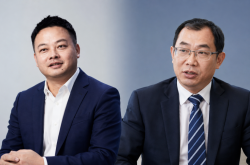
FAW recently announced a strategic move: reassigning Nie Qiang to Hongqi to oversee its sales operations.
While this may appear to be just another routine personnel shift to outsiders, a closer look at Hongqi’s current trajectory reveals its significance.
Born in 1979, Nie Qiang brings over two decades of expertise in marketing and management, having worked across various FAW divisions, including FAW Jiefang, FAW-Volkswagen, Hongqi, and FAW Toyota. His experience spans independent, joint-venture, and luxury brands. FAW’s rationale is to “harness internal marketing talent to propel Hongqi’s high-quality development.” In simpler terms, Hongqi needs a leader who deeply understands the market and consumer behavior to steer its course.
Has Hongqi been on a stable growth path in recent years? Yes, but with caveats.
By 2025, Hongqi sold 460,000 vehicles, marking an 11.7% year-on-year increase and its eighth consecutive year of growth. With a cumulative user base exceeding 2 million, it became the first Chinese luxury brand to achieve this milestone. However, this stability masks a weaker presence in the new energy vehicle (NEV) sector. Fuel vehicles still dominate sales, and while NEV models exist, they lag behind competitors like NIO, Li Auto, Seres, Zeekr, Xiaomi, and Voyah in sales volume, brand recognition, and market impact.
This is precisely why Nie Qiang was chosen. He is no stranger to Hongqi and understands its internal workings. His experience in FAW-Volkswagen’s joint-venture framework and full-chain marketing at FAW Toyota provides Hongqi with the mature expertise in system strength, dealer management, and user operations that it urgently needs.
Hongqi’s Strengths—and the Need for New Strategies
Let’s objectively evaluate Hongqi’s assets.
Its product lineup is diverse. From the H5 to the H9, and from the HS3 to the HS7, its fuel-powered sedans and SUVs span the mainstream price range of RMB 150,000 to RMB 500,000, forming Hongqi’s core market. On the NEV front, models like the E-HS9, EH7, and E-QM5 cater to various segments, from high-end pure electric SUVs to the mobility market.
The E-HS9, priced above RMB 500,000, holds its own in the premium pure electric SUV segment. The EH7 targets the mainstream electric sedan market, while the E-QM5 serves the mobility sector. However, except for the E-QM5, public awareness of the other models remains low. It’s not that Hongqi lacks technology—FAW has accumulated expertise in electrification and intelligent driving—but converting this into market recognition and sales requires a sharper strategy.
Brand momentum is Hongqi’s greatest asset. No other Chinese automotive brand can match the national-level brand equity of “Hongqi.” This is something that NIO, Li Auto, and Zeekr cannot replicate with money alone.
The challenge lies in translating this momentum into a new era of luxury perception. Hongqi’s brand identity as a “national car”—solemn, grand, and historically significant—was an advantage in the fuel vehicle era. But in the NEV era, luxury is being redefined by intelligence, user experience, and community culture. Hongqi must engage a new generation of luxury consumers while preserving its brand ethos.
System capability is another trump card. FAW’s R&D, manufacturing, and supply chain are well-established. Hongqi is not a startup but a mature brand with platforms and technological accumulations. With 2 million cumulative users, the potential for replacements and additional purchases is significant—a figure new competitors are still striving to reach.
However, the challenges are equally clear.
First, the pace of NEV transition. Hongqi’s electrification布局 (layout) is not absent, but it lacks a true “blockbuster” model. In the RMB 200,000 to RMB 500,000 price range, where luxury NEV penetration is highest, NIO has the ES series, Li Auto the L series, Seres the M series, and Zeekr the 9X/8X. Nearly every new luxury brand has a flagship volume model. Hongqi needs a standout product to establish its NEV identity.
Second, brand rejuvenation. Hongqi’s image leans toward maturity and business, while NEV luxury consumers are getting younger. How to make younger consumers feel that Hongqi is “relevant to me” is a problem the brand must solve.
Third, channel and service upgrades. The annual sales volume of 460,000 units corresponds to a vast dealer network. Amid ongoing price wars, balancing dealer profits and terminal pricing is a dilemma for all traditional automakers. Nie Qiang’s channel management experience in joint-venture systems will be invaluable here.
Nie Qiang’s Mission: From National Car to Mass-Market Luxury NEV Brand
Nie Qiang’s new role, as assigned by FAW, is ostensibly about managing Hongqi’s sales and channels. But the underlying challenge is far greater: Hongqi must prove it can be not just a national car brand but also a luxury NEV brand for the masses.
In the NEV luxury market, consumer decision-making logic has shifted. They no longer just look at the logo; they consider the product, experience, service, and whether the brand understands them. Hongqi’s historical assets will not automatically translate into competitiveness in the NEV era. It needs new products and strategies to win consumers anew.
This is precisely Nie Qiang’s strength. During his tenure at FAW Toyota, he navigated the fiercest competition cycle for joint-venture brands in China and gained practical experience in channel expansion, user operations, and price management. The mature methodologies of joint-venture brands in system strength, dealer management, and user operations are precisely what Hongqi lacks. Hongqi has brand heritage and historical assets, but its approach to “converting brand momentum into daily sales” has been conservative in recent years.
The Good News: Hongqi Is Already Taking Action
Its NEV product lineup is expanding rapidly, with more new models to follow the E-HS9 and EH7. Channels are upgrading, transitioning from traditional 4S models to more diversified touchpoints. Brand communication is exploring new avenues—from state events to sports marketing—broadening Hongqi’s reach. Nie Qiang’s addition is the critical missing piece in this transformation plan: the hands that will convert product strength into sales and brand momentum into user reputation.
460,000 units are not the finish line, nor are 2 million users. Hongqi’s true test is to evolve from “China’s No. 1 luxury automotive brand” to “China’s No. 1 luxury NEV brand.” The distance between these two titles is the path that Nie Qiang and the Hongqi team must now traverse.
It is foreseeable that this journey will be far from smooth.
After all, whether it’s Voyah, Dongfeng Motor Corporation’s (also known as Second Automobile Works) NEV luxury brand, or Avatr, Changan Automobile’s newly elevated luxury brand, their transformations have all involved sweeping organizational restructuring—and leadership changes are just a small part of it.
Perhaps Nie Qiang and his peers have strong reform resolve, but when faced with organizational constraints, even their best efforts may fall short.
-
![]()
Honda's Shift from In-House R&D: A Strategic Retreat to Realism
-
![]()
Head of Software R&D at Li Auto’s Chip Division Resigns
-
![]()
Tencent's Revived Aspirations: Yet the Market Remains Unconvinced
-
Nie Qiang Falls Short in Reviving Hongqi’s New Energy Dreams
-
![]()
Pix Exclusive丨EXEED Adjusts Reporting Line Again, Chery's 'Overseas Leader' Zhang Guibing Takes Over from Li Xueyong
-
![]()
I never expected Doubao to change the game in this way.
-
![]()
Pinduoduo Excels in Marketing! Is ‘Fastest Arrival by Tomorrow’ Just a Play on Words?
-
![]()
Integrating DJI Pocket Tech into a Phone: Who Is Honor’s Target Audience?