Honda's Shift from In-House R&D: A Strategic Retreat to Realism
 08/14 2026
 567
567
Honda's decision to abandon its exclusive focus on in-house R&D marks just the initial step in a broader reform initiative.
A recent announcement has sent shockwaves through the Japanese automotive industry and left Honda enthusiasts worldwide disheartened, as the once-relentless Honda has finally bowed to reality.
Reports suggest that Honda Motor will entrust the end-to-end development of its next-generation vehicle platform to India's Tata Technologies. This move represents a historic moment for Honda, founded in 1948, as it marks the first time a core technology component, such as the vehicle platform, has been outsourced to an external engineering firm for primary development. Furthermore, this collaboration is structured as an "outsourcing" agreement rather than a "joint development" venture, with Honda's role confined to setting technical standards and conducting safety reviews.
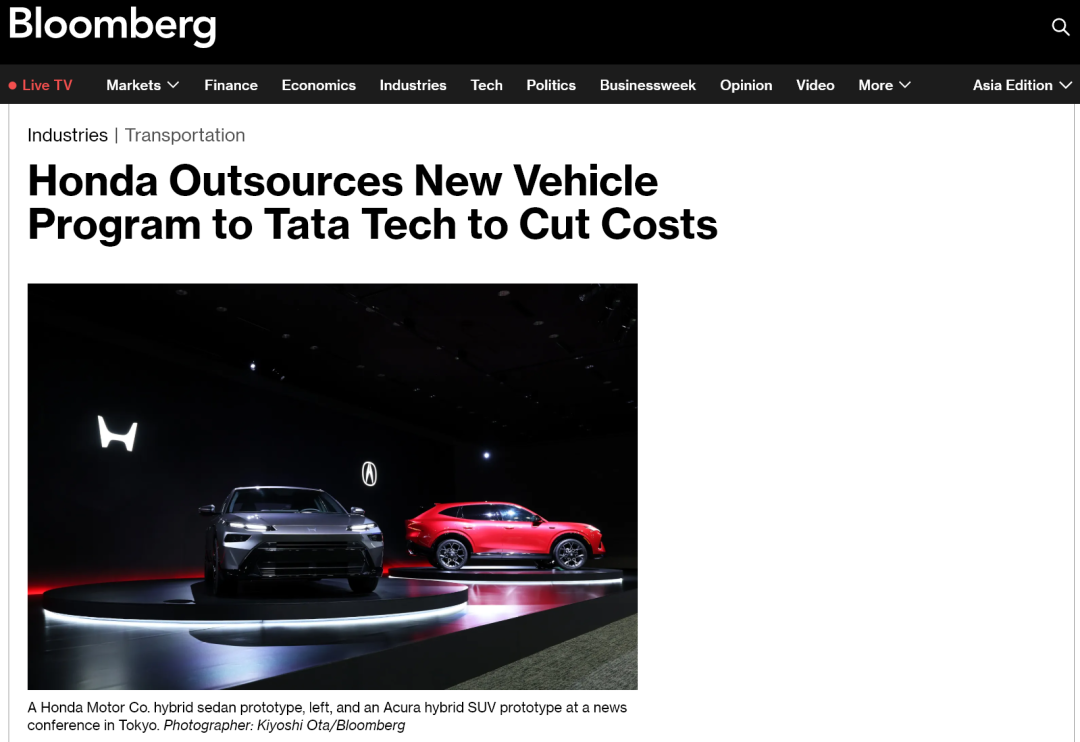
The vehicle platform serves as the fundamental framework for automakers, dictating the basic proportions, manufacturing logic, and derivative capabilities of vehicles. It forms the cornerstone of an entire model family, and nearly all major automakers consider in-house development of vehicle platforms as a core technological capability. Honda is no exception. Over the past 78 years, Honda has transformed from a motorcycle modification shop into a global automotive powerhouse, relying on its spirit of "technical research."
Outsourcing this core technology now represents a dramatic shift for Honda, but to external observers, it appears more as a reluctant capitulation to reality.
From Radicalism to Retreat
In terms of electrification, Honda was once the most radical among Japanese brands. In 2021, while Toyota was still advocating for hydrogen energy and Nissan was adopting a wait-and-see approach, Honda took the lead in announcing that it would "completely halt sales of fuel-powered vehicles by 2040," becoming the first Japanese automaker to make such a declaration.
Subsequently, Honda outlined its most ambitious electrification blueprint to date, planning to invest 10 trillion yen by 2030, launch 30 pure electric models with an annual production capacity of 2 million vehicles, and invest over $11 billion in Canada to construct an electric vehicle factory.
However, five years on, despite cumulative electrification investments exceeding $11 billion, Honda has fallen short of its once-lofty goals. The heavily funded dedicated pure electric platform, the 0 Series, has not only underperformed but has also pushed Honda to the brink.
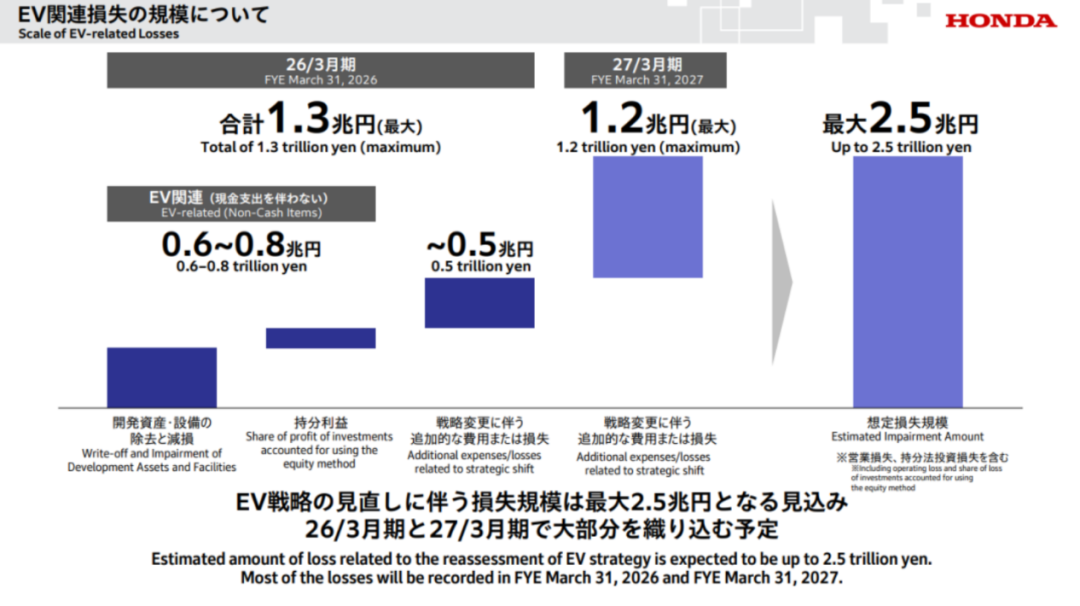
The fiscal year 2025 financial report underscores the severity of Honda's internal issues, with a net loss of 423.9 billion yen (approximately RMB 18.2 billion), marking Honda's first annual loss in nearly 70 years since going public.
Losses related to the electric vehicle business amounted to a staggering 1.58 trillion yen, becoming the primary driver behind the overall deficit.
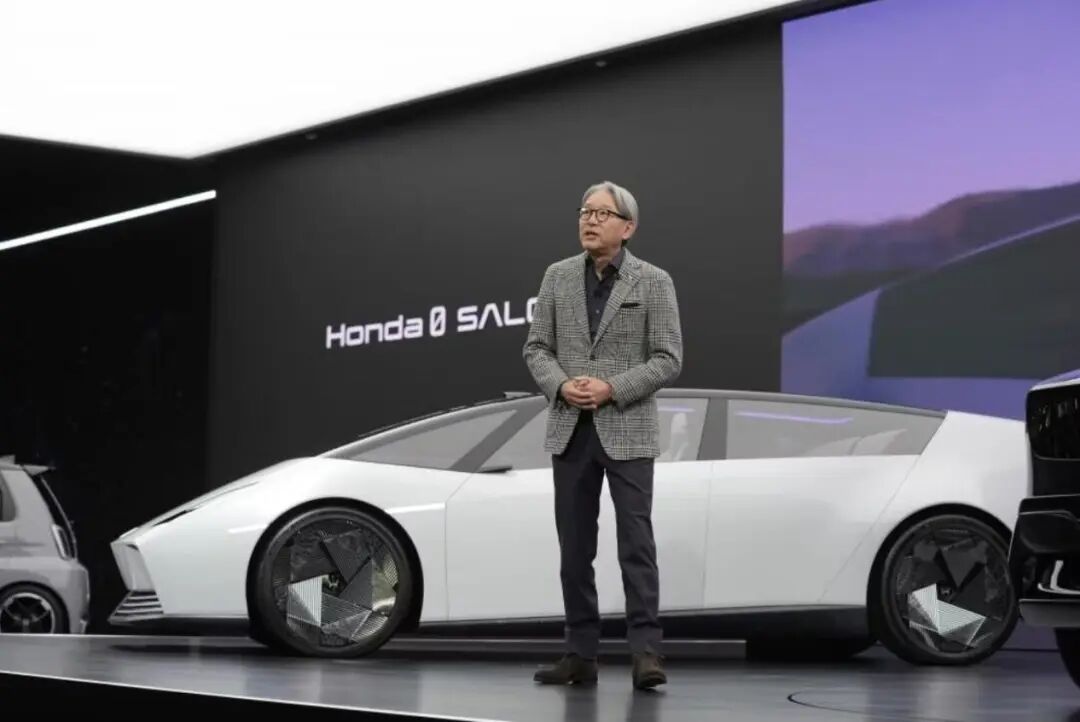
Faced with such a dire situation, Honda President Toshihiro Mibe had to publicly acknowledge that "the previously proposed goal of completely phasing out fuel-powered vehicles by 2040 is unrealistic, and the company has canceled this target."
This was followed by a comprehensive halt to electrification efforts, including canceling the development of the 0 Series pure electric models in North America, freezing the $10 billion-plus battery factory in Canada, suspending the high-end pure electric project in collaboration with Sony, and indefinitely pausing the development plan for pure electric vans in Europe.
This sudden halt has also led to a significant decline in sales. According to statistics, Honda's global pure electric vehicle sales in the first half of this year were only 193,000 units, with a sharp drop in year-on-year growth rate.
Of course, Honda has not remained idle. However, the R&D system established over 78 years has hindered Honda's ability to innovate. From a broader perspective, Honda's difficulty in breaking free from the constraints of the Japanese industrial chain makes success unlikely.
Facing the global market, Honda has set ambitious strategic goals. In the world's largest new energy market, Honda still relied on its successful experience from the past two decades, attempting to achieve new success with a model of "led by Japanese headquarters and introduced by joint ventures."
However, the e:N series models failed to gain traction in the Chinese market. From project initiation to product launch, three years passed, and Honda only managed to produce a product with no advantages in areas such as intelligent cockpits, assisted driving, or OTA upgrades. Moreover, the pricing remained as "premium" as that of joint ventures, refusing to budge.
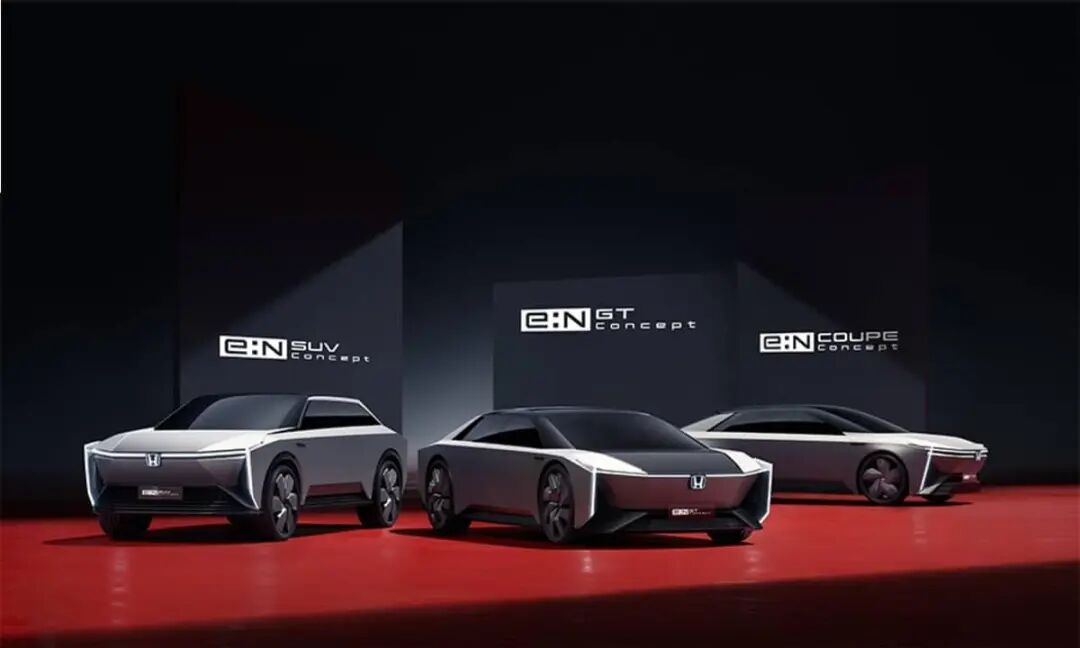
The outcome of such a product in the world's most competitive market was predictable. Cumulative sales of the P7 and S7 in the first five months barely exceeded a thousand units each, far below market expectations.
Regarding the failure in electrification, Honda realized its weakness—insufficient intelligence—as early as 2022. Therefore, it collaborated with Sony, the most entertainment-savvy company in Japan, to jointly develop the high-end pure electric model Afeela.
The Afeela series of electric vehicles made their debut at CES 2023, with production scheduled to start in August 2025 and pre-sales officially beginning at CES 2026, priced at $89,900.
However, on the eve of mass production, on March 25, 2026, both parties jointly announced the termination of the development and launch plans for all Afeela series electric vehicles. The pre-production phase of the AFEELA 1 was completely halted, and customers who had placed pre-orders received full refunds.
It can be said that these two attempts at electrification represent the maximum effort that the proud Honda could muster. However, faced with real-world difficulties and shareholder criticism, Honda had to cut its losses, abandon in-house R&D, and turn to outsourcing.
Industrial Dilemma
Honda's decision to outsource its transformation is quite straightforward. According to estimates, outsourcing to Tata Technologies could reduce Honda's vehicle platform development costs by 40%, shorten the development cycle by 30%, and reduce the overall workload by 50%.
Such a plan is the most reassuring for Honda, which is currently in a loss-making state, and represents the best way to increase revenue and reduce expenses.
Of course, this compelled approach of seeking external solutions is also a helpless move due to the current state of the Japanese auto industry. Ultimately, the "craftsmanship spirit" has succumbed to reality.
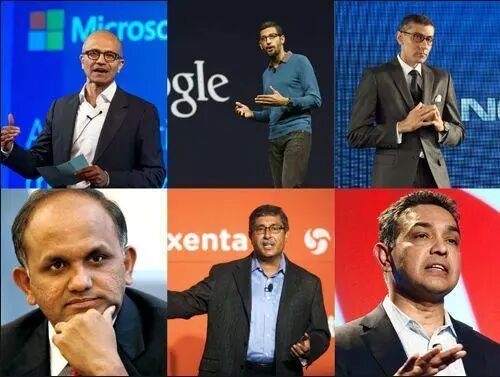
Over the past 80 years, the Japanese auto industry has grown from scratch and formed a unique industrial culture and supply chain structure. This structure was the source of its competitiveness in the era of fuel-powered vehicles but has become a significant obstacle in the transition to electrification.
The Japanese auto industry has formed a closed interest community centered around cross-shareholding. For example, Toyota-affiliated companies have formed tight alliances through cross-shareholding. As of the end of March 2026, Denso holds a 3.45% stake in Toyota, and Aisin holds a 1.33% stake in Toyota. This closed supply chain system enables automakers and parts suppliers to achieve maximum real-time coordination, implementing the Just-In-Time (JIT) production system and achieving cost leadership.
However, when change is needed, this system becomes the greatest resistance. For instance, in the early stages of electric vehicles, Japan simultaneously had the highest-selling cars and the most technologically advanced power battery companies. However, the closed supply chain kept the two separated for a long time, resulting in automakers failing to seize the advantage of the power battery industry chain.
At the same time, over the past two decades, Japanese automakers have established deep barriers in the global market with their hybrid technology, with hybrid vehicles accounting for a stable share of over 30% in the Japanese domestic market. However, this success has precisely formed a "comfort zone" of path dependency. When the world's two largest markets, China and the United States, are fully committed to pure electric vehicles with policies and capital, Japanese automakers are still hesitant about the pure electric route.
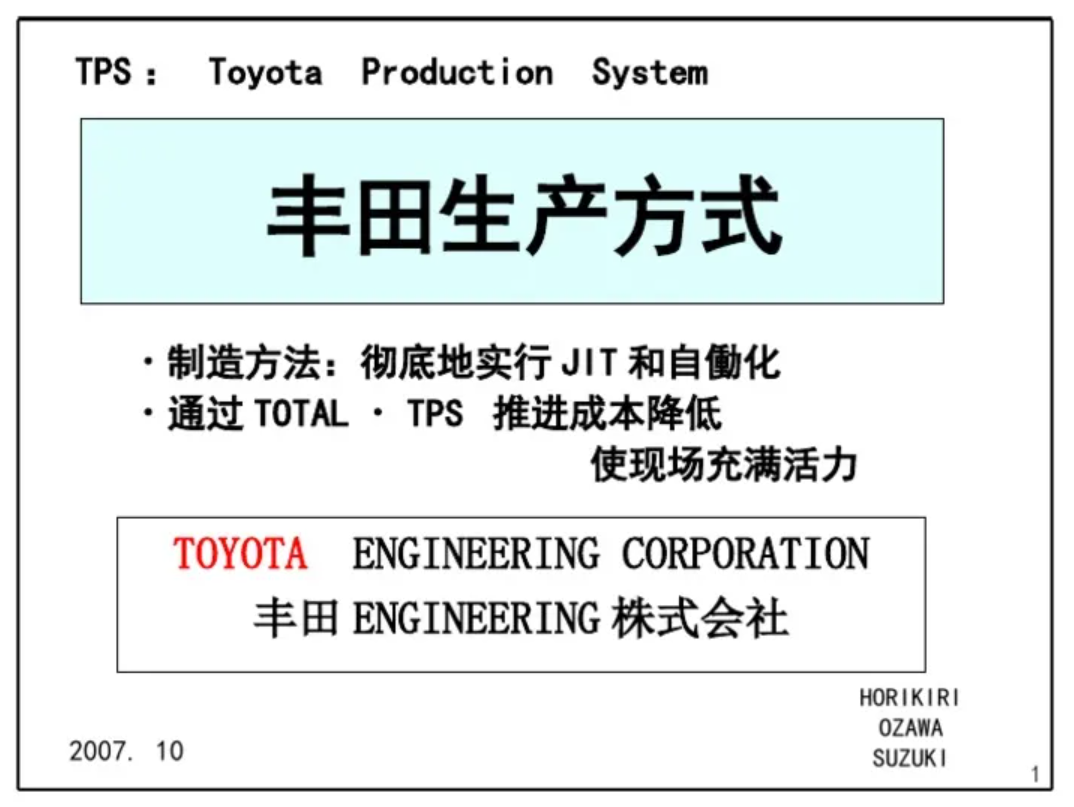
This has resulted in Japan losing its leading position in three-electric technologies in the early stages of electrification and missing out on a wave of electrification.
However, such failures have not awakened Japanese automakers to increase R&D spending to catch up. Instead, they have adopted a resistant attitude towards electrification and intelligence, leading to the gradual erosion of their once-leading advantages.
For example, in the field of autonomous driving, Toyota holds over 1,400 patents but has significant shortcomings in practical applications. Toyota's Toyota Pilot intelligent driving assistance system only supports Level 2 assisted driving, while Level 3/Level 4 autonomous driving relies on collaboration with Chinese companies.
This is the inevitable result of a long-term lack of R&D investment. In fiscal year 2026, the total R&D investment of Japan's seven major automakers—Toyota, Honda, Nissan, Suzuki, Mazda, Subaru, and Mitsubishi—was 3.94 trillion yen, accounting for only 3.92% of their sales. In comparison, China's BYD and the United States' Tesla have R&D investment ratios exceeding 5% and 8.6%, respectively. This investment gap directly leads to a generational difference in software capabilities.
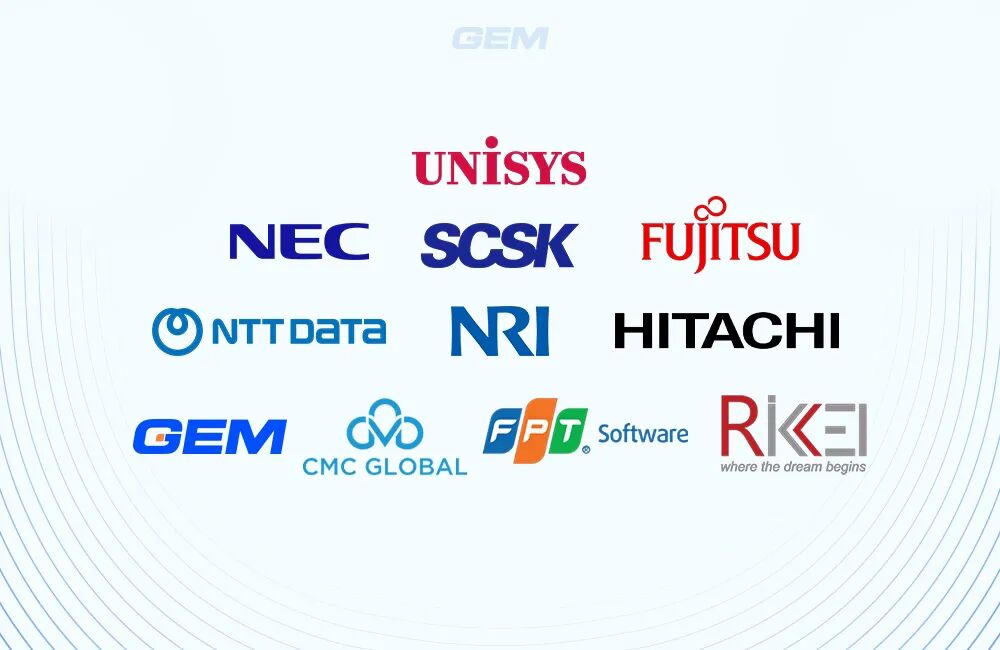
The lack of funding has resulted in a shortage of relevant R&D personnel. According to estimates by Japan's Ministry of Economy, Trade, and Industry, there will be a shortage of approximately 220,000 IT engineers by the end of 2026, with in-vehicle software engineers being extremely scarce and difficult to bridge the gap with China and the United States in a short time.
For example, in Japan's re-imported vehicles, software adaptation cannot even be achieved, and they can only be sold in Japan with bugs. In contrast, BYD, which has entered the Japanese market, has quickly completed the localization adaptation of functions such as intelligent cockpits and vehicle connectivity.
Faced with shortcomings in software capabilities, Honda, Nissan, and Mitsubishi have entered final negotiations on standardizing the Electronic Control Unit (ECU) for their next-generation models. However, such temporary collaborations, relying solely on ECUs, are unlikely to achieve a turnaround in the competition for software-defined vehicles.
Honda President Toshihiro Mibe, after visiting a large Chinese auto parts factory in Shanghai earlier this year, lamented, "China has entered the smartphone era, while we are still using flip phones."
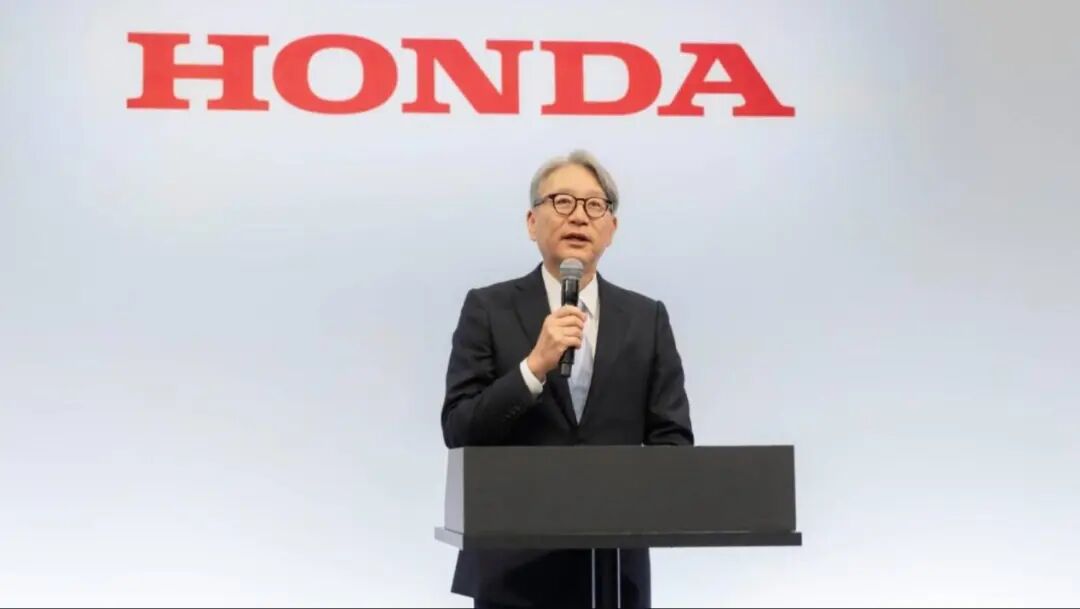
Under the influence of various factors, Honda ultimately chose India's Tata Technologies. From the perspective of engineer numbers, it is indeed a suitable choice and provides a new idea for Japan's industrial transformation.
Outsourcing non-core businesses to reduce costs while focusing on high-end technology R&D and innovation. Enhancing software capabilities will be the key to the coordinated development of electrification and intelligence in the Japanese auto industry, requiring efforts such as talent cultivation and collaborative development to bridge the shortcomings.
As a Japanese auto industry analyst said, "Japanese automakers need to let go of past pride and arrogance and learn to integrate resources globally to maintain competitiveness in the new era of parallel electrification and intelligence."
This transformation process not only involves the choice of technological routes but also represents a comprehensive reshaping of Japan's auto industry culture, R&D model, and policy system.
For Honda, the current bet is all on outsourcing, which can only succeed. However, judging by the reputation of Indian engineers, Honda remains in a precarious position.
Note: The images are sourced from the internet. If there is any infringement, please contact us for deletion.
-END-

-
![]()
Breaking the Mold: LG, Haier, and Hisense Redefine Online and Offline Home Appliance Sales Strategies in India
-
Lenovo's AI Goldmine: How Long Can Yang Yuanqing Keep 'Feasting'?
-
![]()
Samsung Galaxy Z Fold 8 Review: Ultra-Slim Dual Design Shines, but Telephoto Absence is a Bummer
-
![]()
Dongfeng VOYAH’s New Car Makes a Splash, Targeting More Than Just the 30s and 40s Crowd
-
![]()
Annual Salary of 700 Million Fails to Retain Him! AI Genius Jiahui Yu Departs Meta to Launch His Own Startup
-
Qianwen Seeks to Move Beyond Its 'Alibaba Identity'
-
![]()
How Can We Comprehensively Resolve Ctrip's Monopoly Issue?
-
![]()
From Computing Power Supply-Demand Dynamics to Capital Integration: Jin Jing New Energy Embarks on a New Business Phase