How Are Emerging Automakers Faring in the Second Half of the Year?
 08/17 2026
 454
454
Introduction | Lead
The gap among leading emerging automakers has widened further. In July, Leapmotor achieved a significant milestone, while Li Auto became the only top-tier automaker to continue its sales decline. As we enter the second half of 2026, is the current divergence merely a temporary fluctuation, or does it signal a broader reshaping of the competitive landscape among emerging automakers?
This article is produced by | Heyan Yueche Studio
Written by | Cai Yan
Edited by | He Zi
Full text: 2,339 characters
Reading time: 4 minutes
What Changes Have Occurred in the Emerging Automaker Camp in the Second Half of the Year?
In July, Leapmotor became the first domestic emerging automaker to surpass 100,000 monthly deliveries, with 101,200 units. HiMode Intelligent Travel held steady at the 40,000-unit mark with 45,000 deliveries. Meanwhile, XPeng delivered 38,000 units, NIO 35,900 units, Zeekr 35,800 units, Xiaomi 31,200 units, and Li Auto 30,400 units, fiercely competing within the 30,000-38,000 unit range.
Despite month-on-month declines in deliveries for XPeng and Xiaomi, and Li Auto experiencing both year-on-year and month-on-month declines, placing these performances in a broader context reveals that domestic passenger car retail sales fell 20.9% year-on-year and 8.8% month-on-month in July. In comparison, leading emerging automakers still demonstrated strong overall resilience.
In 2026, amid intensifying competition and the phase-out of subsidy policies, top emerging automakers have largely maintained their market positions. However, the gaps among leading players are becoming increasingly apparent, with brands adopting different offensive and defensive strategies. Leapmotor continues to surge ahead, while NIO, XPeng, and Zeekr sustain growth. Li Auto, however, remains under pressure.
Leapmotor Strives for Sustained Leadership, HiMode Intelligent Travel Focuses on Delivery
In July, Leapmotor achieved a historic milestone with 100,000 monthly deliveries, marking a 102% year-on-year increase. Throughout the year, Leapmotor has consistently and forcefully addressed doubts about its ability to surge again.
After expanding into the premium and personalized segments in the first half of 2026, Leapmotor's greatest advantage is no longer just "high specs at low prices" but a systemic advantage derived from product reputation, product matrix, supply chain efficiency, sales scale, and overseas markets. In short, while other emerging automakers are still replicating success paths around hit models, Leapmotor has already gained the advantages of a scaled automaker, with its scale flywheel driving the brand to snowball continuously.
At the product level, with Leapmotor's most aggressive new models, the A05 and D99, set to launch and be delivered in the second half of 2026, combined with the reputation built by its ten models in their respective market segments, Leapmotor is highly likely to maintain a steep lead in the second half of the year.
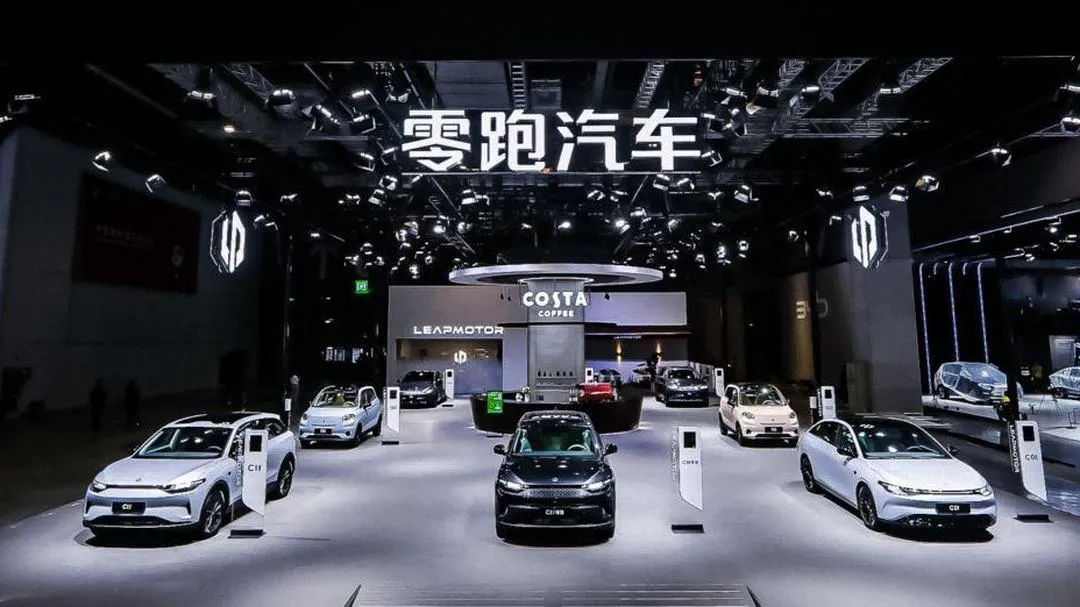
Of course, for Leapmotor, which has now established a scale advantage, the next question is how to sustain its market offensive and make monthly sales of 100,000 units the norm rather than a one-time surge. After all, the next challenge after scale validation is the sustainability of profitability.
HiMode Intelligent Travel delivered 45,000 new vehicles in July, with cumulative deliveries of 286,000 units from January to July, a 13.7% year-on-year increase. Although its sales volume is still less than half of Leapmotor's, HiMode Intelligent Travel holds a higher value proposition among the top brands when considering average selling price.
This is evident from HiMode Intelligent Travel's recently launched three new models: the Zunjie V680/V800 and the Xiangjie G9, showcasing its appeal in the premium market. The top-spec Zunjie V800, the most expensive domestically produced MPV at 1.17 million yuan, received over 3,500 orders within 24 hours and 4,340 orders within 72 hours. To put this into perspective, the Zunjie S800 received 1,600 orders within 24 hours in the past, while the Toyota Alphard and Lexus LM sold only 4,556 and 1,941 units, respectively, in the first half of the year. This clearly demonstrates that HiMode Intelligent Travel's "premium label" has deeply resonated with high-net-worth consumers.
The Xiangjie G9, priced from 430,000 yuan, also achieved over 10,000 orders within 24 hours, which is no small feat. For comparison, the domestically produced flagship boxy SUV, Tank 700, sold only 7,000 units in the first half of the year, while the Dongfeng Mengshi M817 sold 5,851 units. If HiMode Intelligent Travel can convert all these orders into deliveries, it will become a leading player in another market segment.
As a collective entity that has never lacked products, buzz, or sales channels, HiMode Intelligent Travel's key to successfully advancing upward in the second half of the year lies in its delivery capabilities and balancing coordination among different brands. After all, the current sales declines in some of HiMode Intelligent Travel's brands are partly due to internal constraints caused by having multiple brands and products.
XPeng Awaits Volume Growth, NIO Advances on Three Fronts
XPeng Group delivered 38,000 new vehicles in July, a 4% year-on-year increase and a roughly 5.2% month-on-month decline. Although its current sales volume still lags 7,000 units behind HiMode Intelligent Travel, considering the brand's new model launch rhythm and narrative capabilities in the first half of the year, XPeng has significant growth potential for the second half of the year.
On one hand, this is naturally influenced by the automotive sales off-season. On the other hand, the core reason is that the transition to new models like the MONA L03, GX, and G9L requires time for production ramp-up and building model reputation.
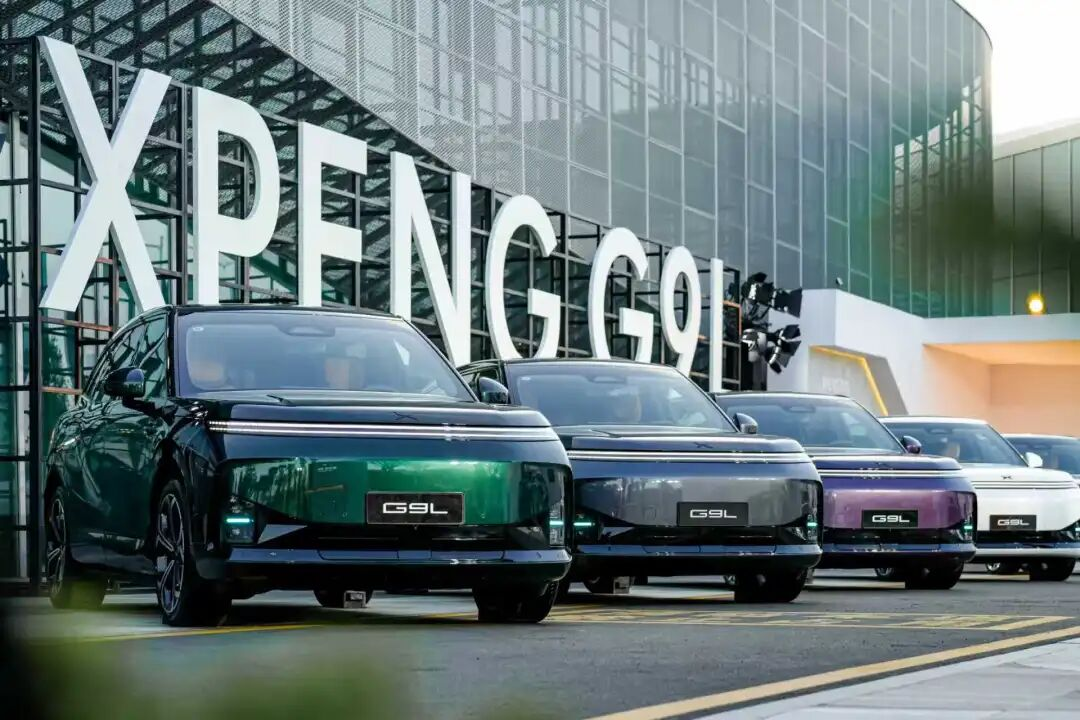
Currently, XPeng has achieved 35% of its sales target for the first seven months. Theoretically, it needs to average 64,000-72,000 units per month in the remaining five months to meet its annual target. The ability of the MONA L03 to quickly ramp up volume will be a critical variable.
It's worth mentioning that if XPeng can maintain the market enthusiasm and sales volume for the GX and G9L in the second half of the year, the brand will achieve a new round of simultaneous volume and price growth in 2026.
NIO is also among the top brands that need to defend their positions and stabilize sales. After emerging from a low in 2025, NIO lingered among "short-lived hits" in early 2026. By mid-year, NIO finally achieved progress on three fronts in July, maintaining a high year-on-year growth rate of 71% among the top emerging automakers.
Perhaps NIO is one of the brands among the top emerging automakers that has experienced the most lows. Therefore, even though its sales began to surge significantly in 2026, NIO's overall brand actions have not been as intense as those of XPeng, HiMode Intelligent Travel, or Li Auto, seemingly lacking explosive force and aggressiveness. At this stage, with the refinement of the narratives for NIO, LeDao, and Firefly, as well as clear brand positioning, NIO is poised to bring us more surprises in the second half of the year.
Stable Li Auto Also Faces Pressure
In July, Li Auto delivered 30,400 new vehicles, a 0.86% year-on-year decline and a roughly 1.4% month-on-month decrease from June. Among the top tier, Li Auto exhibited the smallest fluctuations.
However, as the former sales champion among emerging automakers and the first to turn a profit, the market expects more from Li Auto than just maintaining sales at 30,000 units. This explains why, even with minimal sales fluctuations, the internet remains pessimistic about Li Auto. Stability is also a form of pressure for Li Auto.
Additionally, in the first half of 2026, Li Auto's brand was overall in a transitional phase of retelling its brand story, with narrowing growth space for old products and new products needing time to take over. Therefore, Li Auto's actual situation in 2026 is that, on one hand, it must maintain sales and profitability within a healthy range, especially with the official launch of the Pengcheng N70/N90 in the second half of the year. On the other hand, it must withstand the growing pains of switching growth engines.
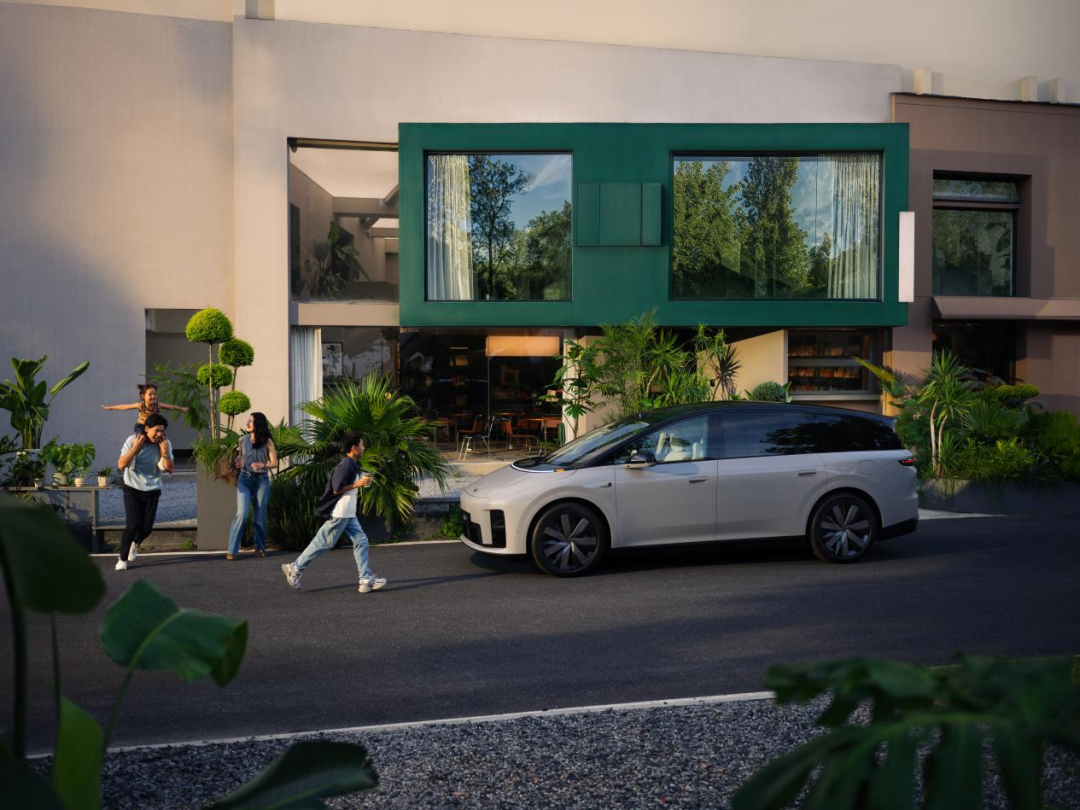
Recently, Li Auto quietly introduced an entry-level i8 model, a typical move to stabilize the market by enhancing charging and comfort experiences while removing the dual-motor all-wheel-drive system to broaden its market appeal.
It's worth mentioning that if we expand the definition of emerging automakers to include "second-generation brands from traditional automakers," such as Shenlan, Arcfox, and eπ, all are struggling to withstand market downturns. These three brands also urgently need to find hit model anchors in the new market environment.
Commentary
At the midway point, emerging automakers have bid farewell to homogeneous competition and collectively outperformed the overall automotive market. As long as emerging automaker brands have clear definitions and can be quickly recognized by consumers, their sales will not disappoint. Leapmotor, which has deeply ingrained its brand label in consumers' minds, is accelerating its scale expansion. HiMode Intelligent Travel, NIO, and others targeting the mid-to-high-end market are not only defending their positions but also competing on efficiency and marketing. Li Auto, meanwhile, needs to readjust its product mix and retell its brand story, standing at a crossroads searching for a new direction.
(This article is original to Heyan Yueche and may not be reproduced without authorization.)
-
![]()
From a 1.4 Billion Yuan Loss to an Estimated 500 Million Yuan Profit: Generative AI Paves the Way for SenseTime’s Turnaround
-
![]()
After Testing CatPaw, I See the Second Half of Meituan's AI Game
-
![]()
In the AI Era, How Much Is Doubao’s Entrance Pricing Power Worth in Terms of Commission?
-
In Line with HJ 1480 - 2026! Hikvision Launches Specialized Products for Video Surveillance Systems in Pollution Discharge Monitoring
-
![]()
The Next Corolla: How Toyota is Reinventing the 'National Car' Amid Global Automotive Industry Changes - NHK's 'Inside Toyota'
-
![]()
HONOR Robot Phone: A Revolutionary Smartphone or Just a Compelling Tale?
-
![]()
Short Dramas with Face-Swapping and Talent Show Debuts: AI Begins to 'Mass-Produce Stars'
-
![]()
Beijing Public Transport Group Launches Tender for Bus Procurement Worth 1.2 Billion Yuan