Porsche 'Steps Out of Group to Secure Carbon Credits,' Facing Fresh Electrification Challenges
 08/18 2026
 501
501
Recently, a document submitted to the European Commission unveiled a significant shift in Porsche's carbon emissions compliance approach. Porsche has officially left Volkswagen Group's carbon emissions pool, opting instead to establish a new open emissions pool in collaboration with Chinese automaker XPENG Motors. The two entities will jointly compute fleet carbon emissions for the years 2026 to 2027. Porsche's decision to "go it alone" highlights a discrepancy between its brand electrification transition timeline and regulatory mandates. 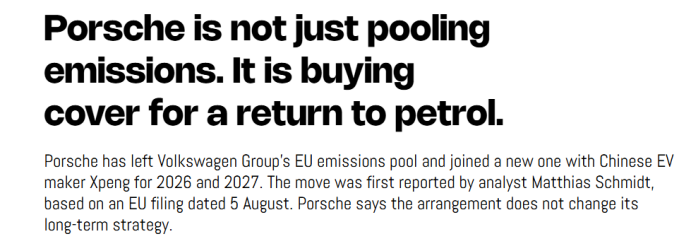
This strategic realignment comes amidst the EU's escalating automotive carbon emissions regulations in recent times. According to these regulations, starting from 2025, the average carbon emissions of newly sold passenger vehicles must be slashed to 93.6 grams per kilometer, with non-compliance resulting in fines of €95 per gram multiplied by the sales volume. However, in March of this year, the EU granted automakers a three-year assessment grace period, allowing compliance based on the average emissions from 2025 to 2027. Nevertheless, this grace period merely extends the assessment cycle without erasing the stringent emissions targets, placing automakers under immense pressure.
Yet, precisely during this grace period, Porsche's electrification momentum has faltered, significantly lagging behind market expectations. Data indicates that in the first half of 2026, Porsche's fully electric vehicle sales in Western Europe plummeted by approximately 30% year-on-year, with the proportion of fully electric models in its overall sales dwindling from nearly 40% in the same period last year to 30%. On a global scale, Porsche delivered a total of 122,306 new vehicles in the first half of the year, marking a 16.5% year-on-year decrease, with fully electric vehicle deliveries accounting for 19.4%, down from 23.5% in the same period last year. Furthermore, to stabilize its product lineup, Porsche reintroduced the gasoline-powered Macan to the market. The resurgence of these high-emission models has further inflated the average carbon emissions of its entire fleet. 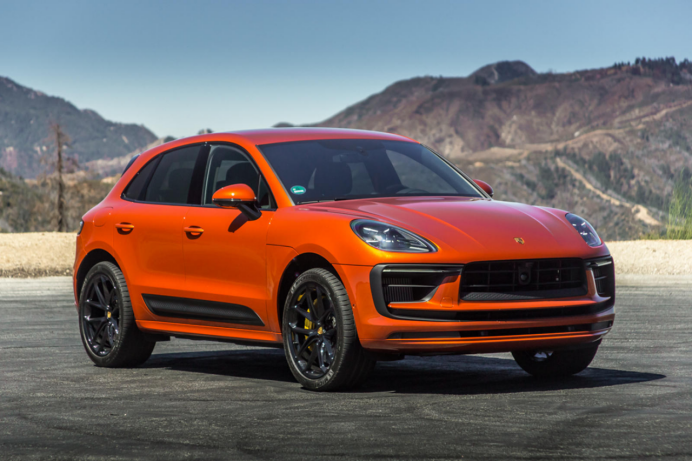
Under these circumstances, remaining in Volkswagen Group's emissions pool would not be the optimal choice for either party. Volkswagen Group's average fleet emissions for 2025 hover around 100 grams per kilometer, already falling short of compliance. Incorporating Porsche's high-emission volume into the group's total would only exacerbate the group's average emissions, making compliance even more arduous for the entire Volkswagen Group. Conversely, for Porsche itself, facing the EU's emissions assessment independently, given its current fleet emissions level, would likely incur exorbitant fines, placing substantial pressure on the company.
After careful consideration, partnering with a company boasting ample fully electric product reserves emerged as Porsche's pragmatic solution. Among the myriad potential partners, Porsche ultimately selected XPENG, not on a whim, as the two companies already had a solid foundation for deep cooperation. As early as 2023, Volkswagen Group invested approximately €700 million in XPENG, acquiring a 4.99% stake, with cooperation spanning from vehicle platforms to electronic and electrical architectures. More critically, XPENG has made rapid strides in the European market in recent years. In the first half of this year, XPENG delivered nearly 20,000 new vehicles in Western Europe, with full-year deliveries projected to reach 50,000. Its product lineup, encompassing multiple fully electric models such as the G6, G9, and P7+, can furnish sufficient carbon emission credits to meet Porsche's needs. 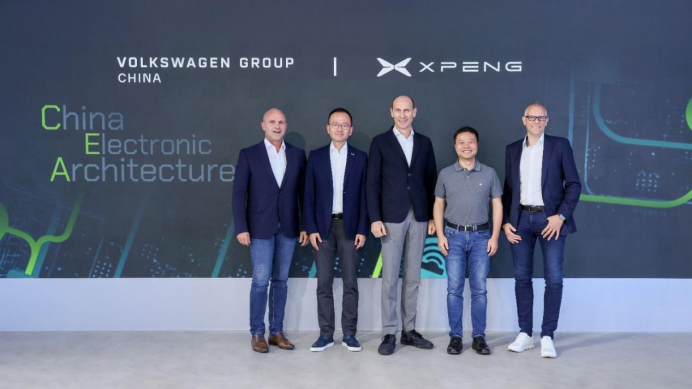
The outcome of this mutual selection is naturally a win-win scenario. For Porsche, rather than facing exorbitant fines, the cost of procuring emission credits through cooperation is far more manageable, enabling it to alleviate immediate compliance pressure in the short term. For XPENG, this regulatory credit revenue, which incurs virtually no additional marginal costs, can directly bolster its channel and service expansion in the European market, effectively leveraging its surplus production capacity to secure resources for overseas market expansion. In fact, the practice of forming cross-brand emissions pools is not novel in the European automotive industry.
In the past, Tesla has successively included brands such as Stellantis, Toyota, Ford, and Mazda in its emissions pool. Mercedes-Benz has also previously collaborated with Polestar, Volvo, and Smart to share emissions pressure. This year, Stellantis brought Leapmotor, in which it holds a stake, into a separate emissions pool. These instances underscore that carbon emissions credit trading in the EU has become a regular means for automakers to comply with emissions regulations. 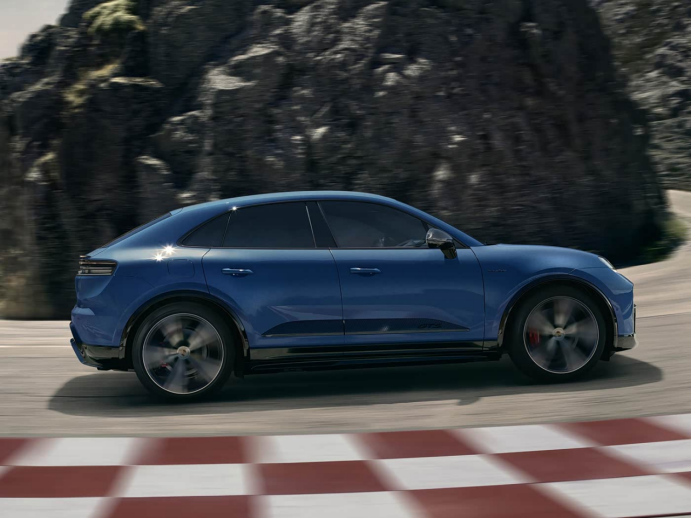
Porsche's decision to "go solo" and seek external cooperation presents a dual impact on its brand image. On the positive side, liberated from the constraints of the group's unified emissions targets, Porsche can fully retain its complete product lineup of gasoline-powered sports cars and high-performance SUVs, continuing to capitalize on its strengths in internal combustion engine driving dynamics. This aligns with the core consumer group's ingrained perception of the mechanical attributes of luxury sports cars, helping to maintain its most critical user base. However, on the flip side, the consecutive decline in fully electric vehicle sales, the resurgence of gasoline-powered models, and the series of moves to purchase emission credits from external sources inevitably raise questions about Porsche's previously communicated commitment to electrification transformation. 
Meanwhile, although this decision can help Porsche avert millions of euros or even higher fines for non-compliance in the short term, alleviating cash flow pressure after a significant profit decline in 2025, procuring emission credits is not a sustainable solution. The cooperation only encompasses the two years of 2026 and 2027. After that, Porsche will still need to independently complete fleet emissions reduction assessments. The procurement costs incurred now essentially only defer current compliance risks to the future without fundamentally reducing long-term compliance costs.
Moreover, allocating funds for emission procurement now will inevitably divert a portion of the budget that could otherwise be invested in electrification self-research projects. Over the long haul, this continuous additional expenditure will gradually become a non-negligible hidden burden on the transformation journey. However, from another vantage point, this cooperation has also provided Porsche with a buffer period of more than a year, allowing it to more calmly iterate gasoline-powered models and focus on refining key upcoming products such as the fully electric 718.
Nevertheless, EU emissions standards are anticipated to further tighten by 2027, and the space for external emission credit procurement will only continue to shrink. This implies that Porsche will ultimately need to revert to reducing emissions through its own fully electric products. This buffer period will also compel the brand to recalibrate its electrification transformation timeline, avoiding further significant strategic swings. 
Ultimately, Porsche's adjustment this time is a pragmatic maneuver to address compliance pressure, effectively resolving the immediate urgency of emissions compliance in the short term. However, in the long run, whether it can build up its independent electrification technology capabilities will be the core factor determining its future success. Relying on external emission credits can only provide temporary respite; only by accelerating the iteration of fully electric products and enhancing market competitiveness can it fundamentally address the issue of strategic misalignment.
(Image sources: Internet, removed if infringing)
-
![]()
SpaceX Releases First Financial Report: Revenue Doubles to $7.8 Billion, Musk Aims to Build a Computing Power Empire Rather Than Just a 'Rocket Company'
-
![]()
Token Economy in Global Expansion: Data Governance Must Be Robust
-
![]()
Half-Year Losses Approach 800 Million, Yet Weride Unveils a Winning Strategy Overseas
-
![]()
Market Analysis of Electric Control Systems: BYD's Market Share Declines from 30% to 20%, Tesla Remains the Sole Foreign Player
-
![]()
Cadence Achieves Record Revenue of $1.584 Billion in Q2 2026, with China Driving 37% of Growth: Fines Recouped Within a Single Quarter
-
![]()
Tencent Music Adjusts Earnings Announcement Date, Sparking Valuation Overhaul | Earnings Insight
-
The More Users, The More Money Lost: AI Transforms C-End SaaS into a Gym-Style Business
-
![]()
Unitree Technology Unveils 'Superman,' Igniting a Robotics Boom!