Half-Year Losses Approach 800 Million, Yet Weride Unveils a Winning Strategy Overseas
 08/18 2026
 445
445
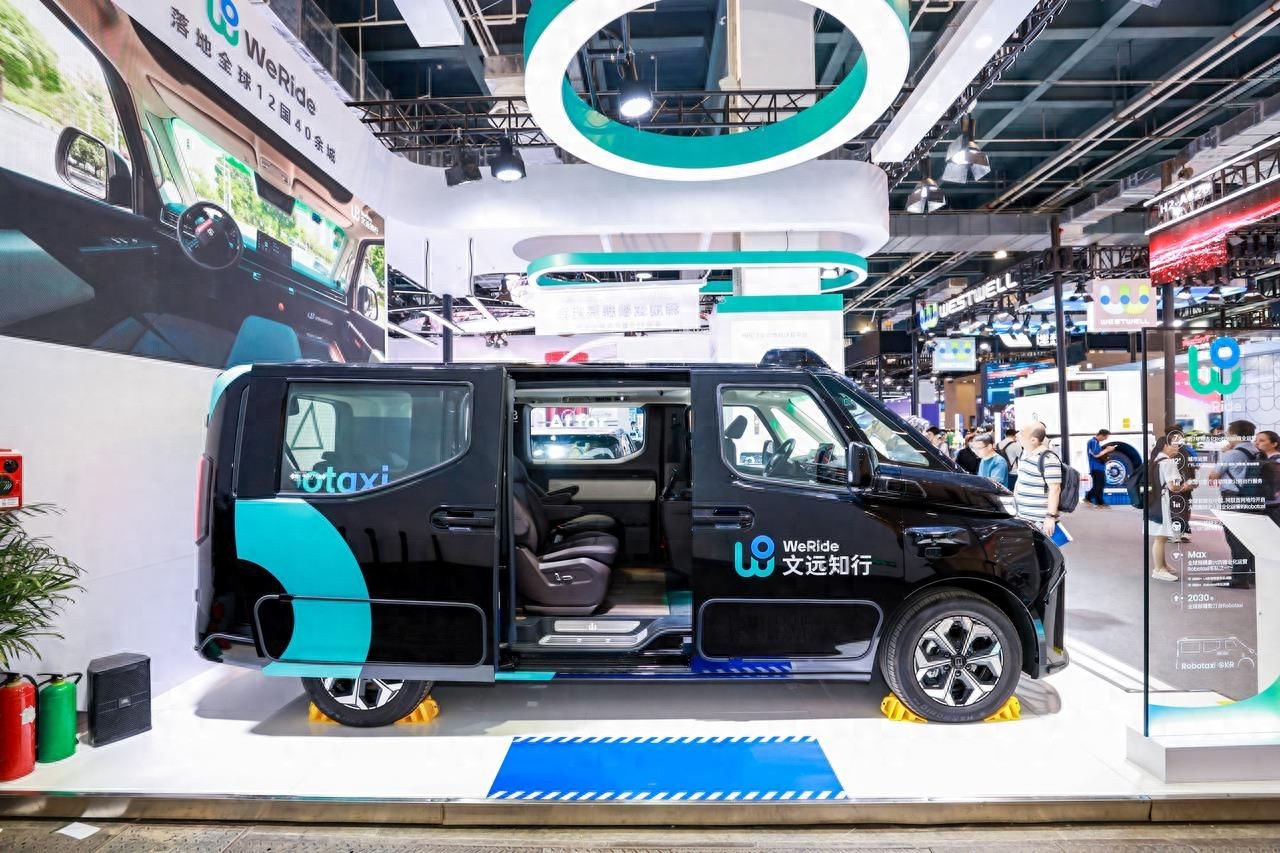
On August 12, Weride unveiled its financial performance for the first half of 2026.
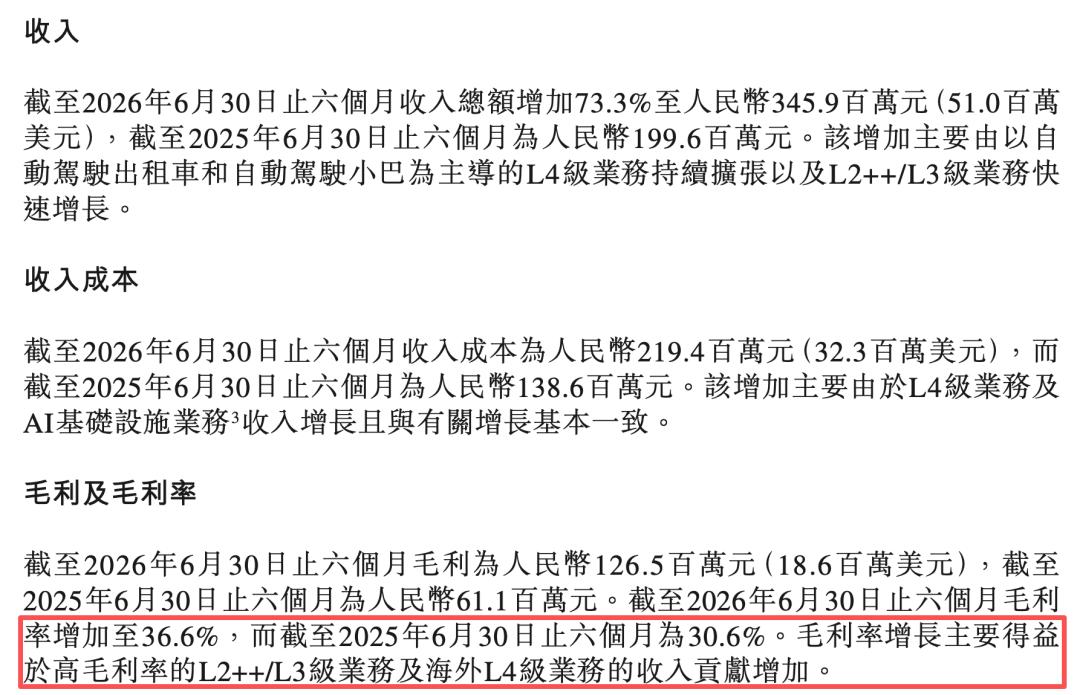
Revenue soared to RMB 346 million, marking a 73.3% year-over-year (YoY) increase; gross profit reached RMB 126 million, up 107.1% YoY; and gross margin improved from 30.6% to 36.6%.
While these figures are promising, the losses remain significant: operating loss stood at RMB 853 million, loss for the period at RMB 790 million, and adjusted net loss at RMB 665 million.
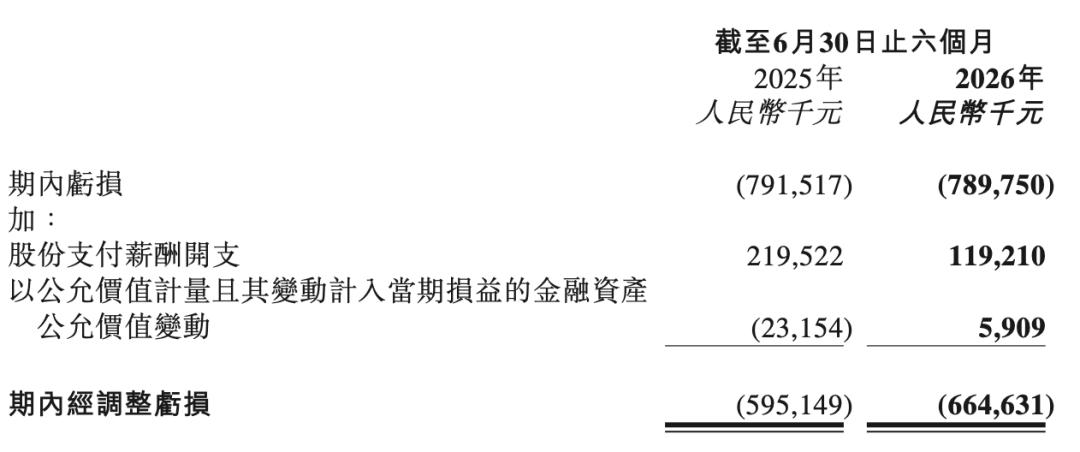
(Image Source: Weride's 2026 Half-Year Report)
Despite substantial expenditures, gross margins are on the rise, with overseas business emerging as the sole bright spot.
For an autonomous driving firm, incurring losses is the norm; generating profits is noteworthy.
The intriguing aspect of Weride's financial report is its strategy of using the "quick cash" from L2++/L3 operations to fuel the "long-term dream" of L4 technology.
01
Let's delve into the revenue structure first.
In the first half of 2026, Weride's revenue hit RMB 346 million, with the second quarter alone contributing RMB 232 million, up 82.2% YoY.
Revenue from L4 operations in the second quarter reached RMB 125 million, up 47.3% YoY and 130.6% quarter-over-quarter (QoQ).
L4 represents Weride's "flagship" technology.
Encompassing Robotaxi and autonomous minibuses.
However, the real growth catalyst is the L2++/L3 business.
This segment boasts a higher gross margin and was the primary driver behind the overall gross margin's surge from 28.1% to 37.5% in the second quarter.
This underscores a crucial point:
Full L4 commercialization still requires time, but L2++/L3 can generate cash flow and profits to sustain ongoing L4 investments.
In simpler terms, it's "leveraging assisted driving revenues to fund the autonomous driving vision."
This strategy is evident in the financials:
In the first half of 2026, R&D expenditure was RMB 798 million, up over 20% YoY.
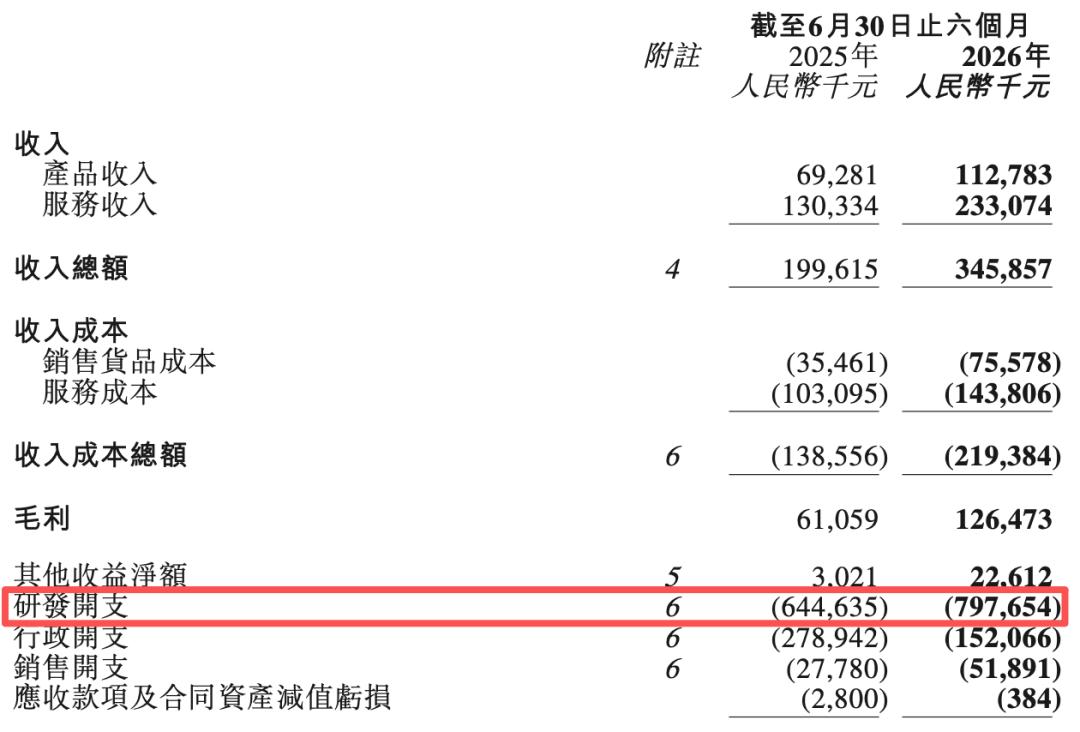
(Image Source: Weride's 2026 Half-Year Report)
While funds are being poured into L4, they are being sustained by the L2++/L3 segment.
02
Overseas markets represent another key focus.
In the first half of 2026, Weride's overseas revenue was RMB 119 million, up 154.2% YoY.
Overseas revenue in the second quarter grew 164.4% YoY and 169.3% QoQ.
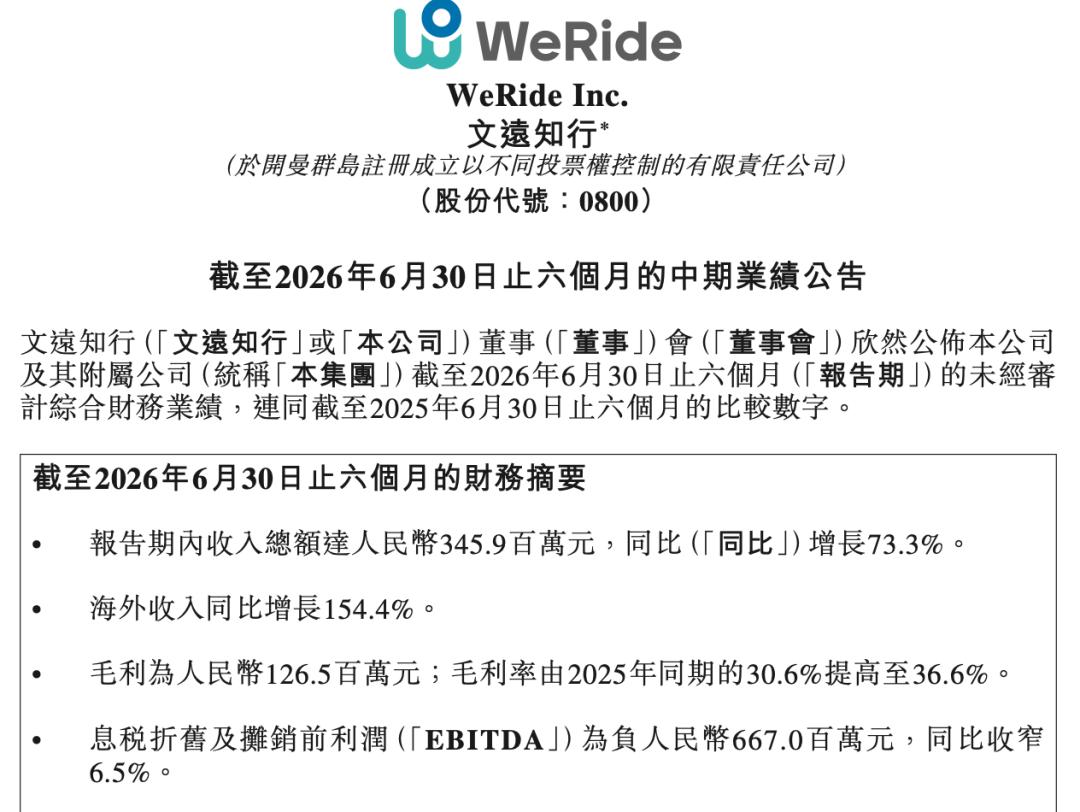
(Image Source: Weride's 2026 Half-Year Report)
Currently, Weride's autonomous driving business spans 13 countries and over 60 cities globally, with overseas markets emerging as its fastest-growing segment.
As of the end of July, the global L4 fleet size was approximately 3,400 vehicles, including over 1,800 Robotaxis.
Weride is replicating its asset-light model, validated in China, on the global stage.
The company is advancing its Robotaxi projects in Europe, expanding operations in the Middle East, and planning to deploy right-hand-drive Robotaxis in Singapore and Hong Kong.
Is earning money overseas easier than domestically?
At least for now, overseas gross margins are indeed higher than domestic ones.
Weride explained in its financial report that the gross margin improvement in the second quarter was primarily due to the growth of high-margin L2++/L3 operations and overseas L4 business.
The pace of Weride's market penetration in Europe and Southeast Asia is a critical factor in determining whether its overseas strategy can continue to deliver results.
03
Returning to the losses.
Weride's loss for the period in the first half of the year was RMB 790 million, roughly flat compared to RMB 792 million in the same period last year.
Adjusted net loss was RMB 665 million, wider than RMB 595 million in the same period last year.
Losses have decreased but not significantly.
R&D expenditure in the second quarter was RMB 434 million, up 36.2% YoY; selling expenses increased from RMB 13.849 million to RMB 29.21 million.
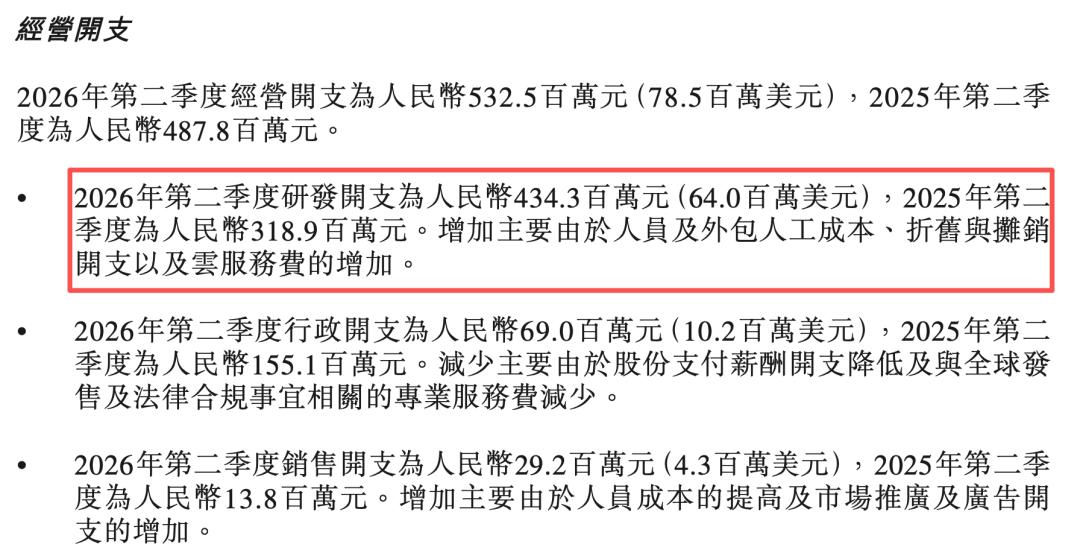
(Image Source: Weride's Q2 2026 Report)
Despite improved gross margins, losses have not narrowed substantially, indicating room for cost control.
Weride stated in its financial report, "As business scale expands, R&D investment is also increasing synchronously." In simpler terms: L4 commercialization has not yet achieved scale effects, and it's still a spending phase.
As of the end of June 2026, Weride held RMB 5.375 billion in cash, cash equivalents, and time deposits, still possessing sufficient "ammunition" to support ongoing R&D and overseas expansion.
Conclusion
According to Tianyancha, Weride has completed nine rounds of financing since its inception, with investors including Yutong Group, Sinovation Ventures, GAC Capital, and Grab.
Now, having completed a secondary listing from the U.S. to Hong Kong in 2025, Weride enjoys smoother financing channels than before.
Its current market capitalization is approximately HK$15.2 billion.
The market's valuation logic for autonomous driving companies is shifting from "betting on technology" to "focusing on commercialization." Whoever can faster turn technology into revenue will command a higher premium.
Weride's financial report sends signals in two directions:
The growth of high-margin L2++/L3 operations and overseas markets is validating the feasibility of its commercialization path.
(Image Source: Weride's 2026 Half-Year Report)
However, achieving large-scale profitability for L4-level Robotaxis globally will still take time.
Whether Weride's strategy of using L2++/L3 to "fund" L4 can succeed depends on whether overseas markets can sustain high growth, whether gross margins can continue to improve, and whether R&D investment can gradually narrow.
In fact, Weride's financial report showcases an autonomous driving company "walking on two legs."
On one hand, it generates cash flow through L2++/L3 operations; on the other, it competes for the future with L4 technology.
On one hand, it stabilizes its domestic base; on the other, it seeks growth overseas.
Losses persist, but the direction is clear:
Overseas markets are the growth engine, L2++/L3 is the cash flow guarantee, and L4 is the ultimate goal.
In the marathon of autonomous driving, Weride has reached the midway point.
How long the funds can last depends on the growth rate of overseas markets and the cash-generating ability of L2++/L3 operations.
The message from Weride's financial report is that both are moving in a positive direction.
However, there is still a long journey between "moving in a positive direction" and "reaching the finish line."
-
![]()
Can the Robot Phone Propel Honor to New Valuation Heights?
-
![]()
Dealer Service Operation Capability | Constructing Four "Consciousness Firewalls" for Proactive Negative Public Opinion Management
-
![]()
Lenovo is Back in the Spotlight, This Time with Its 'AI for All' Story
-
![]()
Two Rising Cloud Service Providers Abruptly Adjust Strategies in Computing Power Market
-
【Insight】High-Pressure Plastic Fuel Tanks Fit for Plug-in Hybrid Electric Vehicles See Expanding Market Space
-
![]()
Satellite Earth Observation Radar: From SAR to Intelligent Sensing with FPGA
-
![]()
SpaceX Releases First Financial Report: Revenue Doubles to $7.8 Billion, Musk Aims to Build a Computing Power Empire Rather Than Just a 'Rocket Company'
-
![]()
Token Economy in Global Expansion: Data Governance Must Be Robust