Regulators Put the Brakes on the Once-Popular 'Little Blue Light'
 08/18 2026
 465
465
The Intelligent Driving 'Little Blue Light' Has Long Lingered in a Regulatory Twilight Zone
The externally mounted intelligent driving 'Little Blue Light,' a once-ubiquitous feature in new energy vehicles, now finds itself at a regulatory crossroads.
Commencing July 27, 2026, with the issuance of the 410th batch of motor vehicle product announcements by the Ministry of Industry and Information Technology, any new passenger vehicle seeking approval will be rejected if it comes factory-equipped with externally mounted blue intelligent driving indicator lights. This signals the definitive phase-out of the once-trendy intelligent driving 'Little Blue Light' from mass-produced new vehicles.
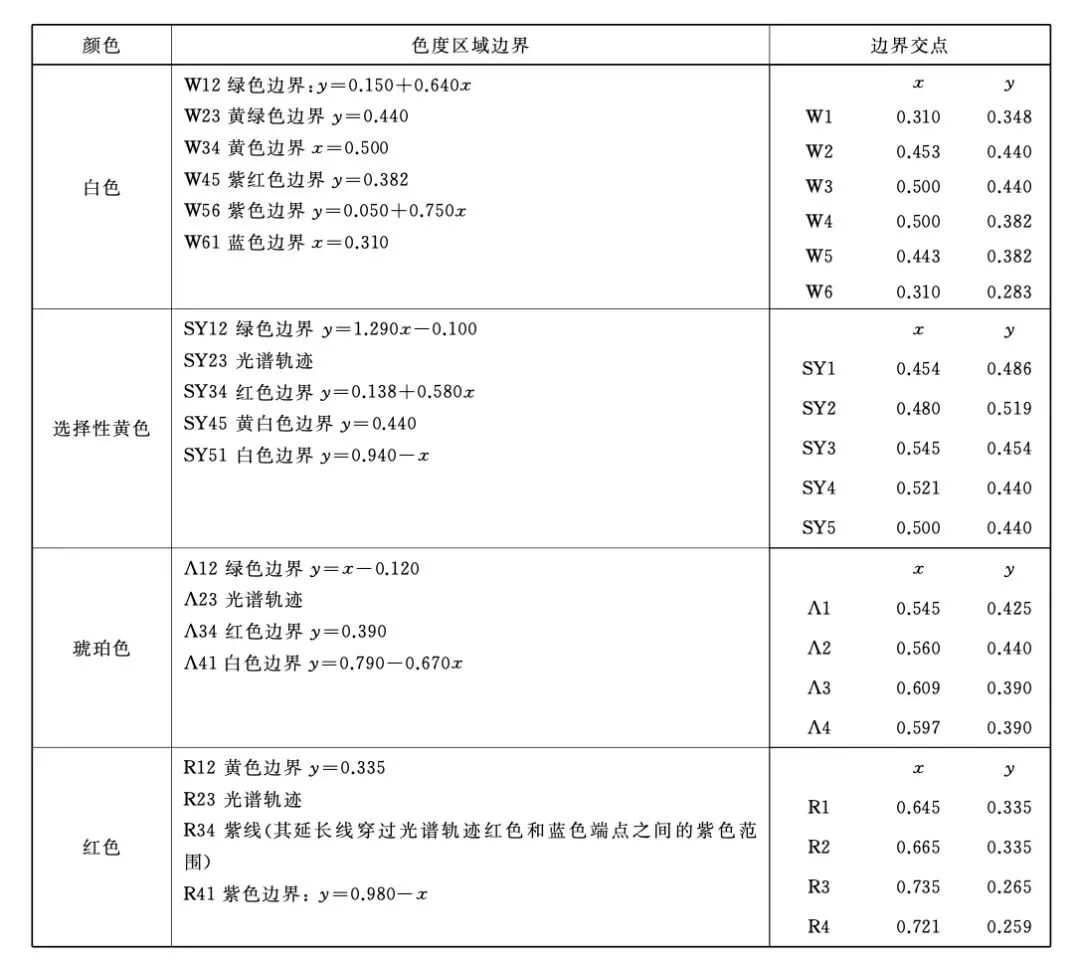
Color Regulations in National Standard GB 4785
The regulatory crackdown is grounded in the stipulations of the current mandatory national standard GB 4785-2019. This standard explicitly restricts external vehicle lighting on civilian vehicles to white, red, and amber-yellow hues, omitting any provision for external blue intelligent driving light devices. Consequently, the intelligent driving 'Little Blue Light,' which automakers have been promoting for years, has always existed in a regulatory no-man's land.
The Rise and Fall of a Trend
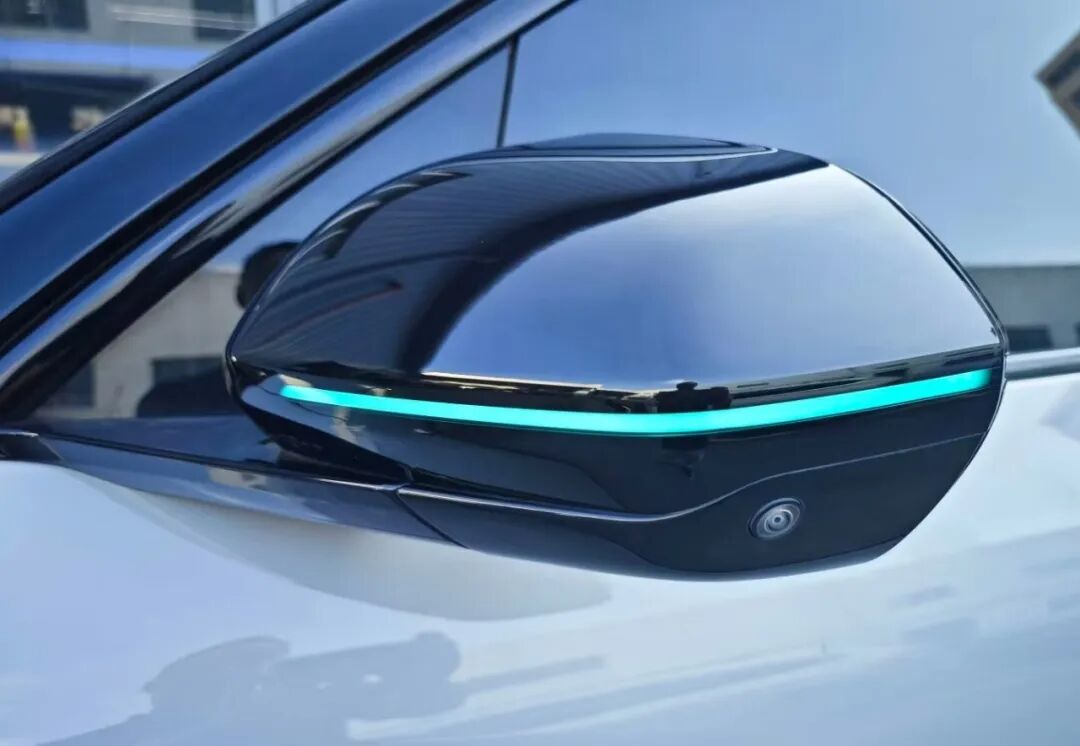
The 'Little Blue Light' refers to the blue indicator lights installed on the exterior of certain vehicles by automakers to signal the activation of the driving assistance system.
The ascent of the intelligent driving 'Little Blue Light' in China began with the launch of the Li Auto L9 in 2022. At that time, the Li Auto L9 sported a blue light strip on its exterior rearview mirrors as a visual cue for high-level driving assistance, pioneering intelligent driving light interaction in domestic civilian vehicles.
Over the ensuing four years, over a dozen automakers, including BYD, XPeng, and Seres, jumped on the bandwagon, spanning the entire price spectrum from 100,000-yuan family sedans to million-yuan luxury SUVs. It became a hallmark distinguishing new energy vehicles from traditional fuel vehicles and underscoring their intelligent prowess. Data from ZuoSi Auto Research reveals that in the first half of 2025, the installation volume of intelligent driving 'Little Blue Lights' in domestic passenger vehicles soared to 755,000 units, with an installation rate of 7.1%, marking a staggering 1098% year-on-year increase.
The meteoric rise of the intelligent driving 'Little Blue Light' was not solely attributable to technological advancements but also a confluence of safety design considerations and industry commercial rivalry.
From a design standpoint, the operational status of intelligent driving systems is largely imperceptible, making it challenging for pedestrians and surrounding vehicles to discern whether the vehicle has engaged its navigation assistance. The advent of the intelligent driving 'Little Blue Light' rendered the invisible electronic intelligent driving state visible, establishing external interaction channels between vehicles and between vehicles and pedestrians, thereby mitigating traffic risks stemming from information asymmetry and serving a safety function.
However, the primary impetus behind the industry-wide adoption of this feature remains cutthroat market competition. Currently, the electric vehicle sector is grappling with increasing homogenization, and intelligent driving has emerged as a pivotal battleground for automakers to differentiate their offerings. The intelligent driving 'Little Blue Light' offers high visual recognition in showroom photos and short videos, serving as a visual marketing tool for automakers to cultivate the perception of high-level intelligent products.
Meanwhile, in various online car enthusiast forums, numerous posts by vehicle owners sharing their experiences with installing intelligent driving 'Little Blue Lights' have amassed significant views and interactions. On e-commerce platforms, related accessories such as modification wiring harnesses and externally mounted blue indicator lights are readily available for purchase, complete with installation tutorials, forming a comprehensive online sales ecosystem. This further underscores the previous market fervor for the intelligent driving 'Little Blue Light.'
Underlying Concerns
Amidst the industry's breakneck expansion, externally mounted intelligent driving 'Little Blue Lights' have unearthed safety and compliance risks.
In the absence of unified standards, the 'Little Blue Lights' from different brands exhibited significant disparities in brightness, flashing frequency, and installation location, causing nighttime glare and potentially misleading surrounding drivers' perceptions of the vehicle's capabilities.
Simultaneously, some intelligent driving users have observed that car enthusiast groups often jest, 'With the blue light on, you can cut in anytime,' alluding to the actual road experience after activating the intelligent driving 'Little Blue Light.' Due to the conservative logic of L2-level driving assistance algorithms, which maintain a greater following distance and automatically yield to close cut-ins, some drivers deliberately tailgate or cut in front of vehicles with the blue light on to probe the system's limits. The warning light, originally intended to mitigate risks, has, to some extent, exacerbated road conflicts.
A deeper concern revolves around the misalignment of responsibility perception. Most externally mounted intelligent driving 'Little Blue Light' models currently on the market still fall under L2-level driving assistance, with the driver retaining ultimate responsibility. However, the illuminated 'Little Blue Light' may subtly suggest to the driver a diminished need for vigilance, leading to prolonged hands-off driving and inducing risky behaviors. It is crucial to emphasize that even if a traffic accident occurs while the 'Little Blue Light' is on, it cannot absolve the driver of responsibility.
From a compliance standpoint, blue is the exclusive lighting color for special vehicles such as police cars and ambulances. Externally mounted blue lights on civilian vehicles can cause visual confusion. During nighttime traffic congestion, when numerous vehicles with blue lights are illuminated simultaneously, drivers may struggle to swiftly identify genuine emergency vehicles, potentially delaying rescue and emergency response in critical situations.
Over the past few years, the externally mounted 'Little Blue Lights' on mass-produced vehicles have been categorized as automakers' voluntary explorations. In the 2021 draft national standard, there were plans to introduce a blue-green ADS (Autonomous Driving System) dedicated indicator light for L3 and above autonomous vehicles, specifying light parameters and installation locations. However, the final GB 5920-2024 intelligent vehicle standard, released in 2024 and implemented in 2025, omitted all provisions regarding blue-green external lighting, leaving the use of 'Little Blue Lights' in a regulatory limbo.
Regulatory Enforcement Arrives
The announcement review restrictions imposed by the Ministry of Industry and Information Technology do not signify a sweeping ban on intelligent driving light interaction. Rather, they establish clear, tiered regulatory boundaries that balance new vehicle compliance management, the rights of existing vehicle owners, and the industry's long-term technological exploration space.
According to the regulatory framework, the new policy exclusively targets new vehicle models with factory-installed external blue lighting submitted for announcement after July 27, 2026. Existing vehicles already on the road will not be subjected to mandatory modifications and can continue to operate normally and undergo regular inspections. Internal intelligent driving prompts, such as those on in-car screens and HUDs, remain unaffected, and intelligent driving functions like navigation assistance are not restricted. However, some automakers may opt to remotely disable the external blue lights via OTA updates in the future. The new regulations do not permanently preclude such interactive lighting; revisions to relevant domestic national standards are underway, and future regulations may introduce clearer lighting specifications for high-level autonomous driving.
Zeng Qinglin, General Manager of Yijing Auto, views state intervention to regulate industry development as a positive development. He stated, 'Objectively speaking, the capabilities of driving assistance systems vary significantly. For models with robust intelligent driving capabilities and high safety thresholds, the Little Blue Light serves as an intangible brand promotion tool. However, for models with limited intelligent driving capabilities, it can occasionally become a 'roadblock,' posing tangible road safety risks.'
The cessation of the 'Little Blue Light' is also part of the comprehensive regulatory governance of China's intelligent connected vehicle industry, with the regulatory system being concurrently refined and multidimensional constraints being implemented. In July of this year, the Ministry of Industry and Information Technology unveiled the 'Safety Requirements for Combined Driving Assistance Systems in Intelligent Connected Vehicles,' establishing China's first mandatory national standard for L2-level driving assistance, setting stringent safety baselines in areas such as system perception, braking response, and driver monitoring.
Looking ahead, intelligent driving remains a cornerstone of China's automotive industry transformation and modernization. According to the 'Technology Roadmap for Energy-Saving and New Energy Vehicles 3.0' released by the Chinese Society of Automotive Engineers, by 2040, the market penetration rate of new energy vehicles will surpass 80%, with at least 8 out of every 10 new vehicles being new energy models. In terms of intelligent driving, by 2030, L2-level and above intelligent driving will be fully popularized in passenger vehicles; by 2035, L3/L4-level intelligent driving vehicles will account for over 70% of the market; and by 2040, L4-level will be fully popularized, with L5-level beginning to enter the market. As high-level intelligent driving continues to permeate the market, designing safe, compliant, and clear external interaction solutions for human-vehicle and vehicle-vehicle communication remains an ongoing challenge for the industry.
From a widely embraced intelligent selling point to comprehensive restrictions in announcement submissions, the ascent and decline of the externally mounted intelligent driving 'Little Blue Light' in just four years reflect the transition of China's intelligent vehicle industry from rapid, expansive growth to refined, rule-of-law-based high-quality development. The withdrawal of external blue lighting is merely a transitional outcome. As intelligent driving penetration continues to rise, innovative technologies for integrated human-vehicle, vehicle-vehicle, and vehicle-infrastructure interactions that balance safety and compliance will continue to evolve and advance.
-
![]()
SpaceX Releases First Financial Report: Revenue Doubles to $7.8 Billion, Musk Aims to Build a Computing Power Empire Rather Than Just a 'Rocket Company'
-
![]()
Token Economy in Global Expansion: Data Governance Must Be Robust
-
![]()
Half-Year Losses Approach 800 Million, Yet Weride Unveils a Winning Strategy Overseas
-
![]()
Market Analysis of Electric Control Systems: BYD's Market Share Declines from 30% to 20%, Tesla Remains the Sole Foreign Player
-
![]()
Cadence Achieves Record Revenue of $1.584 Billion in Q2 2026, with China Driving 37% of Growth: Fines Recouped Within a Single Quarter
-
![]()
Tencent Music Adjusts Earnings Announcement Date, Sparking Valuation Overhaul | Earnings Insight
-
The More Users, The More Money Lost: AI Transforms C-End SaaS into a Gym-Style Business
-
![]()
Unitree Technology Unveils 'Superman,' Igniting a Robotics Boom!