To Truly Live Up to Its Cantonese Moniker ‘Wealthy,’ Volvo Must Elevate Its Game
 08/21 2026
 336
336
Source | Yuan Auto
Unlike the pronunciation-friendly names of Mercedes-Benz, BMW, or even Lexus, Volvo can be a bit of a tongue-twister in Cantonese. Hence, in the regions of Guangdong, Hong Kong, and Macau, this Swedish luxury car brand is more affectionately known by its earliest transliterated name, “Wealthy.”
Numerous Volvo owners in Cantonese-speaking areas are quite fond of the name “Wealthy.” Although it may seem a bit direct, the widespread acceptance of this name eliminates any awkwardness when they mention driving a “Wealthy” to others. In fact, they might even feel a subtle thrill when relatives and friends refer to them as “Wealthy” owners.
Furthermore, in the past, those who could afford a Volvo were indeed considered wealthy.
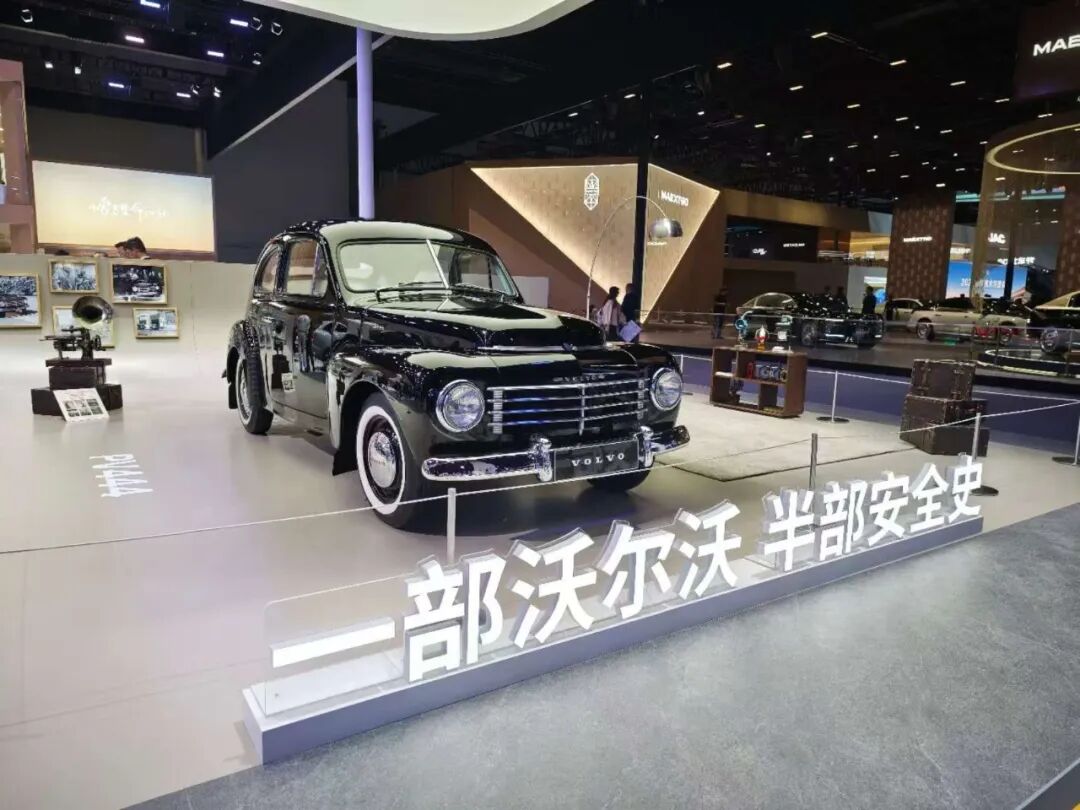
According to the Tianyancha app, Volvo China was established in 2000. Six years later, the first domestically produced Volvo model, manufactured by the Chang'an Ford Mazda plant, hit the market with a starting price of 305,000 yuan. By around 2010, Volvo's station wagons and SUVs began to gain traction, and potential owners needed to budget several hundred thousand yuan to step into a 4S dealership.
Even in the past 5-10 years, despite Volvo offering significant market discounts, it still maintained models in the 500,000 yuan price range. However, with Volvo now heavily promoting its pure electric flagship models this year, the landscape is starting to shift.
01
Flagship Electric Vehicles Yet to Seize the Mantle
It's no longer breaking news that Volvo's two fuel-powered flagships, the S90 and XC90, have lost their once-dominant market position. According to a report by Jiemian News, to stay competitive, the S90, with an official guide price starting at 406,900 yuan, has seen its latest market price plummet to “negotiable from 230,000 yuan.”
But this should still fall within Volvo's acceptable range.
After all, the S90 and XC90 haven't undergone a complete redesign in at least a decade, meaning the amortized costs for their production and R&D have reached a significant stage. Even with substantial discounts, automakers can still make the numbers add up.
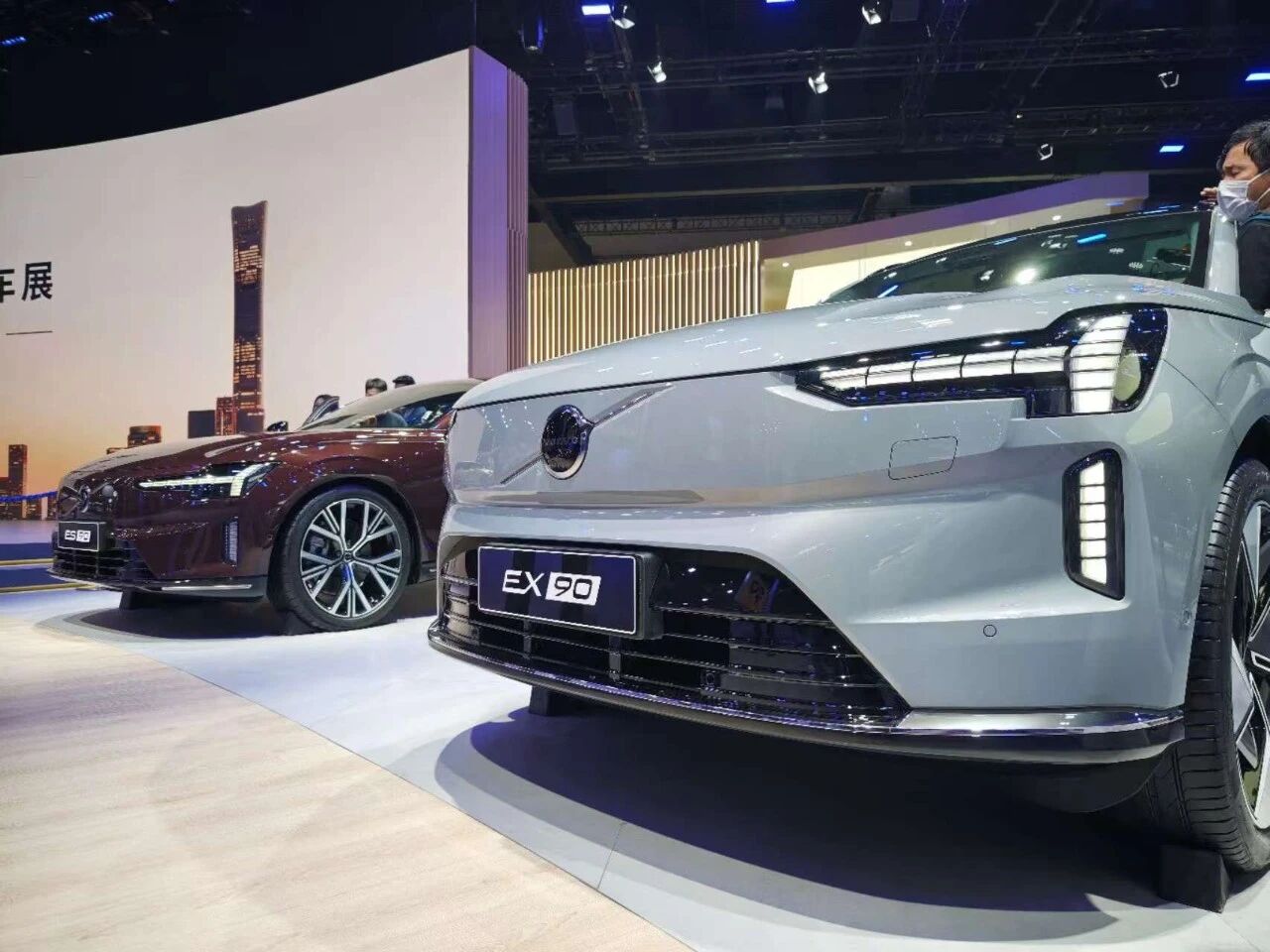
In contrast, the state of the two newly launched pure electric flagships, the ES90 and EX90, which have been on the market since this year but are struggling with low sales despite their prices, poses a more vexing issue for Volvo.
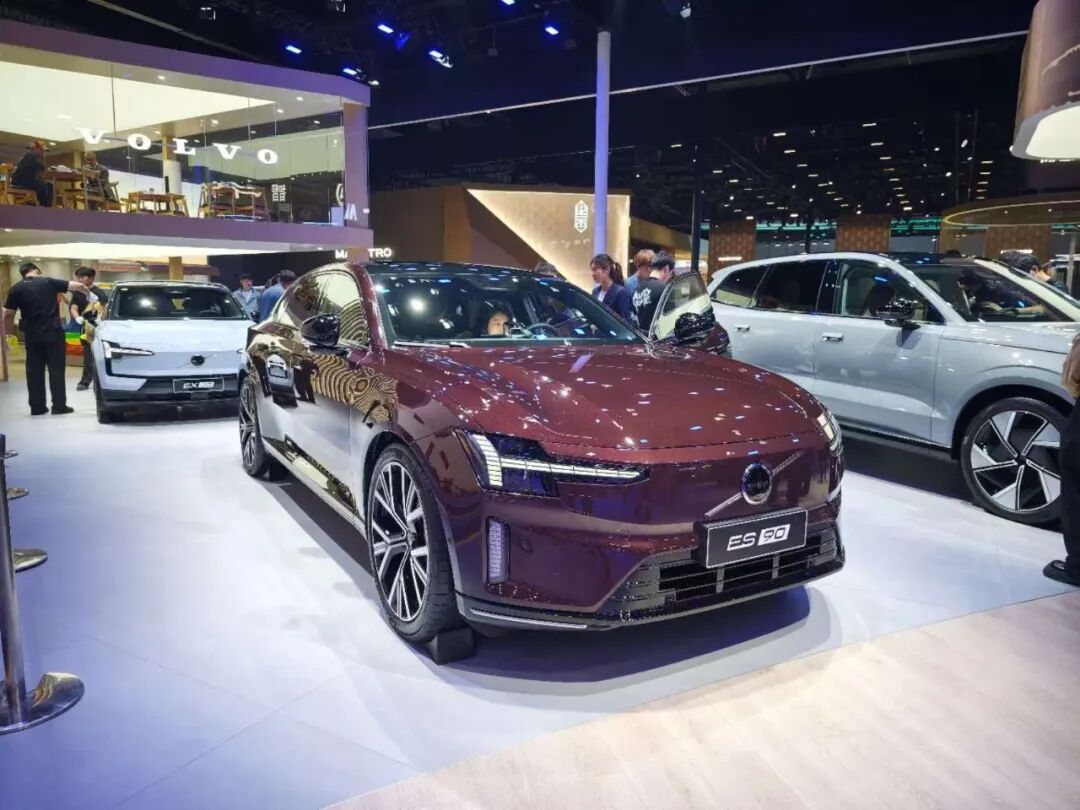
From a pricing standpoint, the Volvo ES90 and EX90 are tasked with taking over the brand's 500,000 yuan flagship mantle. The former, a pure electric sedan, has a post-incentive price starting at 389,900 yuan, while the latter, a pure electric SUV, starts at 459,900 yuan, roughly on par with the levels when the fuel-powered flagships S90 and XC90 were selling well.
However, Volvo's audience seems to be adopting a wait-and-see approach to these two pure electric flagships for now.
According to third-party terminal retail data from the China Association of Automobile Manufacturers and the China Passenger Car Association, the monthly sales of the Volvo ES90 and EX90 have remained in the double digits since their launch in May this year. As of press time, the combined sales of the two models have not surpassed 150 units. It's worth noting that even if Volvo's electric flagships are expanded to include the MPV EM90, which has a relatively higher “Geely content,” the cumulative sales of the three 90-series electric flagships this year still do not exceed 300 units.
Clearly, Volvo's “wealthy-class” models in the 400,000-500,000 yuan range still have work to do. However, the silver lining is that Volvo, amidst its electrification transformation, still excels at selling “middle-class” models in the 200,000-300,000 yuan range.
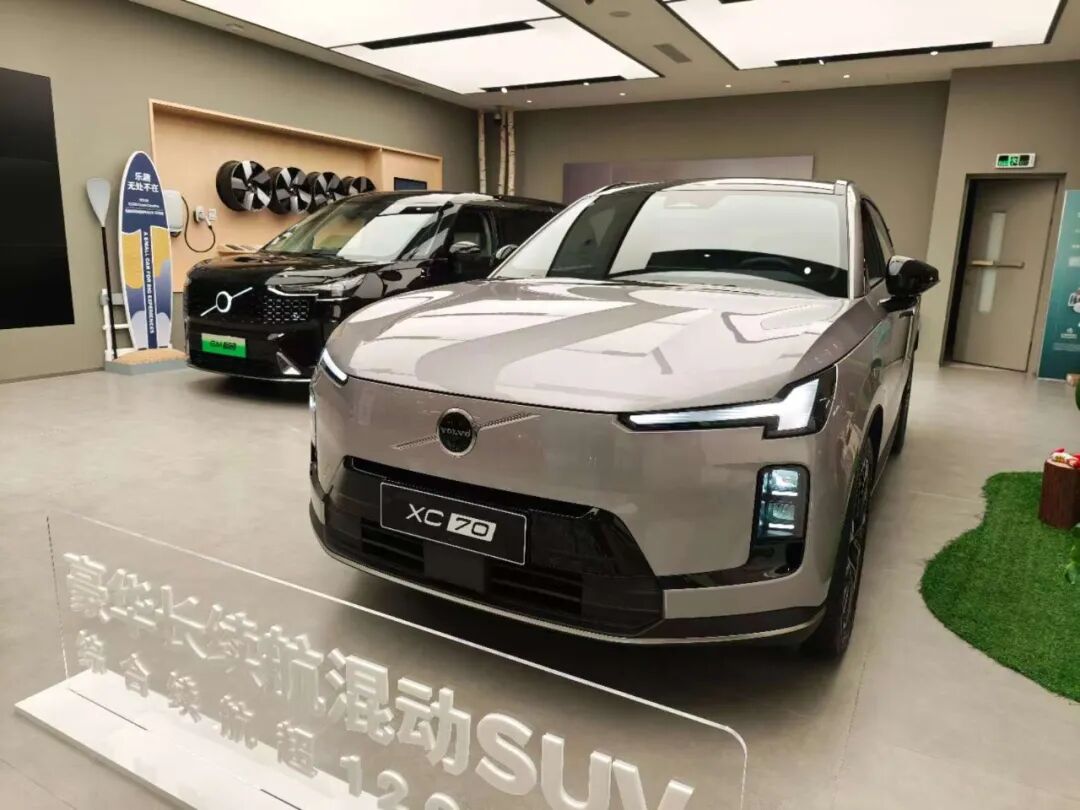
Data reveals that the Volvo XC70, with a terminal price starting at around 230,000 yuan, has sold 17,182 units from January to July this year, accounting for over 30% of the brand's sales. According to online rumors, Volvo may capitalize on the success of the 70-series models by launching additional sedans or even station wagons based on existing SUV models.
In fact, when comparing the Volvo XC70 to the overall traditional luxury brand new energy vehicle lineup, its sales are already at a benchmark level. So, the question arises: Why can Volvo sell the 70-series well but struggle to get the 90-series off to a strong start?
02
Skipping ‘Wealthy’ and Leaping Straight to ‘Ultra-Luxury’?
One reason for the underperformance of the Volvo ES90 and EX90 compared to their fuel-powered counterparts in the Chinese mainland market is undoubtedly the fierce domestic competition.
Although Volvo's SPA2 platform has been upgraded to an 800V high-voltage architecture, and both flagships are equipped with lidar, this is merely “basic operation” in the domestic market at the same price point. When digging deeper, the Volvo ES90 and EX90 start to discuss their connotations, which is clearly something Chinese brand competitors welcome, as the latter have already started incorporating rotating seats and water bars into their vehicles.
To break through, Volvo may need to be bolder.
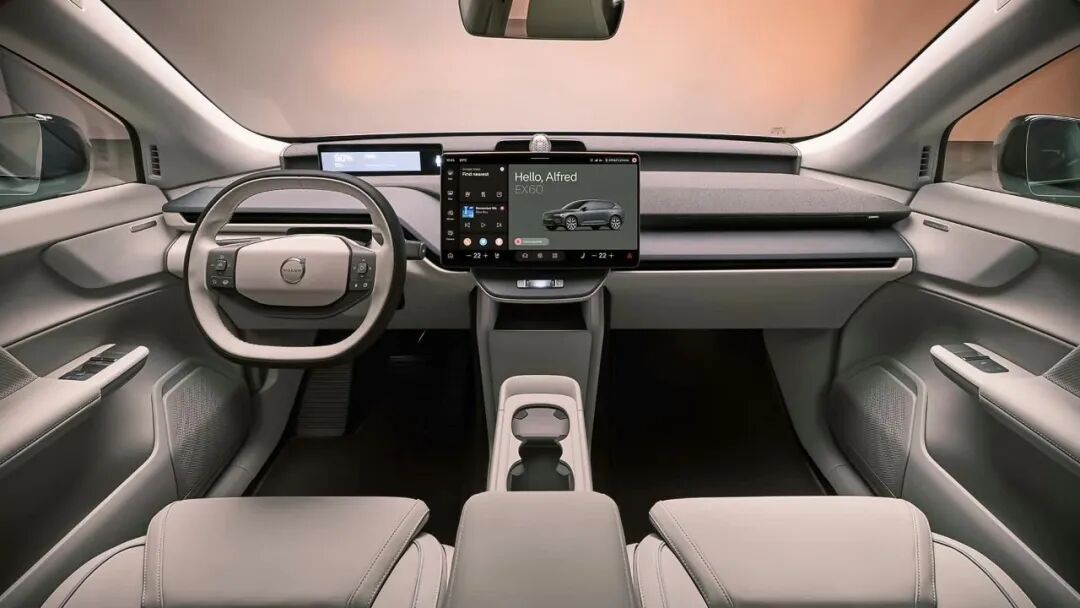
Being bold doesn't just mean Volvo should bring more advanced electrification technology to the Chinese mainland market; it should also break away from past routines and actively cater to the tastes of the Chinese mainland market. In fact, the Volvo XC70, which offers both fuel and electric options, is a representative example of this logic.
If Volvo can combine its ace in the hole—the all-new native platform SPA3—with a more thorough localized product R&D definition model, it's believed that a significant transformation will occur. Perhaps, Volvo is already on this path.
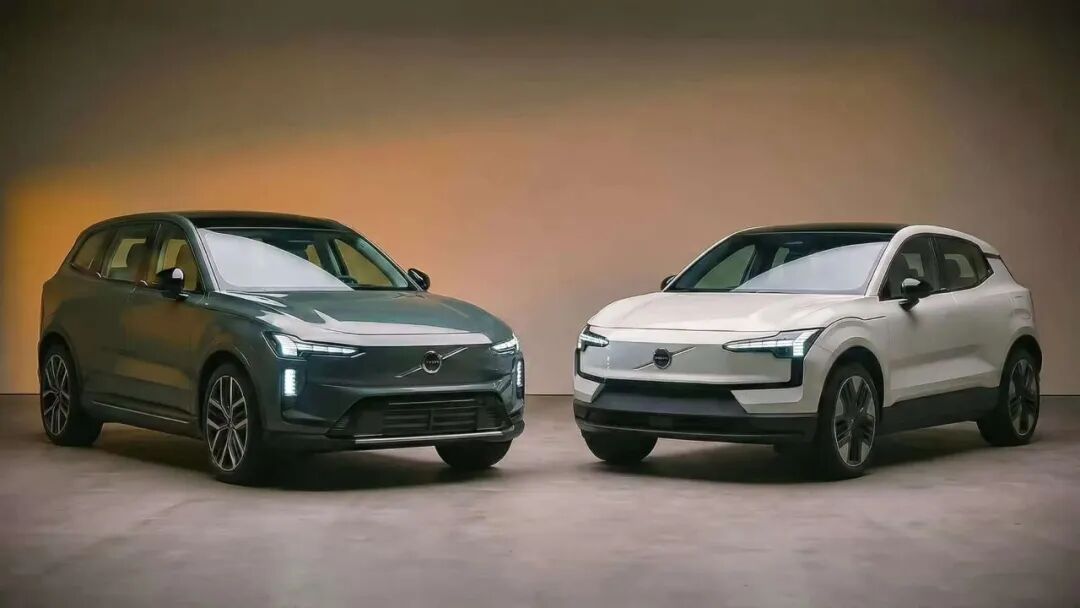
According to a July report by 36Kr, Volvo is internally promoting a D-segment flagship sedan project codenamed “556,” targeting the Zenith S800 and Maybach S-Class. In response, Volvo told the inquiring media that the relevant information was untrue, and 36Kr's report has since been deleted.
Regardless, it's imperative for Volvo to rebuild its influence in the luxury car market of 500,000 yuan and above. This Swedish luxury automaker needs a star model that can help the brand soar in the Chinese mainland market, just like the XC90 did in the past, more than ever before.
From this perspective, if Volvo were to truly launch a model that “goes head-to-head” with the Zenith S800, it would at least provide a significant boost in terms of market attention. Although the difficulty of such a challenge can be described as daunting, it's also a potential solution.
Some images are sourced from the internet. Please notify us for removal if there is any infringement.
-
![]()
BYD Executive: BYD's Intelligent Driving is Actually Stronger Than Huawei's. Netizens: Watch Out for Yu Chengdong's 'Meltdown.' Wow
-
![]()
Amidst the Wave of Unemployment, Will Big Companies Focus Solely on AI Talent Next Year?
-
![]()
The Launch of AITO G9 is Truly Lively! Yu Chengdong: My 'Nervous Tongue' Didn't Explain Well; Shen Teng: My 'Slip of the Tongue' Was Miscommunicated
-
![]()
AI Agents Keep Crossing Boundaries and Causing Trouble? Actually, They’re Just Overeager to Please Humans
-
![]()
Anthropic: The Ideal 'Rebel'
-
The Investment Insight Behind Kuaishou's 11% Share Price Drop: Steer Clear of ByteDance
-
![]()
To Truly Live Up to Its Cantonese Moniker ‘Wealthy,’ Volvo Must Elevate Its Game
-
![]()
Optical Industry Chain's 'Little Giant' Faces the Listing Challenge! Yuanli Optoelectronics Set for BSE IPO Review Tomorrow