The Next Journey of Joint Ventures: Survival is Victory
 08/21 2026
 397
397
Lead-in
Introduction
As the Chinese auto market fully embraces localization, joint ventures must recognize their position.
This year, joint venture automakers have finally abandoned the slight arrogance they once had towards electric transformation and the evolving industry landscape.
After several rounds of market re-education, as consumers increasingly exclude joint venture brands from their purchasing options, the feeling of being in 'boiling water like a frog' has become more pronounced, repeatedly jabbing at the nerves of joint venture companies.
Facing a drastically changed consumer market, accelerating transformation is just the most basic strategic guideline. To continue existing or achieve success in the Chinese market, even powerful companies like Volkswagen and Toyota must not only adopt the right attitude and address the stringent demands of Chinese consumers but also confront the most fundamental issue directly pointed to by all practical factors: 'survival.'
In other words, years later, despite efforts, if there are no significant results in the terminal market, who can say that the post-joint venture era will still provide a viable living space for all?
In the first half of 2026, the market share of joint venture and foreign brands in China's passenger vehicle market has dropped to 28.2%. Whether this figure will rebound in the future remains uncertain. However, regarding the future of the Chinese auto market, what is certain is that the remaining foreign brands can only maintain stability in specific markets, and it is almost unrealistic for them to regain significant influence.
It is said that after gaining experience from 2-3 rounds of electrified product rollouts, this year marks a turning point for all joint ventures. As consumption returns to rationality and the discourse dominated by new forces shifts back to mainstream enterprises, everything will eventually return to its original point.
In the vision of leading joint ventures, once product definition rights are truly handed over to China, combined with the complete system capabilities of foreign companies, the market will provide the fairest judgment: The new ID. product lines from FAW-Volkswagen and SAIC-Volkswagen, as well as the complete shift of Japanese brands like Toyota and Nissan towards China's new energy vehicle (NEV) lineup, are currently the most competitive options.
However, as time entered the second half of 2026, no reversal in the market landscape has occurred. We increasingly feel that Chinese consumers in this era have been thoroughly transformed. Amid intense internal competition among Chinese brands, perhaps no one has the ability to shift market dominance back to joint ventures.
If this trend continues, the best-case scenario is that, during the rapid decline of market share toward 20%, qualifying to remain in the Chinese auto market and maintaining a positive return on investment will already represent the development ceiling in the post-joint venture era.
Whether it's Volkswagen, Toyota, and General Motors, or Honda, Hyundai, and Stellantis, each foreign automaker can only accept this reality as soon as possible. When their answers fail to address the new challenges of market evolution, 'survival' itself becomes a victory.
01 Efforts Fall Short of Expectations
Looking back to 2020, when the new energy industry was still finding its direction amid chaos, joint venture automakers held over 60% of the market share. At that time, except for weaker brands like Suzuki and Renault, which had already exited early, no one believed they would fail to keep pace with the evolution of the Chinese auto market.
Over these six years, the market share of joint ventures has shifted from 60-40 to 30-70, a change we did not anticipate. Nevertheless, the timeless truth remains: 'You reap what you sow.'
While Chinese automakers desperately sought direction amid chaotic competition, joint ventures adopted a spectator attitude, waiting for the industry to return to familiar territory. They must now accept the consequences of things not unfolding as they had envisioned.
Since last year, as the Chinese market ruthlessly swept aside a host of second-tier joint ventures, even Toyota and Nissan finally introduced NEV products suited for the Chinese market.
Initially, as the first batch of fully localized products, models like the Toyota bZ3X, Nissan N7, and even Mazda EZ-6/EZ-60 managed to reverse past sales slumps. However, things would have been fine if they had continued to develop steadily.
It is said that the shelf life of new cars in the Chinese auto market is only three months.
Perhaps the Toyota bZ3X survived this cycle due to its high cost-performance ratio and OTA update frequency comparable to Chinese brands. However, entering 2026, a clear trend has emerged: As the entire market enters a low-price-dominated value judgment system and a crazy era of frequent new car replacements becomes the norm, the effectiveness of this wave of joint venture counterattacks has significantly weakened.
Models like the Nissan N7, N6, and NX8, Buick Zhijing L7 and E7, and other similar joint venture new cars have all shown signs of weakening sales momentum, essentially a sequelae of rapid era-driven change.
It's not that joint venture brands are unwilling to make significant strides; rather, the direction of this war has been completely led astray by Chinese automakers.
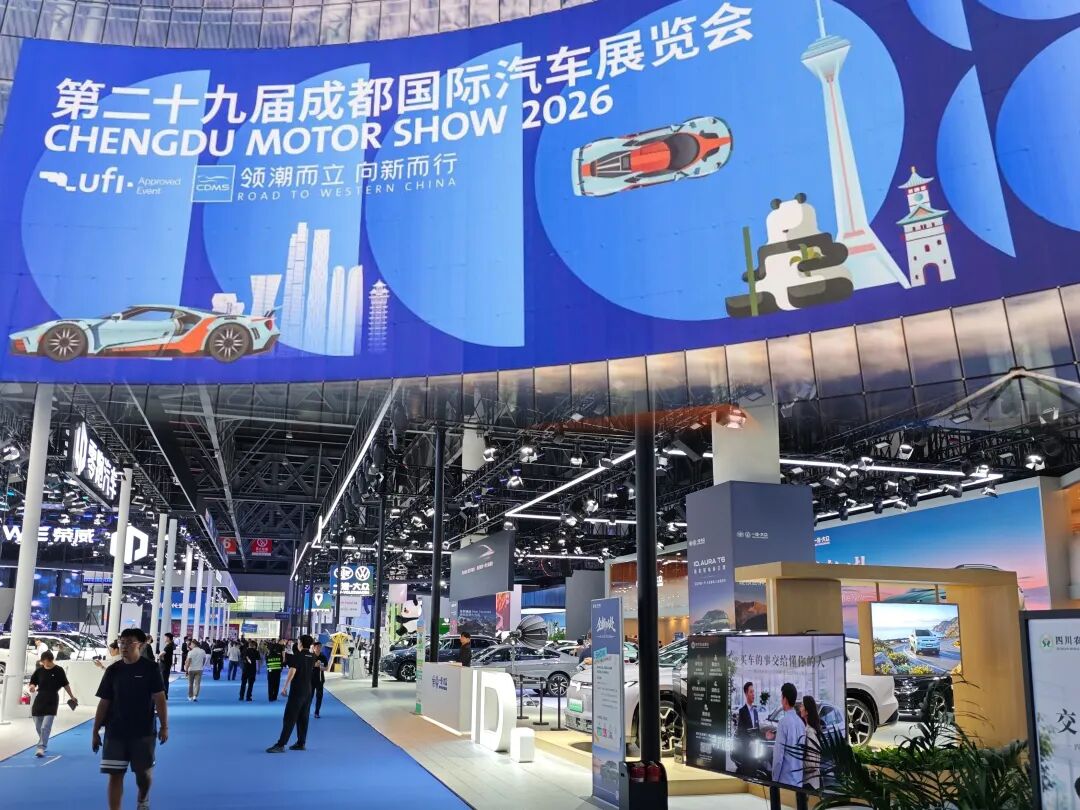
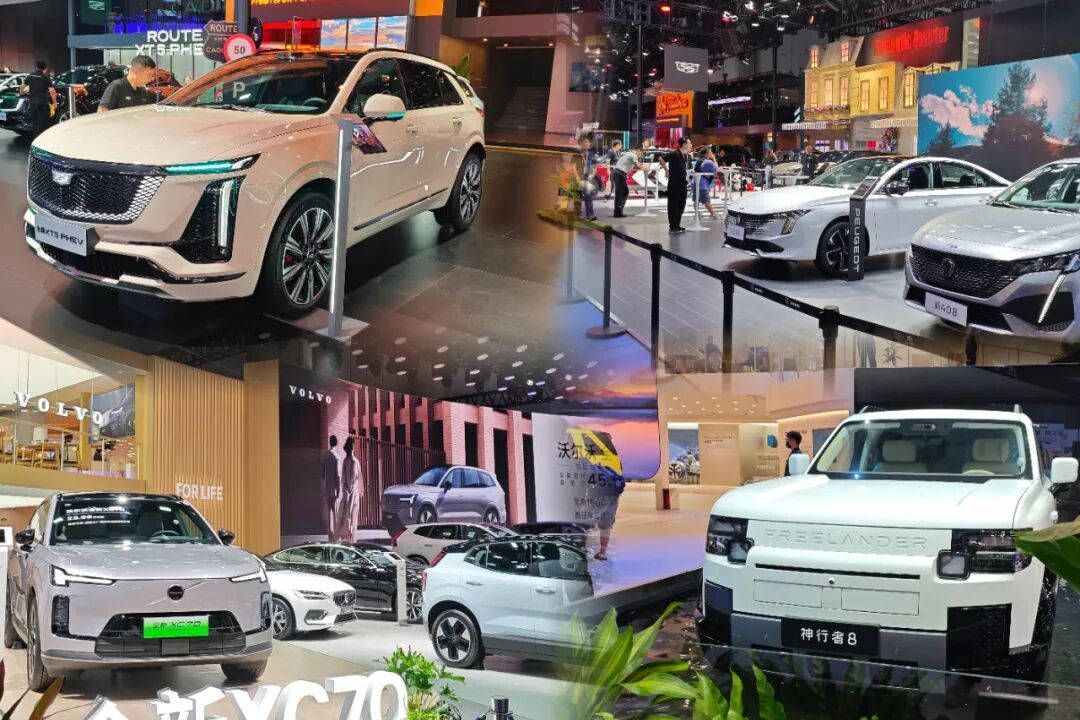
To be honest, after realizing that the entire ID. series was selling at a loss and the electric transformation process had entered a deadlock, everyone expected that Volkswagen in 2026 would systematically present the future approach of joint venture automakers. The Chengdu Auto Show provided another stage for such revelations.
The SAIC-Volkswagen ID.ERA 9X, Volkswagen (Anhui) Zonzon 08 leading the charge, followed by the FAW-Volkswagen AURA T6, Volkswagen (Anhui) Zonzon 09, SAIC-Volkswagen ID.ERA 8X, 5S, and 5X all eager to make their mark, represented the full hand of cards played by a foreign automaker with a 40-year presence in China.
Since the decline of national consumer subsidies and the narrowing of new energy support policies, this year's market conditions have indeed worsened significantly. Most automakers' domestic sales data are dismal, indicating that the current state of the Chinese auto market is unlikely to improve shortly.
Yet, as we witness the terminal monthly sales of FAW-Volkswagen and SAIC-Volkswagen drop to tens of thousands, with newly launched electric vehicles only achieving monthly sales of 2,000-3,000 units, and Volkswagen (Anhui)'s market position showing little improvement, while Honda's sales have plummeted to rock bottom, the expectations from the outside world have suddenly taken on a desolate hue.
In 2018, Suzuki voluntarily exited the Chinese passenger vehicle market, shifting its focus to India; two years later, Dongfeng Renault's passenger vehicle business halted, and the Renault brand withdrew from China. Subsequently, joint venture brands have one by one concluded their Chinese journeys, ceding market share entirely to Chinese automakers.
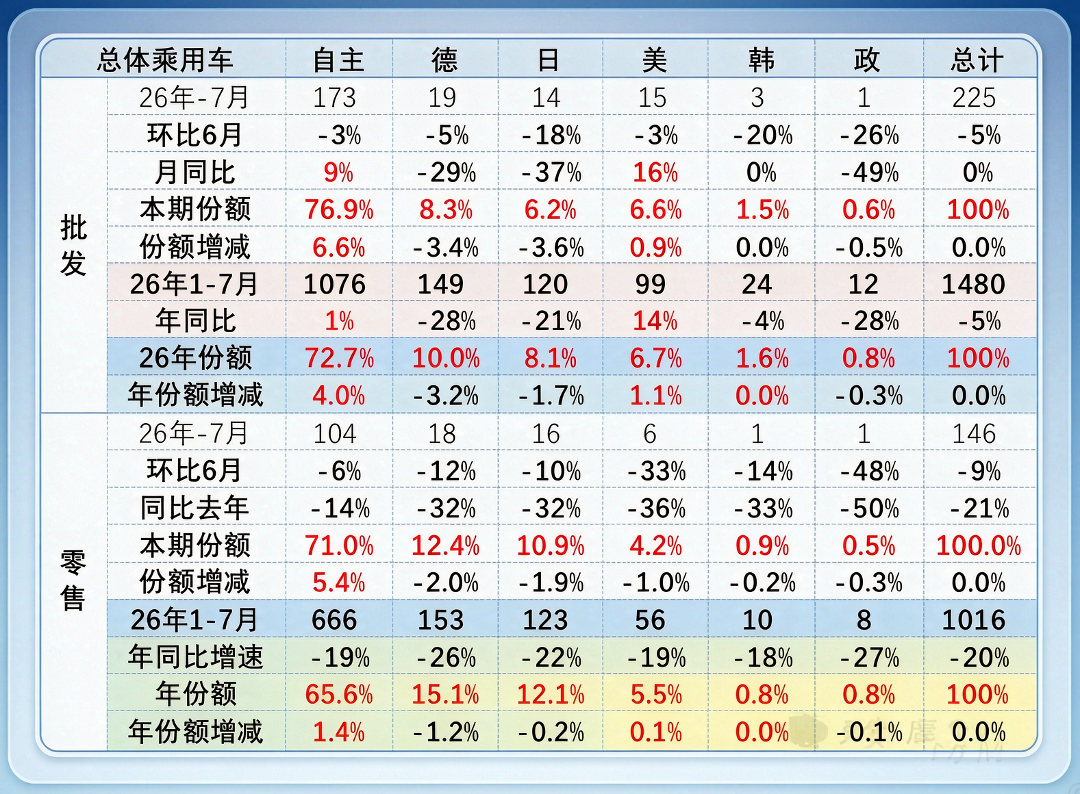
The latest data released by the China Passenger Car Association (CPCA) secretary-general shows that in July, mainstream joint venture brands retail 290,000 units, down 35% year-on-year and 12% month-on-month. German brands' retail share stood at 12.4%, down 2.0 percentage points year-on-year; Japanese brands' retail share was 10.9%, down 1.9 percentage points year-on-year; and U.S. brands' market retail share was 4.2%, down 1.0 percentage point year-on-year.
'If things are like this this year, how will we survive next year?'
This is the question most frequently asked within joint ventures recently, but it has also become a pressing proposition for the entire industry.
02 Embrace a New Way of Life, and the Sky's the Limit
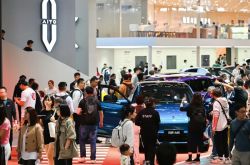
This year's Chengdu Auto Show remains another collective showcase of strength by Chinese brands. According to public information, the absence of Dongfeng Honda, Dongfeng Nissan, and Yueda Kia is mostly due to a lack of new model launches or an inability to hold onto the Southwest market.
However, in the foreseeable future, this list may continue to expand. Is there still a need for joint ventures to stay in China? If so, can they achieve the expected returns by staying? Whether in terms of profits or reputation.
Not long ago, General Motors decided to halt Chevrolet's retail operations in China. Upon hearing this news, the industry was shocked, and consumers expressed deep regret, much like when brands like Skoda and Jeep exited the market, leaving behind a sense of nostalgia.
But honestly, at this juncture, there's no need for excessive sentimentality. 'Rome wasn't built in a day,' and the essence of joint venture brands' struggles is simply that the Chinese market no longer provides them with a viable living space .
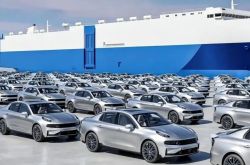
While everyone sympathizes with Chevrolet, a century-old brand, exiting China, few realize that at SAIC-GM's four vehicle manufacturing bases—Jinqiao, Dongyue, Shenyang, and Wuhan—Chevrolet's production lines remain fully operational, with all vehicles produced for export, primarily targeting emerging markets such as Southeast Asia, Latin America, the Middle East, and Mexico. This undoubtedly suggests that joint venture brands' way out is not necessarily confined to achieving success in the retail market, as commonly believed.
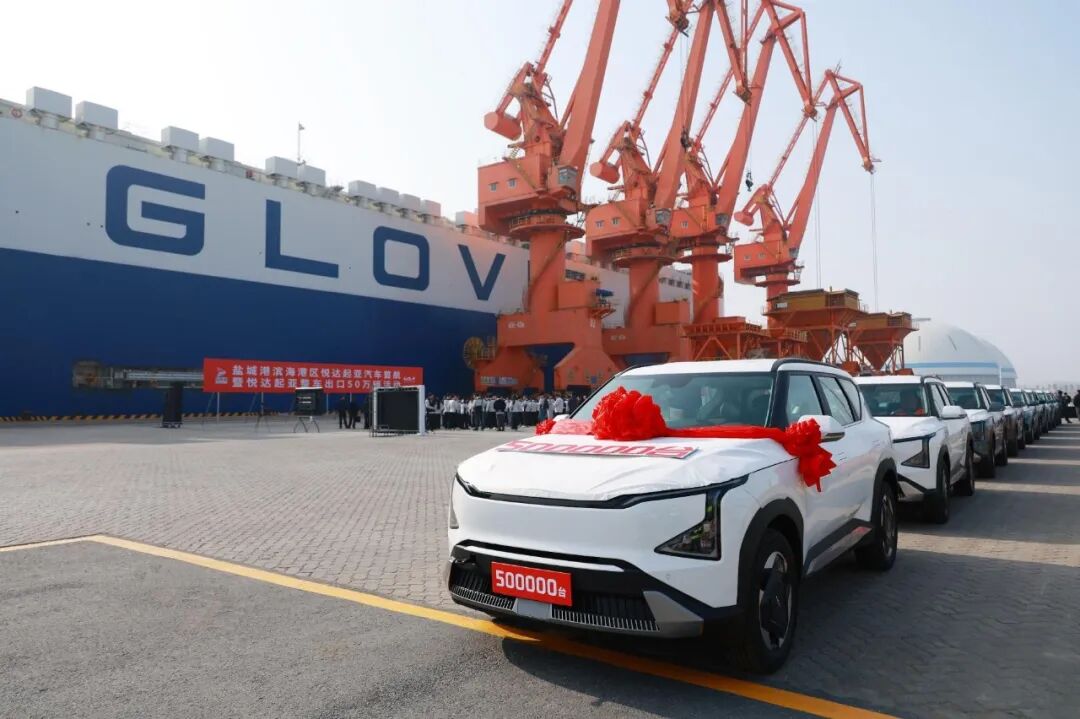
On November 20, 2018, Yueda Kia loaded 400 units of the Kia Stonic at Dafeng Port for export to Egypt, officially launching its global export business. By 2024, Yueda Kia's vehicle exports reached 170,000 units, a staggering 135-fold increase from 2018. By the end of last year, Yueda Kia's total vehicle exports surpassed 500,000 units, allowing it to achieve a balance between profits and losses.
If Chevrolet and Kia can think of this strategy, it's hard to imagine that joint ventures like Dongfeng Peugeot Citroën (DPCA) and Beijing Hyundai, which also engage in vehicle exports, would be unaware of how to leverage China's supply chain for profit.
We have always believed that as long as retail sales underperform, the survival probability of joint ventures would be challenged. However, today, as long as they clarify why they choose to stay in China, everything else will fall into place.
Facing the crazy offensive of China's new energy vehicles, struggling to cope is a task undertaken by both Volkswagen and Toyota. On one hand, to defend their existing market base, the terminal prices of fuel vehicle products continue to drop; on the other hand, locally developed new energy vehicles are being rolled out one after another. Their goal is nothing more than to cling to that meager profit and market share.
But then again, since the ultimate goal is to make money, there seems little point in joint venture automakers obsessing over whether their electric vehicles meet market demands.
Moreover, given the current circumstances, who can guarantee that even if products tailored to the market are created with the help of Chinese joint venture partners, sales will meet expectations? And going forward, the answer is likely to be negative.
Lowering expectations can make life easier. This is not a sign of defeat; for joint ventures, it may be the prerequisite for finding a way out. Henceforth, regardless of any new energy vehicle models, achieving monthly sales of 3,000 units compared to similar Chinese models should be considered a victory. Then, by applying the experience gained to feed into global new energy business operations, wouldn't that be a wonderful outcome?

Stellantis partnering with Leapmotor, Volkswagen eyeing Xpeng, Renault retaining its ACDC (Advanced China Development Center), and Hyundai establishing a forward-looking design center in Shanghai—it's hard to say that any of these moves are redundant. Now, with the establishment of Dongfeng Peugeot Citroën Automobile Technology (Wuhan) Co., Ltd., the reasons are likely the same.",
-
![]()
Shenzhen Speed Gets a New Version
-
When AI Becomes Too Powerful to Ignore: OpenAI Hits the Brakes for the First Time in History
-
![]()
Why Have Small Commuter Cars Priced Under 50,000 Yuan Seen a Slump in Sales?
-
![]()
When 'Li Shufu' and His Peers Begin to Relinquish the 'Reins'...
-
![]()
6.5 Trillion AI Unicorn: Generating $900 Million in Daily Revenue, Racing Toward the Largest IPO in History
-
![]()
Negative Influences Have Run Their Course: Three Key Questions Surrounding Seres' H1 Performance 'Dip' | Mirror Pro
-
![]()
Will China's Auto Exports Surpass 10 Million Units This Year?
-
![]()
Chinese Capital Surges into Europe: Emerging as the 'White Knight' for Local Auto Parts Companies?