VLA, World Models, and Reinforcement Learning: Clarifying Capabilities, Environments, and Training Methods
 08/24 2026
 459
459
Produced by Zhineng Technology
World models are emerging as a new high-frequency term in the field of intelligent driving.
◎ NIO has NWM (NIO World Model),
◎ Huawei incorporates World Engine into its WEWA architecture (WEWA = World Engine + World Action Model, a cloud-based world engine + vehicle-based world behavior model),
◎ NIO was an early proponent of VLA but is now also building a cloud-based world model behind VLA Driver. Other players like XPENG, Horizon Robotics, and overseas companies such as Waymo and Wayve have also integrated "world models" into their systems.
Besides VLA and world models, the term reinforcement learning often appears on the same PPT slide. Those unfamiliar with the details may easily interpret these as three competing technical approaches: choosing VLA means abandoning world models; betting on world models means giving up on VLA.
Of course, that's not the case.
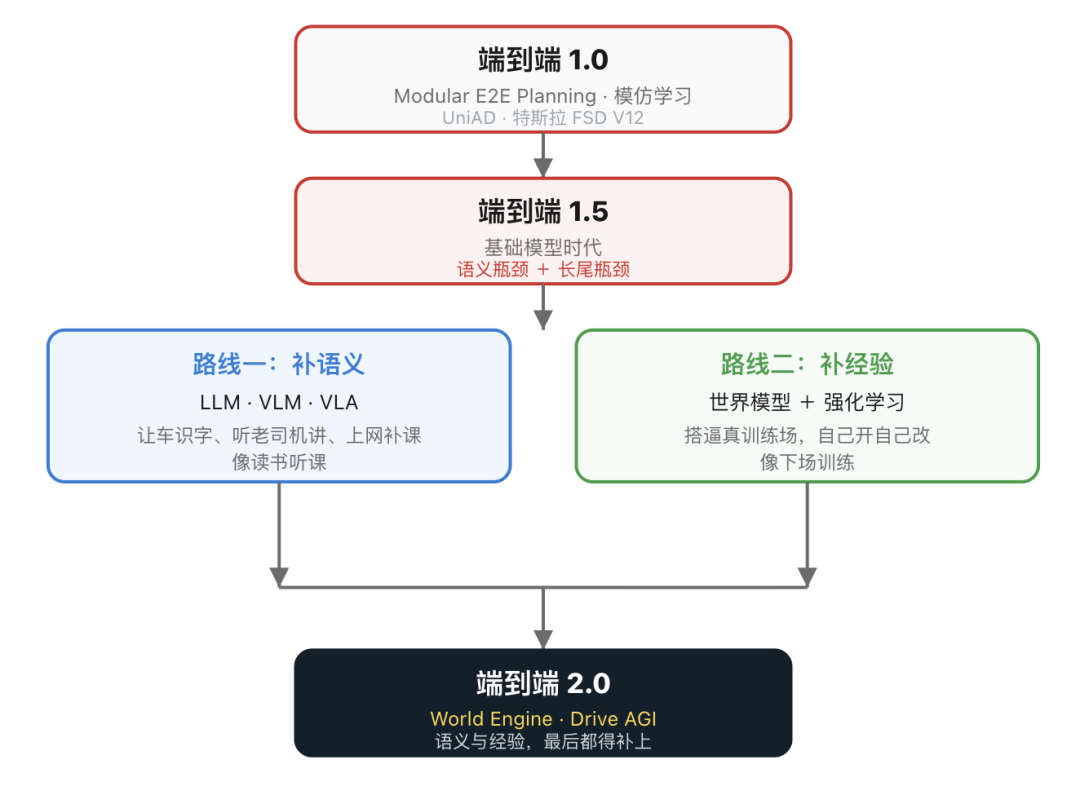
These three terms operate at different levels.
◎ VLA describes how a model receives information and outputs actions;
◎ World models describe how a system learns and predicts environmental changes;
◎ Reinforcement learning describes how strategies are updated based on feedback.
They can be used separately or integrated into the same intelligent driving system.
If we draw an analogy with driving, VLA is more like the driver's interface for observation, understanding, and operation—whether it can only see, or also hear and speak; the world model is like a training environment capable of repeatedly simulating road conditions, while reinforcement learning acts as a scoring and error-correction mechanism.
01 VLA as an Interface: How Models Understand and Act
Early end-to-end solutions primarily learned mappings from sensor inputs to trajectory or control outputs. They mimicked how human drivers operate, finding similar patterns from large datasets.
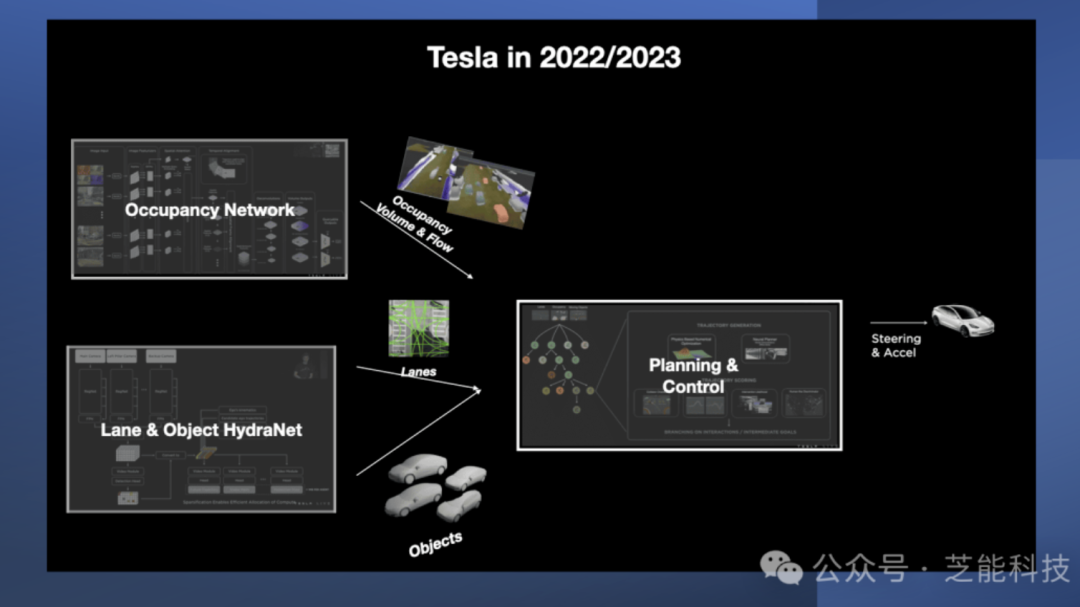
This approach reduces error propagation among perception, prediction, and planning in traditional pipelines but remains limited by the coverage of training data.
VLA adds a linguistic dimension to this foundation. Here, V, L, and A correspond to vision, language, and action, respectively. The model not only processes road scenes but also leverages textual descriptions, navigation intentions, traffic rules, or manually annotated reasoning information to ultimately output trajectories, control signals, or other action results.
The value of language lies in adding a layer of semantic constraints to training and reasoning, not in letting the vehicle search for answers on the fly while driving.
For example, when a camera detects a bus-only lane ahead, a vision-only model must learn how to handle it from sample distributions; with language, the model can also incorporate time periods, road rules, and navigation goals to understand current restrictions. Similarly, when a user says, "Slow down near the school ahead," the system must convert this verbal request into executable driving behavior.
VLA connects "what is seen, how it is understood, and how to drive," but it does not automatically cover all low-frequency dangers simply by incorporating language. How complex traffic participants interact and what changes a single action might trigger seconds later still require temporal prediction and closed-loop training.
02 World Models as Environments: How the Environment Changes After Actions
The core of world models is learning how environmental states evolve over time and in response to actions.
Given current road conditions and a candidate action, it can estimate potential outcomes: whether the vehicle ahead will continue to slow down, whether adjacent vehicles will merge into the lane, whether pedestrians will cross behind obstructions, or whether the vehicle's trajectory will conflict with other traffic participants.
Predicted outcomes can take the form of videos, occupancy grids, trajectories, latent variables, or other state representations. The specific output format is not the sole criterion; the key is whether it retains information relevant to driving decisions and reliably simulates action consequences.
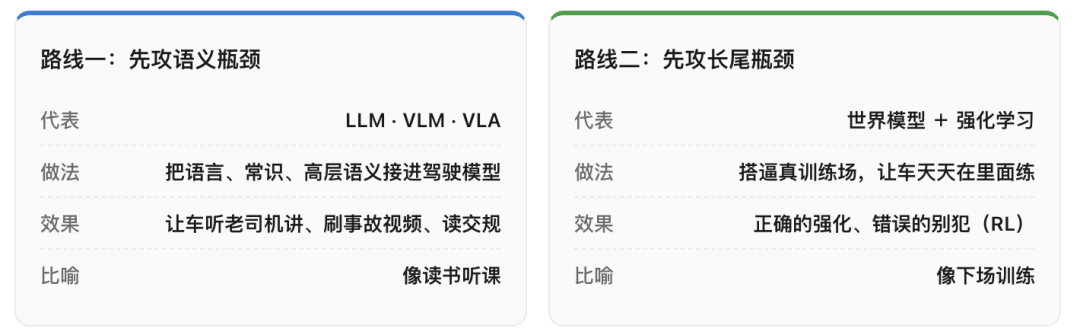
World models typically serve three purposes.
◎ The first is assisting planning. The system can compare multiple candidate trajectories, estimating their safety and efficiency in advance.
◎ The second is generating or reconstructing training environments. Rare dangerous combinations rarely encountered on real roads can be created in controlled environments by altering vehicle positions, speeds, weather, and occlusion relationships to increase training density for long-tail scenarios.
◎ The third is closed-loop evaluation. After the model takes an action, the environment changes, and the new state influences the next action. Only when this cycle truly operates does it more closely resemble continuous interactions after a vehicle hits the road.
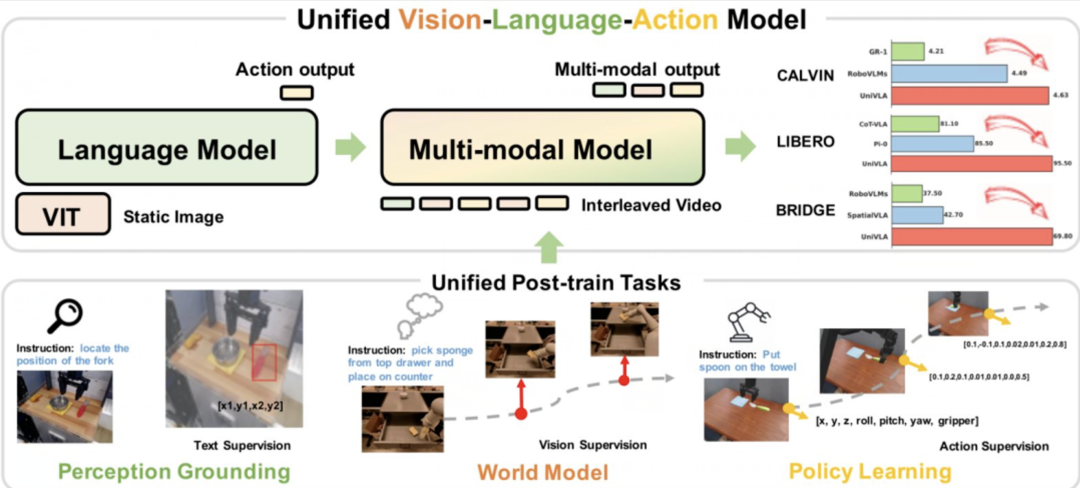
Two easily confused concepts here:
◎ Traditional simulators can also provide virtual roads but are not necessarily learning-based world models;
◎ World models can predict the future, but that does not mean they already possess a complete training engine.
What automakers refer to as World Model, World Engine, or world engine may vary in scope and cannot be simply ranked horizontally by name alone.
03 Reinforcement Learning as Learning: How Strategies Are Updated from Outcomes
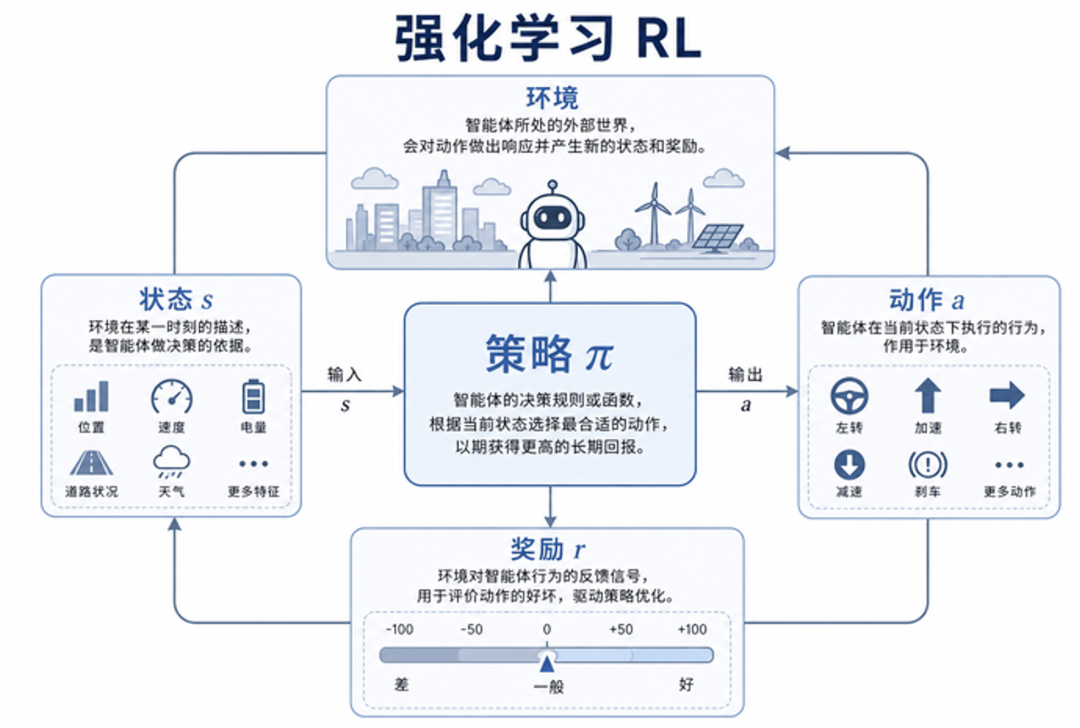
The counterpart to "reinforcement learning" should be "imitation learning."
◎ Imitation learning copies "how human drivers operated in specific situations," while reinforcement learning not only mimics actions but also evaluates "whether the outcomes of those actions were good."
The training system designs rewards or penalties for objectives such as collision risk, traffic rules, comfort, and efficiency. The vehicle takes actions, receives feedback, updates its strategy, and proceeds to the next round. It has the opportunity to discover solutions not directly shown in human samples and can optimize long-term outcomes for sequential decisions.
◎ Reinforcement learning does not rely on a fixed environment. It can train in rule-based simulators, use real data for offline training, or operate within world models for repeated simulation.
This is why world models and reinforcement learning often appear together: the former provides a low-cost, repeatable, and adjustable training ground, while the latter refines strategies based on outcomes.
However, their combination also has clear boundaries.
◎ If the virtual environment differs too greatly from real roads, strategies may only perform well under simulated conditions;
◎ If reward designs omit important constraints, the model may find shortcuts undesirable to humans.
Therefore, simulation fidelity, closed-loop stability, reward design, and real-world validation matter more than mere virtual mileage numbers.
04 How Do These Three Connect?
In short, VLA enhances semantic understanding, world models provide future simulation and training environments, and reinforcement learning improves sequential decision-making.
Together, they form a closed loop: the vehicle-side model understands the scene and outputs actions, the cloud-based environment reconstructs or generates complex road conditions, the training algorithm updates strategies based on feedback about safety, efficiency, and comfort, and then deploys new capabilities back to the vehicle.
Different automakers emphasize different terms, often because they publicly showcase different levels of their systems.
Next time you attend a product launch, don’t stop at asking, "Does it have a world model?" Instead, continue with:
◎ What inputs does the vehicle-side model receive? Does it output trajectories or raw control signals?
◎ What interactions can the cloud-based environment reconstruct? Can it change continuously based on autonomous driving actions?
◎ Does training form a closed loop? How are rewards and evaluations designed to constrain safety and comfort?
◎ Is the launch showcasing research capabilities, internal training platforms, or already deployed mass-production features?
In the next article, we will apply this framework to the public architectures of companies like NIO, Huawei, and Li Auto to see where exactly each places its world model behind the same name.
-
![]()
Registered Capital Slashed to 372 Million Yuan! Yutong Optical Finalizes Industrial and Commercial Change Registration
-
![]()
Zhuque-3 Successfully Lands, and 'Time Traveler' Secures Another ¥100 Million in Funding: China's Commercial Space Industry Experiences a 'Dynamic August'
-
![]()
Autohome Faces a Shrinking Window of Opportunity
-
![]()
Even a Titan Like Musk Has Faced Setbacks in Fulfilling Promises
-
![]()
AI Office: The End of the Racing Era, Context Becomes the Key to Success
-
![]()
Domestic Vehicle Chassis Revolution ②: The Steering Wheel Remains, But Mechanical Connections in the Steering System Are Decreasing
-
![]()
Exploring MiniMax Design: Can Video Editing Be as Simple as Speaking?
-
![]()
Why Can SenseTime Achieve Profitability While CloudWalk Still Faces Challenges, Despite Both Adopting Large Models?