Chengdu Auto Show: A New Era—From ‘Hasty Innovation Race’ to ‘Quality Renaissance’
 08/24 2026
 550
550
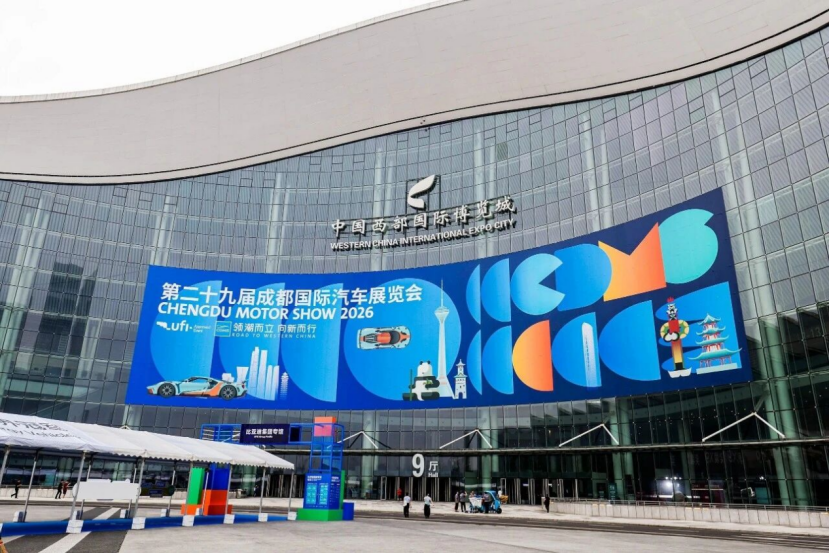
On August 21, the 29th Chengdu International Auto Show officially commenced at the Western China International Expo City. Under the theme of "Riding the Wave, Advancing Towards Innovation," the event brought together approximately 120 leading automotive brands from both domestic and international markets. As the first significant A-class auto show in China for the latter half of 2026, it serves as a crucial barometer for consumer trends in the central and western automotive markets.
Recently, the Ministry of Industry and Information Technology has intensified its focus on regulating automotive product R&D management and quality supervision, providing guidance to curb the practices of some companies that rush R&D cycles and hasten product updates. Coupled with previously implemented policies, China's automotive industry quality supervision system is undergoing continuous refinement.
Against this backdrop, the Chengdu Auto Show has evolved beyond being a mere platform for unveiling new vehicles; it has become a showcase for the industry's strategic shift in competition: Is the nearly four-year trend of price wars and frenetic innovation approaching a turning point?
▍Stricter Regulations Impose Restrictions on 'Hasty Car Manufacturing'
Over the past three years, China's domestic new energy vehicle (NEV) market has witnessed rapid popularization. While the industry scale has expanded swiftly, the pace of product iteration has also accelerated. In the era of fuel-powered vehicles, the R&D and verification cycle for a new model typically spanned three to five years, encompassing multiple core stages such as design verification, mass production verification, and extreme condition testing.
With the advent of the new energy era, the widespread adoption of modular platforms and electronic-electrical architectures has indeed provided a technological foundation for shortening R&D cycles. However, some automakers have misconstrued the 'efficiency gains' brought by technology as a mere pursuit of 'speed,' often relying excessively on simulation testing and curtailing real-vehicle verification processes. Consequently, new vehicle R&D cycles have been compressed to within 18 months, with some derivative model updates completing the entire process from project initiation to market launch in as little as 12 months.
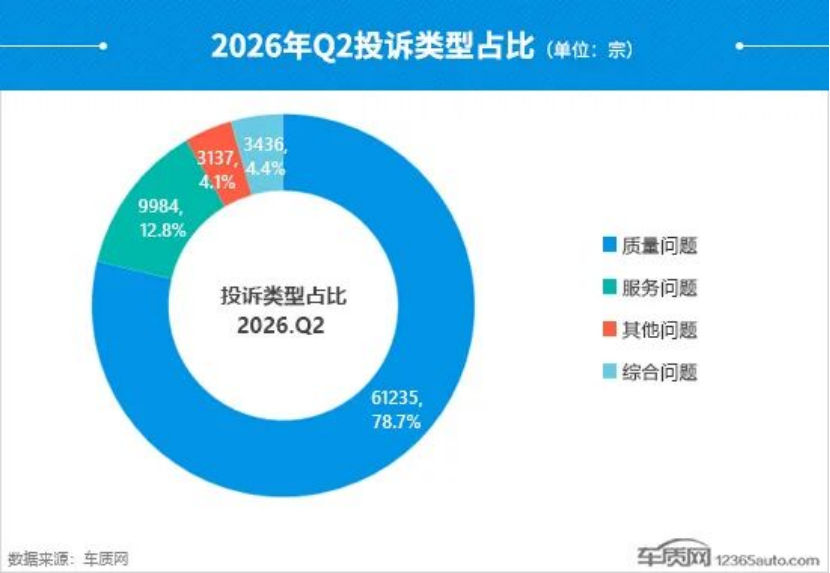
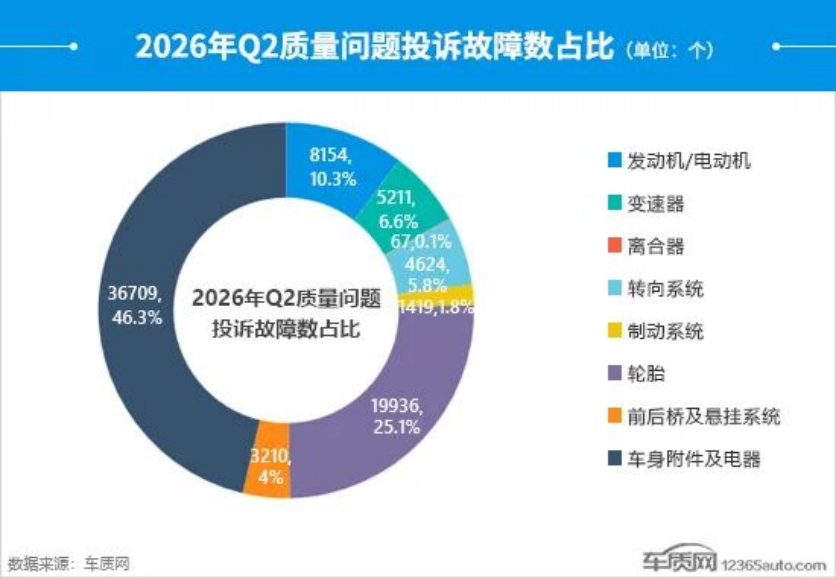
This rapid innovation model has enabled automakers to swiftly capitalize on market opportunities during periods of growth but has also sown the seeds of quality risks. According to a Q2 complaint analysis report from CheZhiWang, a leading platform for collecting information on defective automotive products and handling consumer complaints, the number of quality-related complaints has surged compared to the first quarter, accounting for nearly 80% of the total. Complaints related to steering systems, braking systems, front and rear axles and suspension systems, and body attachments and electrical components have all seen month-on-month growth.
Simultaneously, rapid innovation has intensified homogeneous competition within the industry. Some companies rely on configuration pile-ups and price cuts to vie for market share, leading to a continuous decline in overall industry profitability. In the first half of 2026, the profit margin of domestic automotive manufacturing above a certain scale fell to a near-decade low, with the average profit margin in the vehicle manufacturing segment hovering around just 1.5%. Many automakers have found themselves in a quandary of 'increasing sales but declining profits,' with the industry as a whole exhibiting characteristics of revenue growth without corresponding profit growth.
In response to these industry challenges, regulatory authorities have begun introducing policies since the beginning of 2026 to gradually strengthen the institutional framework for regulating competitive order and ensuring product quality. In February, the State Administration for Market Regulation issued compliance guidelines for pricing behavior in the automotive industry, setting basic red lines for fair competition. In June, the Ministry of Industry and Information Technology, in conjunction with the State Administration for Market Regulation, conducted centralized interviews with automakers suspected of engaging in irrational competition, guiding the industry to abandon disorderly competition practices. In July, two mandatory safety national standards for electric vehicles were implemented, explicitly requiring that power battery packs not catch fire or explode during thermal runaway, setting a stringent standard for core safety in NEVs. That same month, the National Technical Committee for Automotive Standardization publicly solicited opinions on three NEV homologation test procedures, proposing to uniformly increase the total reliability driving test mileage for NEV models to 30,000 kilometers, aligning with fuel vehicle standards. Recently, the Ministry of Industry and Information Technology held a symposium with key automotive manufacturing enterprises, requiring them to strengthen product testing and verification, regulate industry tendencies such as compressed verification cycles from the R&D source, and uphold quality and safety bottom lines.
The core logic of this regulatory policy primarily targets the 'pseudo-speeding' practices that omit verification processes and sacrifice product quality. The industry consensus is that, by leveraging mature modular platforms and comprehensive testing systems, automakers can reasonably compress R&D cycles without compromising quality standards, with such efficiently developed products fundamentally different from 'hastily manufactured vehicles.' The significance of regulatory policies lies in bringing new vehicle launches back to the orbit of complete R&D and thorough verification.
▍Shift in Auto Show Focus: Product Narratives and Competitive Priorities Evolve
As the first major auto show following the implementation of multiple regulatory policies, the participating brands and new vehicle displays at this year's Chengdu Auto Show have already exhibited some noteworthy signs of shift. The most apparent change is reflected in automakers' product promotion messages. In previous auto shows, the core content of most brands' press conferences revolved around listing configuration parameters and announcing price discounts, competing on quantifiable hardware indicators such as screen size, chip computing power, and the number of zero-gravity seats. However, at this year's show, more and more brands have begun to emphasize safety standards, durability testing, and complete verification processes as the core elements of their promotions, with the product narrative shifting from 'comprehensive configurations' to 'stable quality.'
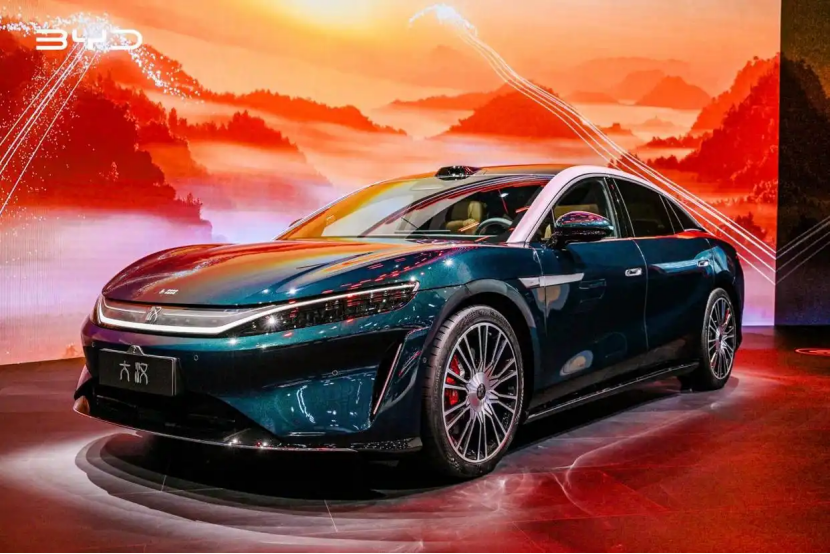
Take BYD's Han, a flagship sedan from its Dynasty series that garnered significant attention at this year's show, as an example. During its launch, the focus was not solely on hardware specifications but rather on introducing the vehicle's safety architecture, full-scenario assisted driving safety redundancy, and complete high- and low-temperature and durability testing processes, allowing consumers to understand the compliance of its development and verification.
Beijing Hyundai also explicitly stated during the show its stance of 'rejecting hasty car manufacturing,' positioning its complete R&D and verification system as a competitive advantage. At the event, executives from several automakers also responded to the controversy surrounding 'hastily manufactured vehicles.' Brands such as Great Wall Motors, SAIC-GM, and Deepal Auto also publicly committed to 'not building hastily manufactured vehicles.'
In addition to adjustments in promotional messages, the cooling-off of price wars is another notable feature of this year's show. In previous Chengdu Auto Shows, serving as a warm-up event for the 'Golden September and Silver October' sales period, brands often concentrated on introducing preferential policies. However, at this year's show, the number of brands directly announcing price cuts has significantly decreased, with most brands preferring to demonstrate product value through technological experiences and service benefits. This shift is influenced by both regulatory guidance and automakers' proactive adjustments amid pressure on their own profitability. Executives from several automakers have publicly stated that mere low-price competition holds no long-term value and that the industry must ultimately return to competition based on product value itself.
Automakers from different segments are exhibiting varying states in this shift. Leading independent automakers, leveraging their scale advantages and technological accumulation, have the capability to take the lead in adjusting product planning rhythms and increasing investment in R&D and verification processes. Some new energy vehicle startups have also begun to proactively slow down their innovation pace, allocating more resources to optimizing existing products and refining quality.
For smaller brands, the pressure from tightened regulations is more pronounced, as they must address the challenge of rising R&D costs while balancing innovation speed and product quality with limited resources, further narrowing their survival space. Joint venture brands, on the other hand, are leveraging their long-accumulated systematic R&D capabilities to regain competitive leverage in terms of quality and reliability.
From the perspective of consumer feedback, this shift also aligns with changes in market demand. After years of price wars and rapid innovation, consumers have grown weary of the rapid iteration of new vehicles, with an increasing number of car buyers beginning to focus on long-term reliability, after-sales support, and usage costs. Industry insiders believe that the frequent statements from multiple automakers reflect the current collective anxiety among consumers regarding the quality of new energy vehicles.
Overall, the industry shift showcased at this year's Chengdu Auto Show is the result of both regulatory policies and market forces. Currently, it is still in the initial stages of adjustment. The regulatory requirements from the Ministry of Industry and Information Technology regarding R&D cycles and quality verification have set institutional bottom lines for the industry. The persistent pressure on industry-wide profitability has also made automakers realize that the path of mere low-price competition is no longer viable, necessitating a shift towards value competition.
Layout 丨 Yang Shuo Image Sources: CheZhiWang, BYD, BMW
-
![]()
Registered Capital Slashed to 372 Million Yuan! Yutong Optical Finalizes Industrial and Commercial Change Registration
-
![]()
Zhuque-3 Successfully Lands, and 'Time Traveler' Secures Another ¥100 Million in Funding: China's Commercial Space Industry Experiences a 'Dynamic August'
-
![]()
Autohome Faces a Shrinking Window of Opportunity
-
![]()
Even a Titan Like Musk Has Faced Setbacks in Fulfilling Promises
-
![]()
AI Office: The End of the Racing Era, Context Becomes the Key to Success
-
![]()
Domestic Vehicle Chassis Revolution ②: The Steering Wheel Remains, But Mechanical Connections in the Steering System Are Decreasing
-
![]()
Exploring MiniMax Design: Can Video Editing Be as Simple as Speaking?
-
![]()
Why Can SenseTime Achieve Profitability While CloudWalk Still Faces Challenges, Despite Both Adopting Large Models?