Can Stellantis Revitalize Jeep’s Domestic Production in China via the ‘New Dongfeng Peugeot Citroen Automobile’ Initiative?
 08/26 2026
 535
535
Lead
The launch of Dongfeng Peugeot Citroen Automobile Technology heralds a fresh collaborative venture among Dongfeng, Stellantis, and Wuhan’s local state-owned enterprises. However, it also signals the emergence of a novel model for reverse joint ventures among multinational automakers. This model integrates China’s cutting-edge new energy technology and supply chain strengths to re-enter both domestic and international markets. Rather than attempting to ‘rescue’ traditional joint venture automakers, Stellantis has opted for a more agile, rapid, and globally imaginative approach this time around.
This article is produced by Heyan Yueche Studio
Written by Zhang Dachuan
Edited by Hezi
Full text: 2,759 characters
Reading time: 4 minutes
The Jeep brand is poised to embark on a new electrified journey in China.
Recently, Dongfeng Peugeot Citroen Automobile Technology (Wuhan) Co., Ltd. was officially registered and established, boasting a registered capital of 8.19 billion yuan. The company is co-funded by Dongfeng Motor Group Co., Ltd., Stellantis Group, Dongfeng Peugeot Citroen Automobile Co., Ltd., Changjiang Industry Investment Group Co., Ltd., Wuhan Financial Holdings (Group) Co., Ltd., and Wuhan Economic Development Zone Industrial Investment Group Co., Ltd. According to the plan, the company will commence production of two Peugeot new energy vehicle models and two Jeep new energy off-road models in Wuhan from 2027, targeting both the Chinese and overseas markets.
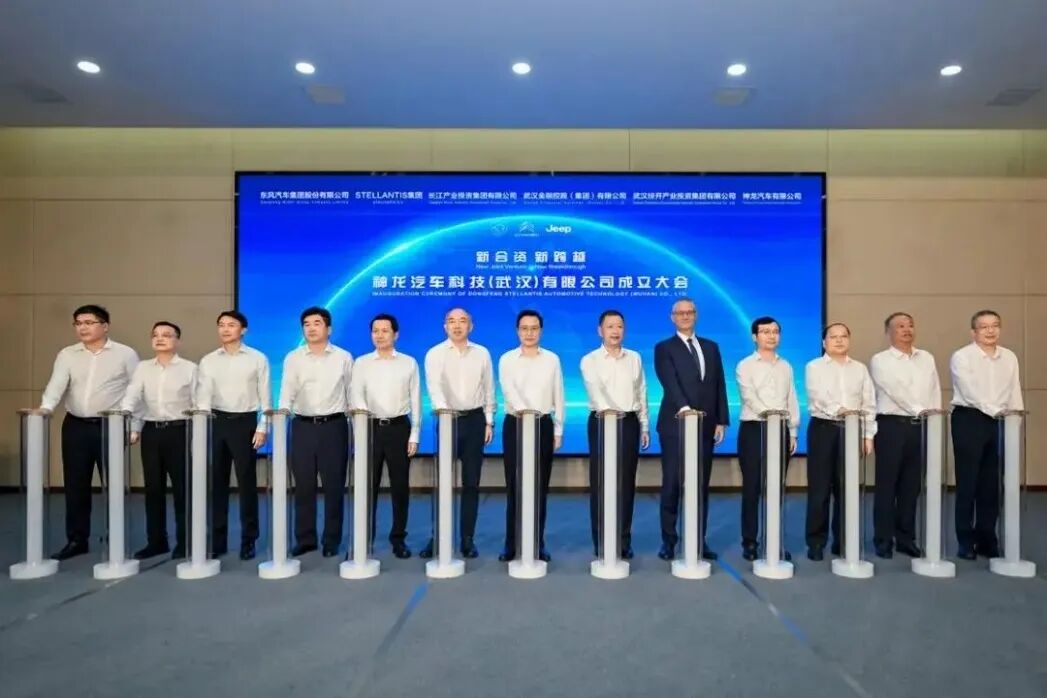
△Recently, Dongfeng Peugeot Citroen Automobile Technology (Wuhan) Co., Ltd. was registered and established
What is the Role of the ‘New Dongfeng Peugeot Citroen Automobile’?
With the registration and establishment of Dongfeng Peugeot Citroen Automobile Technology, Dongfeng Motor and Stellantis Group now effectively operate two joint venture vehicle enterprises in the Chinese market, each with distinct roles and missions.
Dongfeng Peugeot Citroen Automobile has faced sustained operational challenges in recent years, with sales reaching only 51,500 units in 2025, marking a year-on-year decrease of 24.61%. Compared to its peak annual sales of 711,000 units, it has shrunk by over 90%, gradually shifting from a highly influential joint venture automaker to the fringes of the market. In this context, continuing to invest significant resources in Dongfeng Peugeot Citroen Automobile would not only entail shouldering historical burdens such as debts, disputes, and personnel issues but could also divert resources from new model research and development and market launches.
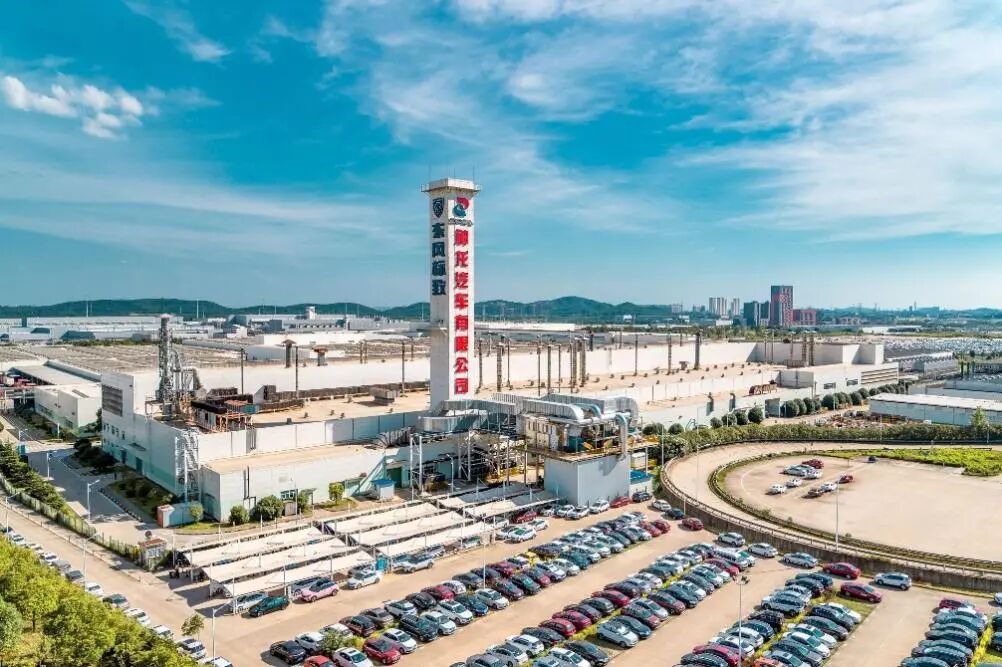
△The original Dongfeng Peugeot Citroen Automobile has been severely marginalized
Therefore, starting afresh and establishing a new company to receive investments from local state-owned assets may be a more pragmatic choice for all parties involved. In the future, the original Dongfeng Peugeot Citroen Automobile is more likely to function as a ‘manufacturing base,’ continuing to handle vehicle production while absorbing fixed assets, over 10 billion yuan in debt, and personnel burdens. Dongfeng Peugeot Citroen Automobile Technology will manage investments in new models, technology introduction, product development, and market operations, achieving a relatively light start by separating old and new businesses.
Dongfeng Peugeot Citroen Automobile Technology still benefits from the resource support of its two major shareholders, Dongfeng and Stellantis: Dongfeng provides technological, manufacturing, and industrial chain support, while Stellantis is responsible for brands, products, as well as global markets and orders. Wuhan’s local state-owned assets contribute nearly half of the registered capital, providing financial support for the new company. For Wuhan, this is not merely an investment in a single automaker. The automotive industry chain is extensive and has a significant driving effect on employment, taxation, and upstream and downstream industries. Compared to investing in new energy vehicle startups lacking an industrial foundation, Dongfeng Peugeot Citroen Automobile Technology, backed by Dongfeng and Stellantis and with products possessing global market potential, is more likely to gain the confidence of local state-owned assets.
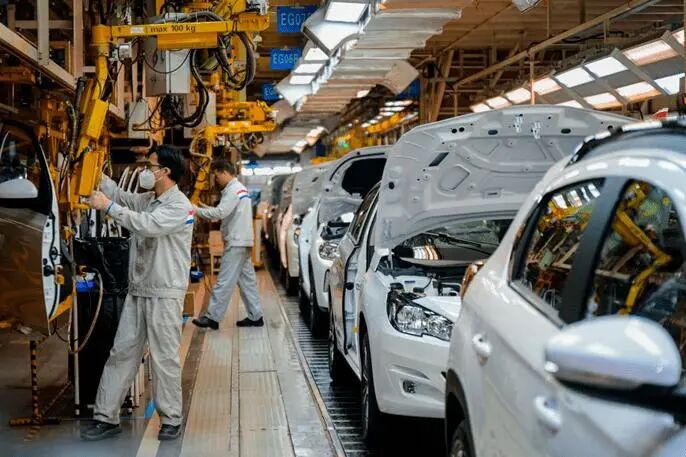
△The original Dongfeng Peugeot Citroen Automobile will be responsible for manufacturing and contract manufacturing
If Dongfeng Peugeot Citroen Automobile Technology develops smoothly in the future, its growth may also provide solutions to the historical issues of the original Dongfeng Peugeot Citroen Automobile, with potential for gradually integrating some of its assets and production capacity. Therefore, establishing Dongfeng Peugeot Citroen Automobile Technology is not ‘abandoning’ Dongfeng Peugeot Citroen Automobile but rather separating old and new businesses, developing new businesses first, and then gradually resolving historical burdens. Compared to directly investing heavily to save the original Dongfeng Peugeot Citroen Automobile, this model may be more economical and have a higher probability of success.
What Are the Odds of Success for the New Dongfeng Peugeot Citroen Automobile?
According to public information, Dongfeng Peugeot Citroen Automobile Technology has planned four models: the mass-produced versions of the Peugeot brand’s Concept 6 Shiruifengrui Smart Flagship Sedan and Concept 8 Liuming Full-Size Intelligent SUV, as well as two Jeep new energy off-road vehicles.
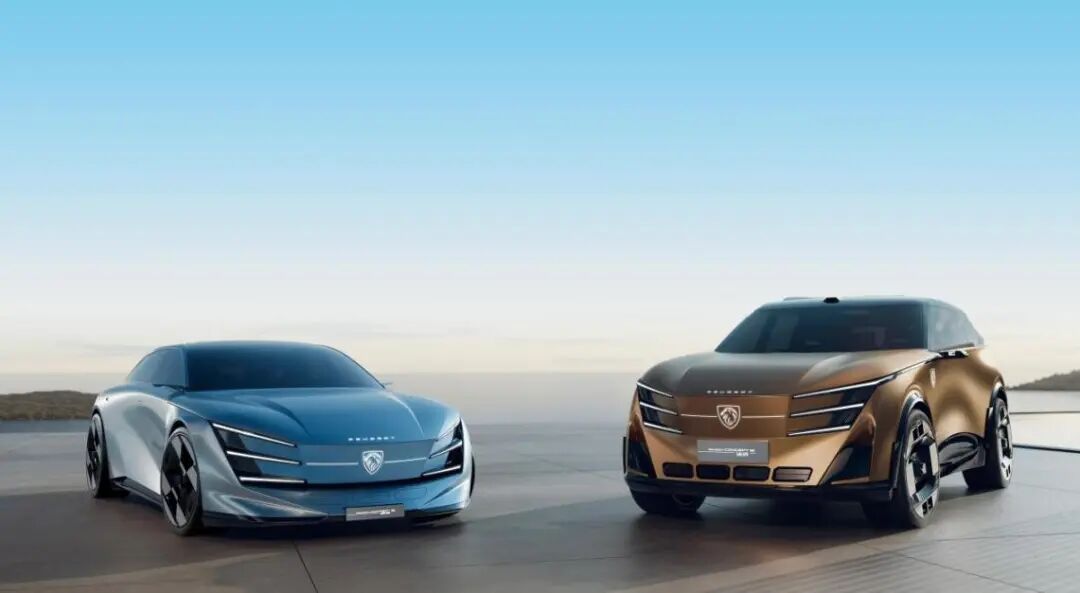
△According to public information, Dongfeng Peugeot Citroen Automobile Technology has planned four models and will launch them in 2027
All four models will incorporate Dongfeng’s technology. The two Peugeot models will adopt Dongfeng’s three electric systems (battery, motor, and electronic control) and intelligent driving technology, equipped with steer-by-wire systems and advanced intelligent driving assistance systems. The two Jeep new energy off-road vehicles will cover pure electric and plug-in hybrid versions and will directly utilize Dongfeng Mengshi’s electric off-road platform. The Mengshi M-TECH intelligent off-road architecture integrates the MORA skateboard chassis, MEGA POWER electric drive system, and M-ATS all-terrain intelligent solution, having completed mass production verification of pure electric and extended-range models on the Mengshi 917. Due to the relative maturity of the core technologies, the four models are planned to be launched successively in 2027.
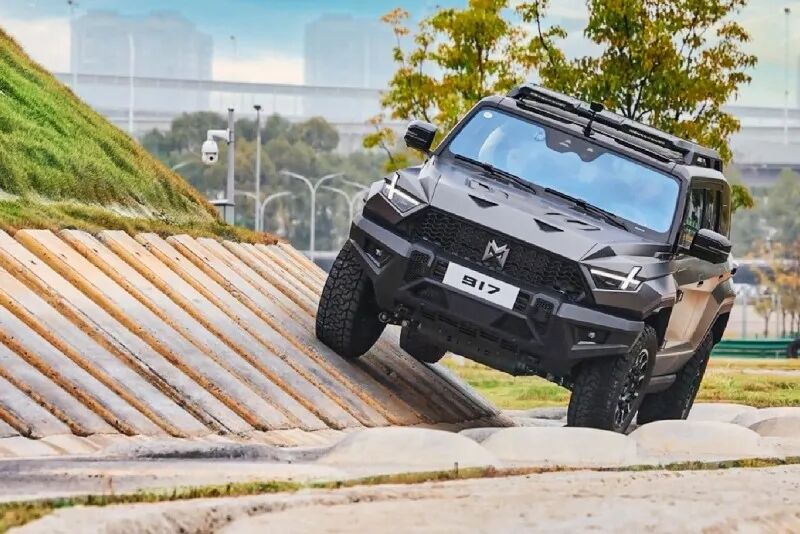
△Jeep will introduce the Mengshi M-TECH intelligent off-road architecture
Of course, in the fiercely competitive Chinese automotive market, there is still uncertainty regarding the sales volume that these four models can ultimately achieve. However, a noteworthy signal is that Stellantis plans to incorporate all four models into its global sales network. The advantages of Chinese automakers in new energy and intelligent connected vehicle technologies, combined with strong cost control capabilities, superimposed with the brand influence of Peugeot and Jeep, as well as Stellantis’ global channels, make it not unlikely for these models to achieve breakthroughs in overseas markets. Once overseas sales continue to grow, it will, in turn, provide crucial support for Dongfeng Peugeot Citroen Automobile Technology. The rapid growth of Chery’s overseas sales in recent years is a good example.
△Stellantis urgently needs new models to reverse its current financial difficulties
For Stellantis, there is also a practical need to promote the global expansion of Dongfeng Peugeot Citroen Automobile Technology’s models. In the second quarter of this year, Stellantis achieved revenue of 43.482 billion euros, a year-on-year increase of 13%, but its adjusted operating profit was only 773 million euros, with a profit margin of just 1.8%. Its European operations are still incurring losses. Faced with the accelerated entry of Chinese brands into the European market, Stellantis needs to quickly launch more competitive new models to improve its European business performance and expand global sales. Against this backdrop, Dongfeng’s mature and market-verified new energy platforms and technologies are undoubtedly a ‘booster shot’ for Stellantis. In fact, this is not the first time Stellantis has leveraged Chinese automaker technologies to achieve product breakthroughs. Previously, Renault used Dongfeng’s technology to build the Dacia Spring, which performed well in the European market. From this perspective, Dongfeng Peugeot Citroen Automobile Technology may actually become a crucial tool for Stellantis to leverage China’s new energy technologies and supply chain advantages to re-expand into global markets.
Stellantis China: A Two-Pronged Approach
In March 2022, Stellantis released its ‘Dare Forward 2030’ strategy, explicitly proposing to adopt an asset-light model in China. In July of the same year, GAC-Stellantis terminated its joint venture operations. Coupled with the low ebb in the operational performance of Dongfeng Peugeot Citroen Automobile at the time, rumors surfaced that Stellantis might withdraw from the Chinese automotive market.
However, Stellantis quickly found another path. In 2023, Stellantis invested approximately 1.5 billion euros to acquire about a 21% stake in Leapmotor and subsequently established Leapmotor International with Stellantis holding a 51% stake, responsible for the sales and production of Leapmotor vehicles outside Greater China. On May 8, 2026, the two sides further announced an expansion of their cooperation: the Leapmotor B10 is planned to be produced at Stellantis’ factory in Zaragoza, Spain, and both sides are simultaneously evaluating the addition of a production line for a new Opel C-segment pure electric SUV.
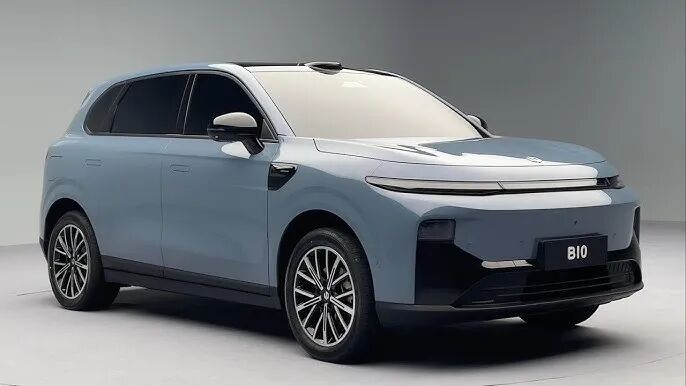
△The Leapmotor B10 will be produced at Stellantis’ factory in Spain
Leapmotor has emerged as a latecomer among domestic new energy vehicle startups. In addition to its own product and cost advantages, the global channels provided by Stellantis have also become a crucial boost for its overseas market expansion. Having tasted success, Stellantis clearly hopes to replicate this model with Dongfeng Peugeot Citroen Automobile Technology. However, this collaboration is even deeper: Stellantis is no longer just helping Chinese automakers ‘go global’ but is directly integrating Dongfeng’s mature new energy technologies into Peugeot and Jeep brand models, with Stellantis leading global marketing.
To some extent, Leapmotor and Dongfeng Peugeot Citroen Automobile Technology represent two different paths for Stellantis to leverage China’s automotive industry advantages, but the underlying logic is highly consistent. China’s advantages in new energy vehicle technologies, supply chains, and cost control are now widely recognized. For multinational automakers that have been relatively slow in transitioning, competing head-on with local automakers in the Chinese market in the short term is not easy. Conversely, for Chinese automakers to independently build overseas channels and cultivate brands also requires long-term investment.
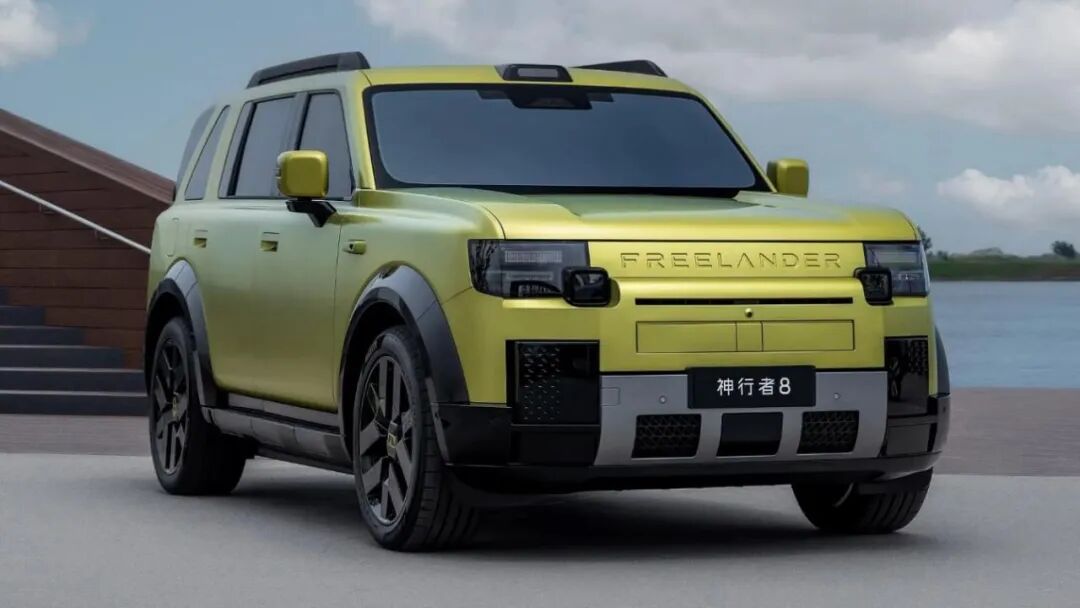
△Introducing Chinese technology has become a shortcut for multinational automakers to reverse their fortunes in China
Therefore, for multinational automaker giants, leveraging China’s mature technologies, supply chains, and cost advantages for their own use and rapidly pushing them overseas through their global brands and channels may be a more realistic ‘shortcut.’ This not only helps them reduce the cost of new energy transition but also enhances product competitiveness with Chinese technology, thereby vying for global market share outside of China. Conversely, Chinese automakers can earn substantial transfer fees through technology exports and accumulate more experience through the actual deployment by foreign automakers, aiding their continuous iterative research and development in the later stages.
Commentary
Dongfeng Peugeot Citroen Automobile Technology has garnered significant attention, not because it is just another joint venture automaker, but because it represents a deeper fusion of Chinese technology, foreign brands, and global channels. The Jeep brand is embarking on its third domestic production restart in China. Unlike the old model of importing overseas models, this is a reverse joint venture where Stellantis outputs the Jeep brand and global channels, while the Chinese side provides the three electric systems, intelligent driving, and local supply chain. If this model can succeed, Dongfeng Peugeot Citroen Automobile Technology may just be the beginning: in the future, multinational automakers may increasingly choose ‘technology localization in China, brand globalization,’ leveraging the efficiency of China’s new energy vehicle industry to re-enter global market competition.
(This article is original to Heyan Yueche and may not be reproduced without authorization.)
-
![]()
Qianwen App Faces Financial Struggles Amidst Competition with Qianwen Office—Wu Jia Under Increasing Pressure
-
![]()
【Intelligentization】 No Resignation, but Entrepreneurship! Ren Shaoqing of NIO Takes on Dual Roles
-
![]()
"Ox Coming" Makes a Splash in the AI Circle! Mysterious Large Model Goes Viral, Who's Behind the Big Move?
-
![]()
Xiaopeng’s New Car is Popular, but Financial Results are Less Impressive
-
![]()
Dialogue with Lv Wenbin from Great Wall Motors: The 30,000+ Orders for Great Wall H10 is Just the Beginning!
-
![]()
Can Xiaomi Pengcheng N90 and N70 Recreate the 'Success Story' of the SU7?
-
![]()
Can Stellantis Revitalize Jeep’s Domestic Production in China via the ‘New Dongfeng Peugeot Citroen Automobile’ Initiative?
-
![]()
Xpeng's Q2 2026: Automotive Losses, Service Gains, and a Narrative Shift Toward Robotics