【Intelligentization】 No Resignation, but Entrepreneurship! Ren Shaoqing of NIO Takes on Dual Roles
 08/26 2026
 450
450
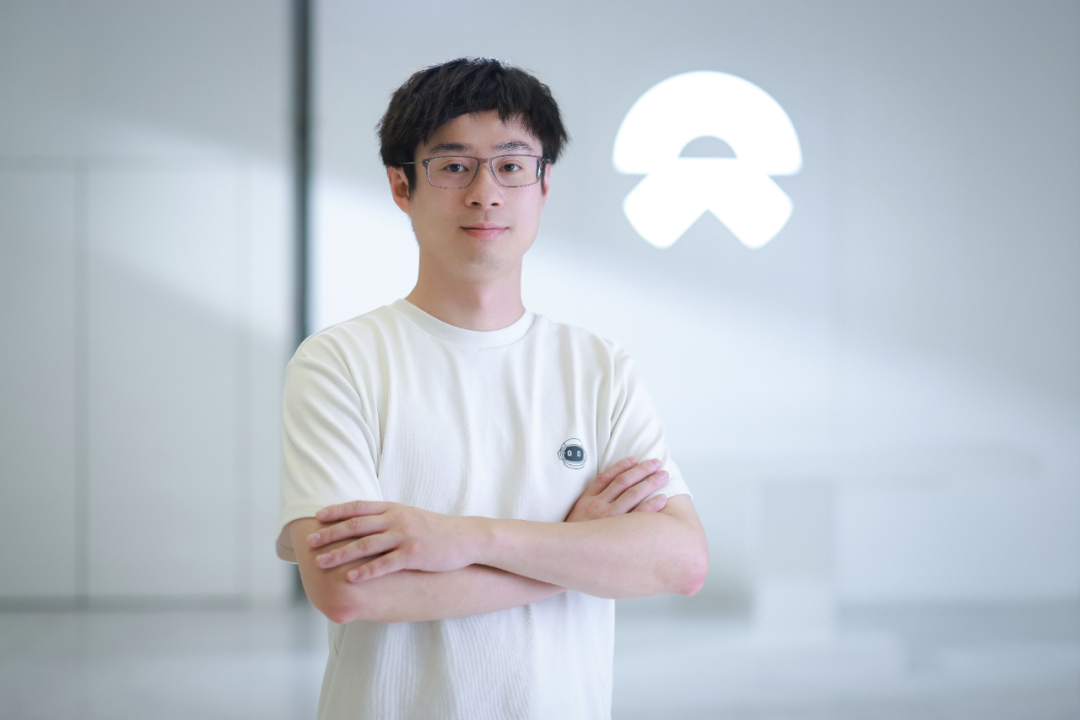
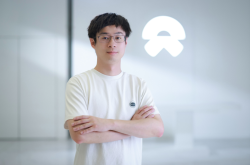
On August 24, Li Bin, CEO of NIO, announced at an all-hands meeting on intelligent driving that Ren Shaoqing, head of intelligent driving, has founded an independent company focused on foundational models for physical AI and embodied intelligence. NIO will invest as a strategic shareholder and collaborate with the new company in areas such as embodied intelligence, algorithm models, intelligent hardware, new energy, and computing infrastructure.
Li Bin and Ren Shaoqing made it clear during the meeting that Ren will continue to serve as the head of NIO's intelligent driving business. Sources familiar with the matter said the meeting was brief and did not mention any organizational changes. Ren's new company has already completed registration and reached unicorn-level valuation, though the company name and specific financing details have not been disclosed.
According to Leiphone, Ren will co-found the startup with Zhang Qiang, who currently serves as the Director and Chief Researcher of the Academic Committee at the National and Local Co-built Embodied Robot Innovation Center. The core team members of the new company are mostly from the University of Science and Technology of China (USTC), with a current team size of nearly 30 people. The first round of financing has been largely finalized, and Ren's psychological expectation for the company's valuation is at least RMB 10 billion.
Ren Shaoqing was born in Bengbu, Anhui, in 1988. He graduated from USTC with a bachelor's degree and earned a joint Ph.D. from USTC and Microsoft Research Asia in 2016, under the supervision of Sun Jian. During his Ph.D., he was one of the four authors of the deep residual network ResNet, whose related paper won the Best Paper Award at CVPR 2016 and has been cited over 320,000 times globally in the past decade, becoming a cornerstone of today's large model architectures.
He was also the first author of Faster R-CNN, a framework widely regarded as one of the most influential foundational technologies in the field of computer vision by the global academic and industrial communities.
In 2018, Ren co-founded the autonomous driving company Momenta, serving as a partner and R&D director. In August 2020, he joined NIO and built the autonomous driving R&D team from scratch, leading the implementation of NIO's full-stack self-developed intelligent driving system and driving the mass production of urban navigation-assisted driving, end-to-end large models, and world models. He also deeply participated in the R&D process of NIO's self-developed intelligent driving chip, Thor NX9031, transitioning the chip hardware platform from relying on four NVIDIA Orin chips to a solution using a single self-developed chip.
In September 2025, he was appointed as a Chair Professor, Ph.D. supervisor, and Director of the General Artificial Intelligence Institute at USTC, with research interests covering artificial intelligence, world models, embodied intelligence, deep learning, and AI for Science. From a collaboration perspective, the unique aspect of this arrangement is that Ren is not leaving NIO to start his own business but is managing both NIO's intelligent driving business and the newly founded embodied intelligence company in a dual role. For NIO, this arrangement allows it to retain Ren's leadership in the intelligent driving business while gaining returns from the new company's growth through strategic investment, all while avoiding the loss of core talent.
However, the challenges are also evident: Ren's simultaneous leadership of two companies means that subsequent staffing, technical collaboration, and energy allocation will directly impact the long-term viability of this arrangement. From a technical standpoint, intelligent driving is one of the most mature large-scale applications of AI in the physical world, sharing continuity with embodied intelligence in foundational capabilities such as perception, prediction, planning, control, world models, and reinforcement learning.
Over the past two years, the growing migration of talent from autonomous and intelligent driving to the robotics industry is also related to this technological overlap. Ren himself has repeatedly emphasized that world models are a foundational paradigm shared by autonomous driving and robotics, and that the spatial-temporal cognition, long-sequence reasoning, and closed-loop optimization capabilities accumulated in vehicle applications can be directly transferred to physical AI and embodied intelligence scenarios. From an industry perspective, this entrepreneurship comes at a time when new automotive forces are collectively deploying embodied intelligent robots. On the same day, XPENG Motors announced that its robotics business had completed its first round of financing exceeding $900 million, with a post-money valuation exceeding $6.3 billion, and plans to mass-produce the humanoid robot IRON by the end of 2026.
Previously, Li Auto had strategically invested in Xieyue Intelligence, an embodied intelligence company co-founded by Zhang Xiao, President of the Second Product Line, and Chen Wei, Chief AI Scientist. Leapmotor also confirmed during its interim results announcement that it has robotics business plans in place. With this, the heads of intelligent driving at NIO, XPENG, and Li Auto—the three leading new forces—have all entered the robotics track (race track).
Compared to XPENG, which incubates its robotics business internally within the group and raises independent financing, NIO has chosen a different path: allowing core technical talent to start businesses outside the system while participating as a strategic shareholder. The advantage of this model is that the new company, operating independently, can step outside the automotive company's internal business evaluation framework to conduct foundational AI research for the general physical world, without being entirely constrained by the mass production timelines of automotive products. Meanwhile, as an industrial investor, NIO can contribute hardware engineering, computing infrastructure, and supply chain capabilities accumulated from vehicle R&D, providing real-world Physical scene (physical scenarios) for algorithm validation. However, the embodied intelligence track (race track) still faces numerous practical challenges.
Despite years of hype, truly scalable products in embodied intelligence remain scarce. Many startups are stuck in pure algorithm simulation, lacking physical hardware scenarios to integrate their R&D outcomes. The disconnect between algorithms and physical hardware has long been an unsolved issue in the industry. Whether Ren's new company can achieve substantive breakthroughs in foundational models for physical AI and whether he can sustain a balanced allocation of his energy between NIO's intelligent driving business and the new company will be core questions for external observers going forward.
-
![]()
Qianwen App Faces Financial Struggles Amidst Competition with Qianwen Office—Wu Jia Under Increasing Pressure
-
![]()
【Intelligentization】 No Resignation, but Entrepreneurship! Ren Shaoqing of NIO Takes on Dual Roles
-
![]()
"Ox Coming" Makes a Splash in the AI Circle! Mysterious Large Model Goes Viral, Who's Behind the Big Move?
-
![]()
Xiaopeng’s New Car is Popular, but Financial Results are Less Impressive
-
![]()
Dialogue with Lv Wenbin from Great Wall Motors: The 30,000+ Orders for Great Wall H10 is Just the Beginning!
-
![]()
Can Xiaomi Pengcheng N90 and N70 Recreate the 'Success Story' of the SU7?
-
![]()
Can Stellantis Revitalize Jeep’s Domestic Production in China via the ‘New Dongfeng Peugeot Citroen Automobile’ Initiative?
-
![]()
Xpeng's Q2 2026: Automotive Losses, Service Gains, and a Narrative Shift Toward Robotics