Xiaopeng’s New Car is Popular, but Financial Results are Less Impressive
 08/26 2026
 543
543
The latest model is now available for delivery.
Original content from AutoPix (ID: autopix)
Prior to releasing its second-quarter financial report, Xiaopeng announced a round of financing.
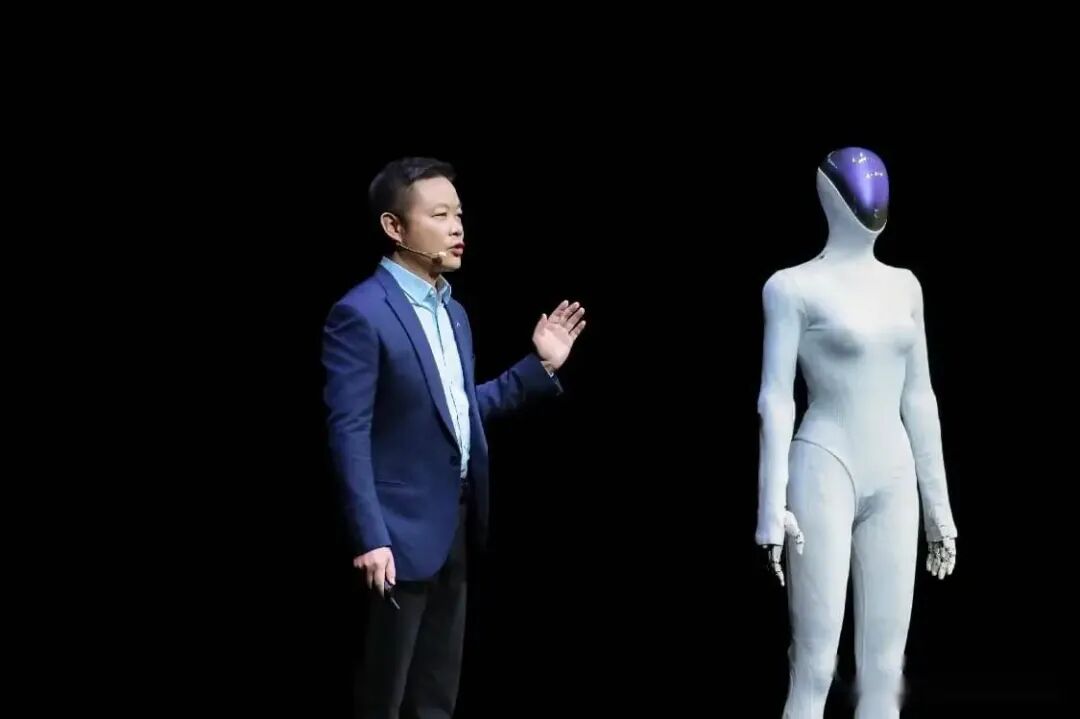
On August 24, Xiaopeng's robotics division attracted investors such as IDG, GaoRong Capital, Tencent, and Alibaba, securing over $900 million in funding with a post-money valuation exceeding $6.3 billion.
This valuation surpasses that of most leading companies in the embodied AI sector, such as Galaxy AI and Ubtech. The robotics business now boasts a valuation nearly half of Xiaopeng's listed market capitalization.
This financing added an element of optimism to an otherwise lackluster financial report, but it did not fully sway investor sentiment. Following the report's release, Xiaopeng's U.S.-listed shares fell approximately 8.5%, while its Hong Kong-listed shares dropped around 9.2%.
Investors in the secondary market opted to assess the robotics potential and automotive business delivery separately.
Xiaopeng launched several new cars in 2026, achieving decent order numbers. However, positive signals alone are no longer sufficient.
01 Sales Recover, but Gross Margin Remains Stagnant
Based on automotive revenue, cost of sales, and delivery volume, Xiaopeng's average selling price per vehicle in the first quarter was approximately RMB 175,500, dropping to RMB 165,000 in the second quarter, a decrease of about RMB 10,500. Meanwhile, the cost per vehicle fell from around RMB 154,300 to RMB 145,100, a reduction of approximately RMB 9,200.
The pace of cost reduction nearly kept up with the impact of vehicle price declines.
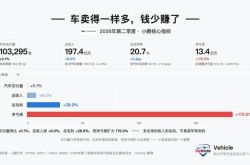
In the second quarter, Xiaopeng delivered 103,000 vehicles, a 65% increase quarter-over-quarter; automotive revenue reached RMB 17.05 billion, up 55% quarter-over-quarter. The gross profit per vehicle dropped from about RMB 21,200 to RMB 19,900, a decrease of around RMB 1,300, leaving the automotive gross margin at 12.1%, unchanged from the first quarter.
The company's third-quarter delivery guidance is 115,000 to 121,000 vehicles, falling short of the market's previous expectation of about 147,000 vehicles.
These figures suggest that Xiaopeng has achieved some cost dilution through economies of scale. After a more than 60% increase in second-quarter deliveries, factory depreciation, supply chain procurement, and manufacturing expenses began to be spread across more vehicles. The introduction of self-developed chips and components also provided room for cost reduction.
However, these improvements were temporarily offset by a shift toward lower-priced products.
In the second quarter, the lower-priced MONA M03 accounted for about 40% of Xiaopeng's deliveries, while the higher-priced X9's share declined. Although the GX entered delivery, its scale was insufficient to alter the overall structure.
Xiaopeng sold more vehicles, but a larger proportion came from products priced below RMB 150,000, while high-priced models did not grow as quickly.
In other words, economies of scale this time around were limited to maintaining gross margin, not improving it.
Xiaopeng's new cars are not underperforming. The L03 received 20,000 orders within 7 minutes of launch and nearly 47,000 orders within an hour; the GX has about 30,000 orders on hand, with over 7,000 deliveries in July. The G9L has opened for pre-sale and is scheduled for launch and delivery in September.
Converting orders into actual performance still takes time. The GX only launched in late May, while the L03 and G9L began deliveries in July and September, respectively. Xiaopeng's third-quarter guidance of 115,000 to 121,000 vehicles, minus July's 38,000 deliveries, implies average monthly deliveries of about 38,500 to 41,500 vehicles in August and September, indicating that supply chain and production ramp-up still limit order fulfillment.
More importantly, Xiaopeng's sales are dispersed across different platforms, which to some extent undermines cost dilution through scale.
Sales of the formerly concentrated F-platform models G6 and P7+ are declining; while the M03 and L03, both volume sellers, belong to the G platform, differences in front-wheel drive vs. rear-wheel drive, torsion beam vs. multi-link suspension, and battery electric vs. extended-range architectures result in lower direct component commonality.
The GX and G9L are expected to have higher component commonality, but the G9L will only begin ramping up in the second half of the year. Xiaopeng's sales are concentrating toward MONA and high-end SUVs, but platform amortization still takes time.
The consolidated gross margin of 20.7% can easily mask the stagnant growth in automotive gross profit. In the second quarter, Xiaopeng's service and other revenue reached RMB 2.7 billion, with a gross margin of 75.1%, mainly benefiting from Volkswagen R&D projects reaching milestones and recognizing revenue.
Xiaopeng's automotive gross profit in the second quarter was about RMB 2.06 billion, while service and other businesses contributed about RMB 2.02 billion, making the two segments nearly equal. Compared to the first quarter, the automotive business added about RMB 730 million in gross profit, while the service business added about RMB 670 million.
Breaking it down, a significant portion of Xiaopeng's narrowed operating loss came from Volkswagen's technology licensing fees, not from car sales.
Meanwhile, Xiaopeng's second-quarter selling and administrative expenses reached RMB 2.5 billion, up about RMB 610 million quarter-over-quarter. New car marketing, channel expansion, and dealer commissions driven by sales growth consumed part of the funds. Ultimately, Xiaopeng's second-quarter net loss was about RMB 1.34 billion, narrower than the first quarter but still significantly higher year-over-year.
Xiaopeng is going through a typical phase of main model transition. R&D, marketing, and supply chain investments have already been made, sales are recovering, but profits have not yet caught up.
02 Product Transitions Outpace Performance Delivery
Xiaopeng already delivered 38,000 vehicles in July. Based on the third-quarter guidance of 115,000 to 121,000 vehicles, average monthly deliveries in August and September can only reach about 38,500 to 41,500 vehicles. Compared to July, the incremental growth in the coming months remains limited.
Externally, this was supposed to be the fastest-growing phase for Xiaopeng's deliveries. The GX began delivery in the second quarter, and the MONA L03 launched in July, both with strong order performance.
Management explained during the earnings call that extreme weather and supply chain disruptions affected the L03's ramp-up. The company has initiated double-shift production and is working with suppliers to increase capacity.
Xiaopeng did not disclose specific constrained components or recovery timelines, but management's conservative third-quarter sales guidance likely indicates that resolving capacity constraints will take time.
Besides the supply chain, after the L03's launch, it will directly divert some G6 and P7+ users; the L05 and G9L have also entered consumers' consideration sets, causing some users to delay purchases. Xiaopeng has more new cars, but orders need to go through production ramp-up to become revenue.
The decline of older models has already occurred, while new model volume growth still takes time. This is the core issue Xiaopeng faces in the third quarter—the product rhythm has moved to the next generation, and the challenge has shifted to manufacturing and the supply chain.
In the long run, concentrated new car launches could still bring cost improvements. In the fourth quarter of this year, Xiaopeng's MONA L05 is expected to launch. From publicly available parameters, this model may share an even higher proportion of components with the L03.
The MONA L03 and the new L05, expected to launch in the fourth quarter of this year, use the same 183 kW motor; their extended-range versions use the same 1.5-liter range extender and 37.2 kWh battery, while the battery electric versions also adopt the same battery supply system. Motors, electric controls, range extender systems, intelligent driving chips, domain controllers, and a large number of electrical and electronic components are all expected to have strong commonality.
Even so, the L05 will still require a new production ramp-up period upon launch. Even if sales scale is achieved, the cost-reduction effects of scale may not be reflected in the financial report until late in the fourth quarter or even early 2027.
Another variable that could improve the product mix is overseas markets. Xiaopeng delivered over 20,000 vehicles overseas in the second quarter, up 81% year-over-year; management stated that the average selling price of export models exceeds €40,000, with overseas business contributing over 25% of the group's revenue in the first half. Xiaopeng aims to deliver over 40,000 vehicles overseas in the fourth quarter.
If high-priced overseas models continue to grow, they could offset the price pressure from the rising proportion of MONA models in China. The short-term impact may be more direct than platform amortization. With an average export price exceeding €40,000, overseas business already contributes over 25% of group revenue.
The only question is profitability. Xiaopeng has never separately disclosed overseas gross margins, so how much of the €40,000 selling price is profit remains unknown. Selling cars overseas requires significant upfront investment.
Xiaopeng's second-quarter sales were decent, but what disappointed the market was the failure to deliver the expected improvements. Second-quarter sales have recovered, and the GX and L03 have secured good orders. Investors had hoped that new products would drive deliveries, revenue, and gross margin upward together. However, the third-quarter guidance suggests that at least in the next quarter, these orders will still be difficult to fully convert into performance.
At this juncture, Xiaopeng did not provide a faster commitment to delivering automotive business performance but instead offered a more distant expectation: robots. The valuation exceeding $6.3 billion proves that Xiaopeng still has technical and financing capabilities but does not eliminate investor doubts about the company's delivery ability.
Xiaopeng expects monthly deliveries to exceed 60,000 units in the fourth quarter, up at least 58% from July's 38,000 units.
To achieve this goal, the delivery of four new models, both domestically and overseas, must meet targets in every link.
-
![]()
Qianwen App Faces Financial Struggles Amidst Competition with Qianwen Office—Wu Jia Under Increasing Pressure
-
![]()
【Intelligentization】 No Resignation, but Entrepreneurship! Ren Shaoqing of NIO Takes on Dual Roles
-
![]()
"Ox Coming" Makes a Splash in the AI Circle! Mysterious Large Model Goes Viral, Who's Behind the Big Move?
-
![]()
Xiaopeng’s New Car is Popular, but Financial Results are Less Impressive
-
![]()
Dialogue with Lv Wenbin from Great Wall Motors: The 30,000+ Orders for Great Wall H10 is Just the Beginning!
-
![]()
Can Xiaomi Pengcheng N90 and N70 Recreate the 'Success Story' of the SU7?
-
![]()
Can Stellantis Revitalize Jeep’s Domestic Production in China via the ‘New Dongfeng Peugeot Citroen Automobile’ Initiative?
-
![]()
Xpeng's Q2 2026: Automotive Losses, Service Gains, and a Narrative Shift Toward Robotics