In-depth | Li Shufu's "Turn at the Peak": Why Did Geely Choose to Change Leadership at Its Prime?
 08/26 2026
 456
456
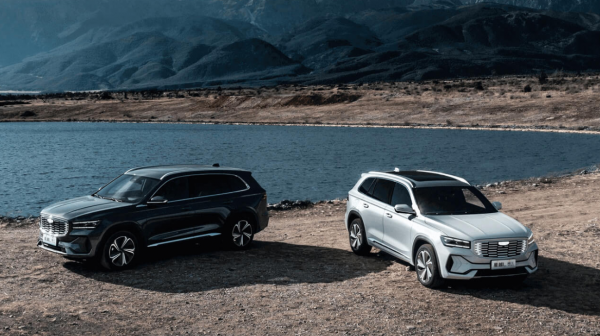
The man who once declared, "Give me a chance to fail," has chosen to step aside at the peak. In mid-August, Geely Automobile sent two major signals to the capital markets on the same day.
One was the 2026 interim results announcement: first-half total sales exceeded 1.423 million vehicles, total revenue reached RMB 173.6 billion, up 15% year-on-year, hitting a record high; core net profit attributable to shareholders reached RMB 9.68 billion, up 46% year-on-year, with gross margin improving to 17.9% and average core net profit per vehicle rising 45% year-on-year to RMB 6,806.
The other was a management reshuffle announcement: effective August 18, Li Shufu, 63, resigned as Chairman of the Board and Executive Director of Geely Automobile Holdings Limited, becoming Lifetime Honorary Chairman; An Conghui, 56, succeeded as Chairman of the Board, while Gan Jiayue, a post-80s executive, was appointed CEO.
Choosing to pass the baton during a period of strong performance, rather than a downturn, sends a powerful signal in itself—this is not a passive transfer of power but an institutionalized succession.
So, why An Conghui? Why now? Is Geely truly ready?
Li Shufu's Track Record
In the historical trajectory of Geely's development, Li Shufu's name has always been deeply intertwined with the company's fate. From his initial foray into the automotive industry with the plea, "Give me a chance to fail," to securing China's first private sedan production license in 2001, and then shocked (shocking) the global automotive world with the $1.8 billion acquisition of Volvo Cars in 2010, this entrepreneur from Taizhou, Zhejiang, has transformed a refrigerator parts factory into an automotive group with annual sales exceeding 4 million vehicles over nearly four decades.
Looking back at several major strategic turning points during Li Shufu's tenure at Geely, each step aligned with key moments in China's automotive industry transformation. In 2009, when domestic brands were largely confined to the low-price market below RMB 50,000, Li Shufu championed the launch of the Emgrand EC7. This model was the first to elevate the price point of domestic brand sedans to the RMB 80,000 range, accumulating over 4 million sales and becoming one of the most successful "national cars" in Chinese automotive history. The Emgrand's success not only shed Geely's "low-price, low-quality" label but also proved the potential for domestic brands to move upmarket.
The 2010 Volvo acquisition stands as the most iconic move in Li Shufu's career. This "snake swallowing an elephant" deal, widely pessimistic by outsiders, took a different path under Li's philosophy of "setting the tiger free." Volvo not only doubled its sales and significantly boosted profitability over a decade but also, through technological feedback, helped Geely build the CMA modular architecture, directly giving birth to the Lynk & Co brand. This acquisition is regarded globally as a successful model for Chinese companies' cross-border mergers and acquisitions.
The launch of the Zeekr brand in 2021 marked another strategic bet by Li Shufu during the critical period of new energy transformation. Amid internal debates over Geely's new energy path and the inertia of its traditional fuel vehicle business, Li Shufu supported the creation of Zeekr as a premium pure electric brand with independent operations, teams, and channels.
Zeekr lived up to expectations, going public in just five years and delivering 178,000 vehicles in the first half of this year, up 97% year-on-year, securing a solid position for Geely in the premium new energy market above RMB 300,000. The first-half results for 2026 represent one of the most impressive finales of the Li Shufu era.
Financially, these results are solid: first-half total sales of 1.423 million vehicles set a same period (same-period) record, with new energy vehicle sales reaching 799,000 units and a penetration rate of 56%; average revenue per vehicle rose 16% year-on-year to RMB 112,000; gross margin improved to 17.9%, and core net profit attributable to shareholders grew 46%, outpacing revenue growth.
As of end-June, the company's cash reserves reached RMB 69.56 billion, a historical high, providing ample risk resilience.
Passing the baton at a performance peak is one of Li Shufu's most astute strategic choices. Leadership transitions in Chinese private enterprises often occur during crises—declining performance, stock price pressure, or founder fatigue—leading to market panic. Li Shufu's decision to step aside at Geely's historical high sends three signals: stability (no oscillation (turmoil) from the founder's departure), confidence (professional managers can continue growing the business), and institutionalization (Geely has transitioned from a founder-driven startup to a team-driven mature company).
As Geely Automobile's Vice Chairman Gui Shengyue stated at the results briefing: "This is a declaration of Geely's de-familization, signaling that the company will no longer rely on individual charisma and authority. Future governance will be more transparent, and decisions more professional and scientific."
Why An Conghui?
In the succession traditions of private automakers, passing the baton to family members seems the default path—as seen with Wahaha's Zong Fuli and Fuyao Glass's Cao Hui. However, Li Shufu chose a different route, entrusting the publicly listed company not to a family member but to An Conghui, a professional manager who has grown within Geely for three decades.
Public records show that An Conghui joined Geely in 1996 after graduating from Hubei Economic Management University, initially working as an auditor in the group's audit department. He later accompanied Li Shufu on numerous business trips. Over the next 30 years, his career spanned finance, engineering, R&D, brand building, and capital operations.
An Conghui is also a rare product-focused manager within Geely. As President and CEO of Geely Automobile Group from 2011 to 2021, he personally oversaw the Emgrand EC7, which sold over 3.8 million units, and led the development of bestsellers like the Borui and Boyue, propelling Geely to four consecutive years as China's top-selling domestic passenger vehicle brand. He also spearheaded post-acquisition integration with Volvo, established the European R&D Center CEVT, nurtured the Lynk & Co brand through the CMA architecture, and later led the development of the SEA modular architecture. In 2021, he voluntarily took the helm as CEO of Zeekr, transforming it from scratch into a premium new energy brand and successfully leading its IPO on the NYSE in May 2024.
On social media, he is a "celebrity" explaining cars in T-shirts and jeans, affectionately called "Congcong" by owners and netizens; within Geely, Li Shufu describes him as a "general who always takes on the toughest challenges and never fails."
A professional manager who has grown within Geely for 30 years, familiar with its culture, technological foundation, and globalization logic, taking the reins is indeed a powerful testament to "de-familization."
With this adjustment, Geely's new governance structure becomes clear: An Conghui as Chairman of the Board oversees strategic decisions and cross-platform collaboration; Gan Jiayue succeeds as CEO, focusing on daily operations and execution; Gui Shengyue becomes Vice Chairman of the Board, strengthening communication and oversight between the board and management. This "strategy-execution-oversight" triangle, paired with a younger core management team, establishes a new governance framework for Geely's next phase.
An Conghui's Three Strategic Challenges: Integration, AI, and Globalization
Building on Li Shufu's foundation, An Conghui faces a fiercer competitive landscape in the new energy sector's second half. According to the "One Geely, Comprehensive Leadership" 2030 strategy, Geely aims to surpass 6.5 million global sales by 2030 and rank among the top five global automakers.
Zijin Finance believes achieving this goal hinges on An Conghui's ability to answer three core questions: the depth of organizational integration, the height of AI-driven intelligence, and the breadth of global expansion.
"One Geely" is the central theme of Geely's current strategy. The "Taizhou Declaration" released in September 2024 officially kicked off this organizational transformation. Over the past two years, integration efforts have intensified: in February 2025, Zeekr and Lynk & Co announced strategic integration; in December, Zeekr completed privatization and rejoined the listed company; in June 2026, Li Shufu and An Conghui stepped down as chairmen of Zeekr and Lynk & Co, respectively, with Gan Jiayue taking unified leadership; in early August, Geely Automobile Group Sales Corporation was established, comprising six sales companies for China Star, Galaxy, Lynk & Co, and Zeekr, marking substantive channel integration. This board-level personnel adjustment can be seen as the final closure of "One Geely" in governance structure.
However, physical integration is relatively easy; chemical synergy is the challenge. An Conghui must accelerate integration to unlock management efficiencies while avoiding one-size-fits-all approaches that stifle brand innovation. Balancing control and autonomy will be key to measuring his governance capabilities.
The second challenge is whether full-stack AI can build a true technological moat. In the second half of the new energy competition, intelligence is the decisive factor. Geely's AI layout (layout) began early, launching the industry's first full-stack AI technology system in 2025 and iterating to version 2.0 in early 2026. Centered on the WAM World Behavior Model and supported by the Super Eva intelligent cockpit and G-ASD autonomous driving, it extends N-class capabilities across vehicle domains.
However, objectively, in the core area of intelligent driving, Geely faces intense competition. Huawei's Qiankun Intelligent Driving, XPENG's XNGP, and Li Auto's AD Max have already established strong user perceptions. While Geely's G-ASD boasts impressive technical parameters, it still lags in user awareness and market presence.
Globalization represents Geely's most imaginative growth trajectory under the 2030 strategy and the most certain source of incremental growth under An Conghui. In the first half of 2026, Geely's overseas sales reached 474,000 units, up 158% year-on-year, surpassing total exports in 2025. New energy exports hit 277,000 units, up 585% year-on-year, accounting for 58% of overseas sales. Based on this Exceeding expectations (better-than-expected) performance, Geely has raised its full-year overseas sales target from 640,000 to 920,000 units and is aiming for 1 million units.
Moreover, Geely pursues a "industrial symbiosis" localization approach, rapidly achieving local production and market penetration through strategic partnerships with overseas players like Proton, Renault, and Ford.
Long-term, Geely's globalization goal extends beyond vehicle sales. The 2030 strategy targets two-thirds of sales from overseas markets, implying a fundamental shift from a Chinese automaker to a global one. This demands higher requirements for governance systems, talent reserves, and cultural integration—the deeper strategic rationale for "de-familization" governance reforms.
Epilogue
Li Shufu once said, "The automotive industry is a marathon without a finish line." This leadership transition is not the end of an era but the starting point of institutionalized governance for a mature enterprise.
Whether Geely can unleash stronger organizational efficiency under professional management, catch up and surpass industry leaders in intelligence, and truly evolve from a Chinese benchmark to a global automaker—the answers will unfold in the races ahead.
-
![]()
Strategic Emphasis on Digital Photonics Gains Momentum! Optical Behemoth Reports RMB 12.4 Billion in H1 Revenue
-
![]()
In-depth | Li Shufu's "Turn at the Peak": Why Did Geely Choose to Change Leadership at Its Prime?
-
![]()
Has Xiaomi Weathered Its Toughest Times?", "Xiaomi, Financial Report, Chips, Automobiles, AI
-
![]()
Has Xiaomi Ridden Out the Storm?
-
![]()
Why Are Children Better at Learning Languages Than AI? MIT TR: Large Models Need to Burn Down an Entire Forest, While Kids Only Need 100 Million Words
-
![]()
Workplace Transformations Amidst AI Influence: Ensnared in Involution, Yet Struggling to Discover Work’s True Value
-
![]()
The Most Absurd Semi-Annual Report: Revenue Surges 20%, Yet Most Automakers Aren't Actually Making Money
-
![]()
The Dazzling Yet Impractical Internet-Famous Smart Driving Features