Hyundai and Kia: Subtly Embracing Chinese Inspirations
 08/27 2026
 537
537

Source | YuanAuto
The South Korean Hyundai Motor Group, which boasts three major brands—Hyundai, Kia, and Genesis—is keenly attuned to trends in the Chinese automotive market.
A recent notable move by Hyundai Motor is evident in its official account's August 21 post on mainstream overseas social media platforms: an abstract AI video remake of the movie 'Bull Run.' If Hyundai comprehends the significance of 'Bull Run,' it undoubtedly grasps the innovations of Chinese automakers' new vehicles.
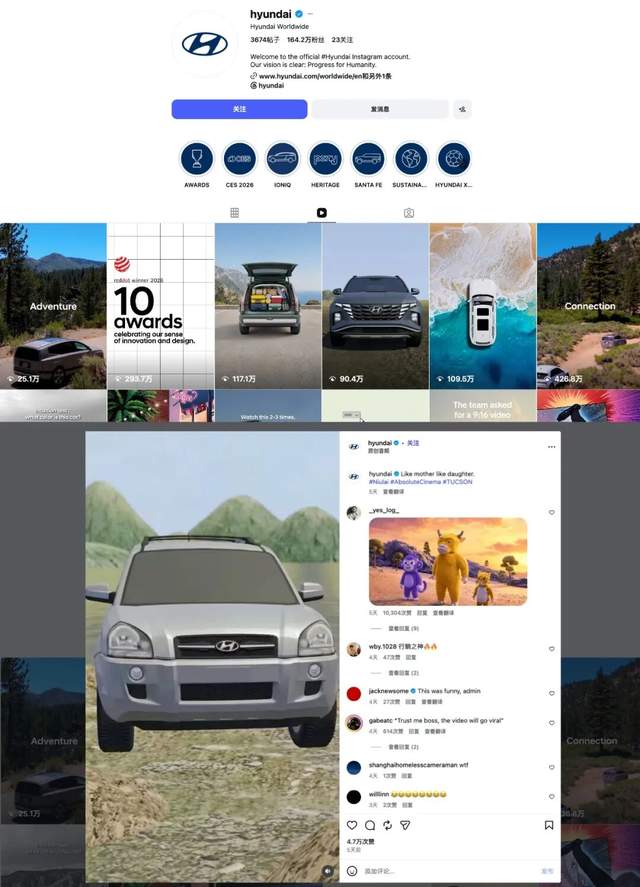
Consequently, new vehicles under the Hyundai Group umbrella are beginning to exhibit a hint of 'Chinese flair.'
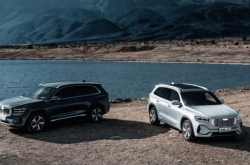
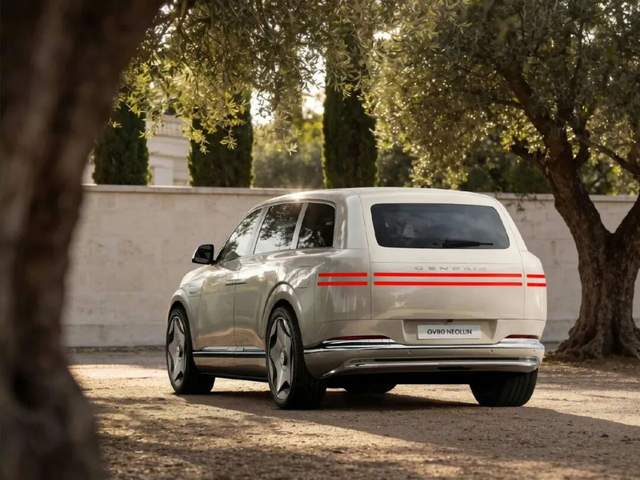
Take, for instance, the GV90 NEOLUN (New Moon Edition) unveiled by Genesis, often dubbed the 'Korean Bentley,' on August 19. As the brand's new all-electric flagship SUV, this model showcases a range of technologies and configurations making their debut under the Hyundai Group, including the increasingly prevalent electric 180-degree rotating seats found in new vehicles from Chinese automakers. While the ability to rotate seats for a face-to-face layout is not exclusive to Chinese automakers, it's undeniable that this feature is being popularized by brands like Zeekr, Li Auto, and Xiaomi.
Although the South Korean automotive market in China pales in comparison to its peak from 2013 to 2016, Hyundai recognizes its importance as a market that cannot be overlooked and as a source of inspiration for its continued ascent as the world's third-largest automaker.
01
Learning from Both Electric and Traditional Fuel Vehicles
Don't assume that only electric vehicles can embody the essence of Chinese brands' new offerings; Kia demonstrates that traditional fuel vehicles can too.
'The all-new Seltos is not merely a global vehicle brought to China for sale. Features like a lengthened wheelbase, standard 8295P chips across the range, and a 27-inch large screen are all targeted upgrades tailored for the Chinese market.'
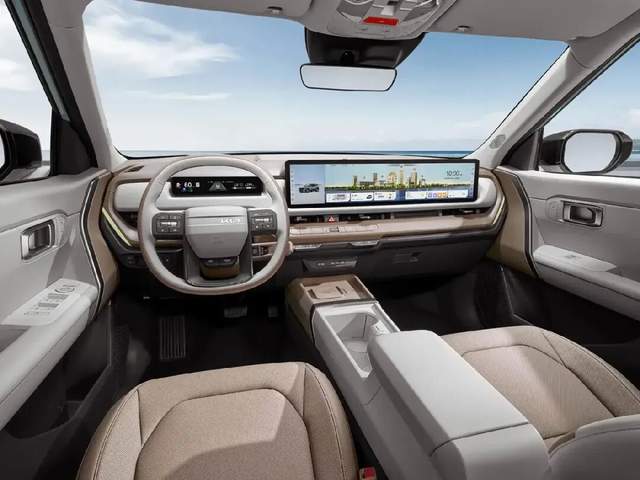
When pre-sales for the all-new Seltos commenced on August 13, Yueda Kia emphasized that this vehicle differs from the version already on sale overseas for over half a year, with a particular focus on upgrades to the intelligent cockpit. Coupled with a limited-time pre-sale price starting at 80,900 yuan, orders for the all-new Seltos on its first day of pre-sale surpassed the monthly sales of the current model.
For context, according to terminal retail data from the China Association of Automobile Manufacturers and the China Passenger Car Association, Yueda Kia Seltos sold a cumulative total of 11,114 units from January to July this year, averaging about 1,588 units per month. Alongside the slightly lower-positioned Kia Stonic, it shoulders the significant responsibility of driving brand sales.
For Kia, the all-new Seltos's significance lies in stabilizing sales and preventing older models from being overshadowed by the market due to inadequate intelligent cockpit features. On the other hand, it lays the groundwork for subsequent exploration of overseas growth opportunities.
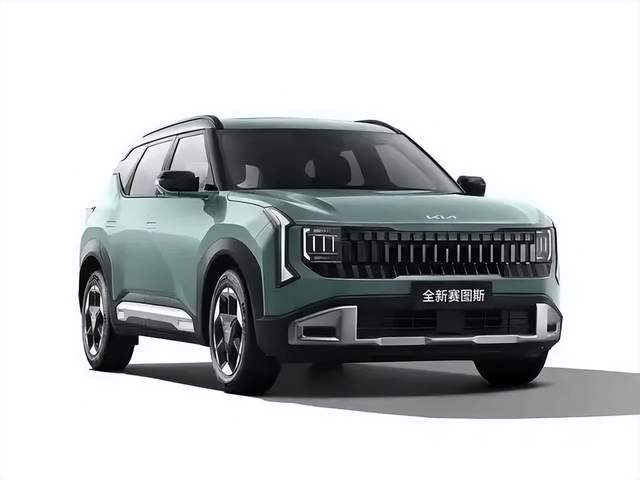
According to public information, the Seltos produced by Yueda Kia's Yancheng factory is not only supplied to the domestic market but also exported overseas. As a traditional fuel vehicle, the all-new Seltos, with its intelligent cockpit on par with electric vehicles, has initially gained recognition from many Chinese consumers. Imagine if Kia were to sell it in surrounding overseas markets like Southeast Asia in the future; it would likely form a unique advantage in the local traditional fuel vehicle market.
However, it should be noted that Kia has not yet confirmed whether the all-new Seltos produced in the Yancheng factory will be exported overseas. Additionally, while the Seltos on sale in overseas markets lacks targeted optimizations for the intelligent cockpit, the overseas version offers options for a 1.6T high-power engine and four-wheel drive system.
Do not underestimate Yueda's strategy of selling Chinese-produced models to overseas markets. Data from the Tianyancha APP shows that Yueda Kia's cumulative sales for the full year of 2025 exceeded 250,000 units, achieving positive growth for two consecutive years. According to third-party terminal sales data, Kia's domestic sales during the same period were approximately 72,000 units, meaning that most of the Chinese-produced Kia vehicles were sold overseas.
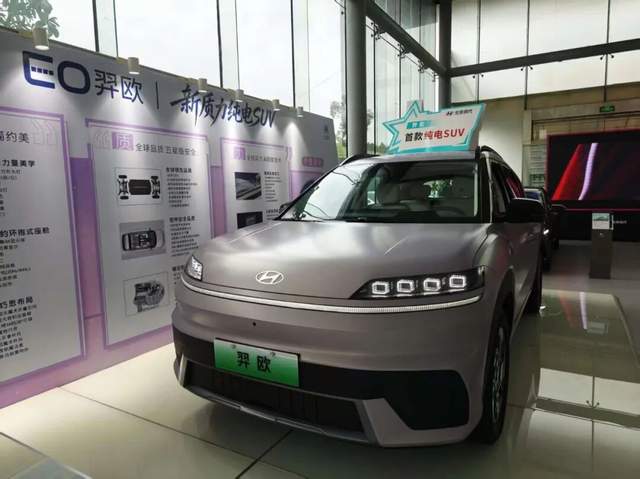
In fact, the model of leveraging China's localized supply chain advantages to develop, manufacture, and sell new vehicles overseas is not unique to Kia; Hyundai is also pursuing this strategy. The latter's all-electric SUV, the Ioniq, which will be locally produced in China in 2025, will be sold in Australia under the name Elexio after some configuration adjustments, becoming one of Hyundai's best-selling all-electric models there and potentially expanding further into markets like Southeast Asia and the Middle East in the future.
Similar to Kia, Hyundai's overseas sales of the Ioniq are also higher than in China. From this perspective, although Beijing Hyundai and Yueda Kia have faded from the spotlight in the domestic automotive market for some time, it does not prevent them from quietly following in the footsteps of Chinese automakers and developing stealthily.
02
In Fact, They Have No Choice but to Learn
Looking at the top five global automakers by sales volume, only Stellantis has not yet developed and produced new vehicles bearing its brand logos in China. Among the remaining four giants—Toyota, Volkswagen, Hyundai, and General Motors—Hyundai's approach is somewhat unique. It relies more on its proprietary vehicle platforms to develop new vehicles, rather than borrowing technology bases from Chinese joint venture partners to accelerate its intelligent and electrification transformation, as others have begun to do.
This choice means that Hyundai's localized new vehicles in China still fundamentally differ from same-priced competitors from Chinese brands, especially in the new energy vehicle (NEV) sector.
The lack of a strong 'Chinese flair' in vehicles produced by South Korean automakers is not inherently problematic—after all, diversity is also a positive direction. However, it is intriguing that even South Korean domestic consumers are starting to be swayed by Chinese brand NEVs with a strong 'Chinese flair.'
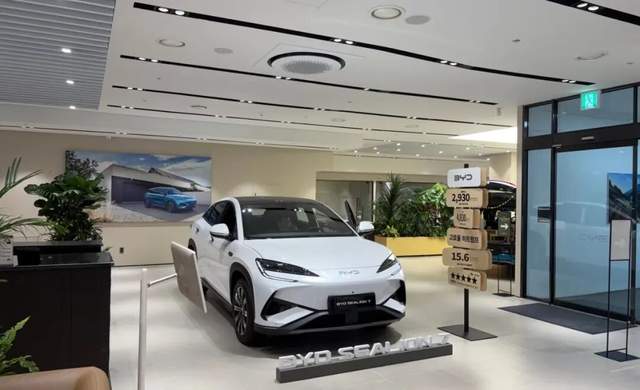
Image Source: Xiaohongshu User @Shengjie
It has always been a characteristic of the South Korean automotive market that consumers prefer domestic brands, making it rare to see imported models from other countries on the roads. However, according to a report by Yonhap News Agency cited by Huanqiu.com, one-third of the electric vehicles sold in South Korea from January to June this year were made in China.
It should be emphasized that this 'one-third made in China' includes a significant proportion of Tesla vehicles produced in Shanghai, but it still establishes recognition for 'Made in China' in the South Korean automotive market.
With Tesla produced in Shanghai leading the way, mainstream domestic NEV manufacturers like BYD, Geely, and Xpeng have begun to penetrate the South Korean market.
Taking BYD as an example, it achieved sales of 11,700 units in the first half of this year with models like the Dolphin and ATTO 3 (the domestic Yuan PLUS), representing a year-on-year increase of over 800%. Based on the trend set by BYD, every move by Zeekr and Xpeng, two Chinese automakers planning to enter the South Korean market, has become a focus of attention in the local automotive circle.
From a product perspective, while Chinese brand NEVs have faced criticism for many innovations, they have indeed developed a series of recognized functions and configurations, such as 'one-touch bed conversion,' ultra-large capacity front trunks, and advanced driver-assistance systems. If overseas consumers also start to be won over by these elements, local automakers will find themselves in a very passive position.
It can be expected that as more high-profile new vehicles from Chinese brands enter the South Korean market, Hyundai, Kia, and even Genesis will need to invest more effort in developing new features and configurations. Perhaps, the rotating seats in Genesis are just the beginning.
-
![]()
Hyundai and Kia: Subtly Embracing Chinese Inspirations
-
![]()
Two Major Optical Film Projects Reach Pivotal Implementation Stage! Tianlu Technology Records RMB 268 Million in H1 Revenue
-
![]()
Following Equipment Business Integration, Sugon’s Net Profit (Excluding Non-Recurring Items) Skyrockets by 222.54% in H1!
-
![]()
Insta360 Sidesteps Price Wars, Pursues New Avenues for Growth
-
![]()
Strategic Emphasis on Digital Photonics Gains Momentum! Optical Behemoth Reports RMB 12.4 Billion in H1 Revenue
-
![]()
In-depth | Li Shufu's "Turn at the Peak": Why Did Geely Choose to Change Leadership at Its Prime?
-
![]()
Has Xiaomi Weathered Its Toughest Times?", "Xiaomi, Financial Report, Chips, Automobiles, AI
-
![]()
Has Xiaomi Ridden Out the Storm?