BAIC Taitan 700 vs. Xiangjie G9: A Clash of Kin, How Will Yu Chengdong Navigate This Challenge?", "Taitan 700, Xiangjie G9, BAIC, Huawei Intelligent Driving, Pricing Showdown", "BAIC has unveiled its
 08/27 2026
 502
502
Few anticipated that this new off-road vehicle, initially positioned to rival the Tank and Fangchengbao models, would deal its most significant blow to a sibling model—the Xiangjie G9.

The Taitan 700, endorsed by Sun Honglei for its striking appearance—though the image editing is exaggerated, the vehicle's capabilities are genuinely impressive.
While price competition in the new energy vehicle sector is commonplace, BAIC's decision to pit its own models against each other is unprecedented. Both the Taitan 700 and Xiangjie G9 are part of the BAIC ecosystem, share Huawei's intelligent driving technology, and emphasize smart luxury. Yet, their prices differ by nearly 200,000 yuan, with highly overlapping features. This internal clash not only disrupts BAIC's product strategy but also places Yu Chengdong in a dilemma: How can the premium pricing of high-end models be sustained when a lower-priced new model offers comparable features?
Many netizens jest: While other automakers compete externally for market share, BAIC is busy undercutting itself. Just as its high-end model gains traction, the company introduces a more cost-effective alternative, leaving consumers bewildered. More critically, this internal conflict directly undermines the premium pricing foundation that Huawei's intelligent driving has relied on for years.
01 The 250,000-yuan price ceiling is broken: Taitan 700 delivers a game-changing performance
Many mistakenly believe the Taitan 700's advantage lies solely in its affordability. In reality, its true strength is offering 400,000-yuan-class capabilities at a 250,000-yuan price point, completely upending market pricing norms.
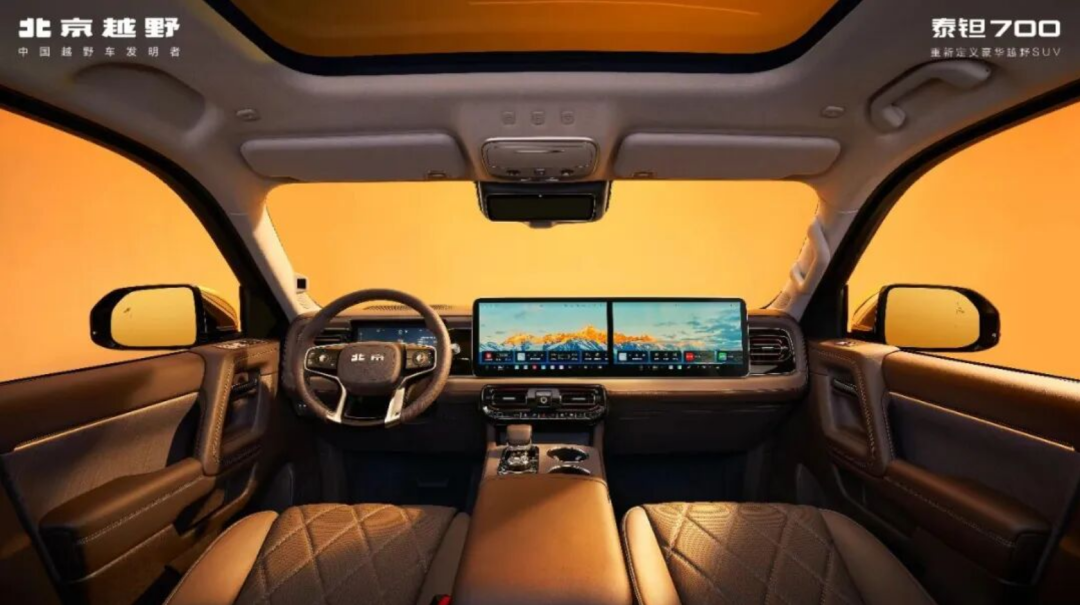

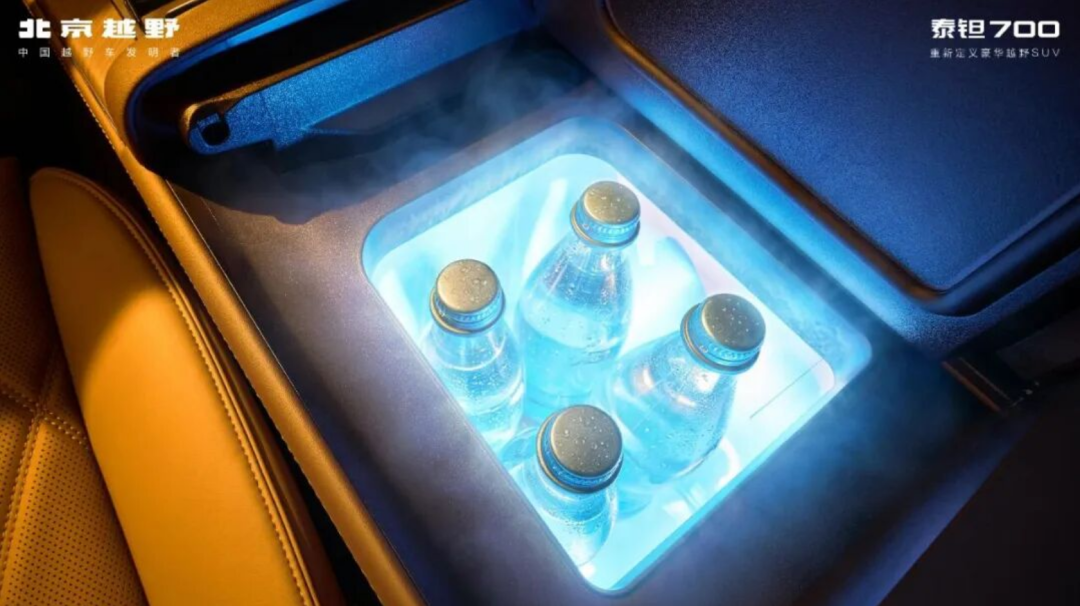 Image Source: Weibo
As a rugged off-road SUV, the Taitan 700 boasts a robust hardware foundation. It comes standard with a body-on-frame design, front and rear electronic differential locks, an intelligent electric center lock, nitrogen shock absorption, all-terrain recognition, creep mode, and tactical U-turn functionality. With a minimum ground clearance of 215mm and a maximum wading depth of 800mm, it effortlessly handles mild off-roading and rough terrain, rivaling professional off-road models.
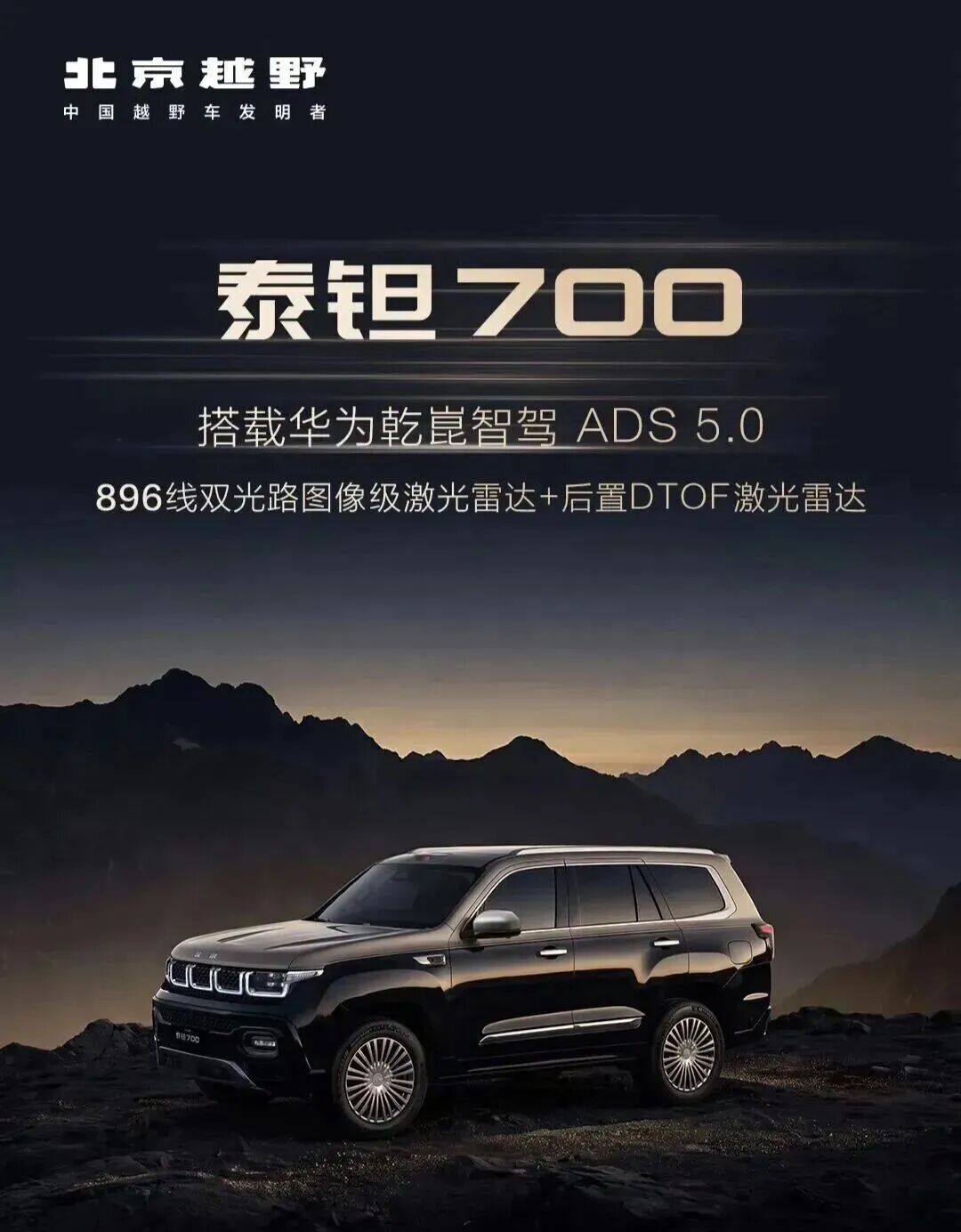 Image Source: Weibo
Its core competitive edge over the Xiangjie G9 lies in its comprehensive suite of Huawei intelligent systems. The new model is equipped with Huawei's ADS 5 Max advanced intelligent driving system, featuring an 896-line dual-light-path LiDAR that supports NOA (Navigate on Autopilot) across urban, highway, and off-road scenarios, matching the Xiangjie G9's capabilities. The cabin offers a luxurious experience with a triple-screen setup, AR-HUD, high-end infotainment chip, rear ceiling-mounted display, and built-in refrigerator.
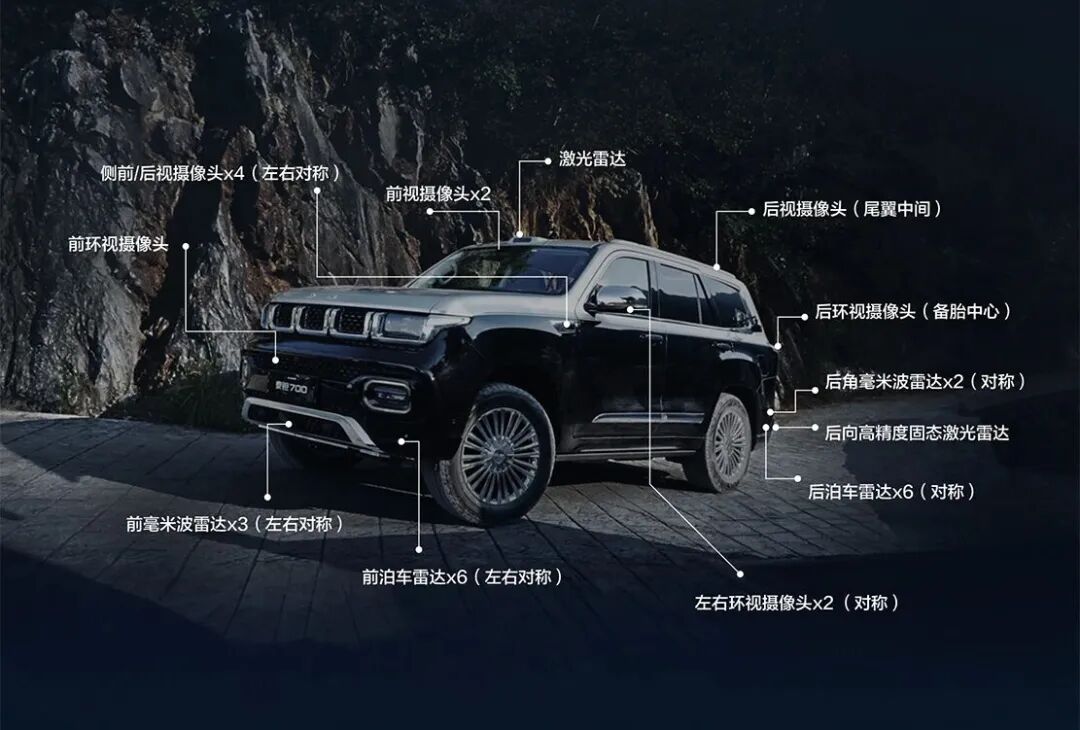
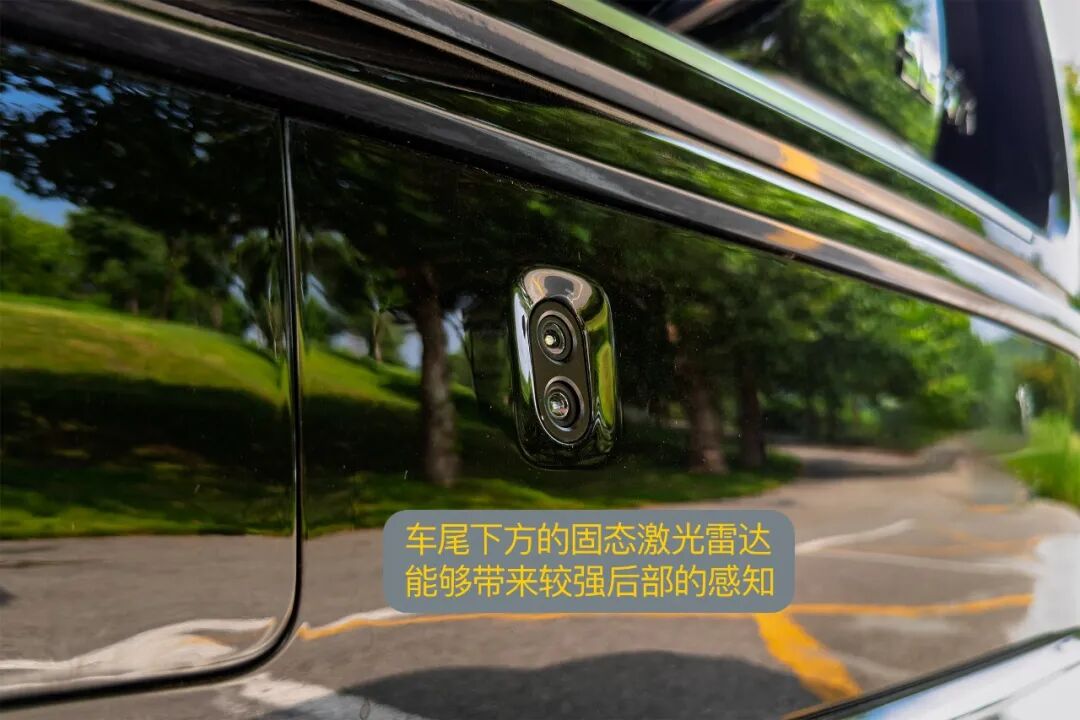 Image Source: Weibo
In terms of range, the 1.5T range extender paired with CATL batteries delivers 220km of pure electric range for daily commuting, while the combined full-tank and full-battery range reaches 1,340km, accommodating both urban and long-distance travel. In short, the Taitan 700 is an all-rounder suitable for both city and off-road driving, with no range anxiety, and its starting price of 249,800 yuan disrupts the value proposition of 300,000-yuan-class new energy SUVs.
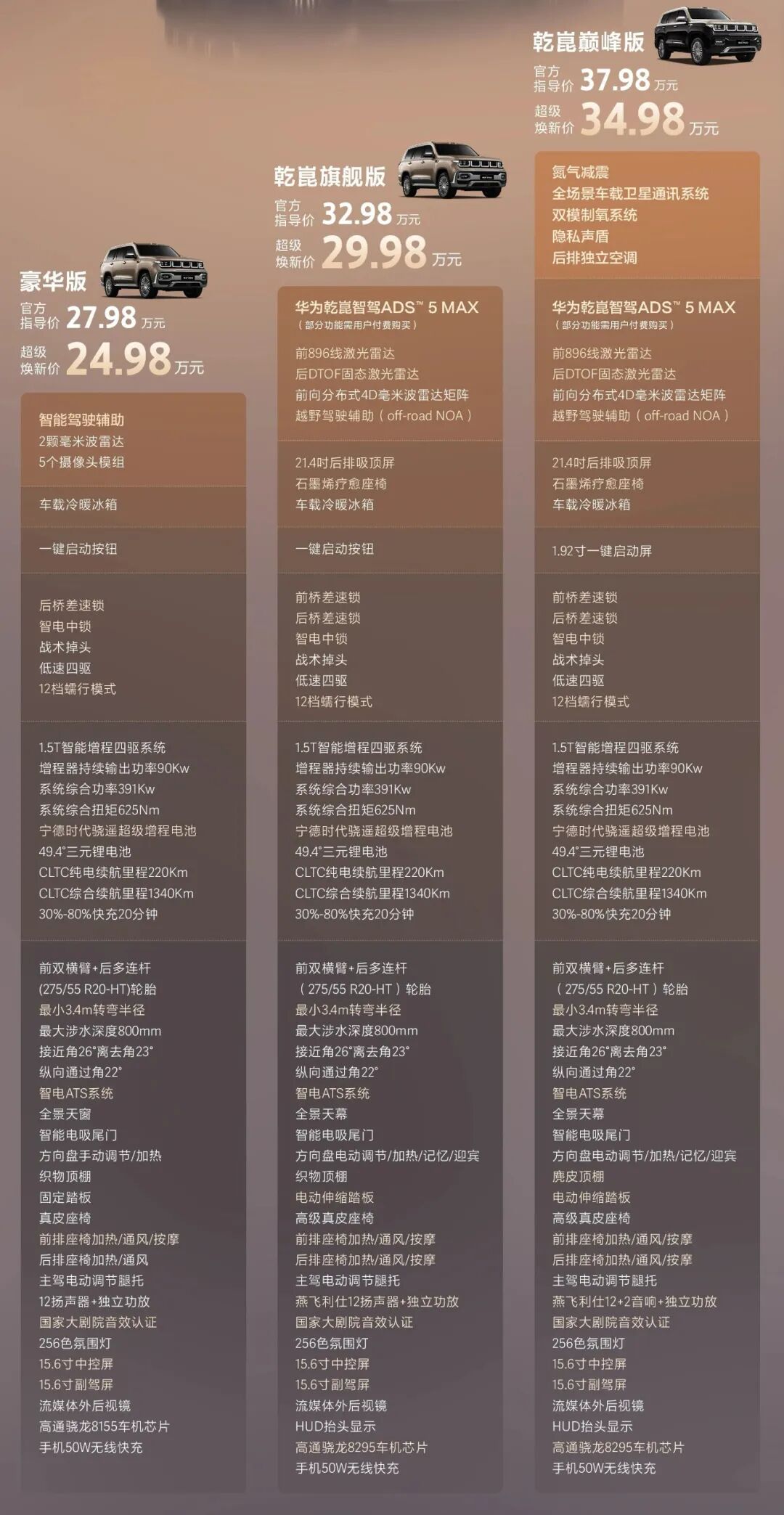 Image Source: Weibo
Off-road enthusiasts are impressed: In previous years, a setup like this—intelligent driving plus triple locks—would cost no less than 400,000 yuan. Of course, car enthusiasts are also pragmatic. The new model isn't perfect; its rugged chassis prioritizes off-road capability over urban ride comfort and noise isolation, and the range extender generates vibrations and noise at low speeds, creating trade-offs for city driving.
02 The most awkward internal competition: The G9's hot-selling streak comes to an end
If the Taitan 700 were a competitor from another brand, it would simply be hailed as the new "price-cut king." However, as another BAIC model equipped with Huawei technology, its disruptive pricing puts the Xiangjie G9 in an extremely awkward position.
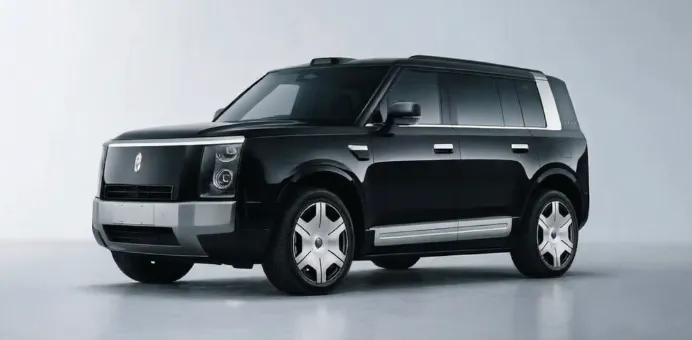 Xiangjie G9 Image Source: Weibo
The Xiangjie G9 is a 400,000-yuan-class high-end flagship SUV developed by BAIC and Huawei, part of Yu Chengdong's HarmonyOS Intelligent Mobility "Five Brands" core matrix. It focuses on urban luxury, ultimate comfort, and an exclusive smart ecosystem. Previously, it relied on the scarcity of Huawei's intelligent driving technology to maintain its premium positioning, with consumers willing to pay a premium for it.
 Xiangjie G9 Image Source: Weibo
Now, the market logic has flipped: With the same Huawei advanced intelligent driving system, the same LiDAR, and a comparable smart cabin, the Taitan 700 is nearly 200,000 yuan cheaper while offering a full suite of professional off-road hardware. In contrast, the Xiangjie G9, priced starting at 429,800 yuan, focuses solely on urban commuting, with limited functionality and fewer hardware features, yet commands a much higher price.
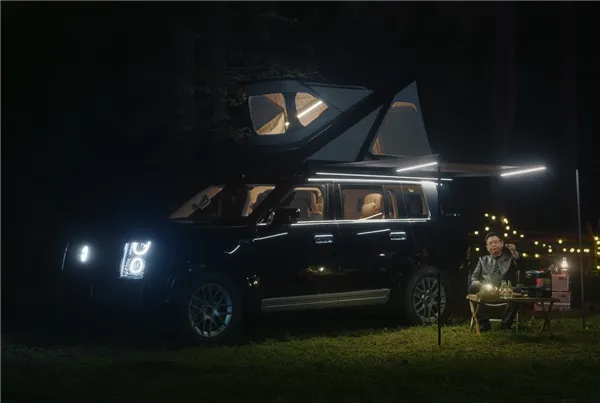 Caption: Beyond camping scenarios, the G9's rear privacy features are also tailored for specific needs.
The automaker officially insists the two models target different segments and do not conflict. However, consumers make purchasing decisions based on value, not official positioning. Netizens point out: With the same Huawei intelligent driving technology, why choose a city-focused SUV over an all-rounder when the price difference is 100,000 yuan?
Many wonder how the Xiangjie G9, which generated immense initial buzz, now faces a crisis. The numbers don't lie: Pre-sales opened on August 5, with 5,100 orders in the first two hours and 15,000 within 72 hours. By its official launch on August 20, it secured 3,100 firm orders in the first hour and over 5,000 within 24 hours. The pre-sale ratio of range extenders to pure electric models was 3:1, and six-seater to five-seater configurations was 7:3, reflecting strong recognition of its premium home-use positioning.
The core issue: All this pre-launch success was achieved before the Taitan 700's debut. The G9's popularity stemmed from the lack of affordable, all-round competitors. Now that the Taitan 700 has entered the market, the G9's comfort zone is gone, and the real sales test has just begun.
Car enthusiasts accurately summarize this internal competition: Originally, the G9 competed only with urban SUVs like Li Auto, NIO, and Aito, with no overlap. After the Taitan 700 filled its gaps in smart luxury and off-road capability, it disrupted the G9's pricing strategy and diverted its core potential customers.
03 Industry upheaval: Huawei's intelligent driving is no longer a premium shield
The Taitan 700's launch has far-reaching implications beyond model competition. It shatters the premium aura surrounding Huawei's intelligent driving and reshapes pricing logic across the new energy vehicle industry.
For the past two years, Huawei's advanced intelligent driving technology was a unique selling point for high-end models, with scarcity driving the belief that "Huawei intelligent driving justifies higher prices." This was an industry axiom and the premium core for models like the Aito and Xiangjie. Now, Huawei's ADS intelligent driving technology is widely available, no longer exclusive to HarmonyOS Intelligent Mobility's "Five Brands."
The Taitan 700 brings top-tier Huawei ADS 5 Max intelligent driving to the 250,000-yuan price range, transforming high-end intelligent driving from a luxury perk into a standard feature. Consumer priorities have shifted: Previously, they asked, "Does it have Huawei intelligent driving?" Now, they ask, "Everyone has it, so why should I pay more?"
This is the Xiangjie G9's most critical crisis. Its once-exclusive intelligent driving advantage has been neutralized by a sibling model, leaving only minor perks like cabin quietness, interior refinement, and chassis comfort—hardly enough to justify a 100,000-yuan premium for average consumers.
Netizens take a pragmatic view: Automaker-defined segmentations are meaningless; average buyers focus on value. While the Taitan 700 has minor flaws like weak rear ventilation and average button quality, its all-round capabilities shine. The Xiangjie G9's urban luxury advantages, while present, don't justify its premium pricing.
04 BAIC's internal conflict jeopardizes the premium positioning of the "Five Brands"
This sibling rivalry is essentially BAIC's self-inflicted wound. BAIC's original plan was clear: The Taitan would dominate the off-road market, while the Xiangjie would focus on urban luxury, with both brands complementing each other to capture Huawei's high-end intelligent driving market. However, the Taitan 700's aggressive pricing turned complementarity into cannibalization.
More critically, the Taitan 700 has set a new value benchmark for BAIC in consumers' minds. Future buyers will question: If a 250,000-yuan model offers Huawei intelligent driving, LiDAR, a luxury cabin, and off-road capability, why pay tens of thousands more for a 400,000-yuan BAIC model?
Previously vague brand premiums, chassis differences, and service advantages are now scrutinized under a microscope. Intangible high-end value can no longer justify price premiums. Netizens joke: BAIC shattered its own premium image, and its hard-earned 400,000-yuan market is now disrupted by its own new model.
Video Source: HarmonyOS Auto Circle @WeChat Channels
The industry poses a soul-searching question: Can Yu Chengdong's "Five Brands premium strategy" hold? The core strength of HarmonyOS Intelligent Mobility's five-brand matrix has been its exclusive access to advanced intelligent driving and a luxury ecosystem. Now that the technology is widely available, external models can also feature top-tier intelligent driving, eroding this exclusive advantage.
Market backlash is already evident, with Aito's terminal sales under pressure and user base diversion. It's predictable that this downward pressure will soon affect the Xiangjie G9, putting HarmonyOS Intelligent Mobility's premium pricing system under its greatest challenge since inception.
05 How should Yu Chengdong respond?
With the Taitan 700's disruptive entry, the Xiangjie G9 faces a pricing dilemma, leaving Yu Chengdong limited options to break the deadlock.
The short-term solution is to reduce terminal prices and offer additional purchase incentives to narrow the price gap with the Taitan 700, stabilize existing orders, prevent mass user defections, and protect hard-earned high-end market share.
Video Source: Yu Chengdong's Weibo
For long-term stability of premium pricing, the only path is to deepen differentiation. Consumers must clearly perceive that the Xiangjie G9's higher price reflects its urban-exclusive luxury, ultimate quietness and comfort, refined chassis tuning, and a mature Huawei full-stack ecosystem—not just intelligent driving hardware.
Meanwhile, BAIC must urgently clarify the price boundaries and positioning of the Taitan and Xiangjie brands to end internal cannibalization. Continuous sibling rivalry will only harm both brands, erode reputation, and cede market influence.
Netizens joke: BAIC's product and pricing teams operate on entirely different wavelengths—one striving for high-end premiums, the other for low-price, feature-packed models—turning internal synergy into rivalry. However, G9 supporters argue the two models cater to distinct groups: For urban home use prioritizing comfort and luxury, the G9 remains the top choice,
Gain daily, in-depth perspectives on the intersection of intelligent technology and the financial realm.
-
![]()
Profits Plunge by 61% in the First Half of the Year! The Rise and Challenges of Great Wall Motors
-
![]()
BAIC Taitan 700 vs. Xiangjie G9: A Clash of Kin, How Will Yu Chengdong Navigate This Challenge?", "Taitan 700, Xiangjie G9, BAIC, Huawei Intelligent Driving, Pricing Showdown", "BAIC has unveiled its
-
![]()
Volkswagen's Layoffs and Factory Closures: What Should Car Owners Make of It?
-
![]()
Yu Chengdong’s Luxseed V9 Dominates Sales, but Netizens Warn Against Complacency
-
HAND Enterprise Solutions Sees Big Jump in Main Shareholder’s Stock Value After AI Integration, Trims Over 1,000 Jobs in Two Years After Cashing In Hundreds of Millions
-
![]()
Insta360 Luna Pro Review: Lightweight and More Freedom with One Less Lens
-
![]()
Minimize Reliance on Huawei! Seres AIVA Embraces Battery Swapping, Echoing NIO's Strategy?
-
Surging 143-Fold in 18 Months! From a Struggling Property Developer to Hong Kong Stocks' Premier AI Computing Power Contender, 'China's CoreWeave' Emerges