Insta360 Luna Pro Review: Lightweight and More Freedom with One Less Lens
 08/27 2026
 329
329
Lighter than a camera, more professional than a smartphone.
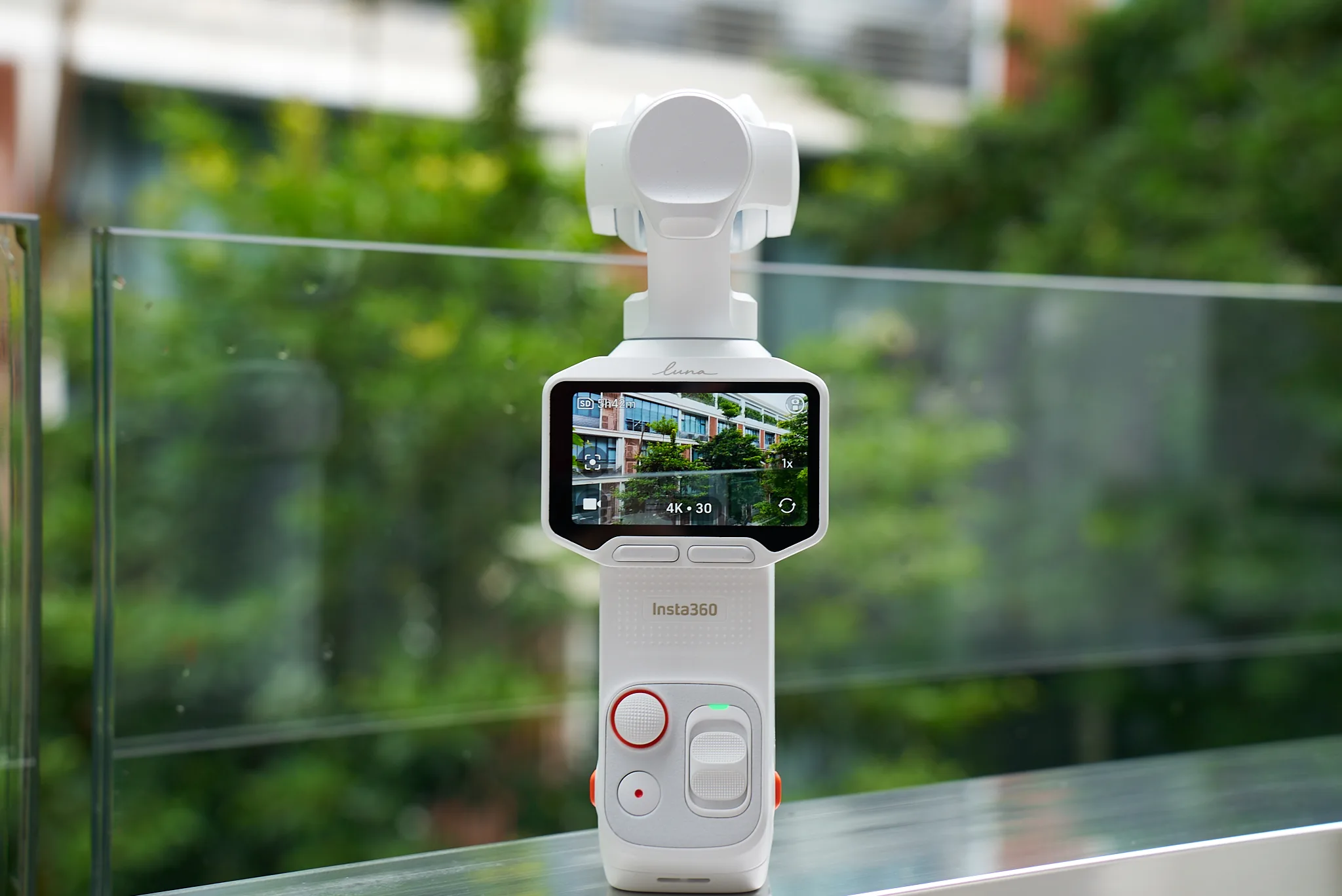
In early June, Insta360 released its first handheld gimbal camera, the Luna Ultra. Xiaolei had very high praise for it at the time (search 'Lei Technology + Luna' online to see). As Insta360's first-generation gimbal product, the Luna Ultra was remarkably polished. However, Xiaolei was curious why Insta360's first product was a dual-camera setup. Was there no plan to release a more affordable single-camera version? Just two months later, Insta360 indeed unveiled a single-camera version of the handheld gimbal camera—the Luna Pro.
(Image source: Lei Technology)
Firstly, the pricing is quite sincere, starting at 3399 yuan, which is 1300 yuan cheaper than the Ultra version. But does this imply some 'downgrades' to the device? Let Xiaolei explain how the Luna Pro, with its 'single eye,' performs.
Lighter and More Portable for Everyday Use
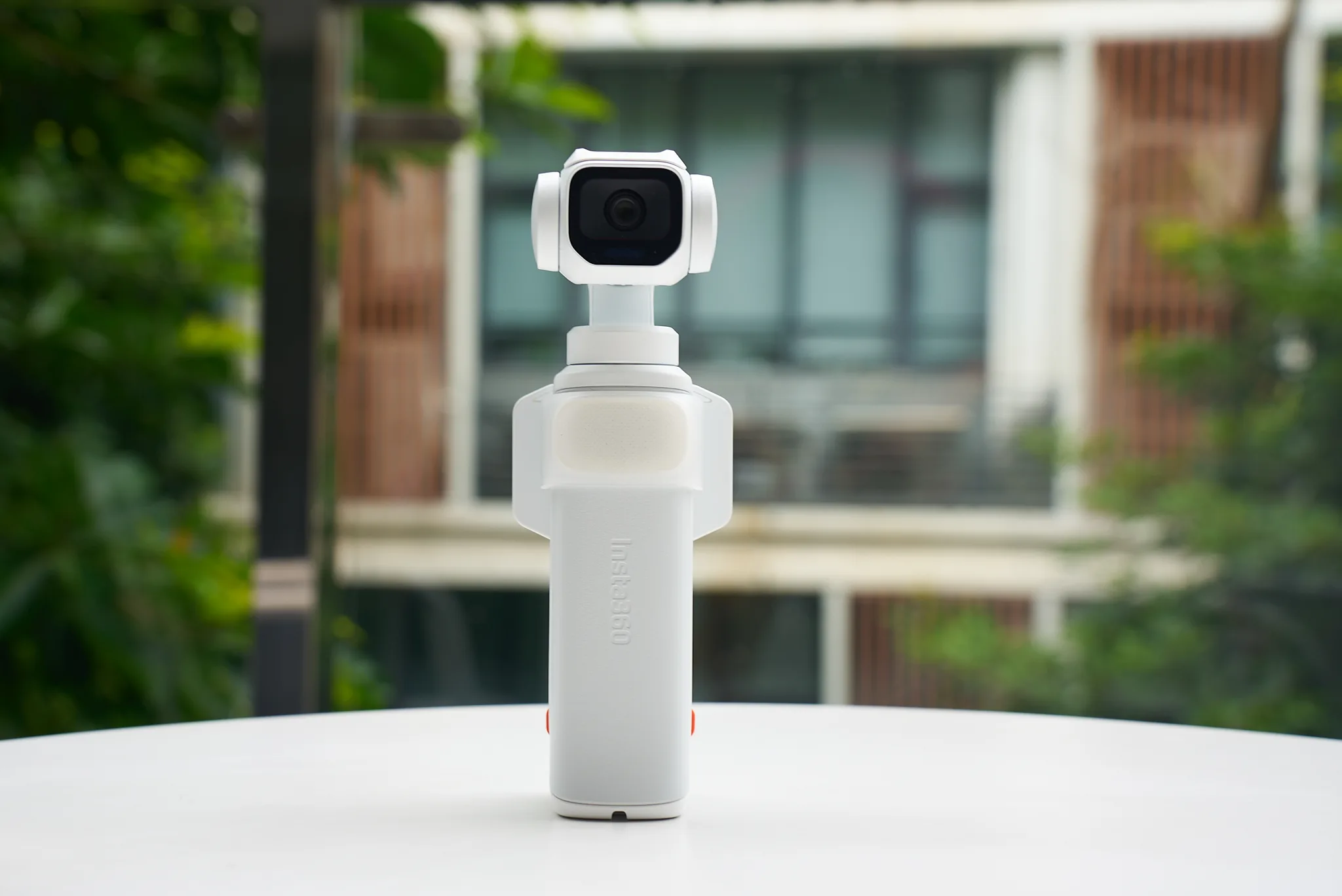
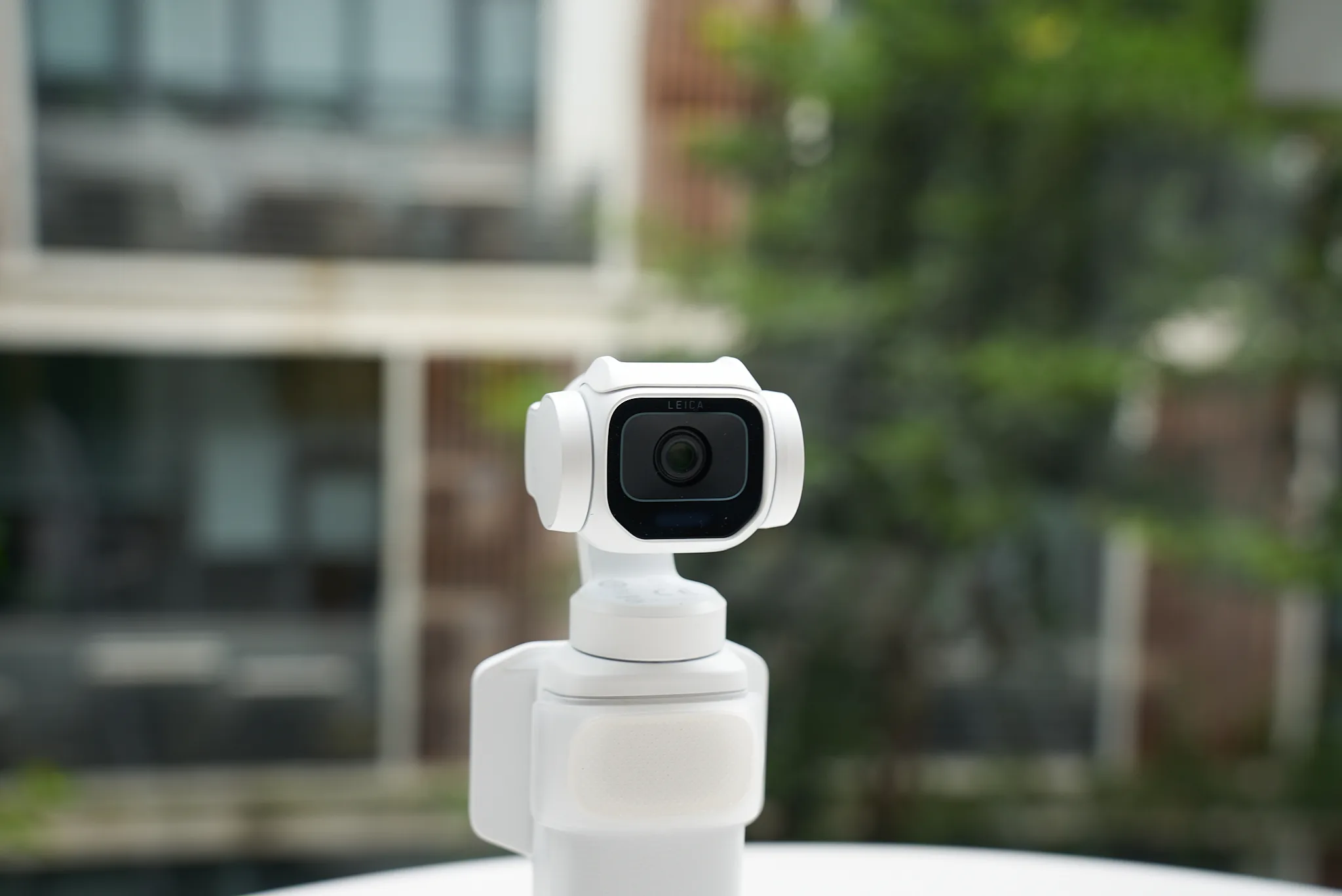
Let's start with the differences. Due to the absence of a telephoto lens, the Luna Pro's weight has been reduced to 215g, making it lighter than a flagship smartphone and more compact when stored. For users who prefer carrying only a small shoulder bag when going out, the Pro's portability far exceeds that of the Ultra.
However, in terms of appearance, it retains the same design as the Luna Ultra: lens, gimbal, rotatable screen, and grip body. Oh, and the detachable screen from the Ultra is also preserved in the Pro. We'll discuss that separately later.
(Image source: Lei Technology)
The only thing Xiaolei is somewhat dissatisfied with is that the slightly complex control buttons from the Luna Ultra have been fully retained. Simply put, the Luna Pro's recording, gimbal control, and zoom functions are all assigned to three separate buttons/joysticks. In theory, this is convenient for users to adjust the lens angle and focal length simultaneously, but in practice, the space is extremely small, making operation quite awkward.
Now, let's get back to the main topic. This is also where Xiaolei believes the Luna Pro shines the most.
Nowadays, most videos are eventually posted on vertical screen platforms. However, the sensors in gimbal cameras are horizontally oriented. To shoot vertically, you have to crop the image after shooting, meaning from 16:9 to 9:16, losing a significant portion of the pixels on both sides and effectively halving the clarity. This is why many users on social media platforms complain that videos shot with gimbal cameras in vertical mode always appear blurrier than those shot with smartphones.
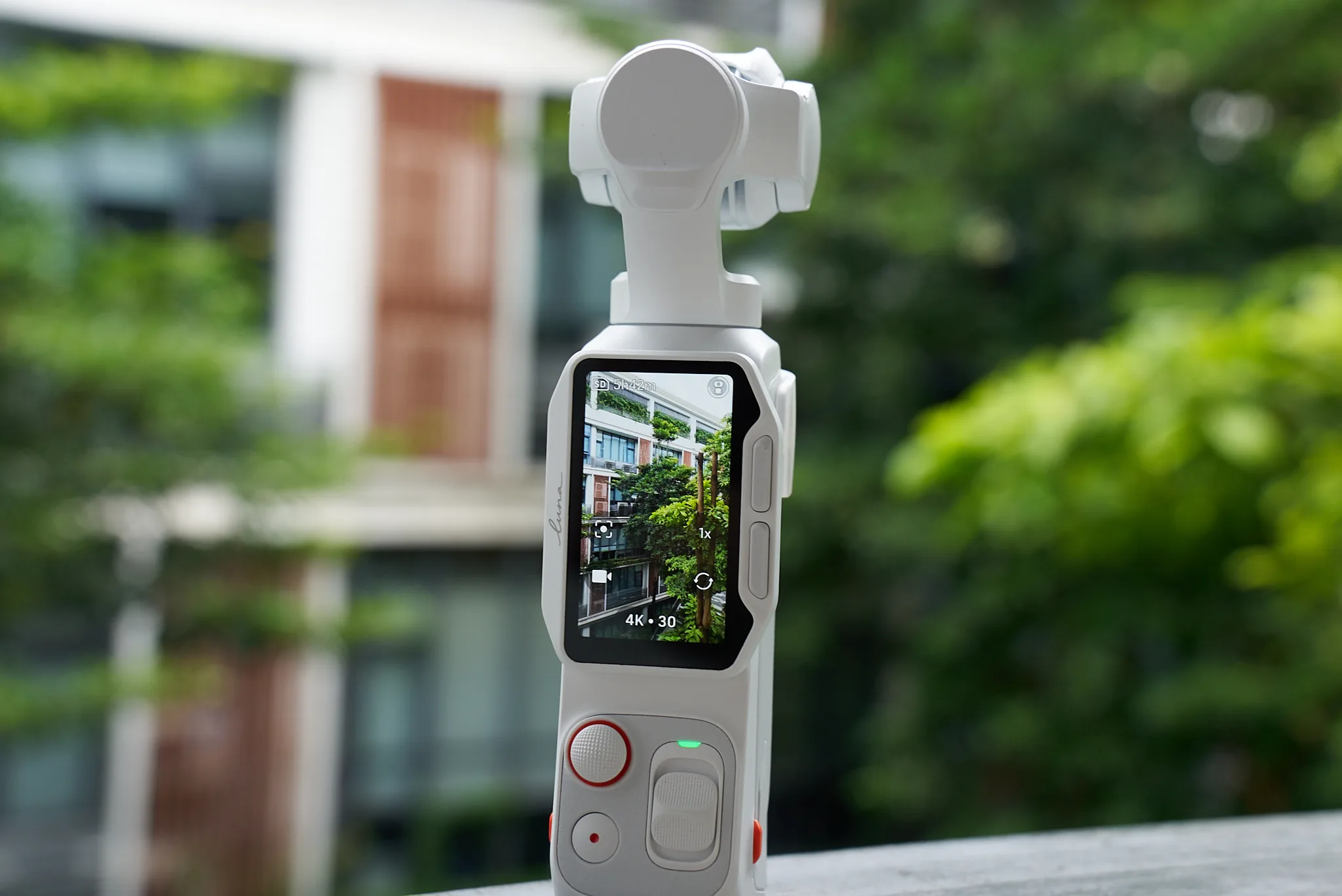
(Image source: Lei Technology)
The Luna Pro's solution is native vertical shooting. It uses the computational power of a Qualcomm 4nm chip to supersample 6K footage and directly output 4K30fps video in a 9:16 aspect ratio. The sensor is fully utilized for imaging, ensuring every pixel in vertical mode is sharp and ready to post immediately after shooting.
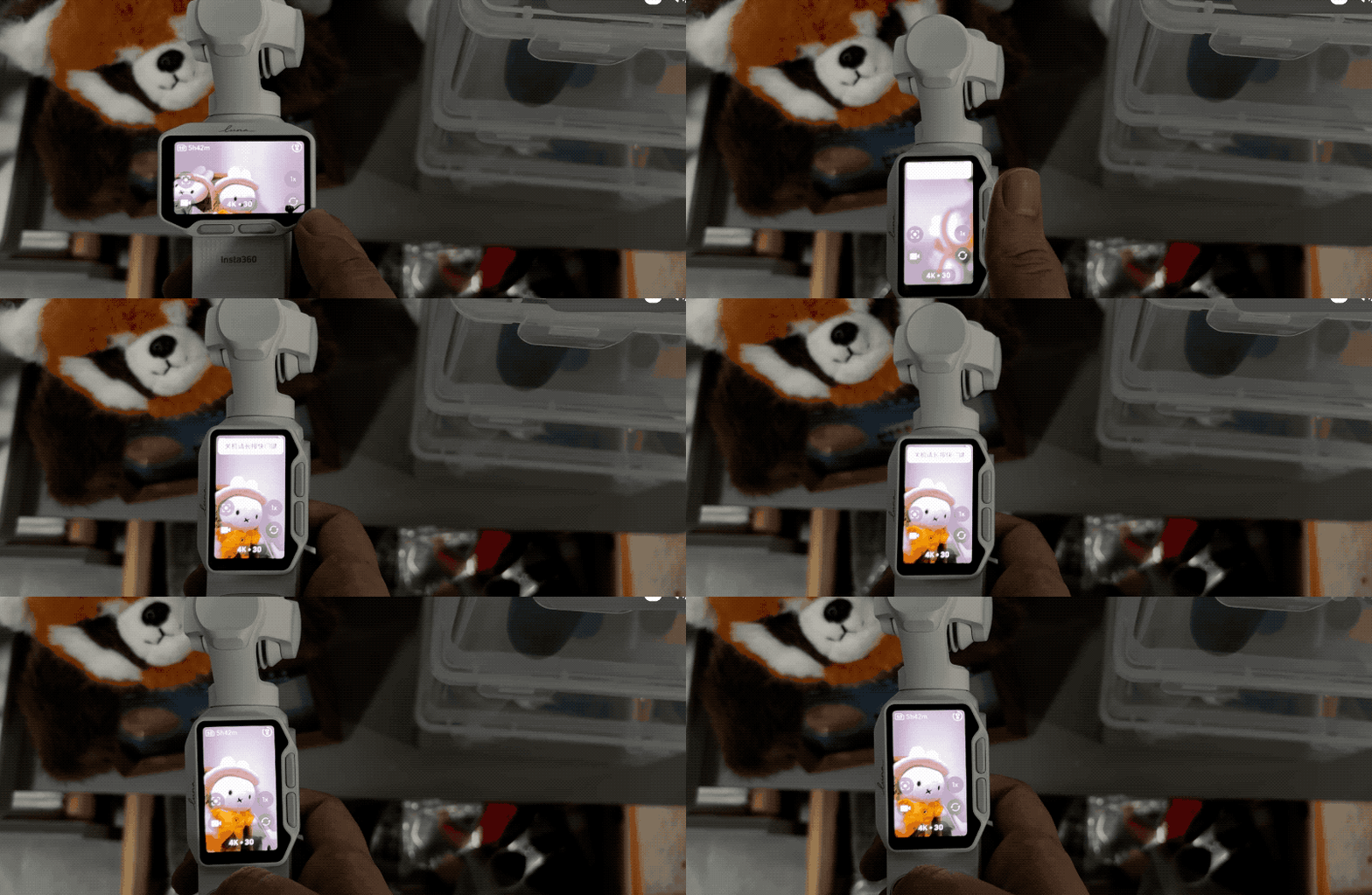
(Image source: Lei Technology)
Simply put, previously, shooting in vertical mode required cropping in editing software, which not only degraded image quality but also wasted time on exporting. Now, with the Luna Pro, pressing the record button instantly captures vertical 4K footage.
By the way, in vertical shooting mode, beauty filters and regular filters can be applied with a single tap, allowing for true 'direct output and posting.'
A 'Self-Operating Photographer'
Many readers may wonder, with smartphones now featuring increasingly powerful stabilization (thanks to various optical and electronic stabilization technologies), why spend over 3000 yuan on a gimbal camera?
This question is understandable. The gap between smartphones and professional imaging equipment is narrowing, and the market for professional cameras is shrinking. So, why buy a gimbal camera?
The answer is simple: it's better than a smartphone while being simpler than a professional camera.
No matter how advanced smartphone stabilization is, it essentially relies on sensors and algorithms to correct the image after the fact. If the image shakes during shooting, the edges will become distorted and blurry. Even with powerful post-processing algorithms, it can only provide remediation. In contrast, the Luna Pro features a true three-axis mechanical gimbal, which is physically more stable than a smartphone. In everyday shooting scenarios like walking, turning, or going up and down stairs, the image remains steady and drift-free from start to finish. One relies on post-processing, while the other handles it upfront—the difference is significant.

(Image source: Lei Technology; replace with video on platforms that support it)
Beyond stabilization, the Luna Pro's strength lies in its ability to 'know what you want to shoot.' Previously, shooting yourself alone was extremely cumbersome: you had to position yourself, run back to press record, and then run back into the frame, or simply hold the camera for a close-up shot.
The Luna Pro simplifies this process to the extreme. Press the joystick downward or double-tap the screen, and it automatically locks onto the person in the frame. Once locked, the gimbal follows you, maintaining a steady track as long as the person's movement isn't overly exaggerated, eliminating the need to manually adjust the camera position.
For example, in this motorcycle tracking shot taken in a tunnel, the camera remains steadily locked onto the motorcycle throughout the one-minute-plus video. Even if the motorcycle briefly disappears and reappears in the frame, it can almost instantly relock onto the subject.
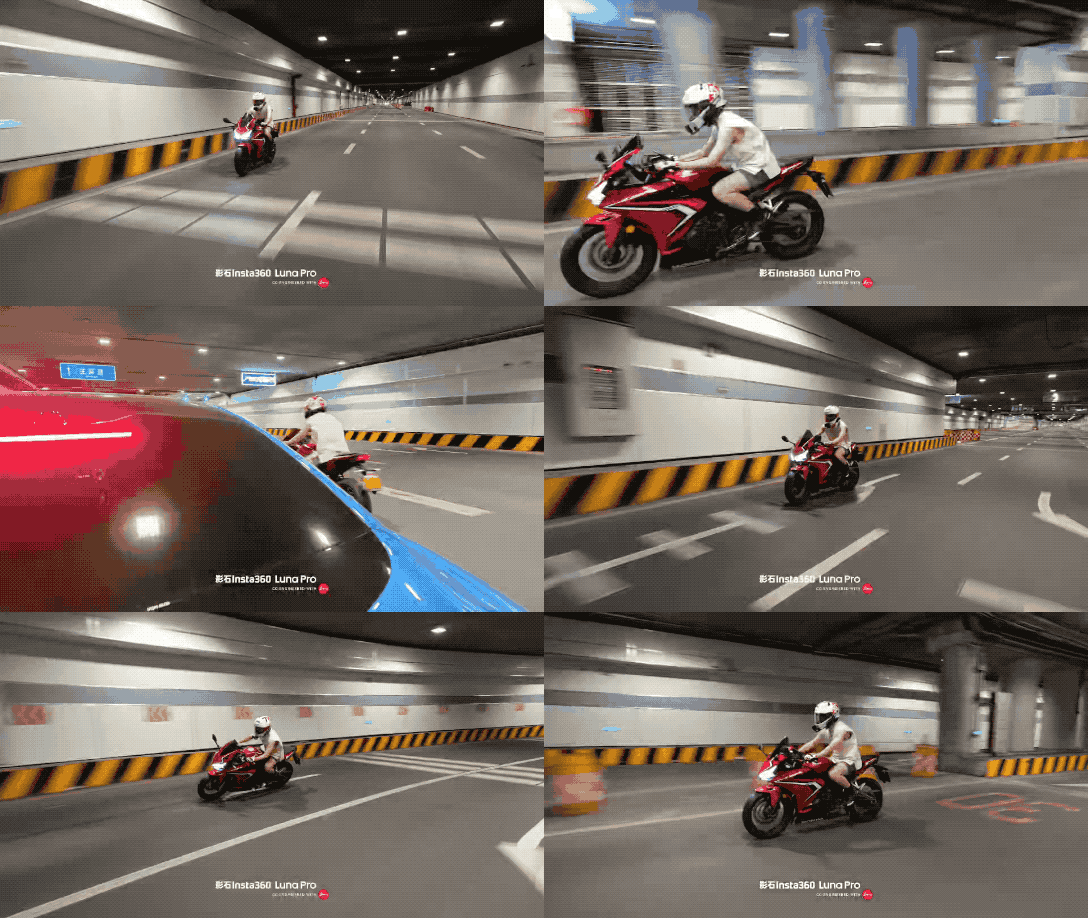
(Image source: Lei Technology; replace with video on platforms that support it)
Moreover, when tracking, it doesn't rigidly lock the person in the center of the frame but places them along the rule-of-thirds lines, adding a touch of compositional sense to the shot and preventing it from looking stiff.
In essence, the Luna Pro is like having half a 'self-operating photographer': you handle the positioning and performance, while it handles the recording.
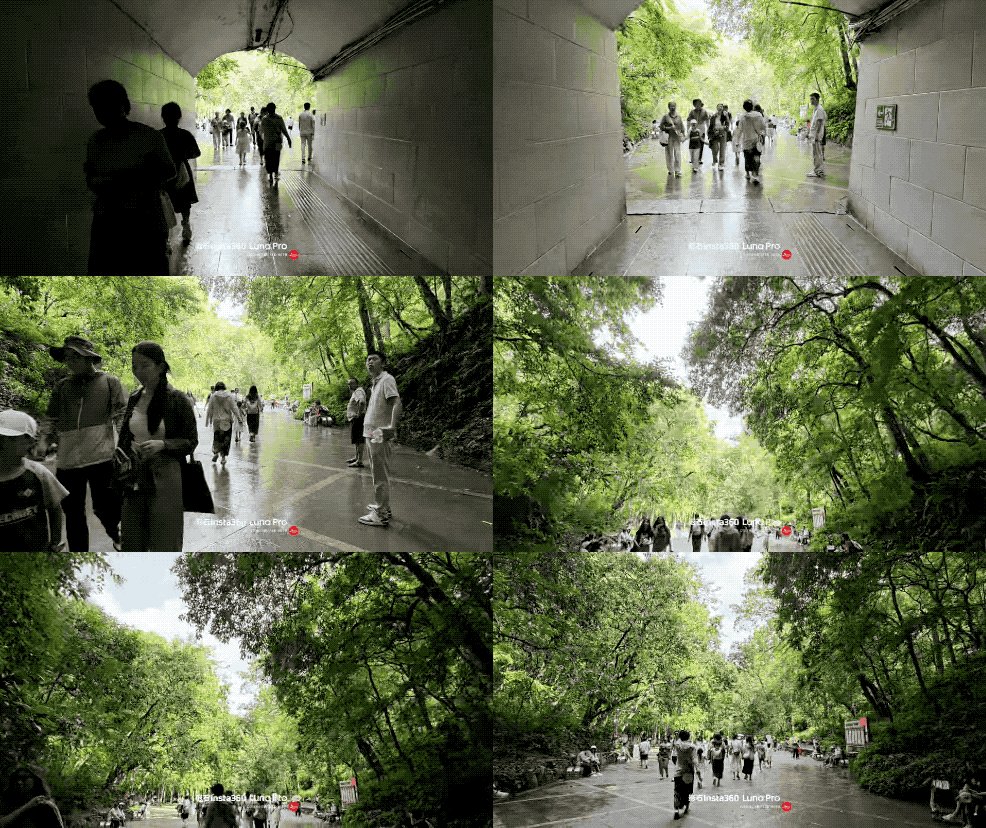
(Image source: Lei Technology; replace with video on platforms that support it)
Next, let's discuss the most significant difference between the Ultra and Pro: the telephoto lens.
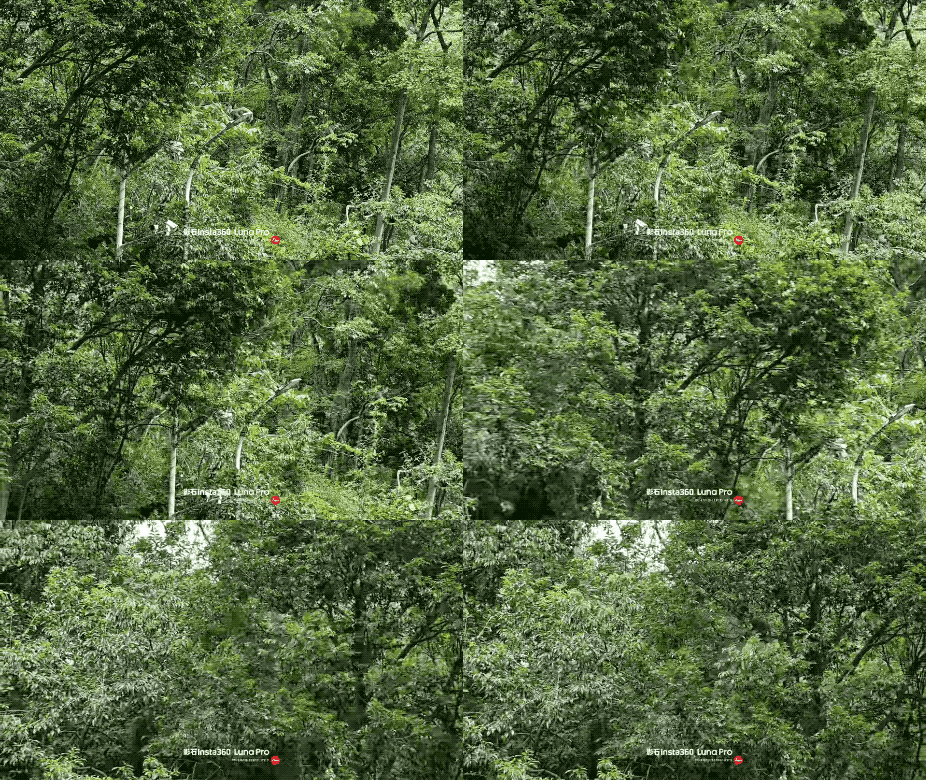
The Pro only has a single 1-inch main camera with an equivalent focal length of 20mm, meaning zooming relies on cropping. However, Insta360 has put effort into this 'cropping' aspect: based on 2x 4K lossless zoom, it uses an imaging chip and AI model for enhancement, extending the usable zoom range to 4x.
1x is 20mm, 2x is 40mm, and 4x is 80mm. Use 1x for selfies with environmental context, 2x for street scenes with character relationships, and 4x for half-body close-ups and still life details. Overall, it's sufficient.

(Image source: Lei Technology; replace with video on platforms that support it)
(Image source: Lei Technology; replace with video on platforms that support it)
However, expecting the 4x zoom to maintain the same image quality as 1x is asking too much. It's usable, but for higher zoom and image quality needs, consider purchasing the Luna Ultra.
On the side of the device, there's a physical zoom lever. A short push quickly switches focal lengths, while a long push enables continuous zooming, which is more intuitive than tapping buttons on the screen. Xiaolei personally quite likes this feature, as the learning curve for the lever is almost zero—once you use it, you won't go back (except for the so-so push-pull feel).
Macro performance is a pleasant surprise. The closest focusing distance is 9cm, allowing for natural bokeh when shooting food up close or your own collectibles with a single lens.

(Image source: Lei Technology)
Now, let's talk about night scenes.
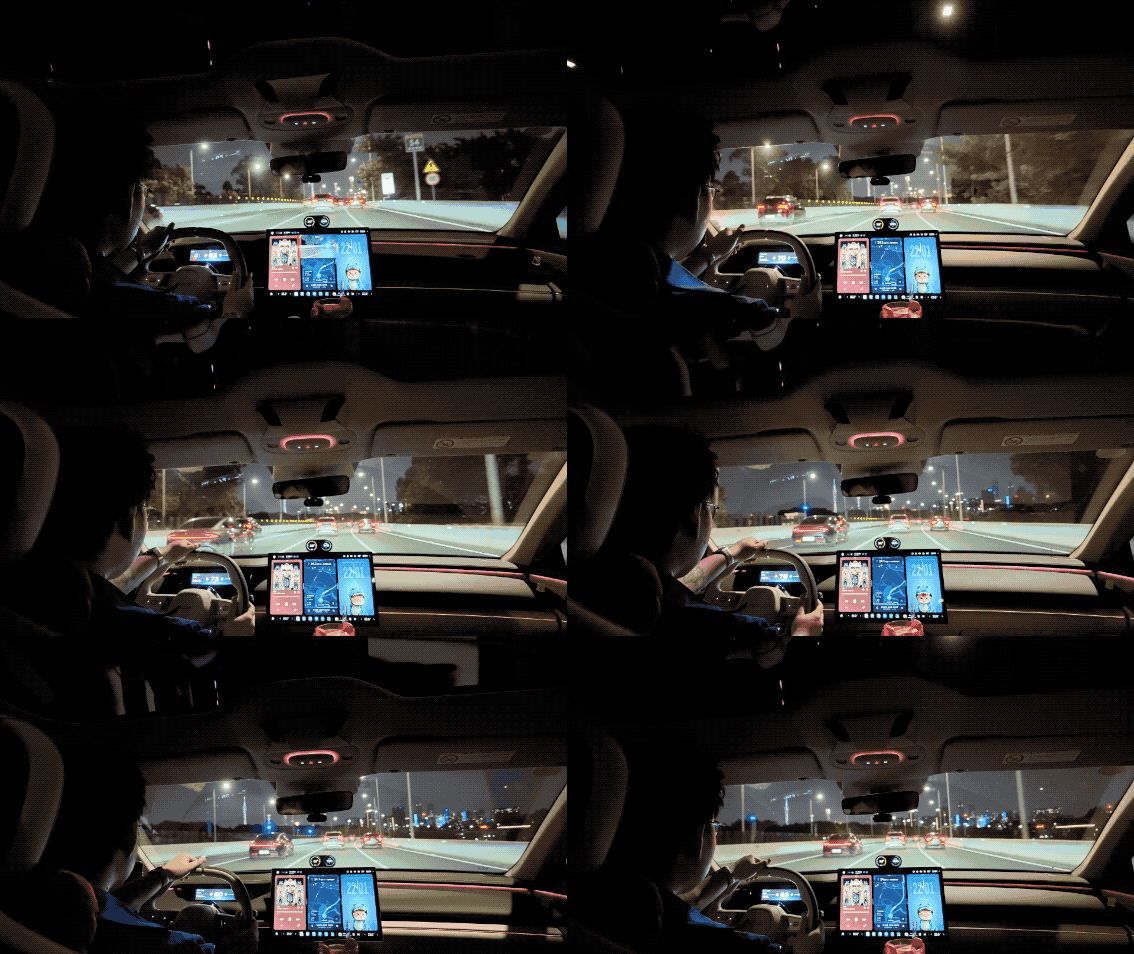
The Luna Pro features 'AI dual chips': a Qualcomm 4nm chip for computational power and energy efficiency, and another imaging chip dedicated to low-light noise reduction. Together, they enable 4K60fps night scene recording. Interestingly, its night scene recording supports zooming from 1x to 4x, whereas many products at the same price point only support wide-angle in night mode, requiring you to physically move closer to shoot.
Admittedly, a 1-inch sensor with computational noise reduction still struggles in extremely dark environments. Don't expect it to match the purity of larger-sensor cameras. However, for everyday urban night scenes, night markets, and neon-lit streets, its direct output is more than sufficient. The image is clean, distant lights don't 'blow out,' and with support for night scene zooming, it's already top-tier in its price range.
(Image source: Lei Technology; replace with video later)
So, what makes the footage from this device stand out?
Xiaolei's answer might differ from what you expect. Its true competitor isn't a full-frame camera—that wouldn't be fair. Its rival has always been the smartphone in the user's hand.
The issue with smartphones is their heavy reliance on computational photography. During the day with good lighting, smartphone direct output can indeed be excellent, even more appealing than cameras. However, in complex lighting scenarios like backlighting, neon lights, or mixed color temperatures, the algorithm's side effects become apparent: it actively suppresses highlights, lifts shadows, and causes skin tones to fluctuate between warm and cool, making the image 'more attractive' but significantly reducing its authenticity.
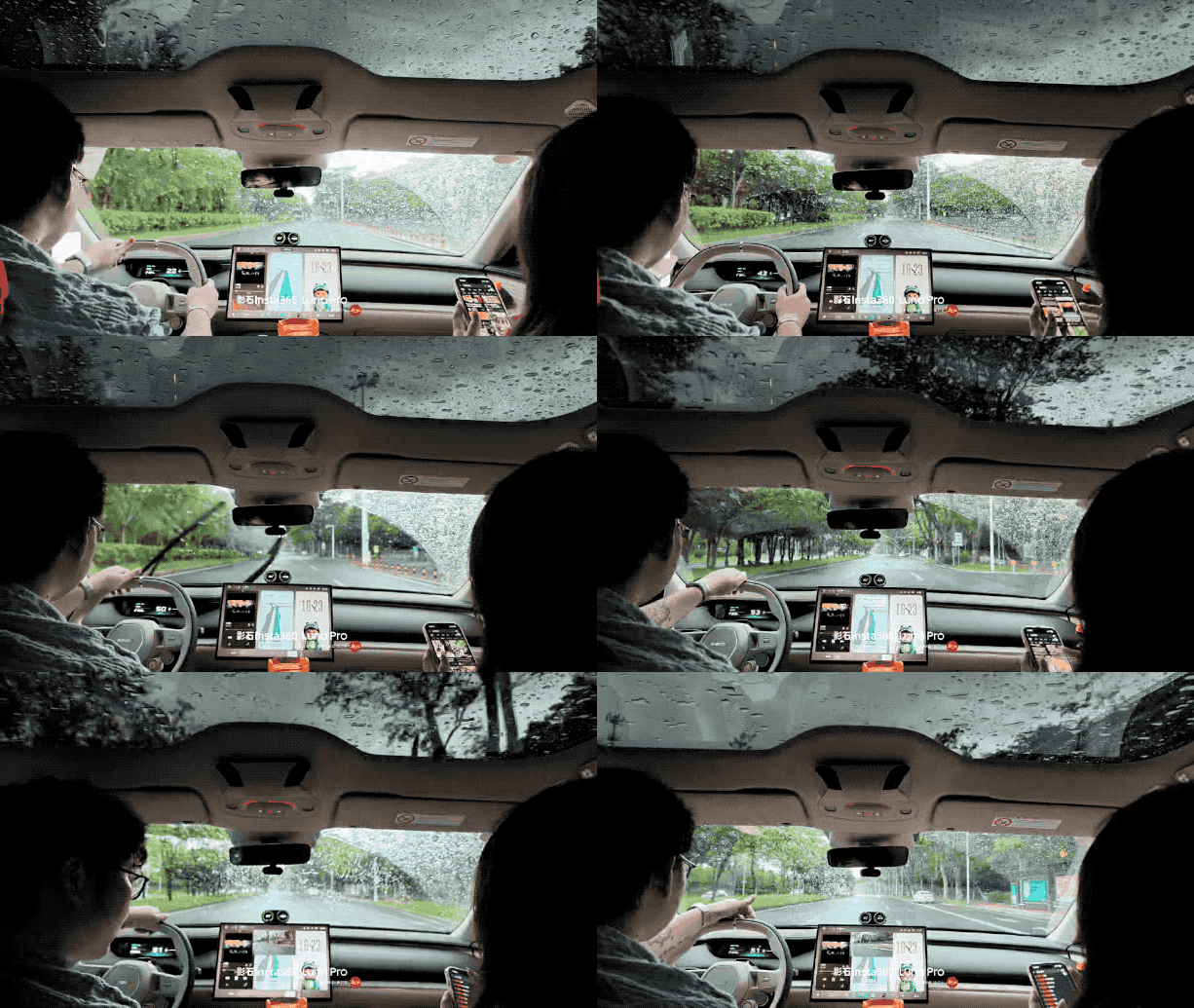
The Luna Pro takes a different approach. With its 1-inch sensor and Leica color science, it allows dark areas to remain dark and highlights to shine brightly, resulting in a more natural image hierarchy. Xiaolei doesn't want to simply label it as 'Leica flavor'—a term that's become overused—but the 'unpretentious, timeless' quality is evident to all.
(Image source: Lei Technology)
For a device primarily focused on capturing everyday life, 'whether it can be posted directly after direct output' matters more than 'how much room there is for post-processing.' The Luna Pro's advantages in this regard are reflected in its beauty filters, regular filters, and live photos.
First, let's talk about beauty filters. It supports direct 4K beauty video output from the camera, with adjustable skin smoothing levels and color temperature sensor-calibrated skin tones, ensuring the subject's skin looks both attractive and 'normal.' Xiaolei must be honest here: many products on the market apply a one-size-fits-all cold white skin tone, smoothing out facial features to the point of looking like a 'fake person.' Insta360 takes a more restrained approach, prioritizing texture and three-dimensionality, so you don't look like you've swapped faces after shooting.
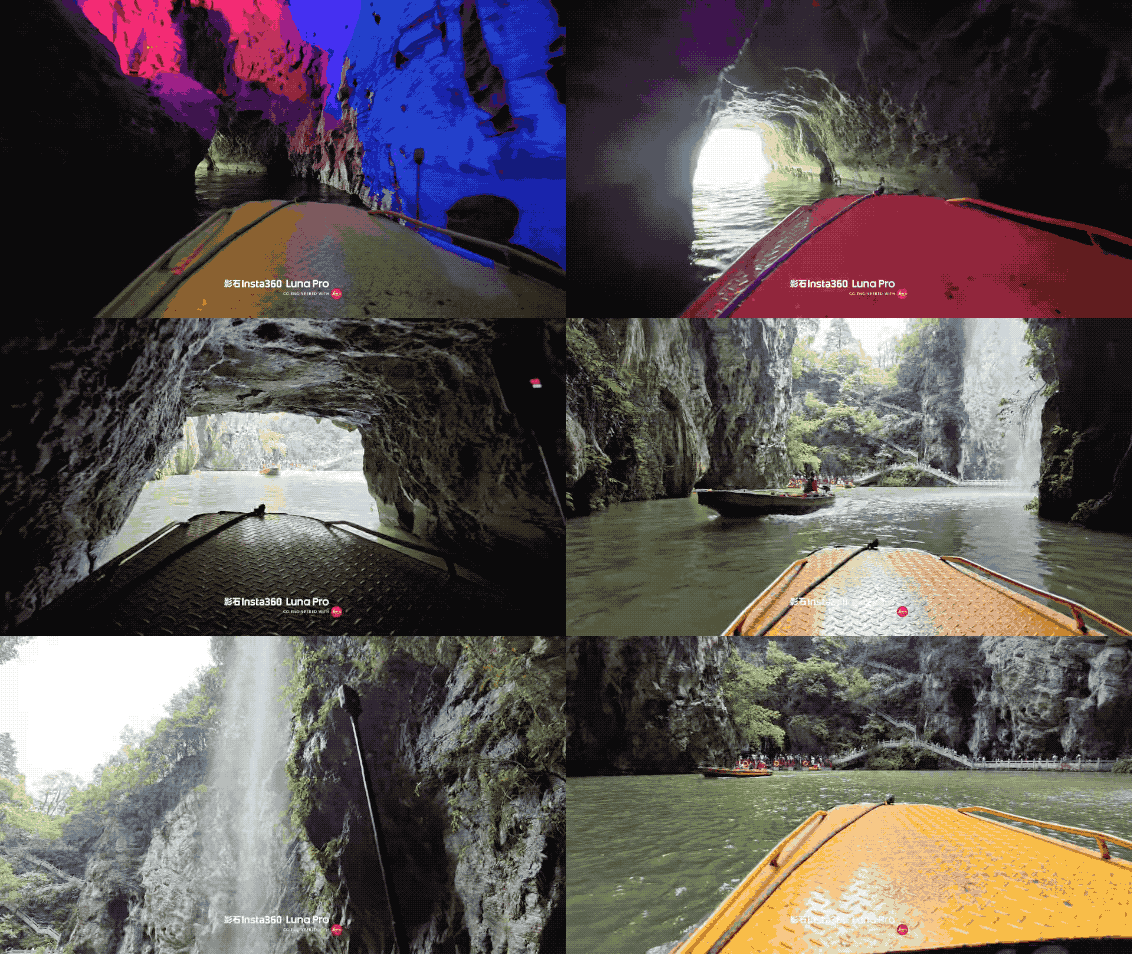
Next are the filters. The device comes with three Leica filters (Natural, Vivid, Chrome) and six cinematic filters. This time, Xiaolei focused on testing several Ricoh and Fujifilm-inspired styles.
(Image source: Lei Technology)
The 'Positive' filter is based on the Ricoh GR4 Positive film, offering rich color layers that work well for street scenes and portraits. The 'CC' film emulates the Fujifilm CC style, with a strong documentary feel, perfect for street photography. For a dramatic effect, try the 'NC' film, which simulates Fujifilm's classic negative film, with warm highlights and cyan shadows. The 'Negative' filter, also from the Ricoh GR4, features a soft and restrained tone, suitable for quiet documentaries.
There's also a handy little feature: filter parameters can be generated into a QR code, allowing others to apply your color grading by simply scanning it. If you want to unify the video style among several people, there's no need to adjust parameters one by one—just scan the code.
Finally, let's cover some peripheral parameters of the Luna Pro. In terms of battery life, it packs a 1550mAh battery, rated for 4 hours in official lab tests, with fast charging reaching 80% in 23 minutes. It has 47GB of built-in storage, allowing you to shoot even if you forget your memory card. The onboard microphone comes with a windshield and intelligent wind noise reduction algorithm, supporting direct connection to Insta360 Mic Air and Mic Pro (the latter's e-ink screen allows for custom patterns).
In terms of accessories, Insta360 officially offers a sliding protective back cover, head tracking module, black soft filter, mini magnetic fill light, battery grip, ND filter, and neck strap bracket, covering almost all your needs.
Conclusion: A 'Just Right' Gimbal Camera
Finally, following Lei Technology's (ID: leitech) tradition, here's a brief summary of the Luna Pro's pros and cons.
Pros:
1. Supports native 4K30 vertical shooting, ideal for short video creators;
2. Three-axis mechanical gimbal, far more stable than a smartphone;
3. Intelligent tracking plus multi-person tracking, it's like having an extra photographer who can move on their own;
4. Leica 1-inch large sensor plus dual chips, excellent performance in night scenes and direct output;
5. Weighing only 215g and featuring a slide-to-power-on design, there's a strong desire to take it out with you.
Disadvantages:
1. Only one camera lens, unable to meet high telephoto demands;
2. 8K30 is a high-performance mode, prolonged recording requires attention to overheating;
3. There are still physical limits to noise control in extremely dark environments, and the focus may occasionally drift.
After two weeks of experience, Xiaolei believes that the Luna Pro is not a downgraded version of the Ultra, but a product targeted at a different user base. The Ultra caters to a minority seeking professional-grade features with its focal lengths and extreme image quality, while the Pro is aimed at the majority who shoot vertical videos, capture everyday life, and take portraits. Instone has reallocated the cost savings from omitting the telephoto lens to enhance the experience with native vertical shooting, improved zoom, and a remote control screen.
(Image source: Photographed by Leikeji)
To put it simply, as Xiaolei mentioned in the Ultra review, its truly interesting aspect is "incorporating the concepts of action cameras and panoramic cameras into a handheld gimbal camera." With the Pro, Instone's approach is: not to provide everyone with a machine that can do everything, but to offer "vertical video shooters" a machine that's just right for them.
For those primarily shooting vertical videos, documenting life, and taking portraits, the Luna Pro, starting at 3399 yuan, is currently the most suitable gimbal camera. For those who are obsessed with telephoto capabilities or have already set their sights on the Ultra, upgrading to the dual-camera version is also a worthwhile investment.
Instone Gimbal Camera, Handheld Gimbal Camera, Instone Luna Imaging
Source: Leikeji
Images in this article are from: 123RF Royalty-Free Image Library, Source: Leikeji
-
![]()
Insta360 Luna Pro Review: Lightweight and More Freedom with One Less Lens
-
![]()
Minimize Reliance on Huawei! Seres AIVA Embraces Battery Swapping, Echoing NIO's Strategy?
-
Surging 143-Fold in 18 Months! From a Struggling Property Developer to Hong Kong Stocks' Premier AI Computing Power Contender, 'China's CoreWeave' Emerges
-
![]()
DeepSeek's Price Increase: Sparking a Surge in the Industrial Chain?
-
![]()
Australia Leads the Way! Pure AI-Generated Music Barred from Official Charts, Human Creativity to Stay Central
-
National Podcasting Boom: Is It Genuine Growth or Just 'Spiritual Consumption' in Disguise?
-
![]()
Hyundai and Kia: Subtly Embracing Chinese Inspirations
-
![]()
Two Major Optical Film Projects Reach Pivotal Implementation Stage! Tianlu Technology Records RMB 268 Million in H1 Revenue