Profits Plunge by 61% in the First Half of the Year! The Rise and Challenges of Great Wall Motors
 08/27 2026
 335
335
Written by | Guanchejun
Revenue soared past 100 billion, yet net profit took a nosedive, plummeting by 60%. The first half of the year for Great Wall Motors was a period marked by both remarkable achievements and significant challenges.
On August 26, 2026, Great Wall Motors unveiled its semi-annual report, leaving Guanchejun with a complex mix of emotions. The Tank brand continued its stellar performance, Haval relied on international markets to fuel its growth, Ora and Wey finally experienced a respite, while the pickup segment showed signs of decline.

In Guanchejun's opinion, this semi-annual report initially appears promising but reveals deep-seated concerns upon closer scrutiny.
01
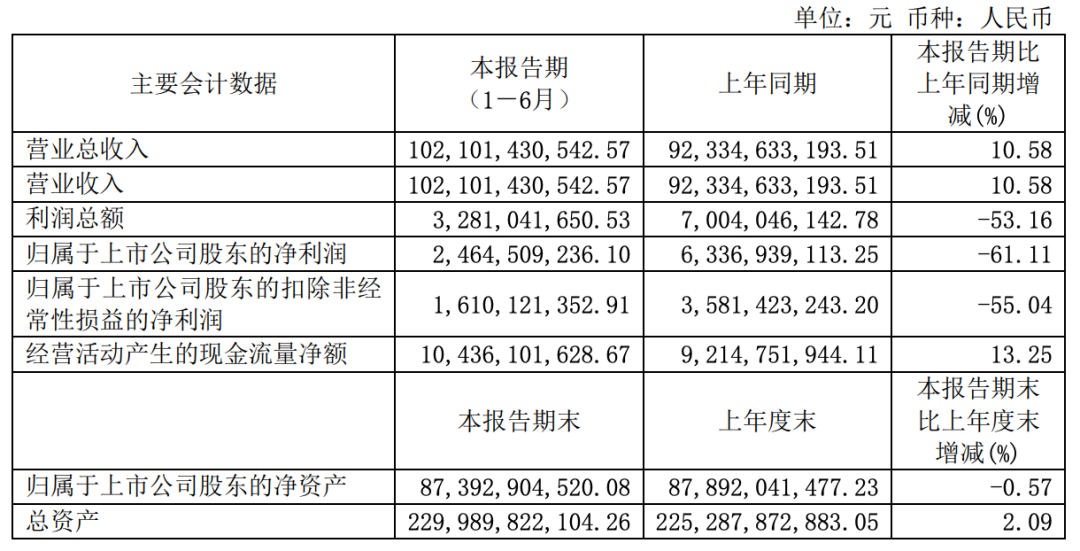
Let's delve into the key figures. Great Wall Motors' 2026 semi-annual report can be succinctly summarized as follows: modest sales growth, double-digit revenue increase, but net profit attributable to shareholders plummeted from 6.337 billion yuan to 2.465 billion yuan, marking a 61.11% year-on-year decline. Core net profit, excluding non-recurring items, fell from 3.581 billion yuan to 1.610 billion yuan, a 55.04% decrease.
In simpler terms, Great Wall sold more vehicles but saw its profits shrink by nearly 4 billion yuan.
Furthermore, the gross profit margin for the first half of the year stood at 18.37%, a mere 0.01 percentage points lower than the same period in 2025, indicating virtually no change.
So, where did this profit collapse originate? It stems from escalating expenses and one-time overseas non-operational losses.
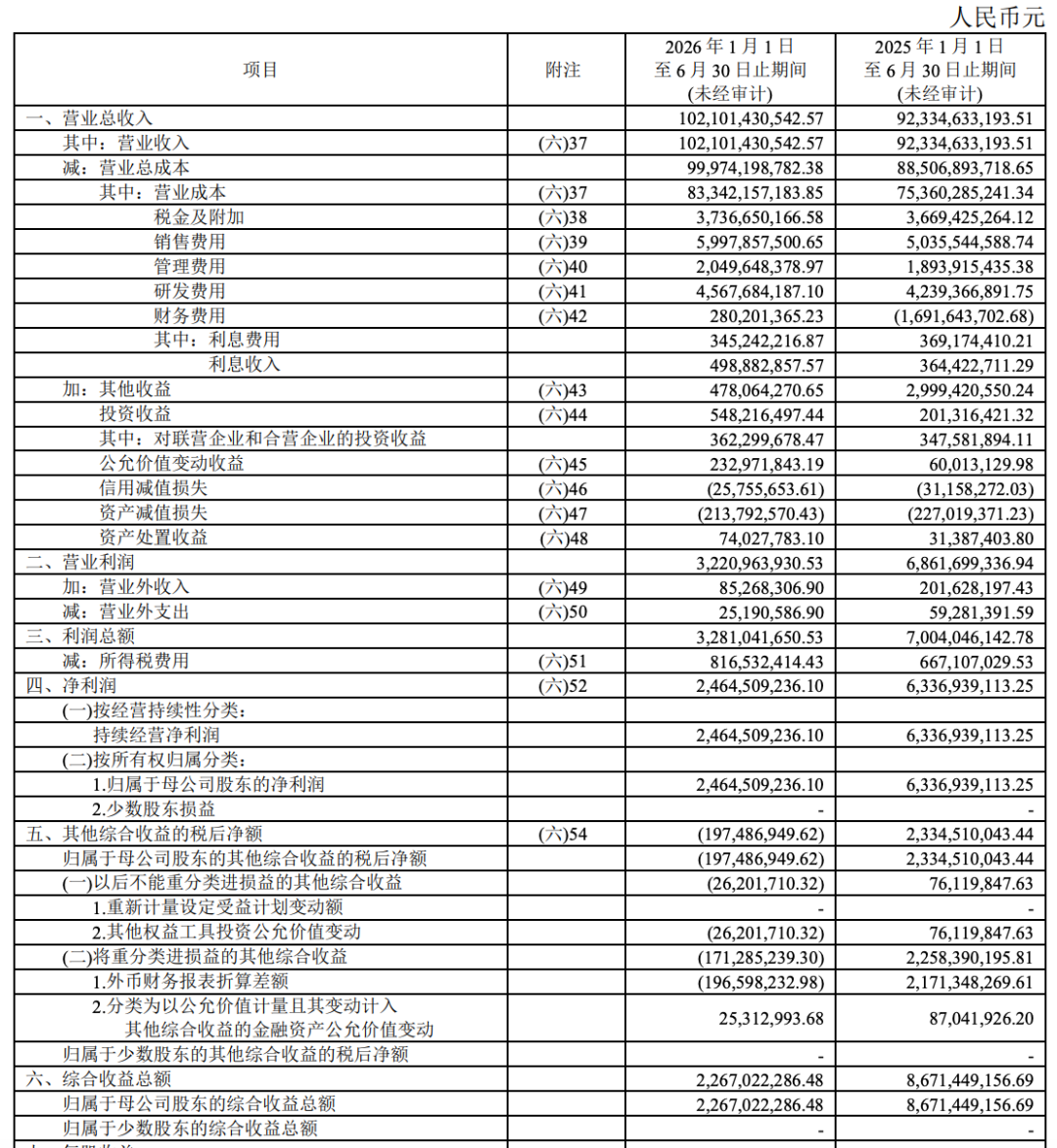
Firstly, Great Wall explicitly stated in its financial report that the decline in net profit was primarily due to "delays in recovering overseas tax policy subsidies" and "exchange rate fluctuations."
Let's begin with exchange rates. In the first half of the previous year, financial expenses were -1.692 billion yuan, reflecting exchange gains. This year, they surged to +280 million yuan, a difference of nearly 2 billion yuan.
Coupled with Great Wall Motors' overseas sales rising from 198,700 units to 289,000 units, the proportion of overseas revenue increased, magnifying the impact of even minor currency fluctuations.
Next, the delay in overseas tax subsidies. This is a one-time timing issue; if recovered in the second half, profits may partially rebound.
In essence, overseas business serves as both a growth catalyst and a volatility amplifier. Exchange rates and tax policies, two external variables, are beyond Great Wall's direct control.
02
The deeper issues lie within the domestic market.
In the first half of the year, domestic sales across the industry plummeted by 20.2% year-on-year. Great Wall's domestic sales were 286,700 units, down 22.53% year-on-year, underperforming the market.
The slight overall sales growth of 1.22% was entirely driven by the 289,000 overseas units sold.
By brand, the Tank brand truly stands out, while others harbor hidden concerns.
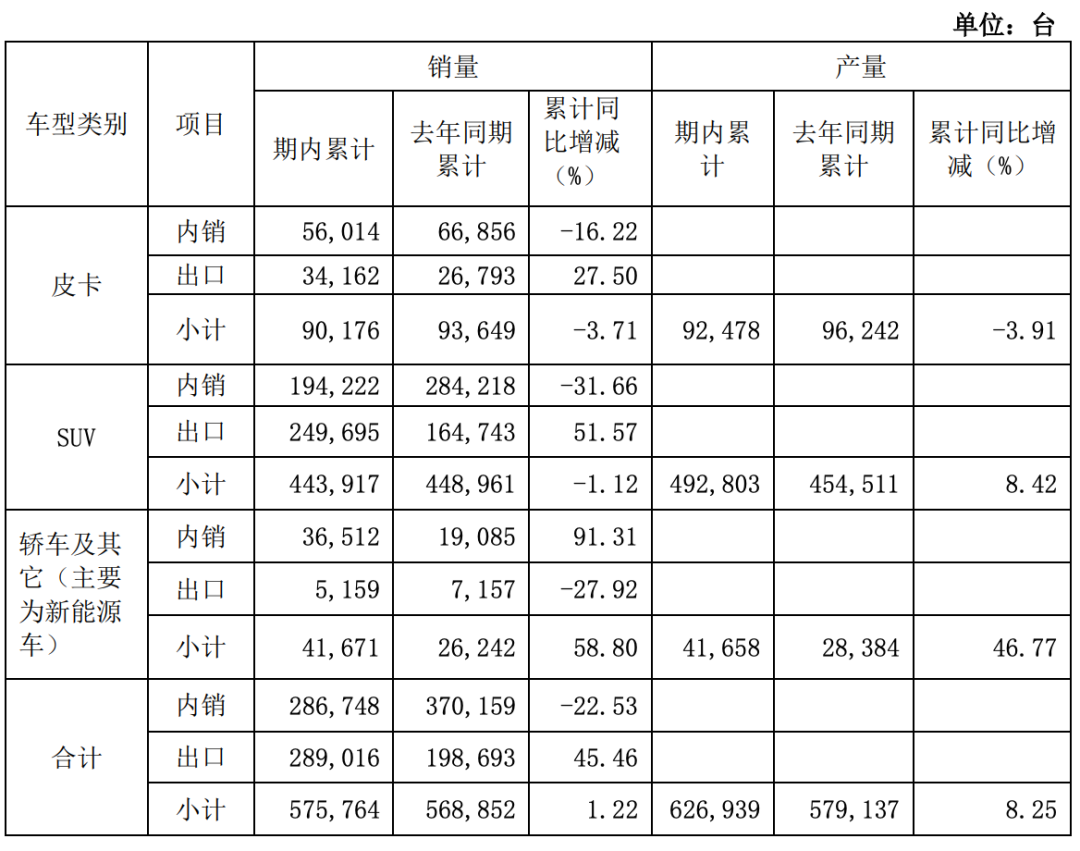
In the first half, Tank sold 90,200 units globally, with 34,500 units overseas, marking a 57.64% year-on-year increase. Domestic new energy penetration reached 58.44%. Clearly, Great Wall maintains a strong foothold in the off-road segment.
Haval sold 327,700 units globally in the first half, with 205,400 units overseas, a 45.04% year-on-year increase. Notably, Guanchejun observed that Haval's growth was almost entirely driven by overseas markets, indicating significant pressure in the domestic market.
For Wey, the Gaoshan MPV delivered 32,100 units, a staggering 186% year-on-year surge, claiming the top spot in new energy MPV sales for the first half. However, the base is still relatively small, and the sustained success of high-end products like V9X and Blue Mountain will determine whether Wey can truly establish itself in the premium segment.
Ora sold 41,700 units in the first half, a 58.80% year-on-year increase, recovering from last year's slump. The Ora 5's multi-power versions expanded its customer base from female to family users. However, the increasingly competitive pure electric small car segment requires Ora to redefine its brand identity.
Great Wall Pickups sold 90,200 units in the first half, a 3.71% year-on-year decline. While maintaining the top market share for 28 consecutive years, the pickup market's growth has plateaued, and the new energy Pao Hi4-T has just begun to gain traction. This "cash cow" needs new growth drivers.
03
On the expense front, Great Wall Motors' sales expenses in the first half were 5.998 billion yuan, a 19.11% year-on-year increase, far outpacing the 10.58% revenue growth. The sales expense ratio rose from 5.45% to 5.87%, indicating that Great Wall had to invest more in marketing, channels, and terminal incentives to sell vehicles.
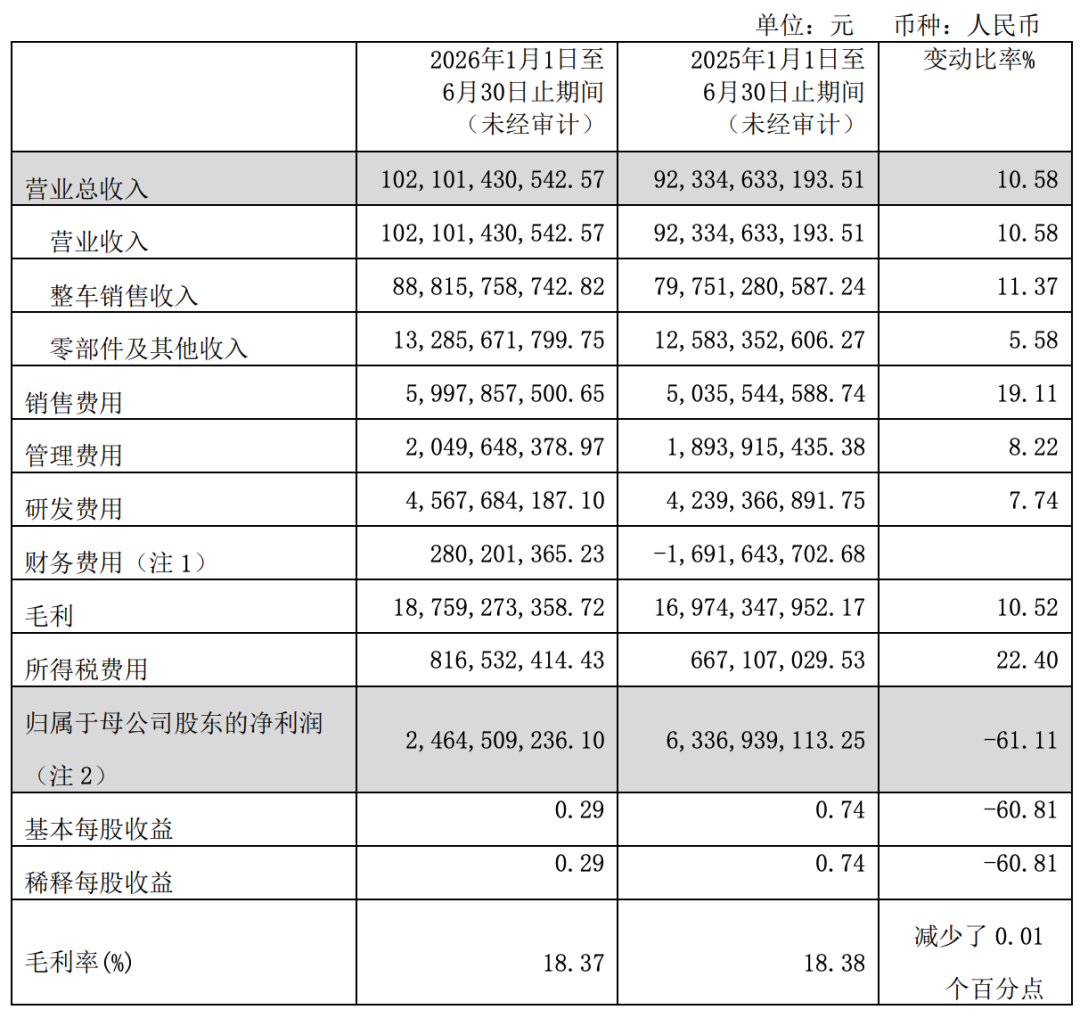
R&D expenses were 4.568 billion yuan, a 7.74% year-on-year increase, largely within a reasonable range.
Administrative expenses were 2.050 billion yuan, an 8.22% year-on-year increase, with the expense ratio slightly declining.
Thus, the main culprits eroding profits are sales and financial expenses.
Cash flow offers some solace. In the first half, Great Wall Motors' net cash flow from operating activities was 10.436 billion yuan, a 13.25% year-on-year increase. This indicates that Great Wall's business is still generating cash, with effective dealer payments and supply chain credit management.
However, good cash flow does not equate to good profits. Great Wall's current challenge is that external fluctuations and expenses are eroding its account profits, significantly reducing earnings quality.
Great Wall's strategic focus lies in "ecological overseas expansion, intelligent new energy, and leveraging off-road and pickup advantages." The direction is correct, but each step presents formidable challenges.
In Guanchejun's view, Great Wall Motors' semi-annual report resembles a powerful off-road vehicle navigating a treacherous terrain.
If overseas tax policy subsidies are recovered in the second half, profits may partially rebound. However, the true determinants of Great Wall's valuation recovery are whether domestic sales can stabilize, whether high-end models can genuinely generate profits, and whether the sales expense ratio can decline.
The charts in this article, unless otherwise noted, are sourced from public disclosures through various channels. We hereby acknowledge and express our gratitude! The views expressed herein are for reference only and do not constitute investment advice.
-
![]()
Profits Plunge by 61% in the First Half of the Year! The Rise and Challenges of Great Wall Motors
-
![]()
BAIC Taitan 700 vs. Xiangjie G9: A Clash of Kin, How Will Yu Chengdong Navigate This Challenge?", "Taitan 700, Xiangjie G9, BAIC, Huawei Intelligent Driving, Pricing Showdown", "BAIC has unveiled its
-
![]()
Volkswagen's Layoffs and Factory Closures: What Should Car Owners Make of It?
-
![]()
Yu Chengdong’s Luxseed V9 Dominates Sales, but Netizens Warn Against Complacency
-
HAND Enterprise Solutions Sees Big Jump in Main Shareholder’s Stock Value After AI Integration, Trims Over 1,000 Jobs in Two Years After Cashing In Hundreds of Millions
-
![]()
Insta360 Luna Pro Review: Lightweight and More Freedom with One Less Lens
-
![]()
Minimize Reliance on Huawei! Seres AIVA Embraces Battery Swapping, Echoing NIO's Strategy?
-
Surging 143-Fold in 18 Months! From a Struggling Property Developer to Hong Kong Stocks' Premier AI Computing Power Contender, 'China's CoreWeave' Emerges