Collective Struggles for New Energy Players: Li Xiang Acknowledges Pricing Challenges
 08/28 2026
 572
572
The unveiling of second-quarter financial reports has dispelled the profit-making myth surrounding emerging new energy vehicle (NEV) players.
Both Li Auto and XPeng have found themselves in a phase of stagnating market share growth and escalating losses. However, this is not merely an operational hiccup for individual companies but a collective predicament facing the entire NEV sector: high-end positioning no longer guarantees high profits, and scaling up does not automatically lead to profitability.
Especially with the ascent of automotive conglomerates like BYD and Geely, the once-favorable market conditions for new entrants have all but vanished.
During the financial results briefing, Li Xiang candidly admitted that rising raw material costs have exerted significant pressure on operations. "We will absorb these cost increases internally rather than passing them on to consumers; instead, we will focus on cost control through integrated design and supply chain optimization," Li stated, implying limited scope for price hikes on new models.
Profitability Challenges for Both Premium and Volume-Driven Players
The second quarter of 2026 saw NEV players deliver financial results that fell short of even the most pessimistic market expectations.
Over the past few years, the industry has implicitly recognized two paths to success: one is the 'premium-focused' approach, exemplified by Li Auto, which leverages high unit prices and gross margins to establish a brand moat in the mid-to-high-end market; the other is the 'volume-focused' strategy, represented by Leapmotor, which rapidly expands scale through extreme cost-effectiveness and uses sales volume to dilute costs. Today, both paths are proving increasingly difficult to navigate.
Notably, both Li Auto and XPeng have experienced a simultaneous widening of losses.
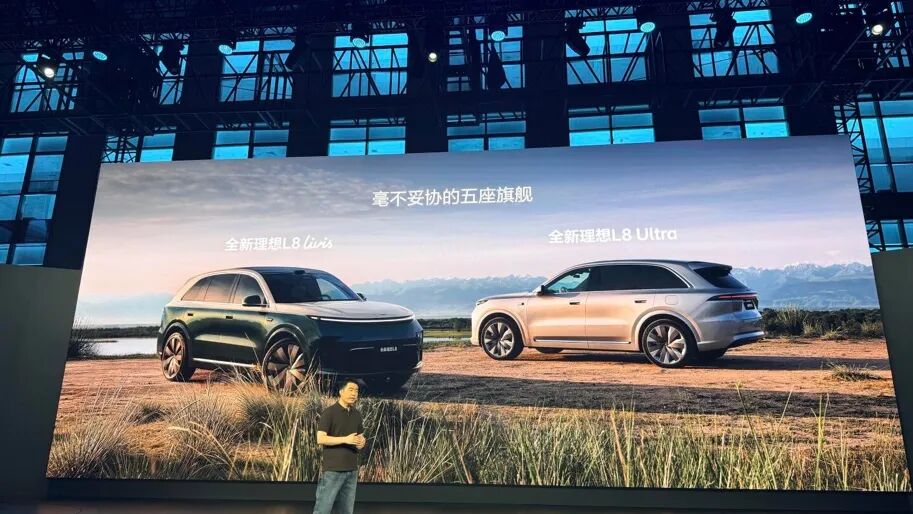
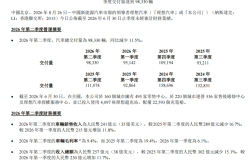
Li Auto delivered a total of 98,000 vehicles in the second quarter, down 11.5% year-on-year; revenue was RMB 25.7 billion, down 15.1% year-on-year; and operating losses ballooned to RMB 2.3 billion.
Li Auto's predicament is not merely declining profits but a fundamental shift in its growth logic. Historically, Li Auto's greatest strength lay in the scarcity of its offerings in the RMB 300,000+ NEV market. Its extended-range technology, family-oriented design, spacious interiors, combined with efficient channel management and supply chain control, positioned Li Auto as "the most profitable new force" from 2023 to 2025.
However, in the second quarter of this year, Li Auto's year-on-year delivery growth slowed significantly, with no meaningful quarter-on-quarter breakthrough. More critically, its average selling price per vehicle has declined for multiple consecutive quarters.
The reasons are multifaceted. On one hand, the L series has entered the mid-to-late stages of its product lifecycle, with its pricing system continuing to soften; on the other hand, its pure electric products have failed to achieve blockbuster status, while the high-end market faces intense competition from brands like AITO, Denza, Zeekr, and NIO. The era when Li Auto nearly monopolized the RMB 300,000+ family NEV market has come to an end.
With the high-end market no longer exclusive, Li Auto must now confront the realities that traditional automakers have long mastered: scale wars, cost wars, and supply chain wars.
XPeng's challenges are even more pronounced. The MONA series has boosted sales but has not led to a recovery in profitability.
XPeng delivered over 100,000 vehicles in the second quarter, roughly flat year-on-year; revenue was RMB 19.74 billion, up 8% year-on-year; and gross margin reached 20.7%, but net losses widened to RMB 1.34 billion, nearly 1.8 times the RMB 480 million loss in the same period last year.
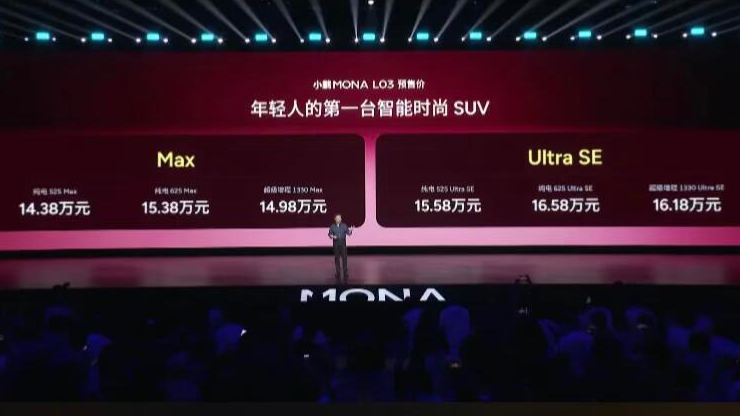
Its core automotive business saw a profit margin of 12.1%, down from 14.3% in the same period last year. Additionally, the financial reports clearly indicate that XPeng's average selling price per vehicle has also declined in recent quarters.
In the past, XPeng aimed to establish a technological premium through advanced intelligent driving capabilities, but now the entire industry is pursuing "intelligent driving democratization," and high-end driver-assistance systems are no longer exclusive to vehicles priced above RMB 200,000. BYD and Geely are both lowering their prices; as intelligent driving, refrigerators, large TVs, and comfortable seating gradually become standard features, the core product differentiation that once defined new forces is rapidly disappearing.
Leapmotor represents another trajectory. In the second quarter, Leapmotor achieved record-high delivery volumes and revenue, with over 246,000 vehicles delivered, catching up with many mainstream joint-venture automakers and appearing to be the new force closest to achieving "scale victory." However, its gross margin has declined significantly year-on-year.
Leapmotor has not escaped the trade-off of exchanging profits for scale. Zhu Jiangming has emphasized "cost-based pricing" over the past few years, and Leapmotor has indeed achieved the deepest vertical supply chain integration among new forces. Nevertheless, in today's industry-wide price war, Leapmotor still struggles to maintain both sales volume and profitability.
This indicates that China's NEV market has entered a new phase. Previously, new forces grew by capitalizing on the "NEV replacement of fuel vehicles" era, when market growth was substantial, and consumers were willing to pay a premium for intelligence, branding, and new experiences.
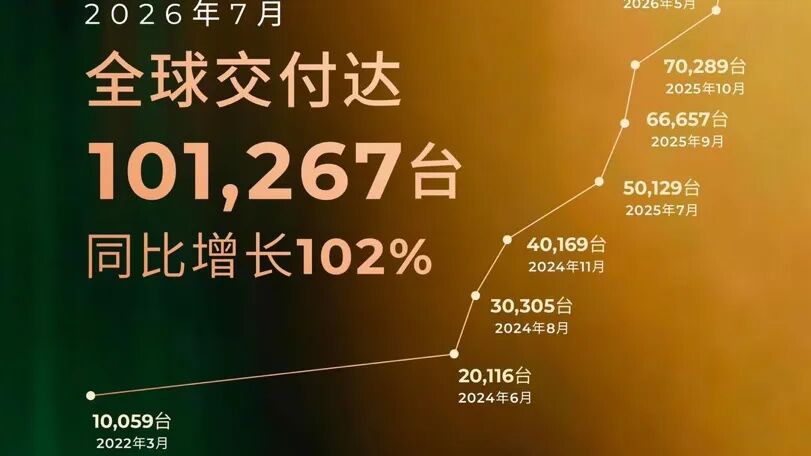
However, NEV penetration has now exceeded 50%, and the industry is shifting from "incremental competition" to "inventory competition." The defining feature of inventory competition is that no one can escape price wars. New forces, once seen as symbols of high-end positioning, must now revert to the most traditional automotive industry logic: scale, cost, and efficiency.
This happens to be where Geely and BYD excel. Late last year, Geely executives publicly stated during a financial briefing that some new forces, despite being established for a considerable time, rarely achieve true profitability. "Next year, the auto market will begin to weed out the weak. Without strong profitability, survival will be extremely difficult."
Now, this prediction is coming to fruition.
In the first half of this year, Geely emerged as one of the few large Chinese automakers still maintaining stable profitability. In particular, the simultaneous growth in sales volume and pricing of Zeekr directly boosted the group's profit performance.
The greatest advantage for new forces in the past few years was the "vacuum in the high-end NEV market." Today, that vacuum has been filled, and new forces are encountering a situation where "neither volume nor pricing is secure" for the first time.
The Spring of Domestic Chips Has Truly Arrived
Deeper changes are occurring in the supply chain than just price wars.
During the second-quarter financial reports and earnings calls, a clear trend emerged: more and more automakers are emphasizing "self-development."
Li Xiang mentioned during the earnings call that self-development does not imply that suppliers are inadequate. Li Auto's self-developed Mach chip does not detract from NVIDIA's status as one of the world's leading chip companies; similarly, self-developed batteries do not diminish CATL's position as one of the industry's strongest battery enterprises. However, in the era of embodied intelligence, batteries and chips will become the most critical foundational barriers.
The crux of this statement lies in "cost and control." In today's automotive industry, whoever masters foundational capabilities controls future profits.
He Xiaopeng also explicitly stated earlier this year that starting from the second quarter, all XPeng models, including the Max versions, would switch to self-developed Turring chips.
Over the past few years, Chinese automakers have heavily relied on NVIDIA Orin for intelligent driving. The reasons are simple: strong computing power, mature ecosystem, and low development barriers. However, the drawbacks are equally apparent: high costs.
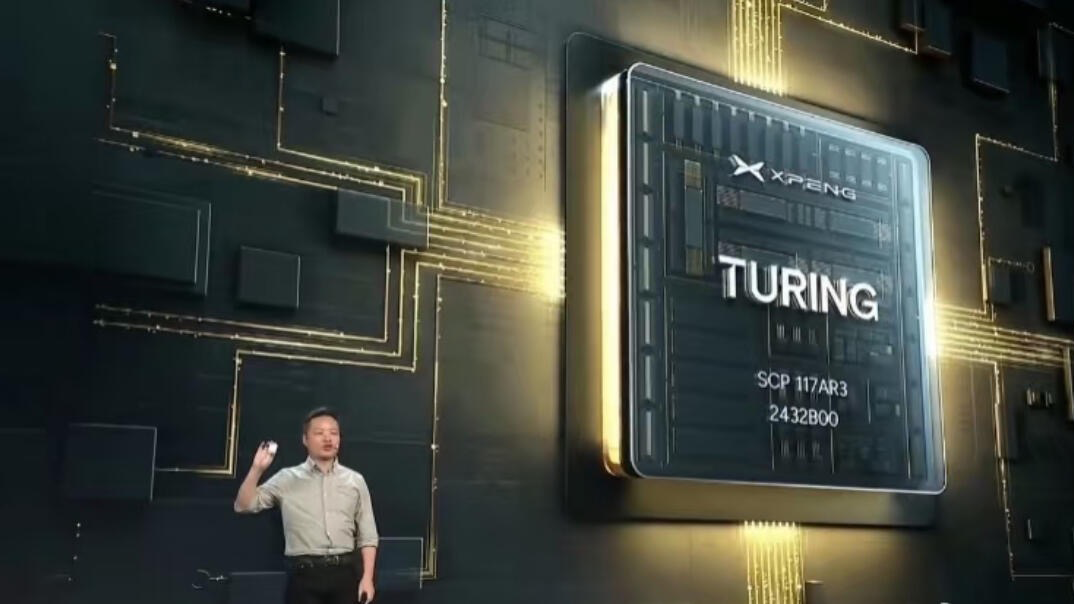
Against the backdrop of intense industry competition and shrinking profits, every reduction in per-vehicle costs can determine whether a company survives. Thus, self-developed chips have shifted from being a "technological showcase" to a "survival necessity."
More importantly, domestic substitution is no longer just a slogan. NVIDIA's latest financial report sends a strong signal: the Chinese market is rapidly changing.
Jensen Huang has openly admitted that NVIDIA's market share in China's AI accelerator market is nearing zero. In that quarter, NVIDIA did not ship any Hopper architecture data center products to mainland China. Four years ago, NVIDIA dominated China's AI chip market; four years later, Chinese vendors have gradually built their own ecosystems.
The automotive industry is no exception. In the past, high-end intelligent driving was nearly synonymous with the "Orin platform." Today, more and more domestic solutions are maturing. For example, Momenta has begun promoting integrated software-hardware solutions. SAIC Volkswagen's ID.ERA 9X debuted with its self-developed intelligent driving chip, and the subsequently launched MG07 also features Momenta's self-developed solution in its mid-to-high-end trims. Critically, these solutions cover price ranges from RMB 100,000 to RMB 300,000.
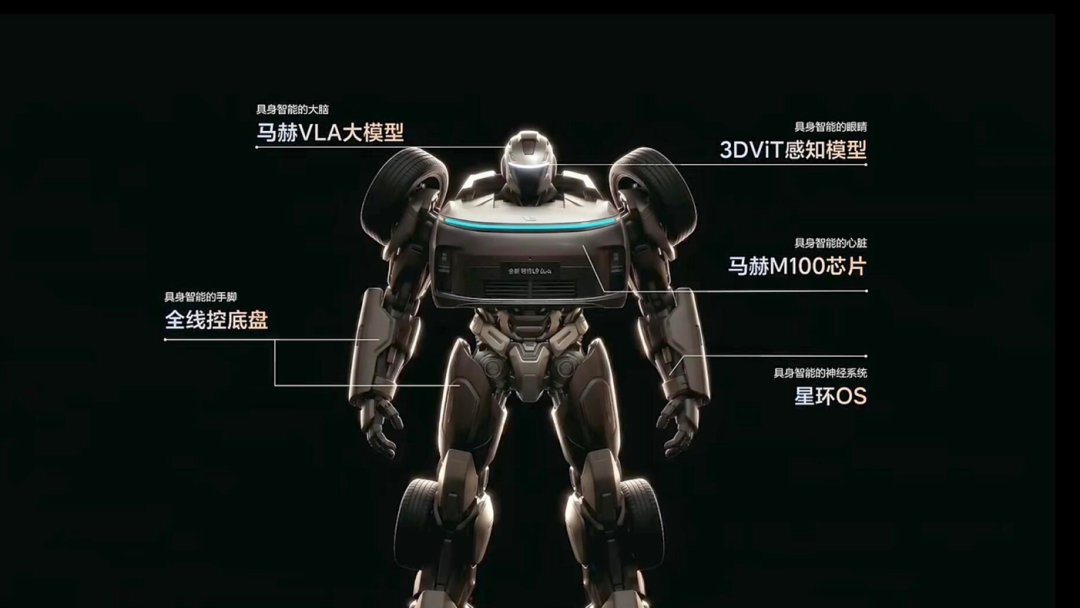
Today, "domestic substitution" is no longer just an industrial security issue but a commercial one. Whoever can reduce the cost of high-end intelligent driving will gain the next round of market advantage.
From this perspective, Li Auto, XPeng, Momenta, and even Huawei are all pursuing the same goal: regaining control over the core capabilities of intelligent vehicles.
This is why "self-developed chips," "self-developed OS," and "self-developed batteries" frequently appear in this year's automaker financial reports. The industry has realized that in the second half of the NEV era, the competition is not just about sales volume but about who can establish a true technological foundation.
As price wars persist and profits continue to shrink, domestic chips are entering their best window of opportunity. When the entire industry is pursuing efficiency, domestic solutions will increasingly enter the mainstream market. This restructuring may prove even more profound than the price wars themselves.
-
![]()
Don’t Use Efficiency as an Excuse to Conceal the Problems of Hastily Launched Cars
-
![]()
Core Indicators Rebound Across the Board in the First Half of the Year! Li Auto Steps Out of the 'Encirclement' During the Industry's Coldest Period | Mingjing Pro
-
Is This the 'Prometheus Moment' for Vertical AI Applications?
-
![]()
NASA Halts Swift Rescue Efforts: 20-Year Gamma-Ray Burst Telescope Slated for Year-End Demise, China’s Tianguan Satellite Steps In for Deep-Space Surveillance
-
![]()
Polestar Strikes Out in US: Volvo Gets the Nod Amid Rising Sino-US EV Regulatory Clash
-
![]()
Parent Company’s Net Profit Drops by Over 3.8 Billion Yuan: Why Does Great Wall Motors Report Higher Revenue but Lower Profit?
-
![]()
Over 20 Billion Yuan in Losses Over Four Years! Why Did Konka, the Former 'Color TV Leader,' Take the Initiative to Delist?
-
![]()
【Electric Equipment】200 electric dump trucks depart from Shaoyang, with half heading to South American mining areas