Li Auto’s Q2 Performance: A Striking V-Shaped Rebound, Regaining Momentum Against All Odds
 08/28 2026
 532
532
Rapid and Sequential Recovery Across Multiple Metrics
Author: Wang Lei
Editor: Qin Zhangyong
The automotive market in 2026 presents unprecedented challenges.
Overall sales continue to decline, reverting to levels seen a decade ago, with New Energy Vehicle (NEV) penetration exceeding 60%. In the second quarter of this year, NEV sales even experienced a 14% drop.
Compounding the issue, the pace of new vehicle launches has not slowed, with 3.5 new models being introduced daily. Upstream costs for materials such as lithium carbonate, copper, and aluminum have surged, exerting pressure on automakers from both ends.
Against this challenging backdrop, Li Auto completed a concentrated model refresh over the past few months. The all-new Li L9, all-new Li L8, and next-generation Li L6 were launched and delivered sequentially. To safeguard the interests of existing owners, Li Auto proactively halted production ahead of schedule during the refresh process, incurring significant short-term operational costs.
Frankly, a full model refresh is a high-stakes move in the current climate. Once old models are sold out and new models have yet to fully roll out, a "transition gap" emerges, where sales and profits must be conceded. This is especially true since Li Xiang chose not to pass on cost increases to consumers.
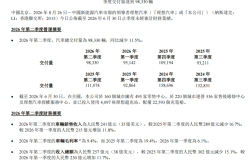
However, the financial results released on August 26th tell a different story: deliveries increased by 3.4% sequentially to 98,330 units, revenue grew by 11.7% sequentially to RMB 25.7 billion, gross margin reached 11.0%—up 3.1 percentage points sequentially—operating cash flow turned from a net outflow of RMB 6.1 billion in Q1 to a net inflow of RMB 15 million, and cash reserves remained steady at RMB 87.5 billion.
During the evening's conference call, Li Xiang, Ma Donghui, Li Tie, and Xie Yan attended collectively. They did not shy away from tough questions or resort to empty rhetoric; instead, they outlined the product rhythm, technological advancements, and cash flow projections for the second half of the year, item by item.
At least for now, despite the dual impact of industry contraction and a full model refresh, Li Auto’s foundation remains intact. Instead, it has achieved a V-shaped rebound within a single quarter. This serves as a stress test report on resilience, proving that Li Auto can thrive not only in favorable conditions but also amidst adversity.
01 How Was the Money Made?
Starting with revenue, Li Auto delivered a total of 98,300 vehicles in Q2, down 11.5% year-over-year but up 3.4% sequentially. Vehicle sales revenue reached RMB 24.07 billion, down 16.7% year-over-year but up 11.8% sequentially, with other revenue at RMB 1.6 billion.
Total revenue reached RMB 25.667 billion, down 15.1% year-over-year but up 11.7% sequentially from RMB 23 billion in Q1 2026. This exceeded the upper limit of previous guidance by nearly RMB 300 million, slightly beating expectations.
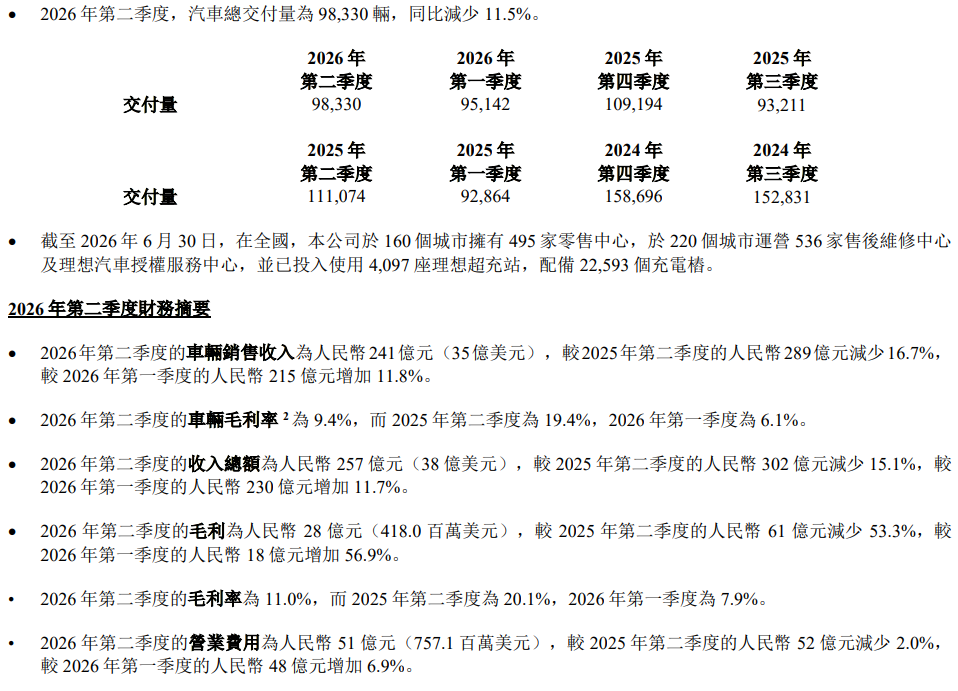
Although still incurring losses at the profit level, the sequential narrowing of losses exceeded 25%, with nearly RMB 600 million less in losses compared to Q1.
From these fundamentals, it's evident that Li Auto’s Q1 performance had hit rock bottom, with Q2 beginning to show a typical trend of "sequential recovery."
Moreover, this recovery was not built on price cuts or drastic cost reductions to secure profits.
From the expense side, R&D spending decreased to RMB 2.776 billion, up 2% sequentially; selling, general, and administrative expenses reached RMB 2.278 billion, also up 11.2% sequentially.
Eliminating suspicions of "profit theft," what remains is a genuine improvement in the ability to generate revenue from selling cars.
A key indicator is the rise in gross margin. Li Auto’s overall gross margin in Q2 increased by 3.1 percentage points sequentially to 11.0%, while the more authentic vehicle gross margin, reflecting profitability, rose by 3.3 percentage points sequentially to 9.4%, achieving a gross profit of RMB 2.8 billion, up 56.9% sequentially.
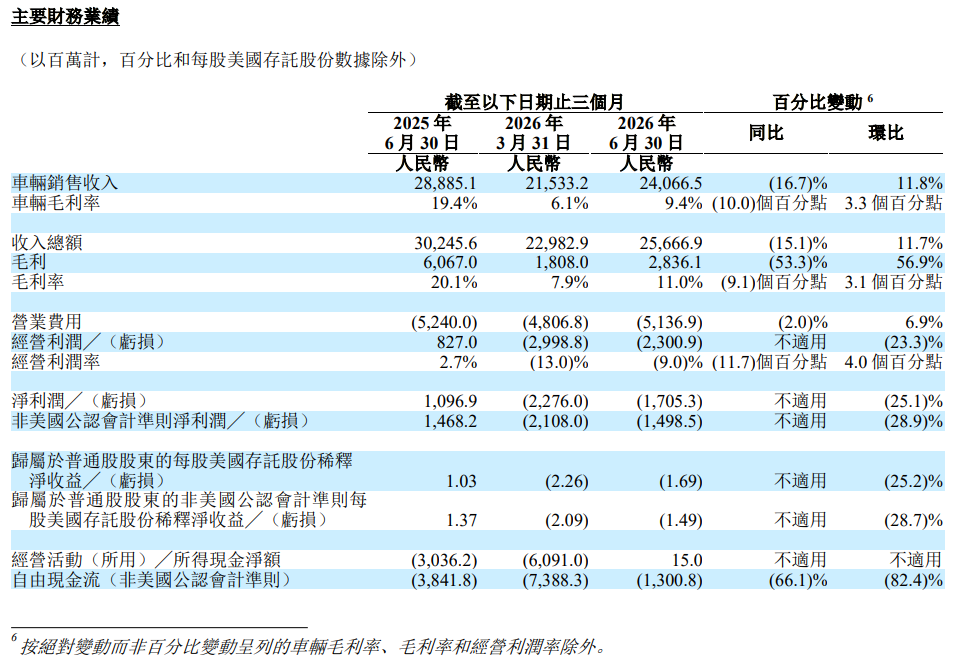
From the revenue fundamentals, it's clear that the sequential increase in vehicle revenue significantly outpaced delivery volumes. Without a substantial rise in sales, both revenue and gross margin improved markedly, indicating a rebound in Li Auto’s model mix and average selling price.
This is the most noteworthy change in Li Auto’s Q2 financial results.
Based on a rough calculation of vehicle sales revenue divided by delivery volume, Li Auto’s average revenue per vehicle in Q2 was approximately RMB 244,800, up from RMB 226,300 in Q1. Gross profit per vehicle reached RMB 23,000, up nearly RMB 10,000 from Q1—a significant increase.
In response, Li Tie, CFO of Li Auto, explained during the conference call that the delivery of high-priced models like the all-new Li L9 Livis drove improvements in the product mix.
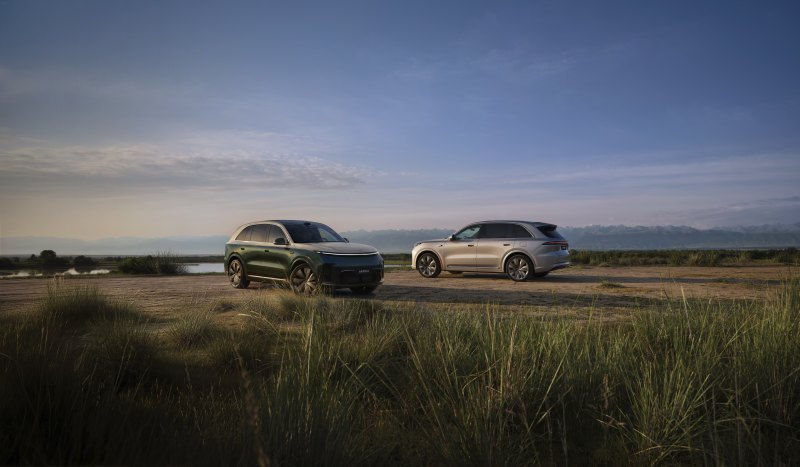
Indeed, the all-new L9 was launched and delivered in May, driving its share in the model mix up by about 5 percentage points sequentially to 9%, while the lower-priced L6's share slipped by about 7 percentage points sequentially to 12%.
Ma Donghui further clarified during the call that, based on launch and delivery performance, user acceptance of high-end versions exceeded expectations. Orders for the L9 Livis version accounted for about 85%, while since the L8's launch, the Ultra version has been the main volume driver.
An external variable must also be considered, as Li Xiang specifically mentioned during the call. Prices of chips, PCBs, and memory chips have been affected by supply-demand changes, while lithium carbonate prices have also fluctuated cyclically, putting pressure on the entire industry.
Li Xiang stated that due to the high level of intelligence in Li Auto’s models, semiconductor and memory usage is higher, making the impact of related cost increases more pronounced. However, he emphasized that "Li Auto will not pass on cost increases to consumers."
This means that raw material price hikes directly impose cost pressures on Li Auto, with cost increases suppressing gross margin release. From another perspective, the true gross margin from simply selling cars in Q2 was likely higher than 9.4%.
When an automaker’s profit improvement primarily comes from cutting marketing expenses, reducing R&D investment, or supplier concessions, it may only temporarily alleviate operational pressure.
However, when profit improvement stems from the sales of higher-value products and economies of scale, it indicates that products have regained their profit-generating capability.
Li Auto’s Q3 guidance also reflects this confidence. Automotive revenue guidance for Q3 is RMB 26.6-28 billion, with delivery guidance of 95,000-100,000 units. Simply put, the gross profit per vehicle is projected to surge to RMB 263,000, up nearly RMB 20,000 sequentially from RMB 245,000 in Q2, demonstrating confidence in continued performance recovery.
Of course, gross margin recovery is still in its early stages. Vehicle gross margin in Q2 was still down 10 percentage points year-over-year, but Li Auto has already moved past its Q1 low, with an upward trend emerging. Li Xiang also provided a future healthy gross margin range during the call: 15%-20%.
The value of performance recovery also lies in cash flow improvement. Operating cash flow saw a net inflow of RMB 15 million in Q2, turning positive for the quarter; free cash flow was negative RMB 1.3 billion, an improvement of over 80% compared to negative RMB 7.4 billion in Q1, indicating that refresh-related working capital pressure has significantly eased.
As of June 30, Li Auto’s cash and various financial reserves totaled RMB 87.5 billion, still the strongest among new forces.
02 BEVs and Self-Research Take the Baton
If Q2 proved that Li Auto has navigated through its product cycle, the next question is: where will growth come from after the refresh?
This became a key focus during Li Auto’s financial results conference call.
It's important to understand that, despite current performance challenges, Li Auto hasn't lost its high-end NEV foundation. In the first half of 2026, Li Auto held a 12.1% share in China’s NEV market for vehicles priced above RMB 200,000, remaining the top-selling Chinese auto brand. In Q2, it maintained the top position across all brands in China’s SUV market for vehicles priced above RMB 200,000.
This indicates that Li Auto’s current issue is merely a sales rhythm disruption caused by the refresh, not a loss of market position. The logic for seeking incremental growth becomes: safeguard the existing foundation while finding new growth sources.
Li Auto’s first answer is already clear—BEVs.
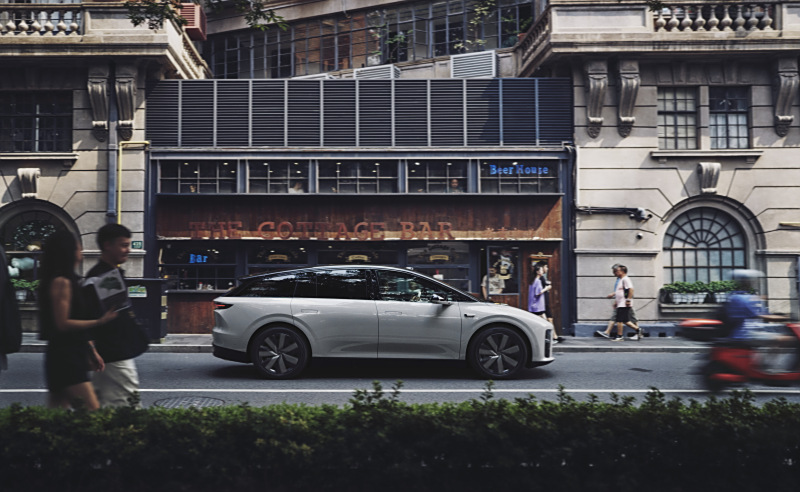
Li Xiang stated during the call that the order mix between Li Auto’s extended-range and BEV models is now nearly 50-50, marking the most significant product mix change since advancing the "Dual Energy Strategy."
The Li i6 has consecutively ranked among the top three in sales for all models priced above RMB 200,000 for six months, becoming a leading product in its segment alongside the Li L6.
In the past, Li Auto’s growth was almost synonymous with extended-range technology, but the i6 sends a positive signal: BEV products are beginning to demonstrate independent market competitiveness, and Li Auto is starting to shed its most familiar label.
Following this, Li Xiang previewed plans for two major flagship BEV models during the call. The next-generation Li MEGA will be officially launched on September 2, with the BEV flagship SUV Li i9 hitting the market in mid-September. The release of these two heavyweight BEV models is separated by less than two weeks, and such flagship products can significantly boost automotive gross margins.
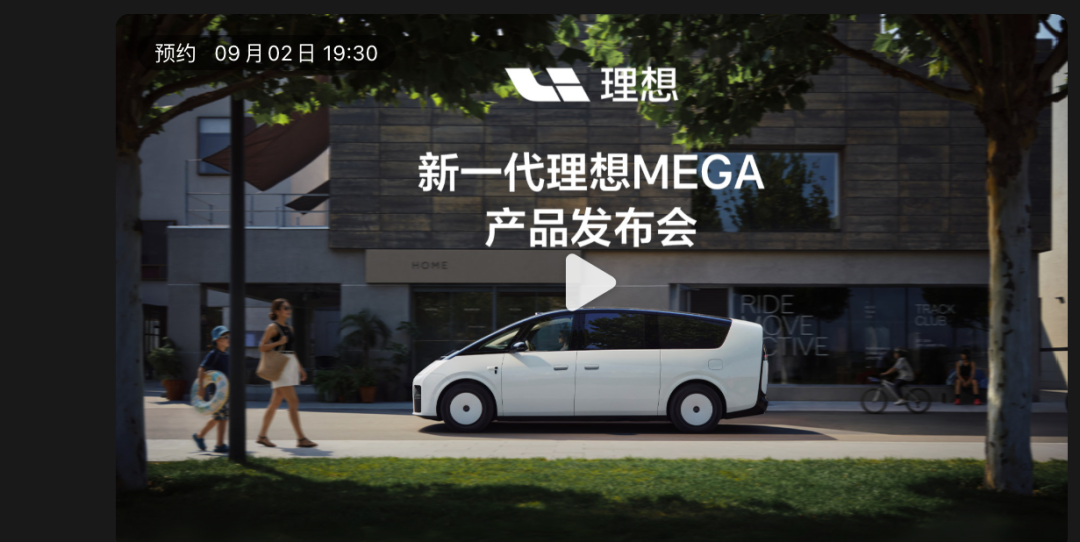
The MEGA will feature rear-wheel steering, steer-by-wire, active anti-roll bars, a self-developed M100 chip, and updated intelligent driving perception hardware. The i9 will be equipped with an 800V 5C platform, a next-generation self-developed electric drive, the M100 chip, and a new-generation cockpit chip.
Li Xiang further set a clear target: "With the launch and ramp-up of several new models in the second half of the year, we are confident in ranking among the top three in sales across all brands in China’s passenger vehicle market for vehicles priced above RMB 200,000."
Meanwhile, the scaling of extended-range products is also set to begin in the second half of the year. The L9, L8, and L6 only completed their concentrated refresh from May to July, with Q2 financial results reflecting only partial data. The second half of the year will be the critical phase for testing the competitiveness of the new-generation L series.
Another growth driver comes from overseas markets. A notable change is that Li Auto has evolved from exporting complete vehicles to establishing a global business framework covering R&D, products, production, and sales.
Ma Donghui stated that in July, the all-new Li L9 was launched in Kazakhstan and Uzbekistan, with Li Auto initiating its first overseas localization assembly project in Kazakhstan. The company also plans to enter the European market in Q4 this year, prioritizing the introduction of BEV products.
In the second half of the year, Li Auto will also enter a technology fulfillment phase. Following self-developed motors and electric controls, it has now completed the final piece of the puzzle in the three electric systems—batteries.
Li Xiang said the company has achieved complete in-house development of systems covering electric cells, battery packs (Pack), battery management systems (BMS), and thermal management. Starting in the second half of this year, Li Auto-branded batteries will be gradually integrated across all model lines.
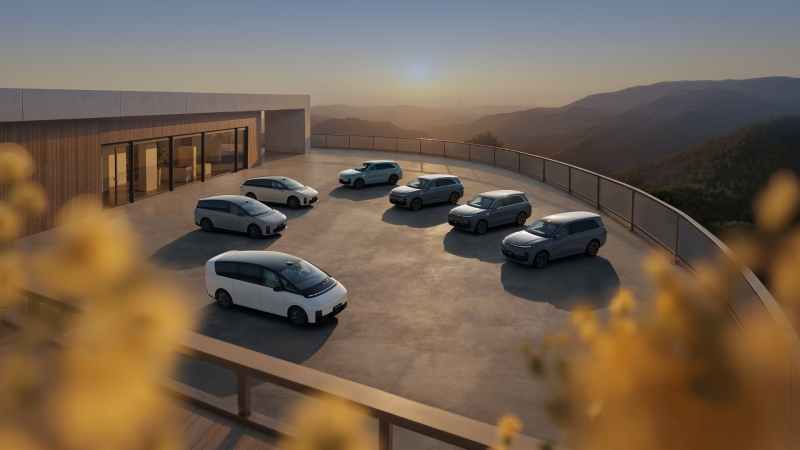
The significance of self-research lies not only in improving product experience and iteration speed but also in establishing cost-reduction capabilities sufficient to hedge against industry risks. While these investments are unlikely to directly translate into profits within a single quarter, they will determine whether future products can maintain pricing and gross margins.
As Li Xiang put it, with the company moving past its startup phase, the current priority is to build core barriers through sustained R&D investment.
"This means we hope to, like Apple and Huawei, keep future core technological barriers in our own hands."
Reviewing Li Auto’s performance over the past year, it's clear that the company has completed a full cycle from peak profitability to collapse and now recovery.
However, the industry is still contracting, competition persists, and external uncertainties continue to rise. After navigating through the refresh pains, the real race has only just begun.
-
![]()
Don’t Use Efficiency as an Excuse to Conceal the Problems of Hastily Launched Cars
-
![]()
Core Indicators Rebound Across the Board in the First Half of the Year! Li Auto Steps Out of the 'Encirclement' During the Industry's Coldest Period | Mingjing Pro
-
Is This the 'Prometheus Moment' for Vertical AI Applications?
-
![]()
NASA Halts Swift Rescue Efforts: 20-Year Gamma-Ray Burst Telescope Slated for Year-End Demise, China’s Tianguan Satellite Steps In for Deep-Space Surveillance
-
![]()
Polestar Strikes Out in US: Volvo Gets the Nod Amid Rising Sino-US EV Regulatory Clash
-
![]()
Parent Company’s Net Profit Drops by Over 3.8 Billion Yuan: Why Does Great Wall Motors Report Higher Revenue but Lower Profit?
-
![]()
Over 20 Billion Yuan in Losses Over Four Years! Why Did Konka, the Former 'Color TV Leader,' Take the Initiative to Delist?
-
![]()
【Electric Equipment】200 electric dump trucks depart from Shaoyang, with half heading to South American mining areas