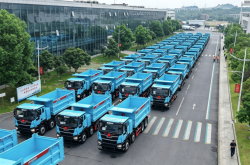
In the first half of this year, Chinese automakers went on a rampage overseas again.
 08/28 2026
 341
341
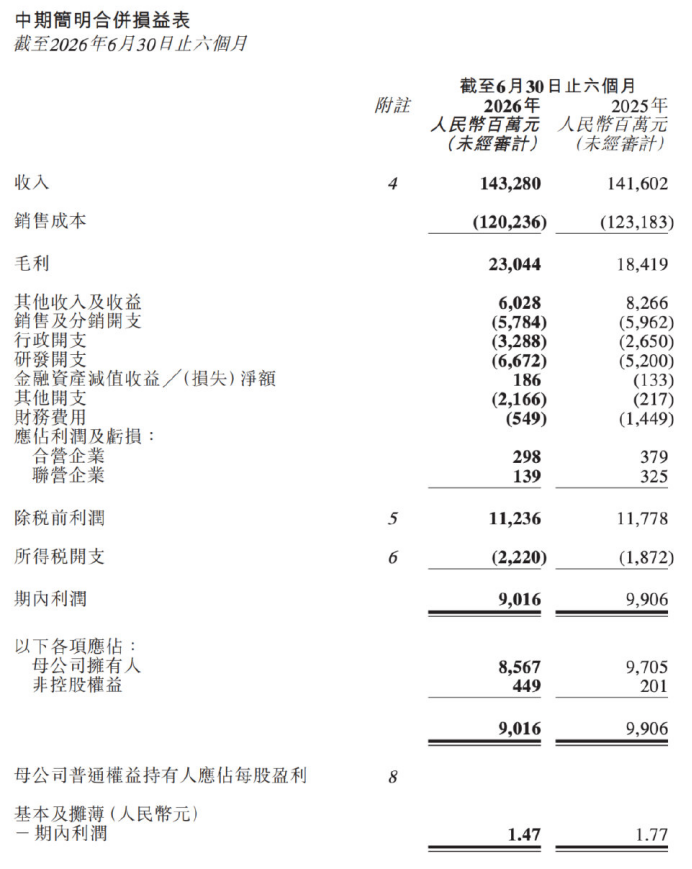
Recently, Chery Automobile disclosed its semi-annual performance for 2026. The data shows that in the first half of this year, Chery achieved revenue of 143.28 billion yuan, of which overseas revenue reached 98.968 billion yuan, a year-on-year increase of 51%. Overseas revenue accounted for 69.1% of total revenue. In other words, nearly 70% of Chery's revenue comes from overseas markets, a proportion that stands out among mainstream independent automakers.
If you take a broader view, you will find that Chery is not the only one "blooming alone." In recent years, more and more Chinese independent automakers have achieved breakthroughs in overseas markets.
Not only Chery, but BYD's overseas sales have also maintained rapid growth, with its sales volume also ranking among the top. In the first half of this year, BYD's cumulative overseas sales reached 789,400 vehicles, a year-on-year increase of nearly 70%. Notably, BYD's overseas sales in the first half of the year increased month by month, achieving continuous improvement for six consecutive months. Sales in June reached the highest level in the first half of the year, with overseas market performance becoming a highlight of its growth.
Compared to Chery and BYD, Geely Automobile's overseas sales growth momentum is even stronger. The data shows that Geely's overseas sales in the first half of the year reached 474,200 vehicles, a year-on-year increase of 158%. This not only surpasses its full-year export volume in 2025 but also achieves a rapid increase in overseas market sales. As Geely raised its overseas sales target for this year from 640,000 vehicles to 920,000 vehicles and is sprint ing towards the 1 million vehicle target, it can be seen that Geely is further increasing its layout in overseas markets, with strong development momentum in overseas markets.
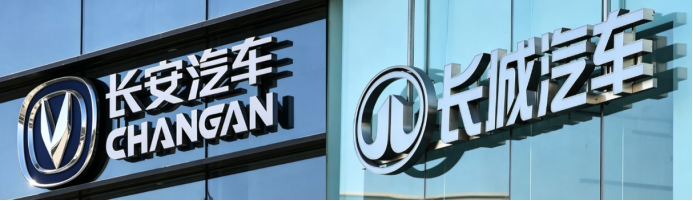
In addition, the overseas businesses of Great Wall Motors and Changan Automobile have also maintained growth momentum, with overseas sales increasing year-on-year. In the first half of this year, Great Wall Motors' overseas sales reached 291,400 vehicles, a year-on-year increase of 47.44%, accounting for nearly half of its total sales. Changan Automobile's overseas sales reached 454,700 vehicles, a year-on-year increase of 51.87%. Its overseas business is also referred to by the company as the "main growth point of current business."
In fact, Chinese new force brands such as NIO and Leapmotor have also made positive progress in overseas markets. In recent years, against the backdrop of intensifying "red sea competition" in the domestic auto market, more and more Chinese automakers are turning their attention overseas, from exporting complete vehicles to establishing factories overseas, and then promoting localized operations, accelerating their expansion into global markets.
The reasons are obvious. Nowadays, the domestic auto market has entered a stage of stock competition, with intensifying price wars and accelerating model update speeds. Automakers face greater growth pressures in the domestic market, and finding new sales growth space has become an increasingly urgent need for automakers. In addition, the maturity of China's new energy vehicle industry chain has also given independent brands stronger confidence. Whether it is electric vehicle technology, intelligent configuration, or product cost-effectiveness, Chinese automakers now have the strength to compete head-on with overseas brands.
At the same time, overseas markets also show significant growth potential. With the continuous development of the global new energy vehicle market, the demand for new energy vehicles in multiple countries and regions is continuously increasing (increasing constantly), providing more opportunities for Chinese automakers to enter overseas markets. With a mature industry chain, cost advantages, and technological accumulations in the fields of electrification and intelligence, Chinese automakers are gradually gaining recognition in overseas markets and opening up new development spaces.
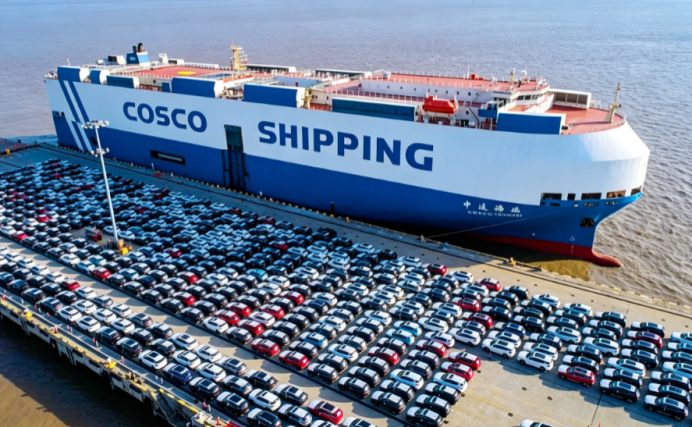
As independent brands accelerate their overseas layout, the scale of Chinese automobile exports continues to expand. The industry generally predicts that the total automobile export volume for 2026 is expected to exceed 10 million vehicles. Cui Dongshu, Secretary-General of the China Passenger Car Association, also gave a more positive judgment, believing that based on the 8.324 million vehicles exported in 2025, the export scale this year may further surge to 12 million vehicles. In addition, multiple automakers are also raising their overseas sales targets. Geely raised its full-year overseas sales target from 640,000 vehicles to 920,000 vehicles, while Changan proposed to achieve 1.5 million overseas sales by 2030.
It can be expected that in the future, the pace of Chinese automakers going global will continue to advance. While expanding overseas sales, they will also further improve their channel layout, promote localized operations, and engage in deeper competition in the global market.
(Image sourced from the internet, removed if infringing)
-
![]()
Don’t Use Efficiency as an Excuse to Conceal the Problems of Hastily Launched Cars
-
![]()
Core Indicators Rebound Across the Board in the First Half of the Year! Li Auto Steps Out of the 'Encirclement' During the Industry's Coldest Period | Mingjing Pro
-
Is This the 'Prometheus Moment' for Vertical AI Applications?
-
![]()
NASA Halts Swift Rescue Efforts: 20-Year Gamma-Ray Burst Telescope Slated for Year-End Demise, China’s Tianguan Satellite Steps In for Deep-Space Surveillance
-
![]()
Polestar Strikes Out in US: Volvo Gets the Nod Amid Rising Sino-US EV Regulatory Clash
-
![]()
Parent Company’s Net Profit Drops by Over 3.8 Billion Yuan: Why Does Great Wall Motors Report Higher Revenue but Lower Profit?
-
![]()
Over 20 Billion Yuan in Losses Over Four Years! Why Did Konka, the Former 'Color TV Leader,' Take the Initiative to Delist?
-
![]()
【Electric Equipment】200 electric dump trucks depart from Shaoyang, with half heading to South American mining areas