DJI and Insta360 Embroil in a Supply Chain 'Clash of Titans', Intensifying Rivalry in China's Smart Manufacturing Realm
 01/23 2026
 606
606
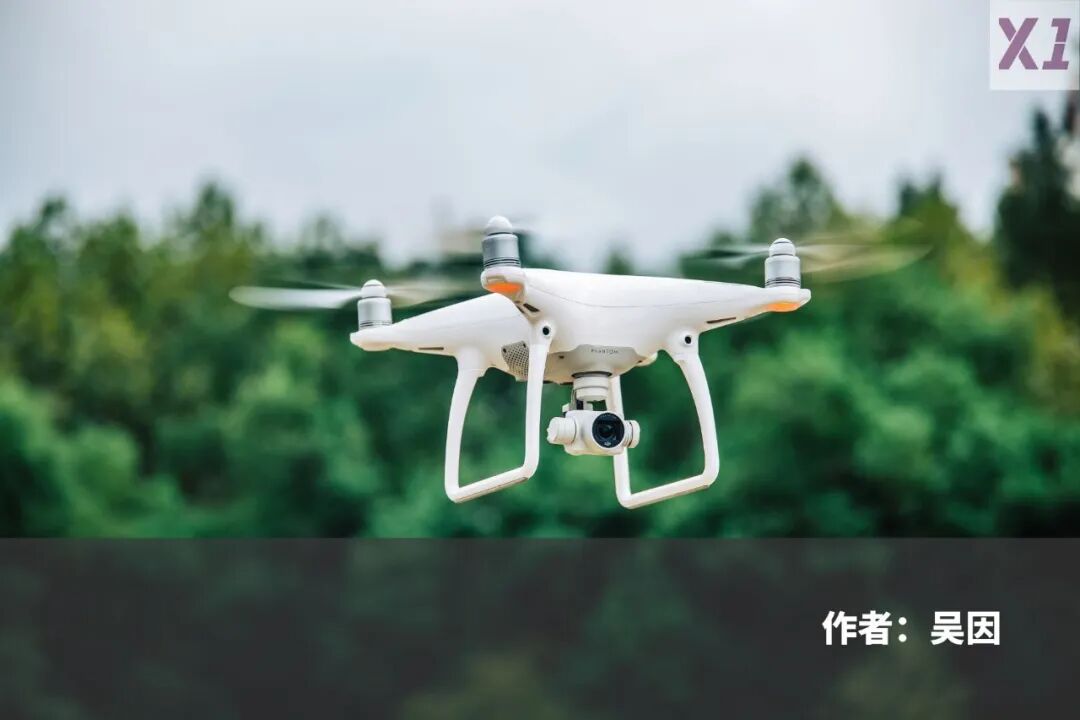
【Abstract】Recently, an internal memo from Liu Jingkang, the founder of Insta360, has brought a clandestine commercial conflict to the forefront. The memo explicitly states that, prior to the launch of their inaugural drone, as many as 33 key suppliers were pressured into exclusivity arrangements.
This is not an isolated event. A comprehensive blockade, centered around 'taking sides', is unfolding between the two imaging behemoths, DJI and Insta360, spanning from the supply chain to sales channels.
As competition shifts from overt product features to the intricate corners of the industrial chain, is this a legitimate defense by industry leaders to safeguard their technological investments, or unfair competition exploiting market dominance?
The trajectory of this rivalry not only determines the fate of the two companies but may also redefine competitive norms in the tech sector.
Here's the main narrative:
Covert Supply Chain Warfare: Suppliers Caught in the Crossfire
In 2025, with DJI unveiling its inaugural panoramic camera, the Osmo 360, and Insta360 launching its first panoramic drone, the Yingling A1, both companies officially encroached on each other's core domains from their respective strongholds, escalating the competition.
However, an even earlier and more intense clandestine battle is unfolding at the supply chain's core.
According to revelations by Insta360's founder, Liu Jingkang, six months prior to the Yingling A1's launch, 33 key suppliers faced 'exclusivity' demands, including 7 for optical lens modules, 8 for structural components, 3 for screens, 2 for batteries, 8 for chip electronic components, and 5 others.
As reported by the Securities Times, an optical module supplier for Insta360 abruptly terminated cooperation, citing insufficient personnel and bandwidth during the design verification phase, leaving Insta360 to recover prepaid mold fees only two years later.
Behind some suppliers' decisions lies commercial rationale rather than mere coercion. Such limited exclusivity or resource allocation is not uncommon in the consumer electronics industry.
When leading firms invest years of resources and time in co-developing and refining a key technology or customized component with suppliers, demanding that suppliers refrain from providing similar products to direct competitors for a specified period is viewed as a means to protect their initial investments and maintain differentiation.
According to the Economic Observer, a mid-level DJI R&D employee once explained that some of their supply chain partners were nurtured from the ground up. If these suppliers then sell jointly developed technological advancements to competitors, 'it's unfair to DJI.'
Such barriers, forged through technological collaboration, are prevalent in the consumer electronics sector, which has entered a 'total war' phase. This is not exclusive to drones and smart imaging but also extends to industries requiring extensive industrial chain cooperation and upstream-downstream joint R&D, such as smartphones, smart wearables, and smart vehicles.
This underscores that the essence of this supply chain game is the isolation zones each company establishes at multiple industrial chain nodes, based on their long-term technological advantages.
However, when these isolation zones become overly extensive, they may transition from protecting innovation to market blockade.
Insta360's predicament stems from DJI's overwhelming market presence, holding over 70% of the global drone market share, granting it significant leverage over upstream suppliers.
This often tips the balance when suppliers weigh orders. According to the Economic Observer, a supplier with annual revenues exceeding 10 billion yuan disclosed that DJI accounts for over one-fifth of its income, making its decision-making concerns self-evident.
This stark power imbalance directly impacts the costs and pace of new entrants.
To counter the blockade, Insta360 had to activate contingency plans, swiftly transitioning to secondary suppliers and rebuilding its supply chain system. This undoubtedly increased R&D and production costs while testing the stability of its product lifecycle. Notably, under multiple pressures, Insta360's drones still demonstrated strong market competitiveness, with over 30,000 units shipped in their first month on the market.
Channel Conflicts: When 'Exclusivity Agreements' Invade Shopping Malls
If supply chain blockades are like still waters running deep, then sales front conflicts are ablaze with tension. The struggle for offline channels has brought this commercial war from the backstage to the forefront, shifting from corporate boardrooms to the front lines of sales outlets.
A pivotal incident occurred in November 2025 at the Hunan Photographic Equipment City, where the signboard of an Insta360 image store, renovated with a million yuan investment by dealer Zhang Junqiang, was forcibly removed by mall authorities.
The reason was not non-compliance but rather a 'Shop Lease Supplementary Agreement' signed between the mall management and the tenant, a DJI dealer.
The agreement explicitly promised that during the DJI dealer's lease term, 'no third-party brands with strong competitive relationships to DJI products would be introduced or allowed to open specialty stores,' directly labeling Insta360 as a 'strongly competitive brand.'
This left Zhang Junqiang, with over a decade of experience in the photographic equipment industry, bewildered. In the traditional camera sector, it is common for dealers to represent competing brands like Canon and Sony simultaneously. However, in the new smart imaging hardware sector, the rules seem to be evolving.
According to Li Qingqi, Insta360's China sales head, since 2023, they have frequently encountered obstacles when expanding into offline channels like shopping malls, often facing pressure from mall properties not to allow Insta360's entry, reportedly from DJI.
Such 'either-or' behavior in channel distribution has been widely criticized and penalized by regulators in the internet platform economy. However, when it occurs in the physical commerce and manufacturing sectors, its legal nature and impact become more nuanced.
After investigating the Changsha Photographic City incident, the Hunan Provincial Market Supervision Administration ultimately concluded that it did not constitute a monopoly, citing 'multiple Insta360 dealers operating normally within the premises,' and thus did not file a case.
This highlights a key point of contention: how to define the abuse of market dominance?
The Anti-Monopoly Law prohibits operators with market dominance from imposing unreasonable trading conditions. However, the determination process requires a comprehensive assessment of factors such as market share, control over upstream and downstream, and whether effective competition has been excluded.
Therefore, whether exclusivity behavior in specific niche markets or regions rises to the level of legal monopoly remains a gray area.
Is Exclusivity Justified? Triple Dimensions of Business, Law, and Industry Future
The all-encompassing rivalry between DJI and Insta360 has transcended the commercial scope of the two companies, evolving into a public discourse on industrial competition ethics, legal boundaries, and the industry's trajectory.
From a commercial standpoint, both sides' intense reactions are rooted in internal logic.
For DJI, panoramic cameras represent a pivotal step in expanding its ecosystem and addressing growth concerns. According to Frost & Sullivan data, after DJI released its new product in July 2025, it captured approximately 17.1% of the global panoramic camera market and 37.1% of the domestic market in Q3, infiltrating Insta360's traditional stronghold. Meanwhile, Insta360 continues to dominate this sector, holding 75% of the global market share and over 60% domestically in Q3, maintaining a stable market landscape.
For Insta360, entering the drone market is a strategic imperative to diversify its growth and sustain its high valuation.
Amid dual pressures on its core business and resistance on new fronts, Insta360 chose to highlight supply chain exclusivity as a central issue, both as a plea against its current predicament and as a strategic maneuver to position itself as an innovator challenging the industry leader.
From a legal perspective, the core challenge lies in balancing the protection of innovative investments with the preservation of fair competition.
According to Article 18 of the State Administration for Market Regulation's 'Provisions on Prohibiting Abuse of Market Dominance,' 'operators with market dominance are prohibited from tying products without justifiable reasons or imposing other unreasonable trading conditions during transactions.'
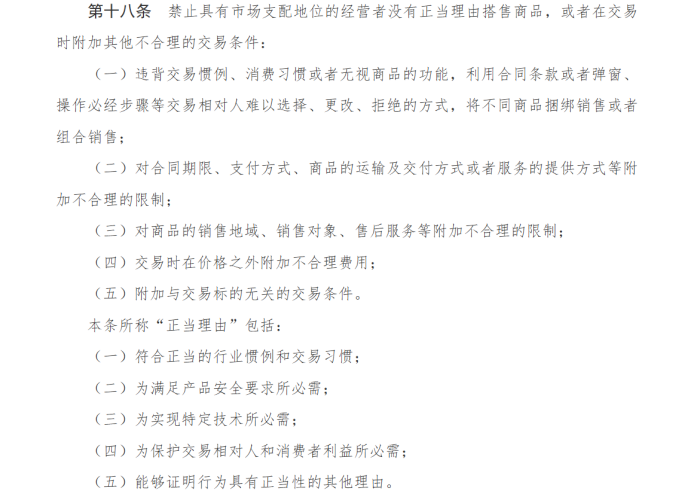
Source: State Administration for Market Regulation's 'Provisions on Prohibiting Abuse of Market Dominance'
For this technology-intensive industry, determining whether 'either-or' practices violate regulations is challenging.
The issue hinges on the degree. If exclusivity behavior is based on reasonable periods and scopes to protect specific jointly developed technologies, it is generally accepted. However, if it leverages market dominance to indiscriminately require large numbers of suppliers and channels to comprehensively block competitors, rendering them unable to survive, it may cross the legal threshold.
Currently, regulatory agencies lack clear enforcement precedents and criteria for such 'either-or' behavior in manufacturing supply chains.
Looking ahead, this rivalry may accelerate the formation of a healthier yet more complex industry ecosystem.
On one hand, it compels direct competitors in the industrial chain to abandon attempts to breach giants' supply chain 'exclusivity' restrictions and instead invest more resolutely in self-developed technologies and independent supply chains, potentially enhancing the resilience and diversity of the entire chain in the long run.
On the other hand, it prompts the industry to explore more sustainable competition-cooperation models. Experts' proposed technological isolation solutions, where suppliers establish independent teams and production lines for different clients to avoid technological crossover, may offer a viable path balancing innovation protection and open competition.
Epilogue
The clash between DJI and Insta360 is an inevitable collision occurring at the right juncture.
It marks China's hard tech companies' transition from singular breakthroughs to ecosystem construction and rule definition. This battle lacks simple binary distinctions of right and wrong; instead, it features leaders defending their moats, challengers vying for survival, and all participants engaged in complex games driven by commercial instincts.
Ultimately, historical experience may reaffirm: extreme blockades rarely foster long-term prosperity, while open competition serves as the fertile ground for great innovations. The mobile phone industry's evolution from early chaos to today's multi-player coexistence and highly shared supply chains offers a precedent.
As the rivalry flames gradually subside, both DJI, Insta360, and future entrants may discover that their greatest fortune and misfortune lie in each other's existence. A more vibrant and fairer new order for the smart imaging industry will gradually emerge from this competition's reconstruction.
- XINLIU -
-
On the Eve of Its IPO, Avatr Finds Itself Embroiled in a 'Farce of Controversy and Belittlement'
-
![]()
Yutong Optics' Japanese Subsidiary Unveiled in Tokyo, Shifting Strategic Focus to Technology-Driven Growth
-
![]()
Half-Year Revenue Outstrips Last Year’s Total! Zhongrun Optics Forecasts 80.2% H1 Revenue Growth
-
![]()
Why Does AI Competition Start with Computing Power?
-
![]()
Apple AI Finally Makes Its Debut in China, Yet iPhone's 'AI Autonomy' Faces Uncertainty
-
![]()
Apple AI and QianWen Make Up Lessons: Alibaba Has Its Own 'Doubao Phone'
-
![]()
QianWen Joins Apple, Signal for Large Models to ‘Fade into the Background’
-
![]()
The ‘Anchor’ Strategy of Google Hidden Behind the Bleeding Financial Report