DJI vs Insta360: Beyond Patents, A Life-and-Death Struggle Between Industry Giants and Emerging Challengers
 03/27 2026
 521
521

The All-Round Game Between Industry Giants and Emerging Challengers Reflects the New Logic of the Low-Altitude Economy
The patent ownership dispute between DJI and Insta360 has become one of the most closely watched business events in the smart hardware industry in recent times.
On March 23, DJI filed a lawsuit with the Shenzhen Intermediate People's Court, accusing Insta360 and six former core R&D personnel from DJI of involvement in six patent ownership disputes. Subsequently, Insta360 founder Liu Jingkang and marketing head Yuan Yue publicly responded, directly alleging that multiple DJI products fall within the scope of Insta360's patent protections. The dispute quickly escalated from a judicial matter to a public confrontation.
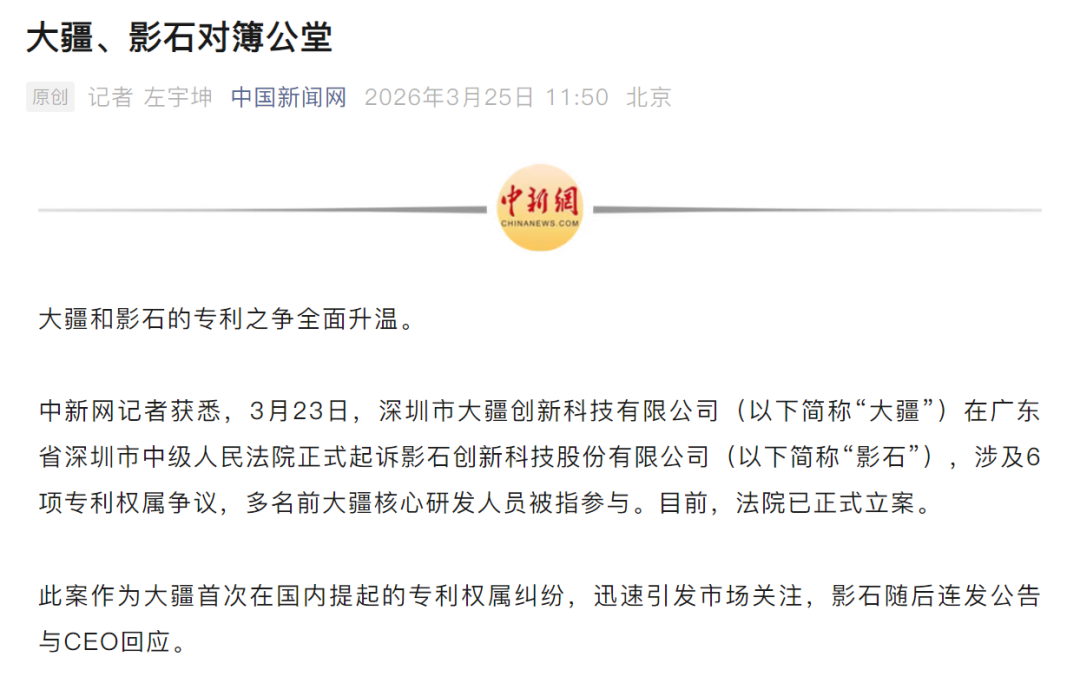
Image Source: China News Service Official Account
This clash in the trillion-dollar low-altitude economy sector goes far beyond a simple commercial friction. At its core, it represents a multi-dimensional defensive and containment strategy by the industry giant against the rapid rise of a cross-border challenger, Insta360.
01
Judicial Offense and Defense: More Than Just Patent Litigation—A Strategic Blockade
DJI is the undisputed leader in the consumer drone market, having established a global advantage through years of technological accumulation and supply chain control. In contrast, Insta360 is a leading global brand in handheld imaging and panoramic cameras, with a mature product matrix and strong user recognition in segments like sports imaging and panoramic photography.
Originally operating in separate markets, the turning point came in July 2025 when Insta360 officially launched its first drone product, the "Yingling Antigravity A1," positioning itself as a lightweight, intelligent, and imaging-focused challenger directly entering DJI's core territory. Just three days later, DJI swiftly released its first panoramic camera, the Osmo 360. The two companies shifted from "parallel development" to "direct confrontation," solidifying their competitive relationship.
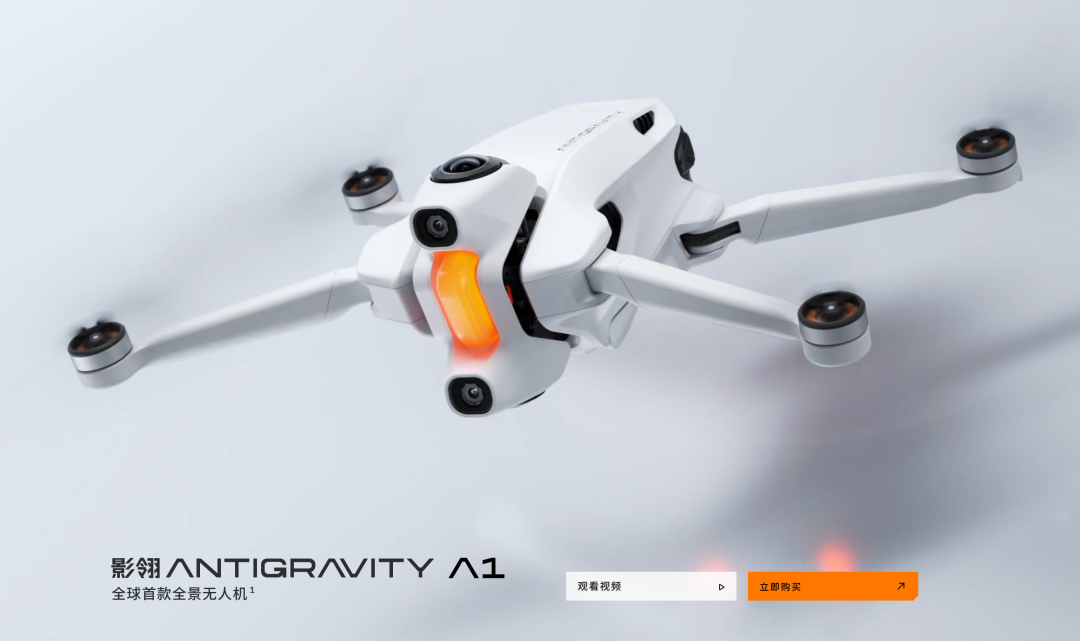
Insta360 Drone - Yingling Antigravity A1 Image Source: Yingling Official Website
The current judicial dispute is a concentrated eruption of this escalating all-round confrontation. Public information reveals that the core of this patent battle focuses on two key legal issues: the ownership of inventions patented within one year of an employee's departure and the compliance of anonymizing inventor information during the patent application process.
As the plaintiff, DJI's primary claim is that the six disputed patents were developed by personnel who previously held core R&D positions at DJI, with technical content highly relevant to their original job responsibilities. According to regulations on service inventions, DJI argues that the rights to these patents should belong to the company. Since initiating the lawsuit, DJI has not provided further detailed responses.
Insta360 responded swiftly and systematically. Founder Liu Jingkang publicly stated that the disputed technical solutions were independently conceived, developed, and validated by Insta360's team, without relying on technologies developed by former employees during their time at DJI. He also explained that differential disclosure of inventor information in domestic and international patent applications is a common practice among tech companies and not a deliberate attempt at concealment.
Insta360 simultaneously countered by alleging that functions and technical solutions in multiple DJI products already fall within the scope of 28 patents held by Insta360. However, Insta360 chose not to initiate litigation proactively, opting instead to await the court's evidence collection and impartial judgment. On the evening of March 24, Yuan Yue, Insta360's China region head, further disclosed detailed technical-patent correspondences, reinforcing the company's stance in a more visual manner and transforming the one-on-one lawsuit into a bidirectional patent game theory (strategic game).
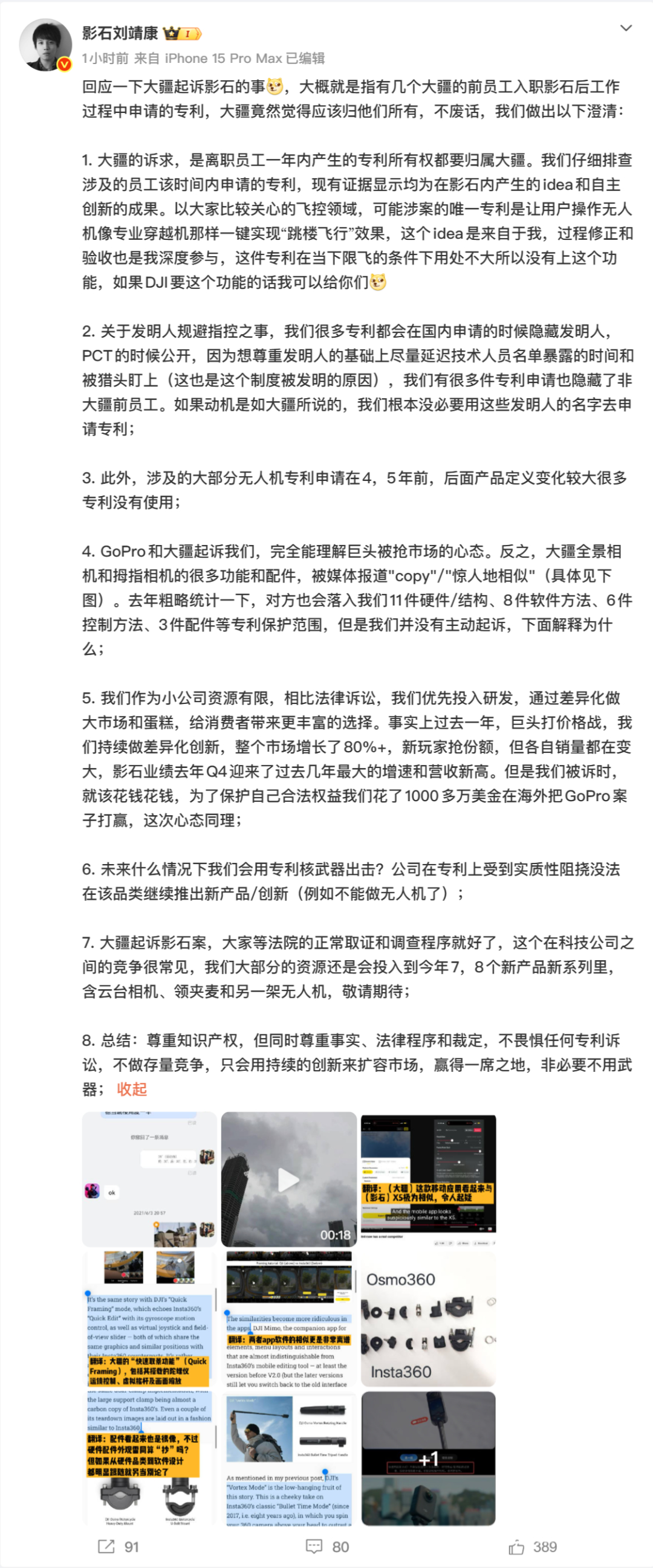
Image Source: Weibo @Liu Jingkang (Insta360)
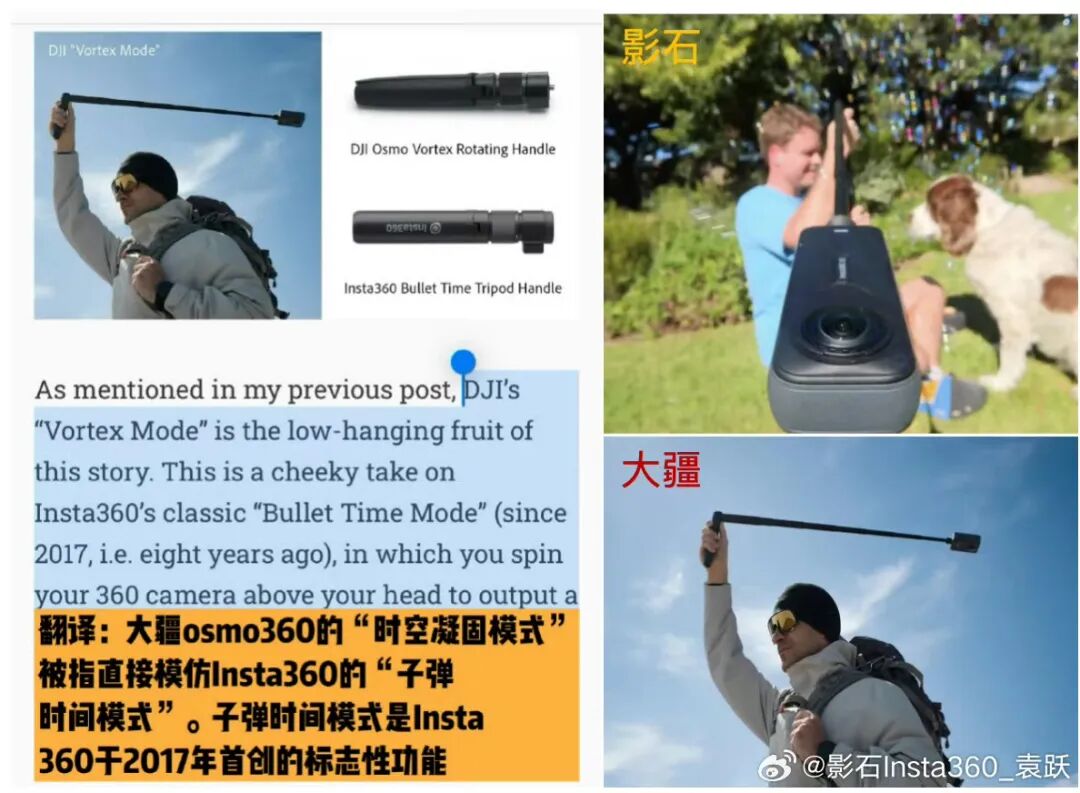
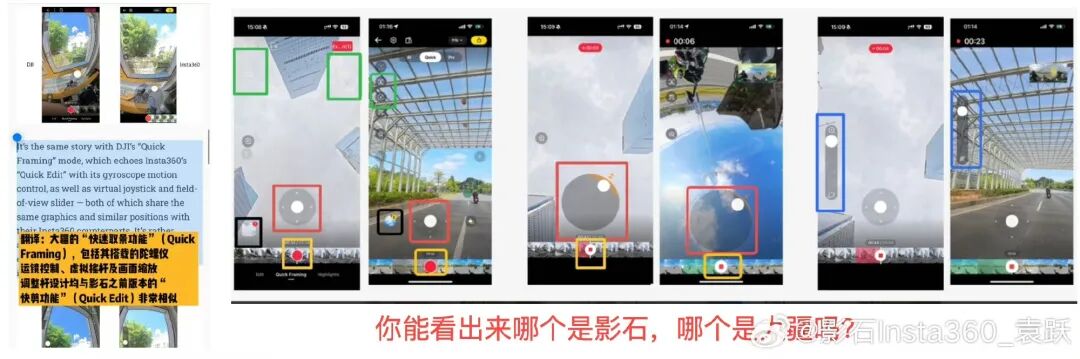
Image Source: Weibo @Yuan Yue (Insta360)
Legal experts point out that under the "Implementation Rules of the Patent Law," inventions completed within one year of an employee's departure and closely related to their original job responsibilities generally belong to the former employer. However, judicial practice does not adopt a one-size-fits-all approach. The crux of the case lies in whether DJI can provide a complete, continuous, and traceable evidence chain proving that the relevant technical solutions had already taken clear shape and undergone R&D documentation before the employees' departure. If DJI fails to present sufficient evidence, its ownership claims are unlikely to gain court support and may even be deemed an abuse of litigation rights and interference with market competition.
From a business perspective, this lawsuit transcends simple "right or wrong." It fundamentally represents an established giant's containment of a cross-border challenger, manifesting as a concentration of technical barriers, talent competition, and market positioning in the judicial arena.
02
Market Positioning: Mutual Penetration into Core Territories—From Complementarity to Survival War
While patent litigation represents overt confrontation, the comprehensive market positioning battles across products, markets, and channels constitute a more direct struggle for survival.
The dispute between Insta360 and DJI did not begin with this lawsuit but dates back to July 2025, when Insta360 entered the drone market with its imaging capabilities as a breakthrough point. Just three days later, DJI launched its first panoramic camera, the Osmo 360, setting the stage for direct product competition.
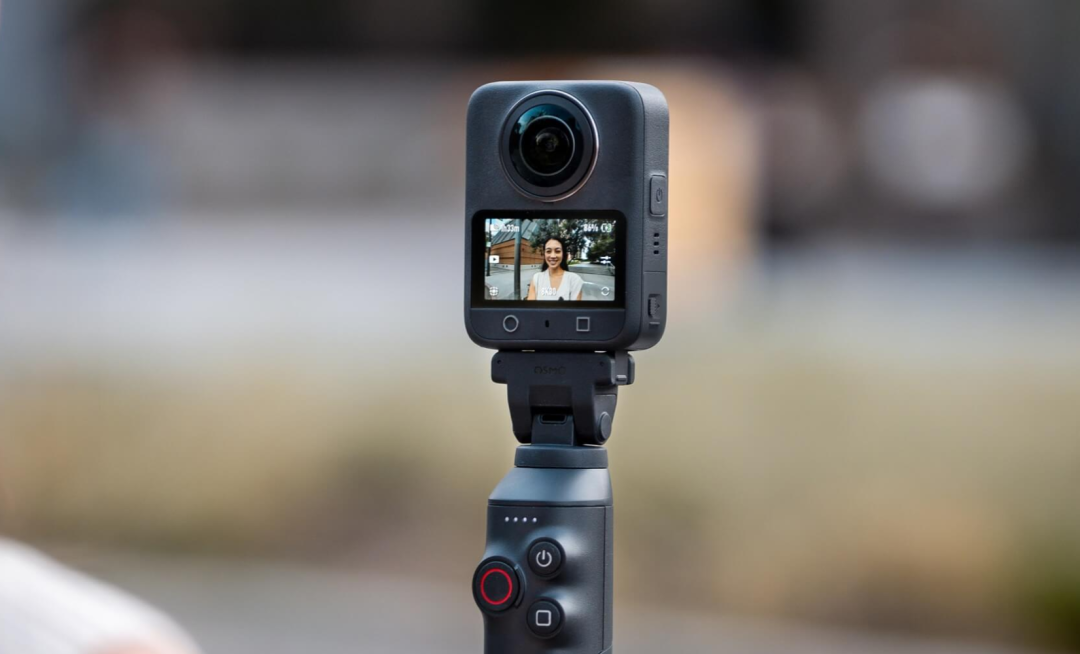
Osmo 360 Image Source: DJI Official Website
This product line extension rapidly altered market dynamics. Counterpoint data shows that the global consumer drone market underwent significant structural changes in 2025: DJI's global share declined from 82% to 76%, while Insta360's share surged from 3% to 8% following its new product launch.
IDC's 2025 Global Handheld Smart Camera Tracker Report reveals that the panoramic camera segment exceeded $1.212 billion in scale, with a year-on-year growth rate of 88%. Insta360 maintained its top global position with a 66% market share, forming deep barriers in panoramic imaging algorithms, hardware integration, and user ecosystems—the very foundation of its confidence in challenging the drone giant. These shifting market shares further rippled through channels and supply chains, bringing conflicts into the open.
In December 2025, a newly renovated Insta360-authorized experience store in Changsha was ordered by the mall management to remove its "Insta360" brand signage due to an "exclusivity clause" in a supplementary lease agreement with a DJI distributor. The incident sparked industry-wide discussions on fair channel competition. Insta360's China sales head promptly stated that the company would fully cover the dealer's losses, demonstrating respect for channel partners and ecosystem integrity.
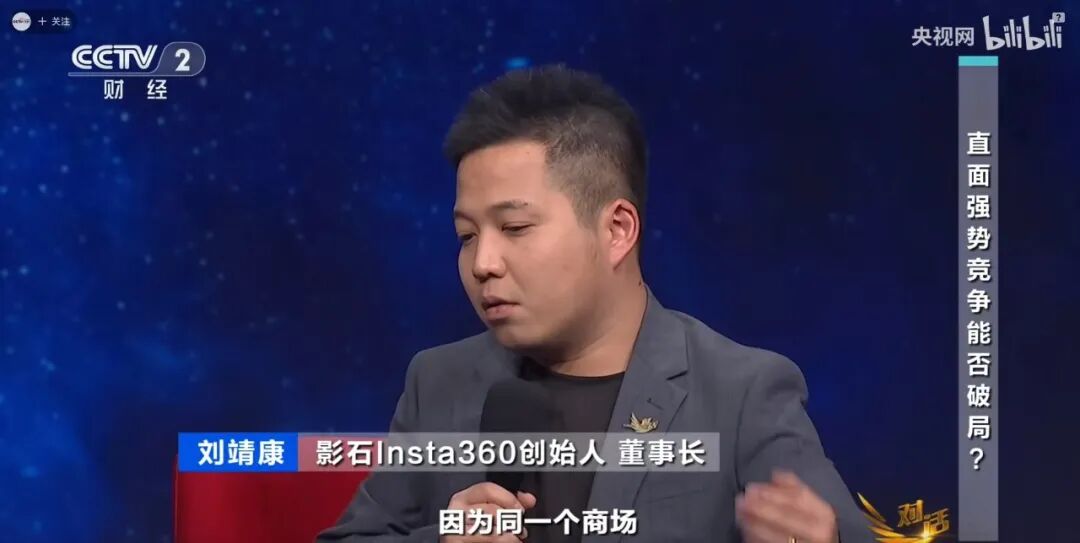



Image Source: CCTV's "Dialogue" Program
Legal analysts argue that such exclusivity arrangements, which restrict other brands' market entry and dealer cooperation spaces through contracts, may violate the "Anti-Monopoly Law" if their purpose is to exclude or restrict market competition and weaken consumer choice. If deemed monopolistic, not only would the agreements be invalidated, but the companies could also face legal risks and reputational damage.
From product clashes to market share battles and channel blockades, the direct confrontation between DJI and Insta360 may reflect a complete reconfiguration of competitive logic in the low-altitude economy and smart hardware industries.
03
Industry Transformation: The Urgent Need to Balance Rules and Innovation
Behind the patent and channel wars lies structural pressure from slowing industry growth.
Statista data shows that the global consumer drone market reached $4.27 billion in 2024, growing 7% year-on-year, with a projected compound annual growth rate of just 3.4% over the next five years. The industry has shifted from rapid expansion to maturity. Even as DJI maintains over 70% market share, it struggles to achieve breakthrough growth in its core business, while second-curve ventures like robotic vacuums have yet to gain traction. The growth ceiling is clearly visible.
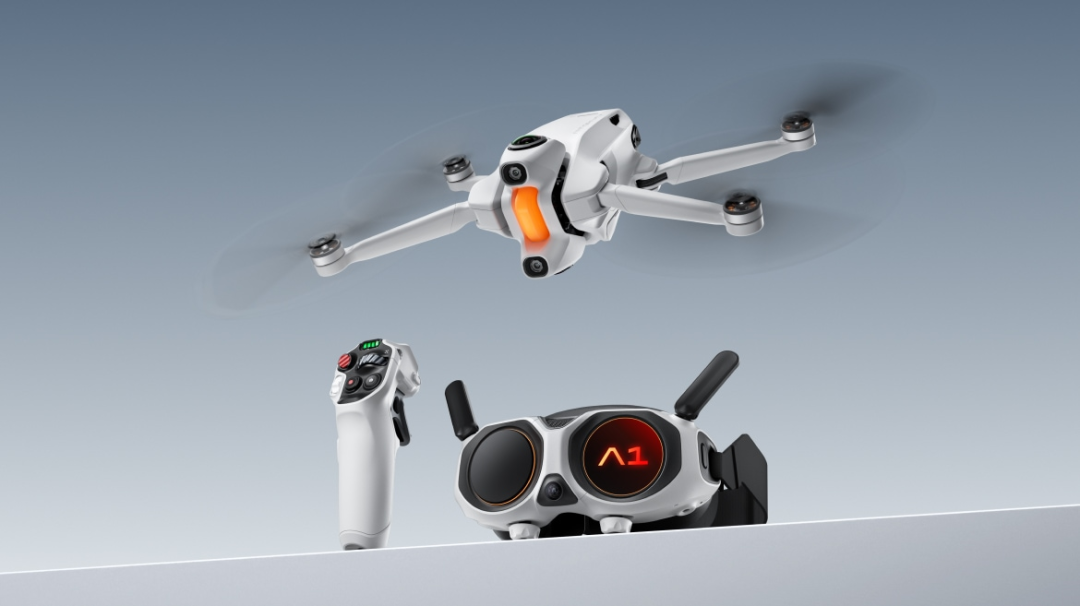
Insta360 Drone - Yingling Antigravity A1 Image Source: Yingling Official Website
Globally, factors such as stagnating core businesses, failed new ventures, and growth anxiety may drive established giants to adopt aggressive containment strategies against emerging challengers. DJI's 2015 patent litigation against peers serves as a precedent, raising concerns that patent lawsuits could become tools for establishing monopoly rents.
From an antitrust perspective, the boundary between legitimate rights protection and abuse of market dominance by leaders like DJI must be clearly defined. Greater market status entails heavier compliance obligations and public responsibilities. Protecting intellectual property does not justify using patent walls to block innovators or as monopolistic tools to suppress challengers.
From an industry upgrading perspective, competition is shifting from price and marketing wars to hardcore contests in self-developed technology, patent strategy, and compliance capabilities. Insta360's cross-border impact stems from its user insights, product innovation, and late-mover technological accumulation.
Conclusion
When patent litigation takes on an asymmetric "giant vs. challenger" character and "patent walls" morph into "monopoly rents," the industry's innovative vitality may be stifled. From an industry development standpoint, we should encourage healthy competition—protecting innovative achievements while reserving space for latecomers to innovate and grow.
A truly healthy industry ecosystem should not be dominated by a single player containing newcomers but should allow emerging challengers to break through and foster fair competition. Future industry winners will not only possess technical barriers but also act as guardians of rules and nightwatchmen of innovation.
The future will be defined not by giants defending barriers but by innovative newcomers daring to break through.
- END -
-
![]()
Internet Valuation Logic Shifts: From Scale Narrative to Profit Accountability
-
VOYAH Struggles to Find Its Niche in the Competitive Auto Market
-
![]()
Maxwell Technologies Gains Indirect Stake in Precision Optics via New Venture
-
![]()
Raising 1.8 Billion! This Domestic Optical Inspection 'Little Giant' is Going Public
-
China's AI 'Normandy Moment': The Explicit and Implicit Threads of BATL
-
![]()
Starting at 4999 Yuan! Nubia RedMagic Gaming Tablet 5 Pro Review: Impressive Performance, But Hefty Price Tag
-
![]()
ByteDance Initiates First Major Management Reform
-
![]()
AI is Quietly Destroying a Trillion-Dollar Industry