In-depth: Why Has the 'King of Glasses' Fallen Out of Favor After a Plunge in Stock Price and a Vaporization of 600 Billion Yuan Following the Explosive Sales of AI Glasses?
 07/27 2026
 352
352
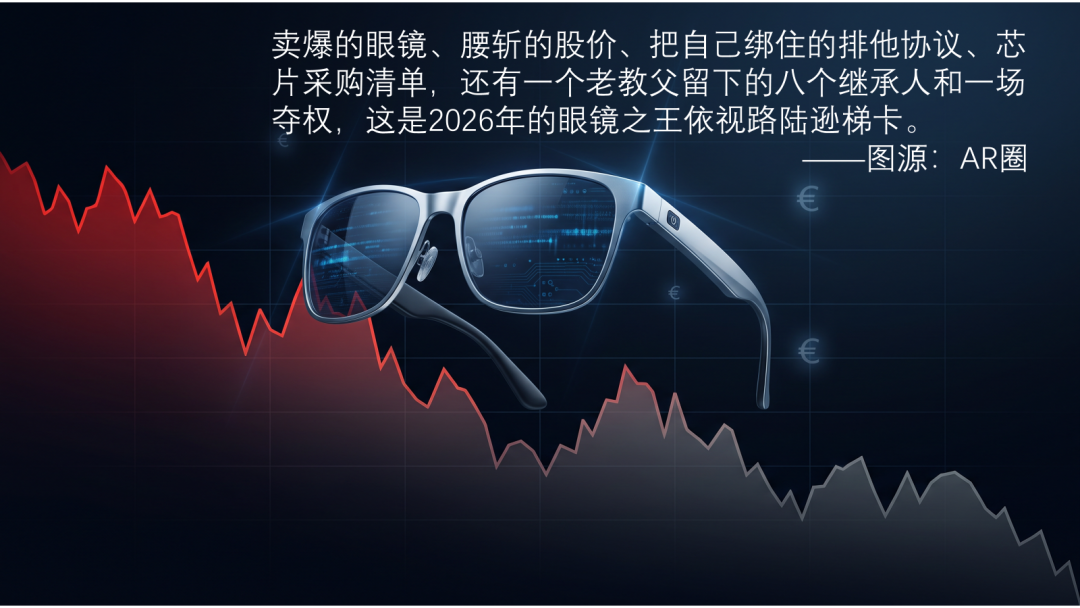
Exploding glasses sales, a halved stock price, a restrictive exclusivity agreement that ties its hands, a chip procurement list, eight heirs left by an old godfather, and a power struggle—this is EssilorLuxottica, the king of glasses in 2026.
If there is an 'Apple' in the traditional glasses industry, it must be EssilorLuxottica.
This is not just about the brand. In terms of scale, the two companies are already in the same order of magnitude: according to estimates, Apple sells about 230 million iPhones a year; EssilorLuxottica sold about 240 million pairs of glasses in 2024. One has defined smartphones, while the other has captured the most profitable segment of the traditional glasses industry, from lenses, frames, and branding all the way to retail stores.
Let's clarify one easily confused point: EssilorLuxottica is a company formed by the merger of French lens giant Essilor and Italian glasses group Luxottica; Ray-Ban and Oakley are glasses brands under its umbrella.
This company controls lenses, design, manufacturing, fitting, and global retail channels. In 2025, it sold over 7 million pairs of AI glasses in collaboration with Meta. However, entering 2026, it presented a staggering figure in the opposite direction in the stock market. Over the past year (as of July 24, 2026), the company's stock price peaked at 323.80 euros (about 2,495 yuan) and fell to a low of 160.60 euros (about 1,237 yuan), with a maximum drawdown of about 50.4% from peak to trough. Based on equity capital, its market value once wiped out about 76 billion euros, equivalent to about 585.6 billion yuan. As of the close on July 24, the stock price was 163.50 euros, not far from the lowest point.
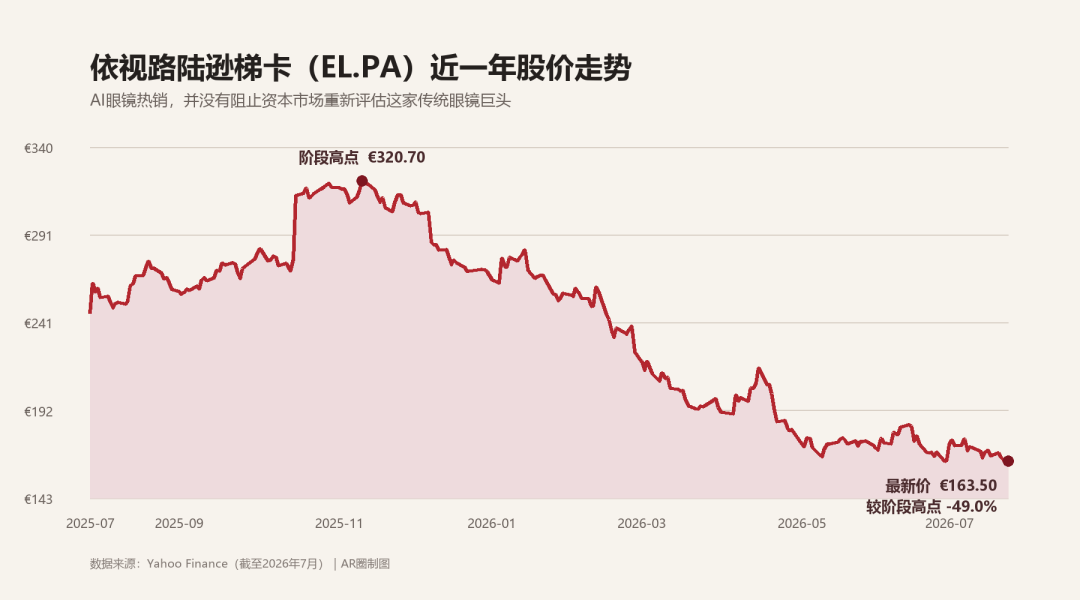
EssilorLuxottica's stock price trend over the past year, with a maximum drawdown of about 50% from peak to trough. Source: AR Circle
On one hand, AI glasses are selling explosively; on the other hand, the stock price has halved. The market is clearly not worried about glasses not selling. It is asking a series of more difficult questions: Why are profit margins worsening as sales increase? Is Meta a partner that brings traditional glasses giants into the AI era, or is it an opponent quietly seizing brands, software, and user access for itself? Why is a company that makes lenses and frames suddenly researching chips, optical waveguides, and even acquiring a VR headset company? There is also a more hidden question: When this business requires burning money at the speed of a tech company for several years, who has the final say among the eight heirs left by the old godfather, professional managers, and a family-controlled company? Let's take them one by one.
01 Why Didn't 7 Million Pairs Support the Stock Price?
Let's clarify the 'halving' first. The 50.4% refers to the maximum drawdown from the past year's peak to trough, not an actual 50% drop from the start to the end of the year. But it reveals one thing: the market once placed an extremely high AI glasses premium on this company, only to quickly withdraw it in less than a year. From a fundamental perspective, this is not a company that has lost momentum. In 2025, revenue was 28.491 billion euros (about 219.5 billion yuan), growing by 11.2% at constant exchange rates; adjusted net profit was 3.157 billion euros, and free cash flow reached a record 2.8 billion euros. In the first quarter of 2026, revenue was 7.127 billion euros, growing by 10.8% at constant exchange rates. The numbers are all respectable.
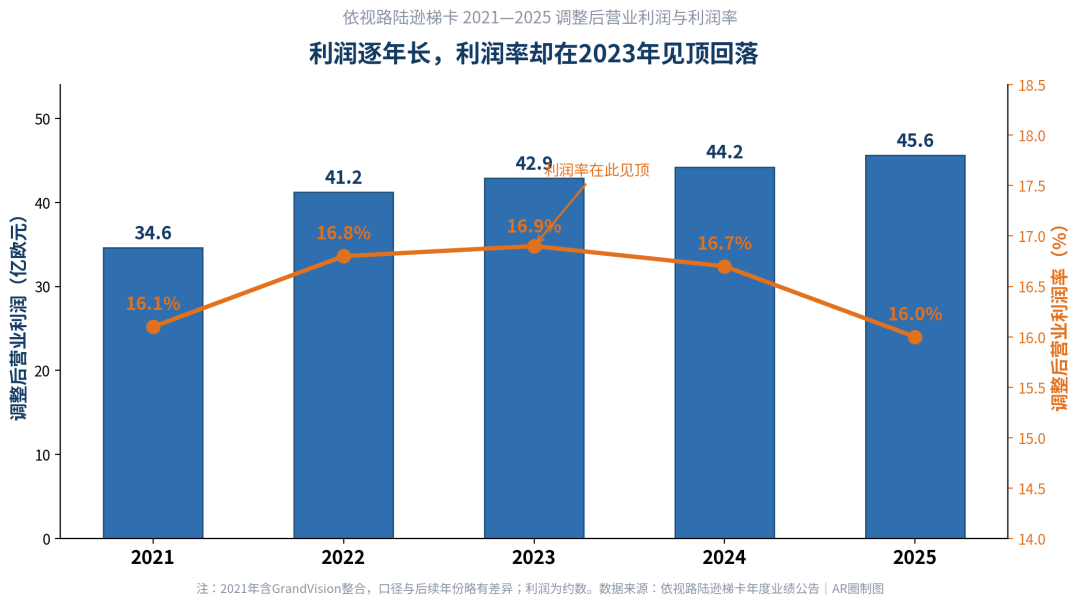
EssilorLuxottica's adjusted operating profit has increased year by year over the past five years, but profit margins have declined for two consecutive years after peaking in 2023. Source: AR Circle
The problem lies in profit margins. In 2025, the company's adjusted gross margin fell to 60.9%, down 2.6 percentage points year-on-year; the adjusted operating margin also fell from 16.7% the previous year to 16.0%. In its earnings explanation, the company made it clear: U.S. tariffs and AI glasses are pressuring profit margins, and the impact will be more pronounced in the second half of the year.
Traditional glasses are a business that EssilorLuxottica has perfected: the material costs of a pair of frames and lenses are limited, but branding, design, fitting, and channels can add layers of markup. However, AI glasses have a different cost structure—chips, storage, cameras, batteries, speakers, microphones, wireless modules, electronic assembly, and after-sales service—none of which can be omitted.
They sell for more than traditional glasses but are not necessarily more profitable. More subtly, they have also changed the company's growth structure. In the second half of 2025, sales of Ray-Ban Meta and Oakley Meta surged, significantly accelerating revenue growth; however, a substantial portion of this new revenue had to be shared with chip manufacturers, electronic component suppliers, and technology partners. The high-margin business once dominated by branding and channels is now incorporating the costs and iteration pace of consumer electronics.
So, while 7 million pairs prove demand, they have not yet proven profitability. And 7 million pairs may only be the beginning of stress testing. Mr. X (pseudonym), a supply chain insider who participated in related projects, told 'AR Circle' that the industry chain's sales forecast for 2026 is at least to double—exceeding 14 million pairs.
This is not the company's official guidance, but for factories and suppliers, forecasts have already translated into tangible preparations for equipment, materials, personnel, and capacity. Doubling sales from 7 million to over 14 million pairs within a year requires simultaneous expansion of electronic production lines, key components, yield rates, and global channels. If the revenue share of AI glasses continues to rise, and the costs of chips, batteries, and cameras do not decrease rapidly with scale, it leads to the most direct question: Why are profit margins worsening as sales increase? This is precisely where the capital market's revaluation begins.
At its peak in 2025, investors viewed it through the lens of a tech growth stock; by 2026, the market began to crunch the numbers: When will economies of scale kick in? Can gross margins recover? Is this company gaining a new high-margin engine, or is it subsidizing a more popular but heavier new product line with its existing resources? In July, Goldman Sachs downgraded its rating from 'Buy' to 'Neutral' and cut its target price from 230 euros to 200 euros. Analysts fear not that there is no market for AI glasses, but that growth and profit realization in the coming years may not materialize as quickly as valuation expectations suggest. The market has started to do the math.
02 The King of Glasses Takes Its First Electronics Manufacturing Lesson
AI glasses are changing not just financial reports but also factories. Dongguan Huahong is an EssilorLuxottica production base that manufactures for multiple glasses brands under the group and is one of the key production sites for Ray-Ban Meta. Its traditional expertise lies in manufacturing conventional glasses: frames, lenses, hinges, coating, polishing, assembly, and an obsessive focus on appearance and batch consistency. However, making a pair of glasses look good and fitting a computer into a temple are two different crafts. According to XR Research Institute, when Ray-Ban Meta first introduced electronic assembly at Dongguan Huahong, Meta coordinated the entry of G Company (pseudonym) from its supply chain to help build production lines and provide engineering support.
G Company, a veteran in consumer electronics and XR device manufacturing, sent its engineering team to Huahong for the first time, only to find an environment more akin to a traditional glasses workshop. Mr. X recalled the factory scene with strong emotion: 'A cleanroom? Forget it—they didn't even have anti-static floor (antistatic floors) at first.' His words, though emotional, highlight the real gap when traditional glasses factories transition to smart hardware.
Electronics manufacturing focuses on electrostatic discharge prevention, motherboard and battery assembly, camera and audio calibration, firmware programming, RF testing, whole-unit traceability, heat dissipation, waterproofing, and reliability verification; traditional glasses factories focus on frame refinement, durability, and comfort. A factory capable of mass-producing millions of traditional glasses weekly does not necessarily mean it can seamlessly integrate cameras, batteries, and motherboards into a several tens of grams (dozens-of-gram) frame on day one. Thus, EssilorLuxottica began catching up.
In February 2026, Dongguan Huahong announced a 550 million yuan expansion of its smart wearable factory, covering about 40.65 acres; simultaneously, the company planned to build its first smart wearable pilot production line in Agordo, Italy, with introduction in the second half of 2026 and operation by early 2027. A clear dual-base strategy emerged: Dongguan handles scale manufacturing and supply chain efficiency, while Italy manages early prototyping, high-end products, and core processes. However, the on-the-ground experience at factories does not always sync with the hype around AI glasses. In the comment sections of reports related to Luxottica, multiple netizens suspected to be Huahong employees mentioned concerns about reduced overtime, stagnant income, and job changes.
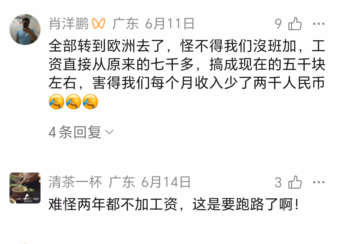
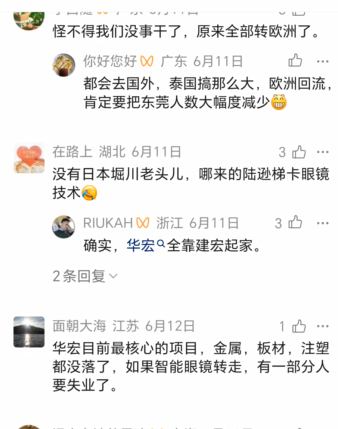
Comments from suspected Huahong employees in the comment section of EssilorLuxottica-related videos 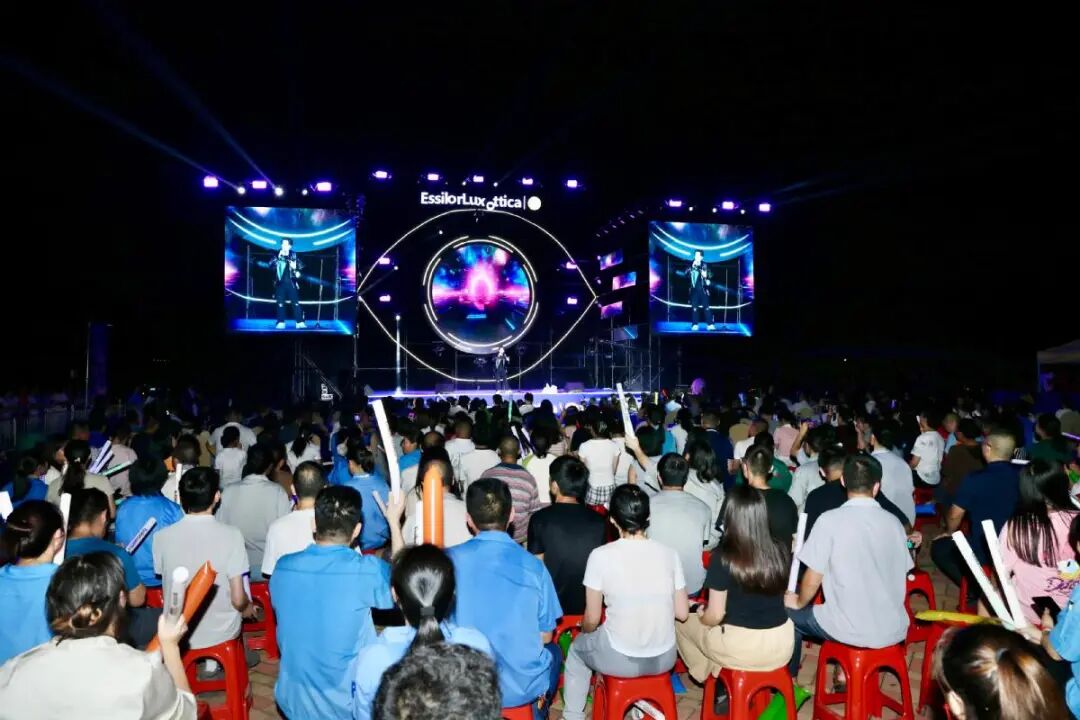
EssilorLuxottica's Huahong factory hosts an event. Source: Dongguan Daily
These identities and claims cannot be verified one by one, but they reveal a reality easily overlooked: Growth in AI glasses orders does not automatically translate into income growth for every position; production line upgrades often accompany automation, process restructuring, and workforce changes. Transitioning from traditional glasses to AI hardware requires EssilorLuxottica to catch up not just on factory buildings and equipment but on a full suite of electronics manufacturing capabilities. And manufacturing may only be the first lesson.
03 Meta Brings Growth but Holds the Product's 'Brain'
The relationship between EssilorLuxottica and Meta began in 2019. That year, Rocco Basilico, in charge of wearables, met Mark Zuckerberg in the U.S. and later brought him to Italy to meet founder Leonardo Del Vecchio (referred to as 'Old Leonardo') in person.
The two companies' needs were almost perfectly complementary: Meta understood software, AI, and social networking but lacked expertise in making glasses appealing to ordinary people; EssilorLuxottica held Ray-Ban and Oakley, understanding design, fitting, manufacturing, and retail but lacking the 'brain' for smart hardware. The collaboration began. Ray-Ban Stories served as a trial run, and Ray-Ban Meta truly brought AI glasses to the masses. By 2025, with Ray-Ban Meta as the mainstay and Oakley Meta launched mid-year, this product line had sold over 7 million pairs.
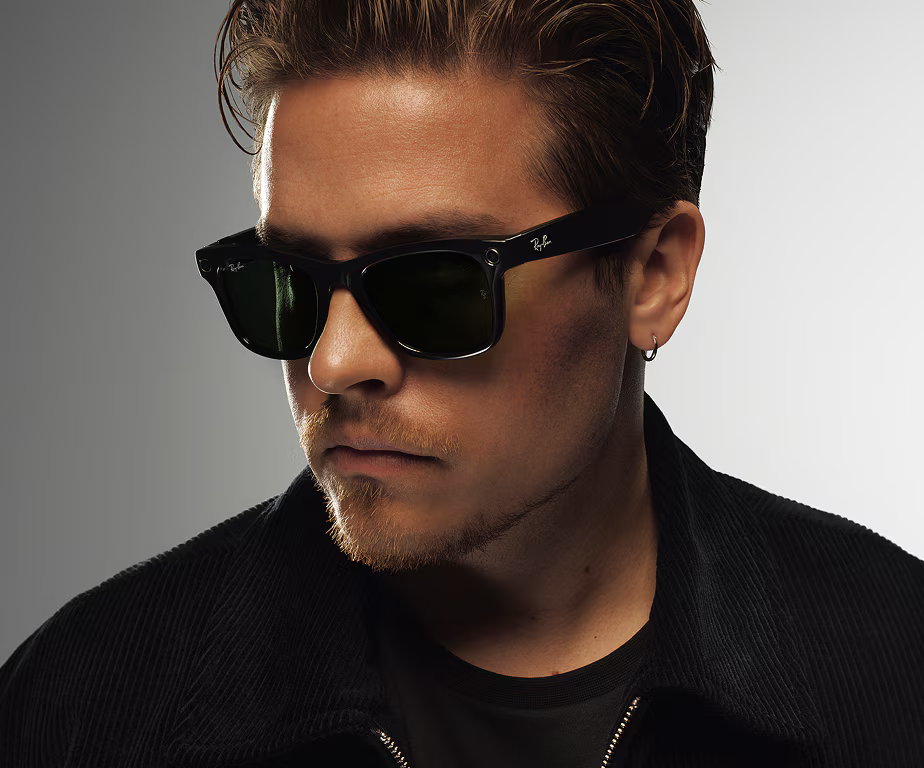
EssilorLuxottica's Ray-Ban Meta AI glasses, developed in collaboration with Meta. Source: Ray-Ban official website This is a joint achievement, but the value distribution is clear. EssilorLuxottica contributes the half of glasses that is hardest to replicate: branding, styling, lenses, wearability, manufacturing, and channels. Meta holds the other half: Meta AI, apps, accounts, cloud services, user data, and iteration pace. When users ask questions through the glasses, the answers come from Meta; when the glasses interpret the world before their eyes, the models come from Meta; in the future, if there are subscriptions, ads, content, and intelligent agents, the closest to users will still be Meta.
EssilorLuxottica sells a pair of glasses; Meta competes for an access point. For an internet company like Meta, hardware is never just a commodity but an entry point to software, content, advertising, and AI services. If hardware is likened to a faucet, what Meta truly sells is the 'water' behind it. The cheaper the faucet, the more people enter its service ecosystem—if necessary, hardware can be sold at cost, with Meta absorbing some losses.
Meta has already practiced this strategy with VR headsets: the 2020 Quest 2 offered upgraded performance and specifications but started at just 299 USD, 100 USD cheaper than the first generation; Zuckerberg has also publicly stated that Meta is willing to sell hardware near cost or even sustain losses to lower the barrier for users to enter its platform.
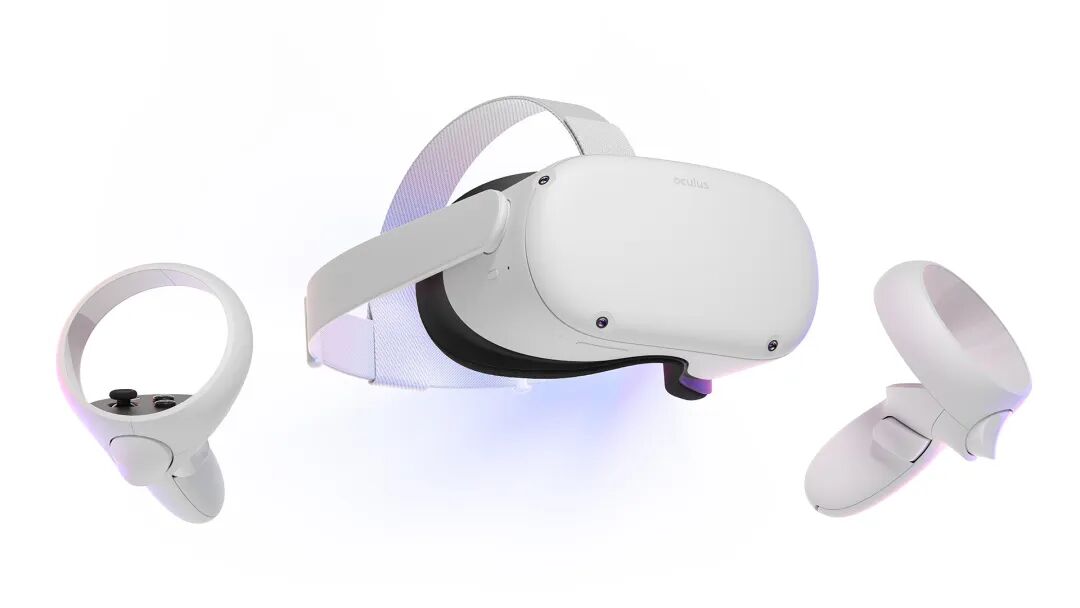
Meta once promoted the Quest 2 at near-cost prices, using low prices to drive adoption. Source: Meta official website This logic fundamentally clashes with that of traditional glasses companies. For EssilorLuxottica, glasses themselves are the profit source; selling them cheaper makes it harder to realize branding, design, lens, and channel premiums. Meta wants the faucet to be cheap enough to enter millions of lives overnight; EssilorLuxottica wants the faucet to bear the Ray-Ban or Oakley logo while maintaining the profit margins of a high-end pair of glasses. This is not a dispute over revenue sharing but a collision of two business models. The binding later extended from products to capital.
In 2024, the two companies signed a long-term agreement extending their collaboration to the next decade; in 2025, Meta invested about 3 billion euros to acquire shares in EssilorLuxottica, and by December of that year, director Romolo Bardin confirmed that Meta held at least 3% of the shares. Meta is not just a technology partner but also a shareholder of the king of glasses. However, this long-term agreement hides a seemingly minor yet increasingly bothersome constraint. CNBC, citing insiders, reported that Meta has secured exclusivity rights for EssilorLuxottica's brands to use its smart glasses technology. This does not mean that all glasses businesses of Ray-Ban and Oakley must go to Meta, nor does it mean EssilorLuxottica cannot develop its own smart hardware. More precisely, within the agreed scope and duration, if these brands want to integrate smart glasses technology from external tech companies, Meta holds the exclusive position. According to XR Research Institute, this clause has not been without controversy within the company.
One school of thought suggests that it made sense in the early days of the partnership: at that time, the market was unproven, and Meta shouldered the major risks of technological investment and market education. The exclusivity rights were one of the bargaining chips for securing long-term commitment. However, as the market expanded, another perspective came to light. "Looking back now, it seems like a significant loss," a source close to EssilorLuxottica's smart glasses business told XR Institute. The reasoning is straightforward. As one of the world's largest traditional eyewear groups, EssilorLuxottica owns brands like Ray-Ban and Oakley and also handles design and production for fashion brands such as Prada.
In theory, it could have collaborated with Meta, Apple, and Google separately, tailoring partnerships to different brands, positioning, and target demographics. By granting Meta exclusivity, EssilorLuxottica secured a strong long-term partner but, for a time, relinquished the opportunity to license its brand and design to multiple platforms simultaneously. However, there appears to be a loophole in this exclusivity web. Bolon is also part of EssilorLuxottica's brand portfolio. In 2013, Luxottica acquired Bolon's parent company, Xiamen Yarui Optical, bringing the Chinese brand under its umbrella.
In 2024, the Rokid Glasses, a collaboration between Rokid and Bolon, made their debut—on the surface, this conflicts with Meta's exclusive position. According to XR Institute, the key lies in timing: the partnership between Rokid and Bolon predates Meta's latest round of exclusivity arrangements and was thus preserved as an existing collaboration.
Based on the information currently available to XR Institute, this may be the only third-party smart glasses collaboration that has continued under the exclusivity arrangement. The full agreement has not been disclosed, so it remains unclear whether it is protected as an existing collaboration exemption or by boundaries related to brand, region, or product form. Nevertheless, this exception at least demonstrates that Meta did not secure a vague "priority partnership" but rather a right that significantly influences how EssilorLuxottica selects other technology partners.
This agreement served as financial security for Meta when the market was still nascent. However, as AI glasses became a coveted entry point for tech giants, it transformed into a barrier for EssilorLuxottica when seeking new partners. By 2026, a new variable emerged in the relationship: Meta launched its own-brand AI glasses without Ray-Ban or Oakley branding, still developed in collaboration with EssilorLuxottica but now featuring Meta's brand prominently on the product. According to XR Institute, production of these own-brand glasses has also shifted to Meta's supply chain, bypassing the previous arrangement where Huahong manufactured Ray-Ban Meta glasses.
This does not equate to a breakup but indicates that Meta is reducing its reliance on a single eyewear brand and manufacturing system. For EssilorLuxottica, the risk is not that Meta will abruptly walk away tomorrow but that as AI glasses technology and supply chains mature, Meta will have increasingly more options. Meta can continue leveraging Ray-Ban's fashion appeal or directly introduce its brand to consumers. It can collaborate with EssilorLuxottica or distribute orders among more suppliers. Meta seeks an affordable AI device for everyone, while EssilorLuxottica aims for high-margin eyewear. Their directions are not entirely aligned.
04 Waveguides, Chips, and Lynx: The Eyewear Empire Begins to Build the Other Half
EssilorLuxottica is clearly aware of the risks. Over the past year, its technological ambitions have accelerated—and the directions it has pursued are increasingly atypical for a "traditional eyewear company." In June, it announced a long-term joint development partnership with Applied Materials to research waveguides, active optical modulators, and new material platforms for next-generation smart glasses. Applied Materials is a heavyweight in global semiconductor equipment and materials engineering, specializing in deposition, material modification, and patterning.
Its collaboration with the eyewear giant is not focused on ordinary lenses but on the most challenging and expensive component of AI glasses with displays: how to project images onto transparent lenses while controlling weight, brightness, power consumption, and manufacturing costs. Mr. X provided AR Circle with a ready example: the etched diffractive waveguide used in Thunderbird Innovation's X3 Pro was jointly developed by Thunderbird Innovation and Applied Materials. "The effect is indeed impressive, but the cost is high. Why does the X3 Pro sell for nearly 10,000 yuan? The optical display system is a major contributor to the price.
To clarify, the starting price of 8,999 yuan cannot be entirely attributed to the waveguide—binocular full-color MicroLED displays, main control chips, early production yields, and still-low volumes all drive up the overall cost. However, this case at least proves that the transition of waveguides from laboratory to mass manufacturing directly determines when AI glasses with displays can genuinely become more affordable.
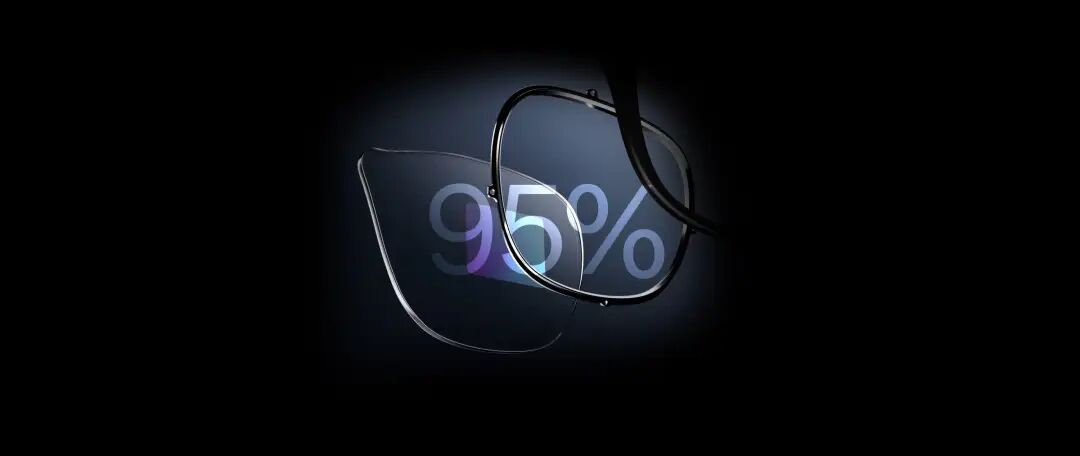
The etched diffractive waveguide used in Thunderbird Innovation's X3 Pro, jointly developed with Applied Materials. Image source: Thunderbird Innovation's official website. Meanwhile, EssilorLuxottica is collaborating with Chips-IT on ultra-low-power SoCs for eyewear, with annual reports indicating directions such as continuous perception, real-time environmental understanding, and all-day operation. This means it is no longer satisfied with merely purchasing off-the-shelf chips defined by others.
In today's AI glasses chip landscape, Qualcomm's AR1 is a mature high-performance main controller handling photography, video, visual perception, and AI. China's BES Technologies entered from low-power audio, wireless connectivity, and collaborative control, aiming to extend into complete eyewear SoCs with its next-generation chips. If EssilorLuxottica succeeds in developing self-designed or jointly customized chips, it will directly enter this competitive arena.
Qualcomm aims to defend its high-performance main controller position, BES Technologies seeks to evolve from low-power collaboration to a complete SoC, and EssilorLuxottica wants a chip tailored to its product definitions. The competition is not about benchmark scores but about the three most precious resources in eyeglass temples: battery life, space, and thermal management. For smartphones, chips determine performance ceilings; for AI glasses, chips first determine whether you can comfortably wear them all day.
EssilorLuxottica's collaboration with chip company Chips-IT. Image source: EssilorLuxottica. In July, the final piece of the puzzle emerged. Stan Larroque, founder of French XR startup Lynx, confirmed that EssilorLuxottica had acquired Lynx's name, domain, database, source code, 3D design files, manufacturing processes, and other assets, with most of the team joining as well. Lynx previously developed standalone mixed-reality headsets, accumulating years of expertise in environmental perception, spatial positioning, see-through displays, operating systems, and complete device design. Its product form overlaps with Meta Quest, but there is currently no evidence suggesting EssilorLuxottica will proceed with the originally planned Lynx R2. A more plausible interpretation is that it is acquiring not a headset Urgent to go public but a suite of spatial computing capabilities.
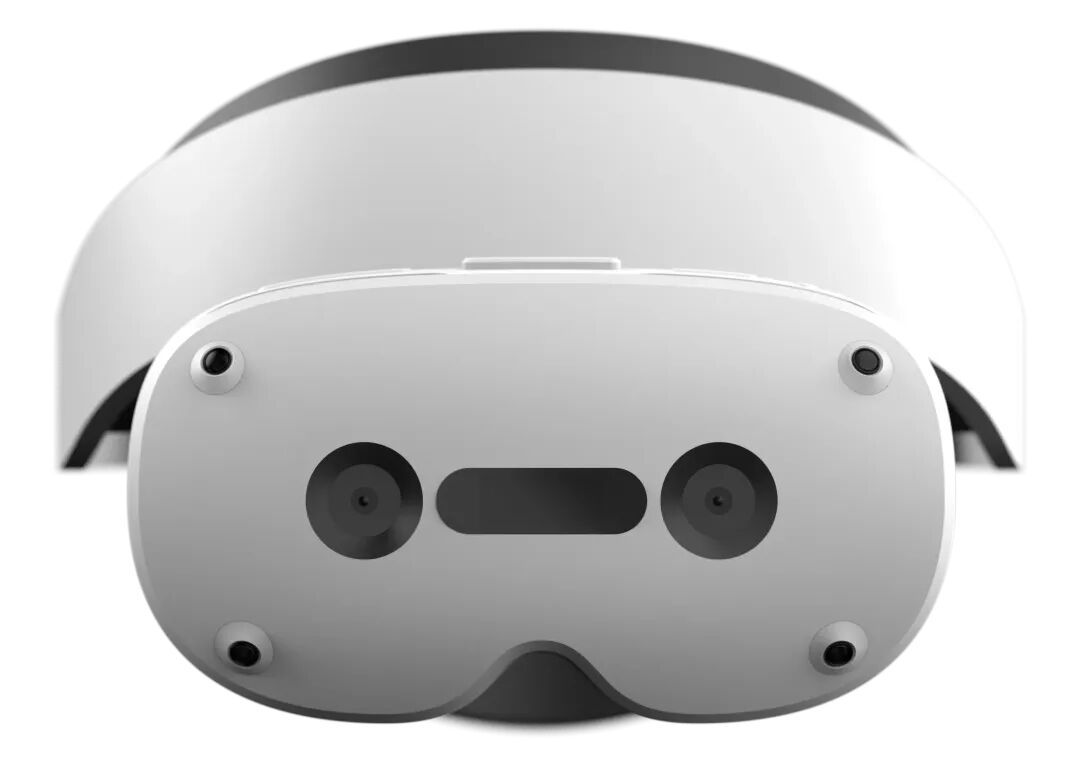
The R2 mixed-reality headset previously developed by Lynx, the French XR company acquired by EssilorLuxottica. Image source: Lynx's official website. Connecting these dots reveals the intent: Applied Materials fills the "display in the eye," Chips-IT fills the "brain in the temple," and Lynx fills the device's spatial understanding capabilities, along with software and complete device experience.
This is nearly a direct replication of Meta's multi-year technological stack investment. Meta's Orion prototype uses silicon carbide waveguides, MicroLED projections, and multiple custom chips to keep eye-tracking, hand gestures, and spatial positioning within wearable power consumption limits.
While EssilorLuxottica's recent moves do not yet prove it has caught up, this "shopping list" exposes its deepest anxiety—a company holding the world's best eyewear brands and distribution channels is unwilling to remain merely a provider of frames, lenses, and factories in the AI glasses era. Meta is reducing its reliance on EssilorLuxottica's technology, and EssilorLuxottica is reducing its reliance on Meta's technology. The two have not broken up but are objectively preparing for a potential "divorce."
05 The Empire Left by the Old Godfather Has Not Resolved Succession
Beyond technological transformation, EssilorLuxottica faces another, more concealed risk: control. The life of the elder Leonardo reads like an Italian film. Born in 1935 into a poor family in Milan, Italy, his father passed away before his birth, and at age seven, he was sent to an orphanage by his mother. In his teens, he became an apprentice mold maker in a factory.
In 1961, he founded Luxottica in the northern town of Agordo, starting by manufacturing eyewear components for others before eventually acquiring brands like Ray-Ban and Oakley and retail networks such as LensCrafters and Sunglass Hut. In his later years, the elder Leonardo often wore thick black-framed glasses, his white hair slicked back, usually dressed in dark suits. When not smiling, he resembled an old godfather from an Italian gangster film.
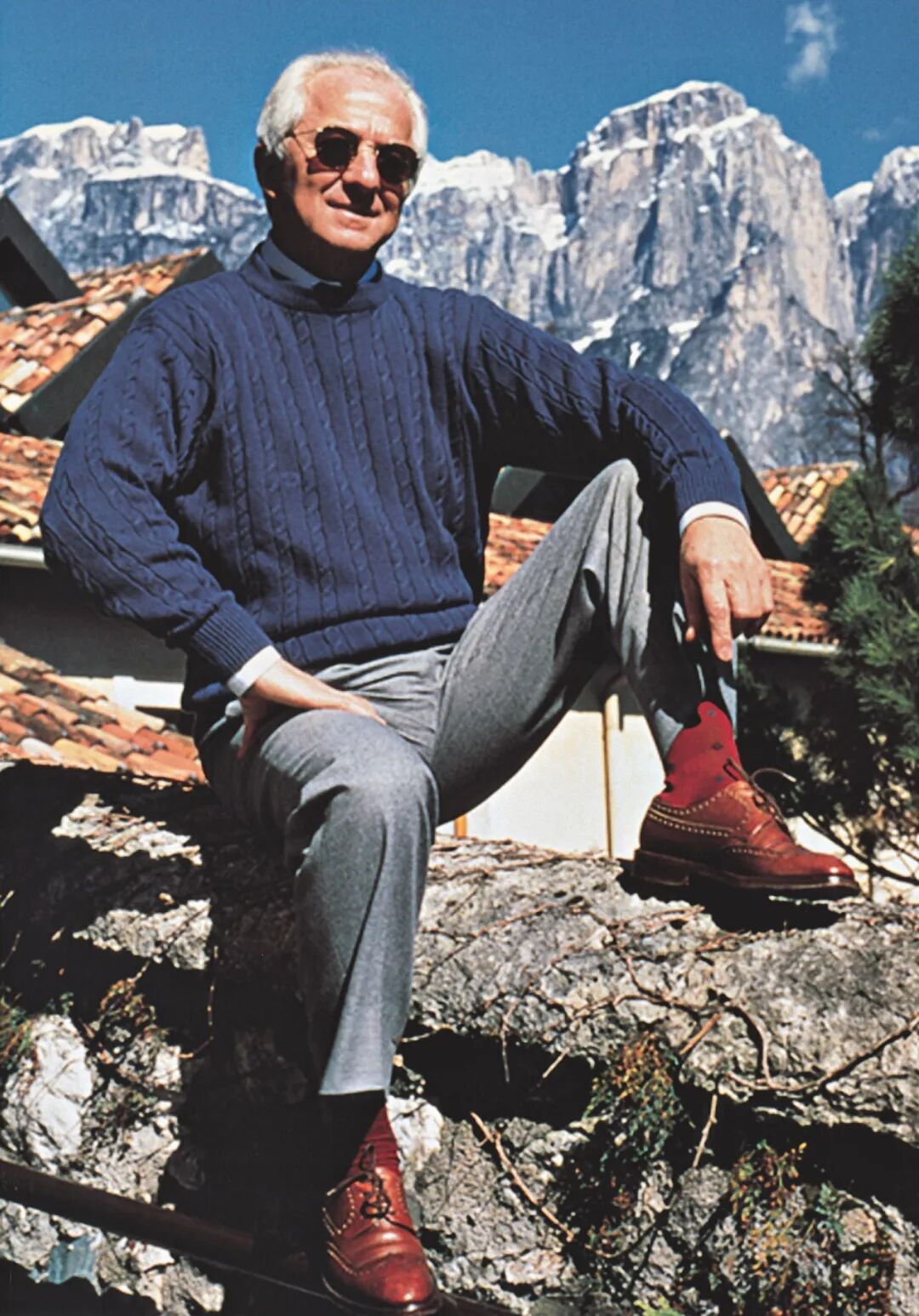
Leonardo Del Vecchio (the elder Leonardo), founder of EssilorLuxottica. Image source: Del Vecchio Foundation. He also managed the company in a godfather-like manner: operations could be delegated, but control was rarely truly relinquished. "Leonardo was never someone genuinely willing to retire," Marco (a pseudonym), an industry veteran who has long followed the Del Vecchio family, told AR Circle. In his view, handing over the CEO role in 2004 did not mean the founder had completed a succession—"he could let others manage the company and recognized capable professional managers. But for him, the company was not an ordinary asset; it was a creation he had built step by step from the orphanage and his apprenticeship.
He could never fully entrust its direction to others." In 2004, he stepped back temporarily. Instead of choosing his eldest son, Claudio Del Vecchio, as his successor, he entrusted the company to professional manager Andrea Guerra. Guerra expanded Luxottica over a decade: the stock price rose from around 14 euros to about 40 euros, and revenue surged from approximately 2.8 billion euros to over 7 billion euros. Then, at age 79, the old godfather returned. Due to disagreements over strategic direction and management autonomy, Guerra left in 2014, and his successor, Enrico Cavatorta, lasted only about six weeks before resigning.
Guerra's decade-long tenure proved that professional managers could scale Luxottica; his departure proved that scaling the company and truly owning it are two different matters. In 2018, Luxottica merged with French lens giant Essilor, creating EssilorLuxottica. Italian and French shareholders engaged in another round of power struggles, with the elder Leonardo ultimately elevating his long-trusted Francesco Milleri to a core position, and the latter became CEO in 2021. The elder Leonardo passed away in 2022.
He did not designate a specific son as his successor but evenly distributed the family holding company, Delfin, among eight heirs, with each indirectly holding 12.5%. High voting thresholds locked out the possibility of any single heir easily taking control. While seemingly equitable, this structure placed a multibillion-dollar publicly traded company into an extremely complex family governance framework. He left the empire to his family but also left a power struggle bound to erupt eventually.
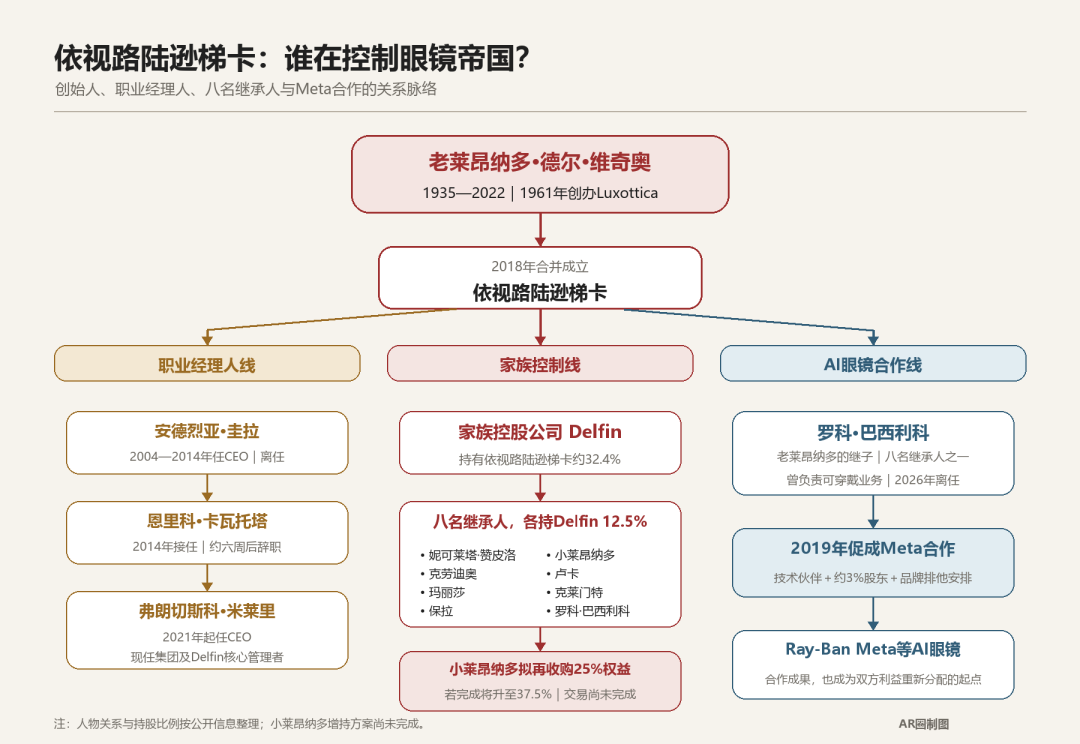
EssilorLuxottica's key figures and control relationships. Image source: AR Circle. On the eve of the AI glasses boom, contradictions began to surface faintly. Rocco Basilico, who brought Meta into the eyewear empire, is the son of the elder Leonardo's widow, Nicoletta Zampillo, from a previous marriage and one of the eight heirs. He managed wearable business operations but announced his departure in late 2025, officially leaving in January 2026, subsequently becoming embroiled in inheritance and transaction disputes within Delfin.
Meanwhile, Leonardo Maria Del Vecchio, the elder Leonardo's son, began attempting to acquire a combined 25% stake in Delfin from two siblings. If successful, he would become the strongest single heir within the family holding. However, as of now, this restructuring remains incomplete, still constrained by other heirs, the Delfin board, and existing management.
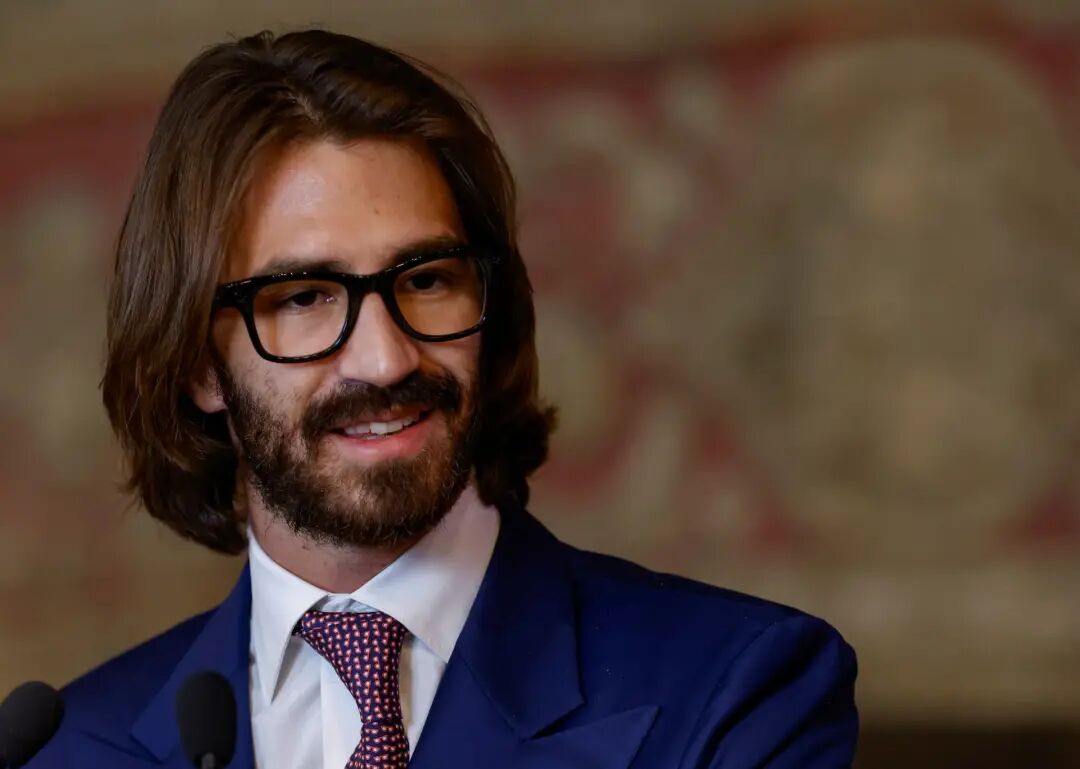
Leonardo Maria Del Vecchio, son of the elder Leonardo. Image source: Reuters. Thus, the current scene is quite dramatic: the person who brought Meta into the empire has left, the founder's son is vying for family control, while daily operations remain under the professional managers handpicked by the old godfather before his death. In Marco's view, this is not merely a dispute over a wealthy second generation's inheritance. "They are competing for long-term control of a company worth nearly 100 billion U.S. dollars," he told AR Circle. "Luxottica used to be primarily an eyewear company, but now AI glasses, chips, optics, and data are all involved.
Whoever controls Delfin will, to a certain extent, decide whether the company continues as a traditional consumer goods group or transforms into a tech hardware platform." Family inheritance disputes do not directly explain the stock price decline, but they amplify market concerns about long-term transformation. Waveguides, chips, AI, factory retrofits, spatial computing—all require massive investments with prolonged returns. This business demands stable decision-making over several consecutive years, not repeatedly answering "who decides" every few years.
06 What the Market Truly Fears Is Its Failure to Become a Tech Company
When stock prices, profit margins, Meta, self-developed technology, and family governance are considered together, EssilorLuxottica's situation becomes clear. It is neither a collapsed company nor one that missed the AI glasses trend. On the contrary, it possesses the world's strongest eyewear brands, lens technologies, manufacturing capabilities, and retail networks, and it co-created the most successful AI glasses to date with Meta. The problem is that success arrived too swiftly, exposing its shortcomings just as brightly.
First, can sales translate into profits? After 7 million units, the market no longer cares about sales records but whether gross margins can recover as scale increases. Second, can it secure more technological definition rights? Applied Materials, Chips-IT, and Lynx have filled gaps in optics, chips, and spatial computing, but mature mass production remains far off. Third, can its partnership with Meta remain balanced long-term? Meta holds AI and the entry point, while EssilorLuxottica holds brands and distribution. They still need each other but are both stockpiling alternatives.
Fourth, can family control, professional managers, and massive technological investments coexist stably within the same organizational framework? On July 28, EssilorLuxottica will announce its first-half performance for 2026. While the market will focus on revenue, profit margins, and sales of AI glasses, what deserves closer attention is how management answers these four questions. In the past, its greatest strength lay in transforming eyewear with limited material costs into products for which consumers willingly paid a premium for brand, design, and service.
In the AI era, it must also prove that it can turn chips, software, algorithms, and sensors into a similarly controllable and profitable business. The market no longer doubts whether AI glasses will become a major category. What it questions is whether, once this category matures, EssilorLuxottica—a traditional eyewear giant—will emerge as the rule-setter in the smart glasses industry or remain a conventional eyewear company with the best brand and largest distribution network, yet perpetually reliant on others for the 'brains.'
END
-
[Insight] Miniature Fiber Optic Spectrometers Have a Wide Range of Application Fields, with Jingfei Technology as a Leading Enterprise
-
![]()
Half-Year Report | Global TV OEM Market Sees Slight 0.3% Growth in H1 2026; Expected to Decline in H2, Full-Year Drop of 1.1%, Ending Four-Year Growth Cycle
-
![]()
JD's AI Bet: 700,000 'Brothers' and a Supply Chain Worth Hundreds of Billions
-
![]()
AI Smartphone War: The Endgame is a World Without AI Phones
-
![]()
What Occurs When You "Slice a Photon in Two"? Norwegian Physicists Reveal: It Unleashes a Spectrum of Colors
-
![]()
In-depth: Why Has the 'King of Glasses' Fallen Out of Favor After a Plunge in Stock Price and a Vaporization of 600 Billion Yuan Following the Explosive Sales of AI Glasses?
-
![]()
Used Cars Step into the Limelight Alongside New Cars: What Does This Trend Indicate?
-
![]()
After 20 Million Vehicles, How Can Chery Conquer the 'Brand Value' Challenge?