Global Vehicle-Mounted Optics Leader Reports RMB 358 Million Loss in H1!
 08/20 2026
 352
352
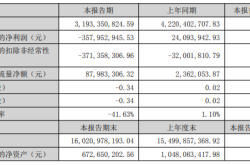
Recently, Lianchuang Electronics released its semi-annual report for 2026, revealing that the company generated revenue of RMB 3.193 billion in the first half of the year, marking a year-on-year decrease of 24.34%. Its net profit attributable to shareholders recorded a loss of RMB 358 million, a significant deterioration from a loss of approximately RMB 32 million in the same period last year, representing a staggering decline of 1585.66%.
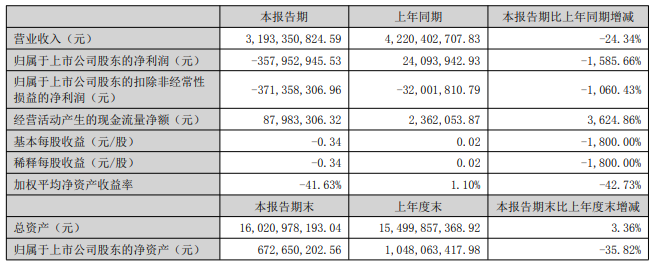
Notably, in the second quarter alone, the net profit attributable to shareholders posted a loss of RMB 261 million, with the gross profit margin plummeting to 3.55% and the net profit margin dropping to -17.81%. This sharp decline in profitability cannot be solely attributed to industry cycles.
Analyzing the business structure, it becomes evident that the company's two core sectors have both experienced a slowdown. The touch display business generated only RMB 87 million in revenue in the first half of the year, a staggering year-on-year decrease of 85.33%, with the gross profit margin plummeting to -12.34%. This business, once a reliable source of cash flow, has now transformed into a profit-draining black hole. Meanwhile, the highly anticipated vehicle-mounted optics business recorded revenue of RMB 1.313 billion, a year-on-year decrease of 19.43%, with a gross profit margin of only 10.15%, far from reflecting the premium capabilities expected of a global market leader.
The three main subsidiaries—Chongqing Lianchuang, Jiangxi Lianyi, and Hefei Lianchuang—reported net losses of RMB 106 million, RMB 104 million, and RMB 80 million, respectively. This situation, where none of the subsidiaries are profitable, indicates that the company's overall operations are under significant pressure.
By the end of the second quarter, the company's total liabilities stood at approximately RMB 15.348 billion, with the asset-liability ratio climbing to 92.03%. Meanwhile, the net assets attributable to shareholders plummeted from RMB 1.048 billion at the end of last year to RMB 673 million, a decrease of 35.8%. Such high leverage levels and continuously shrinking shareholder equity severely limit the company's financial flexibility. If it fails to reverse its operational downturn in the short term, liquidity risks will become a major concern.
It was at this critical juncture that Lianchuang Electronics underwent a significant change of control at the end of July this year. Anhui Huainan Shouxian Xinqiao Business Management Co., Ltd. acquired approximately 7.27% of the shares held by the controlling shareholder, Jiangxi Xinsheng, for about RMB 630 million, making the Shouxian Finance Bureau (Shouxian SASAC) the actual controller of the company.
The move from Jiangxi to Anhui not only signifies a fundamental transformation in the company's nature but also reflects a deeper strategic consideration in local industrial布局 (industrial layout). According to data from Zuosi Auto Research, Lianchuang Electronics held approximately a 35% global market share in vehicle-mounted lenses in 2024, ranking first globally. It had established deep partnerships with leading clients such as Tesla, BYD, NIO, Mobileye, NVIDIA, and Horizon Robotics, and occupied a 74% share in Huawei's vehicle-mounted lenses.
In 2025, Hefei's new energy vehicle production reached 1.371 million units, ranking first among cities in China for two consecutive years. By acquiring this global leader in vehicle-mounted optics at a relatively low cost, Shouxian State-Owned Assets aims to complete the key link of 'optical lenses' in Anhui's new energy vehicle industry chain, forming a closed loop with Hefei's existing advantages in vehicle manufacturing and power batteries.
In fact, Lianchuang Electronics' Hefei Vehicle-Mounted Optics Industrial Park officially commenced production in 2024, with planned annual production capacities of 50 million vehicle-mounted lenses and image modules each. The unification of control and production capacity under local jurisdiction undoubtedly paves the way for subsequent resource synergies.
From an industry perspective, the long-term prospects of the vehicle-mounted optics sector remain widely optimistic. According to ICVTank forecasts, the global market size for front-mounted vehicle cameras is expected to reach USD 30.6 billion by 2026. With the continuous rise in the penetration rate of L2+ level intelligent driving, the number of cameras per vehicle has increased from the traditional 3 to 5 units to 8 to 13 units.
Lianchuang Electronics now stands at a critical crossroads. The historical burden of the touch display business has yet to be cleared, the profitability of the vehicle-mounted optics main business urgently needs to be verified, and the 92% asset-liability ratio looms like a sword overhead.
The entry of Shouxian State-Owned Assets brings a glimmer of hope—the synergistic effects of Anhui's new energy vehicle industry cluster, the financing support from state-owned asset credit, and the leap from family governance to modern governance theoretically all point towards a positive direction of recovery. However, uncertainties regarding the release of vehicle-mounted optics production capacity mean that the road to recovery will not be smooth.
For Lianchuang Electronics, the second half of 2026 may mark the beginning of a true test. When the industrial ambitions of local state-owned assets intersect with the critical moment for a company's survival, the market needs to see not just a timeline for turning a profit but also a substantive transformation in governance efficiency and strategic resolve. Ofweek Optical will continue to follow the story.
-
Five Consecutive Quarters of Revenue Decline: Baidu Sets Sights on 'Reclaiming Top-Tier Status in Foundational Large Models'
-
![]()
Global Vehicle-Mounted Optics Leader Reports RMB 358 Million Loss in H1!
-
![]()
Global Computing Power Behemoth Nvidia Faces Emerging, Formidable Rivalry!
-
![]()
Generative AI Fuels Global Cloud Market Boom, Three Cloud Titans Amass Trillions in Pending Orders
-
![]()
Semi-annual Report | Global Large-Size Interactive Flat Panel Market Grows by 9.4% in H1 2026; Analysis of Domestic and International Brand Strategies
-
![]()
Can Tencent Still 'Buy a Ticket' Onboard with an Extra 20 Billion?
-
![]()
The Moment to Put Geely Auto’s An Conghui to the Test Has Come
-
![]()
The AI Product Selection Race Nears Its End: What's Next?