Can Tencent Still 'Buy a Ticket' Onboard with an Extra 20 Billion?
 08/20 2026
 324
324
Author | Bishan
Source | Bowang Finance
On the evening of August 12, Tencent Holdings released its Q2 financial report.
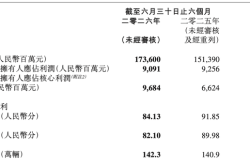
Focusing solely on revenue and profit, the results are not unimpressive: operating revenue reached RMB 204.785 billion, up 11% year-on-year, slightly higher than market expectations of RMB 202.84 billion; gross profit was RMB 118.433 billion, up 13% year-on-year, with the gross margin increasing from 57% to 58%. However, the market's attention did not stop there. The next morning, Tencent's stock price fell by 4.46%, with its market value dropping back to HKD 4 trillion, a price-to-earnings ratio (TTM) of 15 times, and a price-to-book ratio of 3.07 times—this valuation level is now on par with some capital-intensive industries.
What made investors uneasy were two other figures. In Q2, Tencent's capital expenditure reached RMB 52.784 billion, a staggering 176% year-on-year increase and a 65% sequential rise, exceeding market estimates of RMB 32.14 billion by over RMB 20 billion; free cash flow turned negative at RMB -13.8 billion—the first time Tencent has seen a negative quarterly free cash flow since its listing.
A financial report showing steady growth corresponds to a historic negative cash flow. To understand Tencent's current situation, one must break down these RMB 52.8 billion.
01 What Does RMB 52.8 Billion Represent?
First, let's place these figures in context.
RMB 52.784 billion in capital expenditure accounts for 26% of Q2's total revenue. For comparison, Tencent's capital expenditure in Q1 this year was RMB 31.9 billion, a 16% year-on-year increase, already a record high for a single quarter; last year's total capital expenditure was RMB 79.2 billion. In other words, one quarter's investment is nearly 70% of last year's total. Including the RMB 51.4 billion in prepaid deposits for computing power procurement in the same period, Tencent's actual capital investment in AI for Q2 exceeded RMB 100 billion.
The contraction in cash is equally apparent. As of June 30, Tencent's net cash position was RMB 58.2 billion, down from RMB 146.9 billion on March 31—a 60% decline in one quarter. The main consume (consumption) came from two sources: capital expenditure payments of RMB 59.3 billion and RMB 41.6 billion in dividend payments for 2025.
Tencent explained that if prepayments for computing power procurement were excluded, the current free cash flow would still be RMB 37.6 billion. However, prepayments represent rigid future expenditures for securing computing power, and excluding them does not reflect the true operational state. At the current pace, Tencent's capital expenditure for 2026 is likely to exceed RMB 200 billion, nearly triple last year's figure.
This is not a conventional increase in investment but a concentrated, early bet.
02 Where Did the Money Go?
The flow of these RMB 52.8 billion is relatively clear from the financial report and earnings call.
The first area is foundational models. In July, the official version of Hunyuan Hy3 was released, with significantly improved performance over the preview version, outperforming most models of similar size. According to token consumption statistics from AI model aggregation platform OpenRouter, Hy3 has consistently ranked among the top three globally since its launch. A larger-scale Hy4 model is planned for release soon, with market expectations of reaching over 1 trillion parameters. Since Yao Shunyu, who joined late last year, took charge of foundational models, the research and development pace of Hunyuan has accelerated noticeably.
The second area is applications. The most externally focused is WorkBuddy. This AI office tool evolved from a side project by a dozen-person team in March to a project personally overseen by Pony Ma, with the team expanding to 100 people and receiving green lights across all six business groups in less than six months. Internally, Tencent refers to it as the "new crown prince." The financial report explicitly states: WorkBuddy is China's most widely used AI efficiency agent service. According to Analysys data, its desktop monthly visits surpassed 20 million in June, ranking first among domestic similar products, exceeding the combined total of the second and third-ranked products. Its origins are worth noting: Tencent began investing in AI programming in 2022 and released CodeBuddy in 2024, now used by over 90% of its internal engineers. However, the team soon realized that CodeBuddy was for programmers, while non-programmers would be intimidated by a screen full of code—leading to the creation of WorkBuddy, aimed at users who cannot code, with over 2,000 non-technical employees using it daily before its public beta.
The third area is the intelligence of the WeChat ecosystem. The native WeChat AI assistant "Xiaowei" is undergoing grayscale testing; Tencent also holds an Agent matrix—QClaw for remote control, Marvis for system-level PC operations, along with WorkBuddy and CodeBuddy, covering office, social, and other scenarios.
However, a dose of realism is needed amid the prosperity. WorkBuddy still relies on a free version with point subsidies to attract users, while the enterprise version charges per seat, with most users still using it for free. In Q2, Tencent's sales and marketing expenses increased by 26% year-on-year to RMB 11.9 billion, with a significant portion used for brand promotion of WorkBuddy. Industry data cited in media reports further illustrates the situation: 88% of enterprises have piloted AI agents, but only 24% have achieved a return on investment across multiple use cases. The "high penetration, low return" of AI office tools is a challenge faced by Tencent and the entire industry.
03 Who Is Funding This?
The RMB 10.5 billion quarterly drag from AI operations ultimately relies on traditional businesses to shoulder the burden. The financial report clarified this for the first time: excluding the revenue, costs, and expenses of new AI products (Hunyuan, Yuanbao, CodeBuddy, WorkBuddy, and Xiaowei), Q2's Non-IFRS operating profit increased by 19% year-on-year to RMB 86.1 billion; including AI investments, the actual figure was RMB 75.636 billion, a 9% year-on-year increase—AI operations halved the core profit growth rate.
Shouldering this RMB 10.5 billion are three mature businesses.
Gaming remains the largest profit source. Q2 value-added services revenue reached RMB 98.414 billion, up 8% year-on-year. Domestic market gaming revenue was RMB 47.3 billion, a 17% year-on-year increase, hitting a recent high; "Delta Force" and "Valorant" both set new records for average daily active accounts; the newly launched "Roco Kingdom: World" became the biggest dark horse in the Chinese market in Q2, ranking first in average daily active users and revenue among all newly released mobile games that quarter, according to QuestMobile and Sensor Tower data. The gaming business's gross margin improved from 60% to 64% year-on-year, reaching a recent high.
Marketing services were the fastest-growing segment, with revenue of RMB 43.565 billion, a 22% year-on-year increase, roughly 2.7 times the industry average. Growth was driven by AI: continuously optimized AI-driven ad recommendation models, upgraded intelligent ad product matrices (Tencent Marketing AIM+), and closed-loop marketing capabilities within the WeChat ecosystem. Total usage time on WeChat Channels increased by over 20% year-on-year, with AI-driven mixed ranking systems continuously improve (continuously improving) ad matching efficiency.
Fintech and enterprise services revenue was RMB 60.286 billion, a 9% year-on-year increase. Notably, the growth in enterprise services revenue was directly attributed by the financial report to "increased demand for AI-related services"—cloud services revenue growth benefited from AI contributions, international business expansion, and a more favorable pricing environment. In recent years, China's cloud market has been mired in price wars, with repeated price cuts compressing industry profit margins; the surge in AI demand is changing this landscape, with pricing power for high-value-added services like model training, inference services, and AI application development platforms far stronger than for general-purpose cloud computing.
04 What Do Executives Say?
Tencent's management provided its most comprehensive response to date on the sustainability and returns of these investments during the earnings call.
President Martin Lau broke down the business into two parts: "The first part is our existing mature core businesses, which are growing steadily and still have good operating leverage. These are high-quality growth foundations we've honed over the long term. The other part is the new AI-native businesses we're building, including self-developed large models, entirely new AI applications, and the Newly built supporting facilities (supporting newly built) computing infrastructure." He emphasized that capital expenditures for AI-native businesses are "primarily concentrated in this year and next year as a one-time investment. It should not be assumed that Tencent will maintain equally large investments every year."
More critically, he offered a "fallback plan": "The core reason for our large-scale computing power procurement is that we need it to launch the entire AI business line. At the same time, this investment has clear upside potential—if we were to place all this computing power on Tencent Cloud for external rental, it could generate substantial revenue. Even if we stop developing our own applications and simply lease the computing power externally, this business could be profitable on its own. That's why we dare to invest for the long term." He also left room for adjustment: "If returns fall below expectations, we will adjust the scale of our investments."
Chief Strategy Officer James Mitchell added a detail: a batch of computing power equipment preordered by Tencent a few months ago could now be resold at over 30% profit compared to the original purchase price. This illustrates two points: the speed at which computing power prices are rising and the urgency of Tencent's lock-in strategy.
However, when asked about the timeline for AI business profitability, Lau's response was: "At this stage, we will not provide precise quantitative targets."
05 Valuation Disagreements
The market's disagreement over this financial report essentially reflects differing views on how to value Tencent.
For the past two decades, investors have treated Tencent as a light-asset cash cow—free cash flow was easy to estimate, earnings often exceeded expectations, and the P/E ratio once surpassed 50 times. Now, with a P/E ratio of 15 times and a P/B ratio just over 3 times, this valuation logic is beginning to waver. Yu Fenghui, an advisor at the Hong Kong Stocks 100 Research Center, analyzed for Yicai that the logic of valuing Tencent using discounted cash flow (DCF) models must be revised: it should be split into "cash cow businesses" and "AI investment-phase businesses" for segmented valuation, with the former valued using DCF and the latter priced based on industrial capital logic tied to computing power scale and AI cloud revenue. He also suggested that management disclose efficiency metrics for AI capital expenditures in each earnings report—AI cloud revenue, incremental AI ad revenue, and GPU utilization rates—"Currently, there is still a lack of transparent sub-item return data. The -RMB 13.8 billion free cash flow will not be seen as a strategic investment but will continue to be priced as profit erosion."
Li Zeming, Chief Investment Officer at BlueWater Capital, offered a more technical perspective: negative free cash flow directly impacts DCF model valuations, but for internet companies, if AI investments yield returns later, the final outcome may not be poor—the market just needs to digest the unexpectedly large capital expenditures first. Li Qian, an investment advisor at Guangzhou Yuesheng Wealth Management, provided a reassuring viewpoint: most of this expenditure is in the form of large one-time prepayments, not operational losses, and the core businesses (gaming, advertising) still generate strong operating cash flow.
Industry comparisons are also underway. Alibaba saw a net outflow of RMB 17.3 billion in free cash flow in Q1 this year, compared to a net inflow of RMB 3.743 billion in the same period last year, due to investments in instant retail, user acquisition for Qianwen App, and cloud infrastructure. Tencent is not the only company burning large sums on AI—it was just the least spendthrift one before.
06 A Bill That Will Be Recalculated Repeatedly
Returning to the initial two figures. Revenue of RMB 204.8 billion and free cash flow of -RMB 13.8 billion will be weighed against each other on a balance scale for a long time to come.
Tencent's logic is clear: use the stable cash flow generated by gaming, advertising, and fintech to feed AI models and applications; once models catch up and applications gain traction, let the AI business sustain itself. This path hinges on the traditional businesses' ability to keep funding and the AI business's commercialization not waiting too long. Currently, the former holds—gaming gross margin is 64%, advertising grows at 22%, and fintech and enterprise services remain steady; the latter still lacks an answer—WorkBuddy's 20 million monthly visits have not yet translated into significant revenue, and Hunyuan's global top-three ranking has not yet turned into pricing power.
Pony Ma's statement in the earnings report can serve as a footnote to this bet: "Entering the third quarter, we are building a new, AI-empowered Tencent across three layers: intelligence, applications, and infrastructure." The new Tencent has not yet arrived, but the bill has. This -RMB 13.8 billion cash flow statement will be recalculated every quarter going forward.
-
![]()
Generative AI Fuels Global Cloud Market Boom, Three Cloud Titans Amass Trillions in Pending Orders
-
![]()
Semi-annual Report | Global Large-Size Interactive Flat Panel Market Grows by 9.4% in H1 2026; Analysis of Domestic and International Brand Strategies
-
![]()
Can Tencent Still 'Buy a Ticket' Onboard with an Extra 20 Billion?
-
![]()
The Moment to Put Geely Auto’s An Conghui to the Test Has Come
-
![]()
The AI Product Selection Race Nears Its End: What's Next?
-
![]()
Equating Li Shufu's Resignation with De-familization is a Major Misstep
-
Did Baidu and Xiaomi Hit Their Pivotal Moments on the Same Day?
-
![]()
The Dual Prospects of New Energy Heavy Trucks