Kilowatt-Level, Ten-Millijoule Ultrashort Pulse Generation via Multipass Cell: A Cutting-Edge Ultrafast Nonlinear Optics Technology
 08/24 2026
 384
384
Ultrafast lasers, characterized by their high average power, elevated pulse energy, and ultrashort pulse durations, serve as indispensable driving light sources in fields such as strong-field physics, high-order harmonic generation, precision micro-nano machining, and high-flux pump-probe experiments. Traditional titanium-sapphire laser systems are capable of delivering sub-50 fs pulses; however, their scalability in terms of average power and practical engineering operation are often hindered by challenges related to thermal management, pumping efficiency, system complexity, and maintenance expenses. In contrast, ytterbium-doped lasers offer notable advantages, including high electro-optical efficiency, robust average power output, and long-term operational stability. Nevertheless, constrained by their gain bandwidth, the direct output pulse widths from these lasers typically span several hundred femtoseconds, and their peak power remains insufficient to fully satisfy the rigorous demands of strong-field applications. Consequently, the primary challenge in developing high-flux strong-field light sources and advanced manufacturing light sources lies in further compressing industrial-grade sub-picosecond pulses to tens of femtoseconds while preserving high energy, high average power, and system stability. This paper aims to address this need by investigating whether nonlinear post-compression technology can be scaled from low-power experimental demonstrations to industrial parameter ranges of 1 kW and 10 mJ [1].
The experimental setup is depicted in Figure 1 and primarily comprises a ytterbium-doped laser frontend, an input optical path, a spectral broadening module, an output optical path, and a dispersion compensation module. The researchers utilized a commercial TruMicro 9010 ultrashort pulse laser system as the driving source, with input pulse parameters set at 10 mJ, 100 kHz, 1 kW, and 871 fs. The core of the experimental scheme involves coupling high-energy sub-picosecond pulses into a gas multipass cell, where self-phase modulation accumulates over multiple round trips within an extended equivalent nonlinear length, thereby achieving controlled spectral broadening. Subsequently, the broadened pulses are compressed using a chirped mirror compressor to attain near-transform-limited pulse compression. To meet the stability requirements for operation at kilowatt-level average power, the system incorporates active beam pointing stabilization, temperature stabilization, and automated control processes to mitigate thermal drift, coupling fluctuations, and parameter drift during prolonged operation. 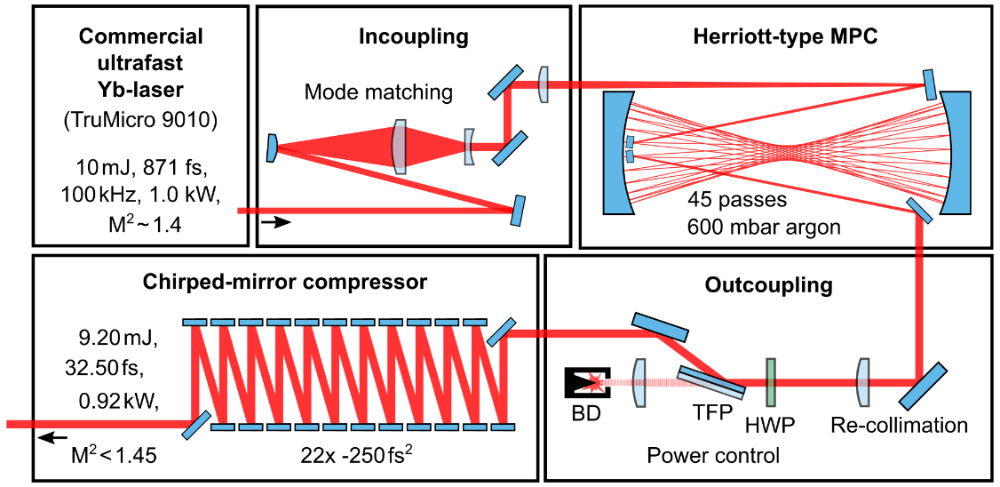 Figure 1. Schematic of the experimental setup [1]
The experimental results reveal that the system is capable of compressing 871 fs input pulses to 32.5 fs, achieving a compression factor of approximately 27. The output pulse energy remains at the 9 mJ level, the average power approaches 1 kW, the overall transmission efficiency exceeds 90%, and the beam quality factor M2 is superior to 1.45. These findings indicate that the system can maintain excellent spatial mode and conversion efficiency following intense nonlinear broadening, thereby demonstrating the stable operation of the multipass cell post-compression scheme under industrial-grade high-power conditions. The authors also analyzed the asymmetry of the output spectrum, attributing it to the combined effects of self-phase modulation and residual higher-order dispersion from the driving laser. This phenomenon results in incomplete and asymmetric instantaneous frequency shifts at various temporal positions within the pulse. Consequently, the broadened spectrum is not solely governed by ideal Kerr phase modulation but is also influenced by the phase and dispersion characteristics of the input pulse. 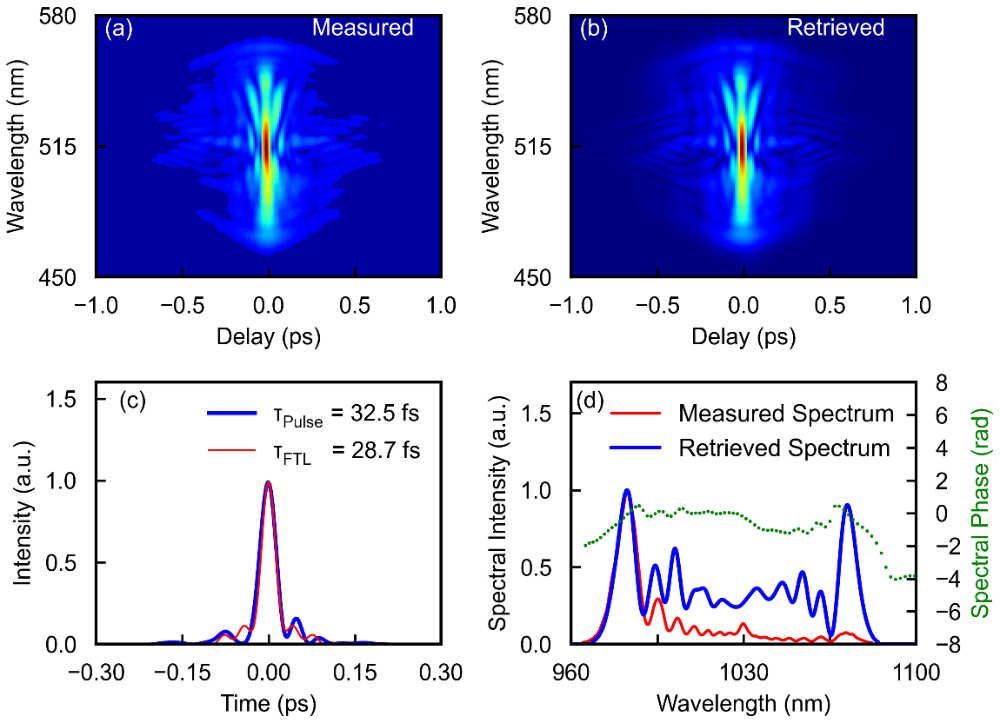 Figure 2. Pulse output results from the gas multipass cell [1]
Furthermore, the paper underscores the importance of stability analysis, as the key challenge for a 1 kW-class post-compression system lies not in achieving single short pulses but in ensuring long-term stable output under high-power conditions. During high-power operation, minor thermal effects in optical components and the gas environment can alter beam pointing and mode matching, thereby impacting spectral broadening efficiency and compression quality. Therefore, beam pointing stabilization, temperature control, and integrated diagnostic devices are essential for the reliable operation of industrial-grade nonlinear post-compression systems. Through comprehensive characterization of output power, beam quality, and compressed pulse width, the authors demonstrate that the system exhibits excellent repeatability and engineering robustness under high-power operation. 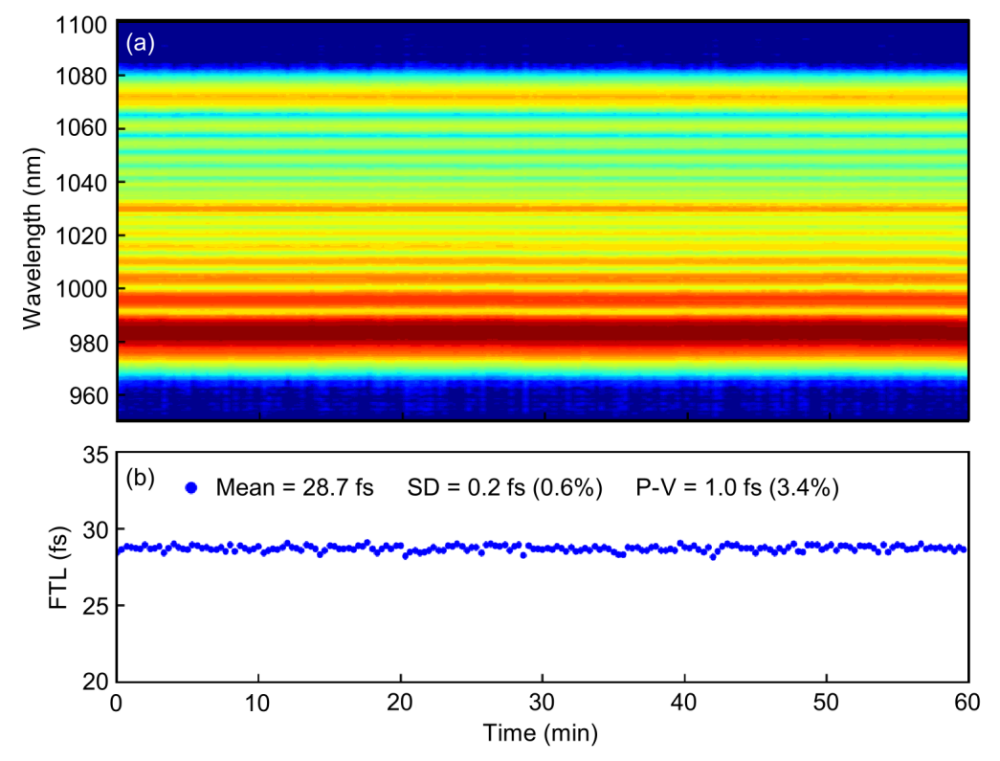 Figure 3. Characterization results of spatial spectral uniformity [1]
In conclusion, this research propels nonlinear pulse post-compression to an average power of 1 kW and a single-pulse energy of 10 mJ, demonstrating that the combination of high-efficiency multipass cell broadening and chirped mirror compression can simultaneously achieve short pulse widths, high energy, high transmission efficiency, and superior beam quality. It is important to note that this scheme still relies on a sophisticated industrial-grade frontend, precise multipass cell adjustment, and active feedback control, resulting in elevated system costs and setup complexity. Future research endeavors could further focus on automation optimization, long-term stable operation, higher repetition rates, and specific application scenarios such as strong-field physics and precision machining.
References: [1] Ertel, Dominik, et al. "Industrial-grade nonlinear pulse compression of 1kW and 10mJ ultrashort laser pulses." doi:10.1364/opticaopen.32034420
-
![]()
Registered Capital Slashed to 372 Million Yuan! Yutong Optical Finalizes Industrial and Commercial Change Registration
-
![]()
Zhuque-3 Successfully Lands, and 'Time Traveler' Secures Another ¥100 Million in Funding: China's Commercial Space Industry Experiences a 'Dynamic August'
-
![]()
Autohome Faces a Shrinking Window of Opportunity
-
![]()
Even a Titan Like Musk Has Faced Setbacks in Fulfilling Promises
-
![]()
AI Office: The End of the Racing Era, Context Becomes the Key to Success
-
![]()
Domestic Vehicle Chassis Revolution ②: The Steering Wheel Remains, But Mechanical Connections in the Steering System Are Decreasing
-
![]()
Exploring MiniMax Design: Can Video Editing Be as Simple as Speaking?
-
![]()
Why Can SenseTime Achieve Profitability While CloudWalk Still Faces Challenges, Despite Both Adopting Large Models?