Chengdu’s Next Five Years: A Treasure Trove of Key Signals
 12/11 2025
 765
765
Source: Shenlan Finance
In December, Chengdu once again shifted the focus of its urban development to a comprehensive perspective. With the convening of the Eighth Plenary Session of the 14th Chengdu Municipal Party Committee, the "Recommendations of the Chengdu Municipal Party Committee on Formulating the 15th Five-Year Plan for National Economic and Social Development of Chengdu" were officially reviewed and approved. This has made the development trajectory of this megacity over the next five years increasingly clear.
For Chengdu, a city with a population exceeding 20 million, five years is ample time to reshape its industrial structure, adjust spatial layouts, and redefine its development logic. When comparing the 14th Five-Year Plan with the newly released 15th Five-Year Plan, it becomes evident that Chengdu is undergoing a more targeted and focused strategic upgrade.
The changes are first reflected in the city's positioning. In the previous phase, Chengdu took on demonstration tasks for national strategies, emphasizing the "Park City Demonstration Zone Practicing New Development Concepts." Over the next five years, Chengdu's goal has been elevated to becoming a "socialist modern international metropolis with global influence and prestige." Urban development no longer solely serves internal optimization or regional coordination but actively projects its vision into the global urban system, planning competitiveness from a loftier perspective. Chengdu's ambition is clearly visible as it transitions from "exploring concepts" to "enhancing capabilities."
Corresponding to its positioning, Chengdu's development path is also undergoing an upgrade. For the first time, the plan encapsulates the strategic direction in 16 characters: "Innovation-Driven, Open Leadership, Integration of Science and Industry, Strengthening Counties and Activating Districts." This succinct and focused expression points to four main lines: industry, innovation, openness, and regional development, providing clearer guidance for implementation over the next five years.
The urban functional system is also being adjusted accordingly. The "Five Centers and One Hub" outlined in the 14th Five-Year Plan are evolving to a higher level. The "Five Centers + Five Hubs" proposed in the 15th Five-Year Plan constitute a more operational functional framework. Specifically, the "Five Centers" refer to the economic center, technology center, financial center, cultural and creative center, and international exchange center. The newly added "Five Hubs" are important carriers of national strategic scientific and technological strength, a national advanced manufacturing base, a digital cultural and creative industry cluster, a new frontier of reform and opening up, and a high-quality, livable habitat. The introduction of the "Five Hubs" further translates urban functions from macro positioning into quantifiable and assessable construction tasks.
To make the city's image more recognizable and outwardly communicative, Chengdu has also, for the first time, defined "Five Brand Images": a vibrant and innovative Chengdu, an inclusive and open Chengdu, a beautiful and livable happy Chengdu, a virtuous and humane Chengdu, and a smart and resilient safe Chengdu. Unlike previous policy-oriented expressions, this system is more concrete and easier to form as a communication memory point, reflecting Chengdu's emphasis on shaping its urban character in global competition.
At the industrial level, Chengdu's shift is garnering significant attention and is particularly crucial. Currently, Chengdu's industry is at a critical juncture of transformation and upgrading, and momentum switching. The 15th Five-Year Plan proposes accelerating the promotion of "Industry-Based City, Manufacturing-Strong City," placing advanced manufacturing at the core once again. If the previous five years focused more on the new economy, the next five years will prioritize hard technology, hard industries, and new quality productive forces. Against the backdrop of global supply chain reshaping and intensifying technological competition, Chengdu's transformation indicates that it is taking a more stable industrial foundation as the main theme for future development.
In September this year, the Sichuan Provincial Party Committee and Provincial Government issued the "Opinions on Supporting Chengdu to Optimize and Strengthen Its Core Functions and Accelerate High-Quality Development," already setting a framework for Chengdu's next regional role. This 15th Five-Year Plan reemphasizes "optimizing and strengthening core functions," meaning Chengdu will play a stronger leading role in the Chengdu-Chongqing Economic Circle and the broader western region. The so-called "core" means first strengthening its own comprehensive capabilities and then driving the overall regional advancement with stronger agglomeration.
The innovation system also faces restructuring. "Integration of Science and Industry" has become the main theme, requiring scientific and technological innovation achievements to truly flow to the industrial end and accelerate the formation of new quality productive forces. Whether it is the construction of major scientific and technological innovation platforms or the upgrading of industrial chains, Chengdu regards the transformation of scientific and technological achievements as the core source of future competitiveness.
In terms of spatial layout, Chengdu's development focus has shifted from expanding the urban framework to enhancing county-level capabilities. "Strengthening Counties and Activating Districts" has been elevated to a strategic height, meaning that future new development potential will no longer be concentrated solely in the central urban area but will emerge in broader hinterlands. The county economy will also become an important growth source for Chengdu in the next five years.
Regarding the governance system, Chengdu has proposed, for the first time, the goal of building a "megacity transformation and development" model, striving to become a national benchmark in governance effectiveness and capability.
Overall, the 15th Five-Year Plan is not a linear continuation of the 14th Five-Year Plan but a systemic structural adjustment in a new stage. With the implementation of the plan, a new urban cycle has officially begun.
Chengdu's next leap is worth anticipating!
The Shenlan Finance New Media Cluster originated from the Shenlan Finance Journalist Community and boasts a 15-year history. As a well-known domestic financial new media outlet, its accounts focus on China's most valuable companies, cutting-edge industry developments, and emerging regional economies, providing valuable content for investors, executives of listed companies, and the middle class. Welcome to follow us.
***
-
![]()
Personnel Shuffle: Independent Director Mi Xuming Steps Down from OFILM
-
![]()
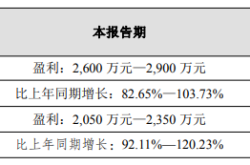
Net Profit Anticipated to Skyrocket by 103%: What Gives This Optical Company a Competitive Edge?
-
In Just One Year, China Unveils Unicorns Valued at 10 Trillion Yuan!
-
![]()
6 Park Companies Shine at WAIC: How Hong Kong Science Park Bridges AI from Research to Industry
-
![]()
Wang Wenjing’s Third Act: Can Yonyou Reinvent Itself in the AI Era?
-
![]()
Performance Coupe Entry Threshold Reduced to 170,000 Yuan: Assessing the 2027 Exeed ES's Prospects
-
![]()
Battery "Crisis" for 4 Million New Energy Commercial Vehicles
-
【Focus】Fluorinated Photosensitive Polyimide (FPSPI): A High-End Subdivision of PSPI with Great Potential in High-Tech Industries