Report | 2025 AI+CITY Urban Intelligent Agent Forward-Looking Research Report
 12/15 2025
 832
832
Foreword:
Recently, the National Data Development Research Institute unveiled the AI CITY Urban Intelligent Agent Forward-Looking Research Report. This report offers a comprehensive overview of the macro trends, industry trends, and technological trends shaping urban digital transformation. It also presents a forward-looking analysis of the technical architecture underlying AI CITY urban intelligent agents.
Cities across the globe are rapidly advancing into a new era of digital and intelligent development. The AI CITY, characterized by its perceptiveness, intelligence, empathy, and self-evolving capabilities, is poised to become the model for future cities. This report meticulously outlines the macro, industry, and technological trends driving urban digital transformation and delves into the technical architecture of AI CITY urban intelligent agents.
Overall, urban digital transformation is exhibiting the following key trends:
The urban architecture is evolving towards an AI CITY urban intelligent agent. AI CITY signifies a holistic upgrade of urban infrastructure. Through the vertical integration of 'urban domain intelligent agents,' 'urban intelligent hubs,' 'urban intelligent connectivity,' and 'urban intelligent interaction,' it creates a self-perceiving, intelligent, precisely executing, and continuously evolving urban intelligent agent. This agent injects fresh vitality into the evolution of urban intelligence.
The AI CITY urban intelligent agent is structured around 'three layers and two supports.' The technical reference architecture for the AI CITY urban intelligent agent includes the 'application layer, hub layer, and facility layer,' along with the 'security system and operational system,' forming a 'three-layer and two-support' framework. Together, they establish an open, compatible, innovative, scenario-driven, and integrated foundation that underpins the city-wide implementation of digital transformation.
The urban application architecture is shifting towards a super assistant orchestrating intelligent agents across diverse domains. The approach to constructing urban intelligent applications has undergone a significant transformation, moving away from function-centric, business-oriented applications to user-centric super assistants. These super assistants represent a new paradigm of intelligent applications driven by intent and seamless collaboration, redefining urban services.
Data + AI has emerged as a pivotal common foundational capability for cities. Urban data platforms and trusted urban data spaces are comprehensively enhancing data governance and trustworthy data circulation, facilitating the seamless flow of urban data. The urban intelligent hub accumulates various urban large models and industry knowledge bases, bolstering innovative capabilities in urban intelligent analysis, scheduling, supervision, and decision support, thereby fostering the enhancement of original urban innovation capabilities.
Intelligent integration has become a hallmark of digital infrastructure. The new-generation digital infrastructure, exemplified by intelligent interactive perception, intelligent connectivity networks, integrated computing power, advanced storage capacity, and multi-cloud management, forms the critical backbone of AI CITY. By fortifying intelligent digital infrastructure, the digital arteries of the city are unblocked, ensuring the city's smooth operation.
An integrated security protection and long-term operational assurance system is becoming the norm. The '5+1+1' full-stack security assurance system, comprising '5' lines of defense, '1' platform, and '1' set of professional security services, is designed to tackle the security challenges encountered throughout the entire lifecycle of artificial intelligence. The AI CITY urban operational system emphasizes four core elements: intelligent agents, data assets, intelligent hubs, and infrastructure.
-
![]()
Personnel Shuffle: Independent Director Mi Xuming Steps Down from OFILM
-
![]()
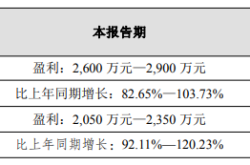
Net Profit Anticipated to Skyrocket by 103%: What Gives This Optical Company a Competitive Edge?
-
In Just One Year, China Unveils Unicorns Valued at 10 Trillion Yuan!
-
![]()
6 Park Companies Shine at WAIC: How Hong Kong Science Park Bridges AI from Research to Industry
-
![]()
Wang Wenjing’s Third Act: Can Yonyou Reinvent Itself in the AI Era?
-
![]()
Performance Coupe Entry Threshold Reduced to 170,000 Yuan: Assessing the 2027 Exeed ES's Prospects
-
![]()
Battery "Crisis" for 4 Million New Energy Commercial Vehicles
-
【Focus】Fluorinated Photosensitive Polyimide (FPSPI): A High-End Subdivision of PSPI with Great Potential in High-Tech Industries