Shenzhen's Unmanned Vehicle 2025 Annual Report Shines Bright: 1,122 Units in Operation, 1,940 Routes Established, and 8.66 Million Orders Fulfilled! In Just One Year, It Sets a Benchmark for the Natio
 02/05 2026
 776
776
Introduction
Shenzhen has just achieved a remarkable feat that has garnered attention across the entire industry.
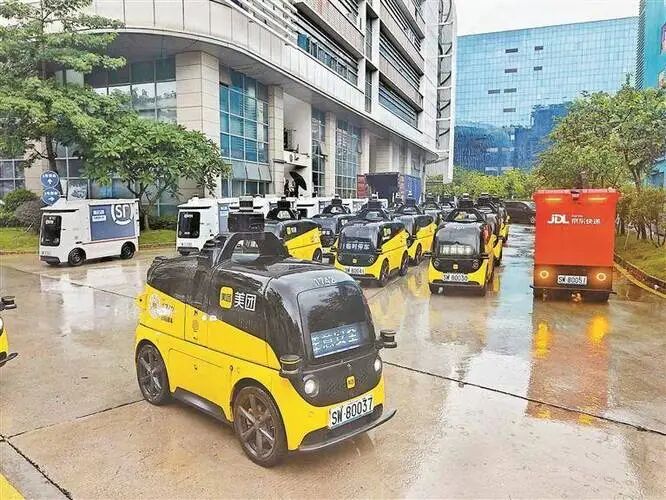
According to the '2025 Shenzhen Functional Unmanned Vehicle Operation and Development Annual Report,' the city has witnessed an astonishing leap in the operational scale of functional unmanned vehicles, soaring from 'hundreds to thousands' within a single year. The total number of vehicles surged from 393 at the beginning of the year to 1,122.
More significantly, Shenzhen has established a citywide operational network spanning over 7,191 kilometers. The total number of open routes expanded from 442 at the start of the year to 1,940, marking a 339% increase. Additionally, 8.66 million real orders, worth approximately RMB 73 million, were completed.
This growth is not merely numerical; it signifies the commercialization of autonomous driving in China, achieving, for the first time at the mega-city level, a complete closed loop of 'policy-platform-operation-commerce.'
Let's delve deeper into this with Unmanned Vehicle Cometh (WeChat Official Account: Unmanned Vehicle Cometh)!
(For further reading, please click: 'Shenzhen's Unmanned Vehicles Surpass 1,000, Reaching 1,122 Units: 86% Online Rate + RMB 16.58 Million Revenue, December 2025 Shenzhen Functional Unmanned Vehicle Operation Transforms from 'Pilot' to 'Cash Cow')

I. Decoding Acceleration: Behind the 185% Vehicle Growth and 829% Mileage Surge
Shenzhen's 'acceleration' is first evident in a series of explosive growth figures:
Operational Scale: The total vehicle count increased by 185.5%, surpassing 1,000 units.
Network Coverage: Open routes surged from 442 to 1,940, a 339% increase; total operational mileage extended from 774 kilometers to 7,191 kilometers, an 829% increase.
Service Breadth: Rapidly expanded from pilot programs in 3 districts to covering all 7 administrative districts citywide.
(For further reading, please click: '1,000 'Xiaozhu' Unmanned Vehicles: From Shenzhen to the Middle East! How Innovusion Leverages Local Wisdom to Forge a 'Golden Track' for Unmanned Vehicles')
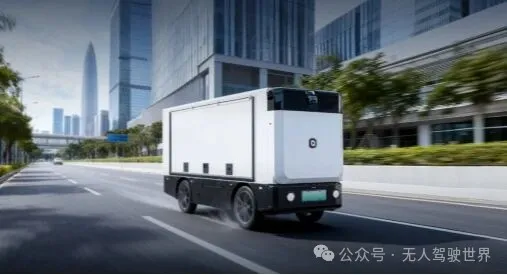
These figures reveal a core fact: Shenzhen's unmanned vehicles have evolved from scattered 'bonsai-style' demonstration sites into a preliminary 'urban transportation network.'
Notably, unmanned logistics vehicles accounted for 718 units, dominating the fleet.
This indicates that the primary driver of scale growth is not government-subsidized procurement but genuine, high-frequency 'last-mile' delivery demands from markets such as express delivery, fresh produce, and food delivery.
The 8.66 million annual orders serve as the best proof of market endorsement.
II. Systemic Success: The 'Shenzhen Equation' for Cracking Large-Scale Deployment
Merely increasing vehicle numbers would be just another 'money-burning game.'
Shenzhen's true significance lies in its systematic resolution of the three core challenges hindering large-scale unmanned vehicle deployment: 'difficulty in hitting the road,' 'chaotic management,' and 'low efficiency.'
First, Resolving 'Difficulty in Hitting the Road': The Nation's First '4123' Top-Level Design
Shenzhen pioneered a clear policy framework, providing explicit compliance paths for vehicle access, road rights, accident handling, etc.
This institutional design serves as a 'city manual,' informing enterprises which vehicles can operate, where, and how, significantly reducing policy uncertainty risks for businesses.
This is the fundamental prerequisite for the rapid expansion of vehicle numbers.
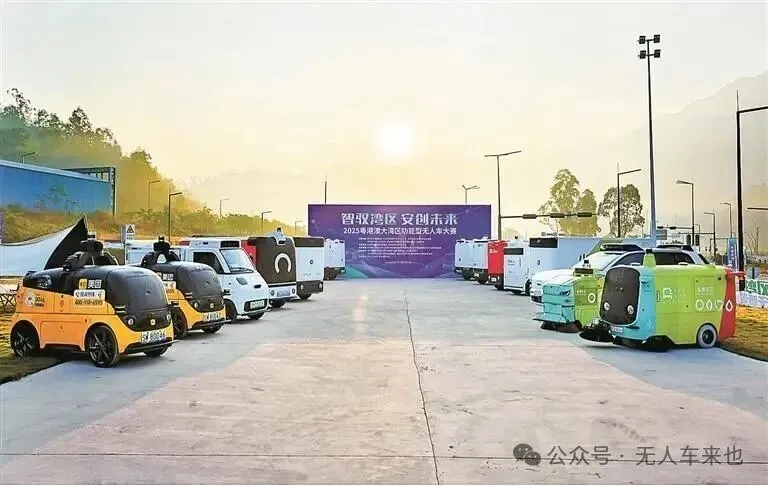
Second, Resolving 'Chaotic Management': Integrated Platform and 'Bus Group' Empowerment
Shenzhen launched the nation's first integrated management platform for functional unmanned vehicles, boosting approval efficiency by 75%.
More importantly, it innovatively introduced municipal bus groups for large-scale, professional operations.
This is akin to assigning experienced 'regular army' commanders to the scattered tech company fleets.
The bus groups' profound expertise in route planning, vehicle scheduling, safety supervision, and maintenance directly enhances the operational efficiency and reliability of the entire fleet.
Third, Resolving 'Low Efficiency': From 'Vehicle Intelligence' to 'System Intelligence'
Shenzhen's practice transcends the traditional focus on maximizing individual vehicle performance, instead constructing a 'vehicle-road-network-cloud' collaborative system intelligence.
Through dynamic road rights management and data interconnection, unmanned vehicles are no longer isolated information islands.
This system optimizes overall transportation capacity, preventing vehicle congestion or idle runs, which is the core efficiency secret behind the nearly 9-fold mileage increase with less than a 2-fold vehicle count growth.
III. Paradigm Export: A Replicable 'Smart City' Infrastructure Blueprint
The core value of Shenzhen's experience lies in providing a standardized, replicable model for constructing city-level intelligent connected transportation systems. This 'Shenzhen Paradigm' can be briefly summarized as:
Government Sets Rules: Issue clear, stable, and forward-looking top-level designs and regulatory standards to define the operational framework.
Platform Manages Operations: Establish a unified management and data platform to serve as the 'traffic control center,' enabling efficient approvals and global scheduling.
State-Owned Enterprises Lead: Rely on state-owned operators like bus groups to undertake large-scale, standardized fleet operations, ensuring safety and order.
Market Drives Innovation: Open scenarios to all qualified tech enterprises, using real commercial orders (e.g., logistics, sanitation) to drive technological iteration and cost reduction.
Data Fuels Cycle: Establish mechanisms like monthly data releases to feed operational data back into policy optimization and technological upgrades, forming a positive cycle.
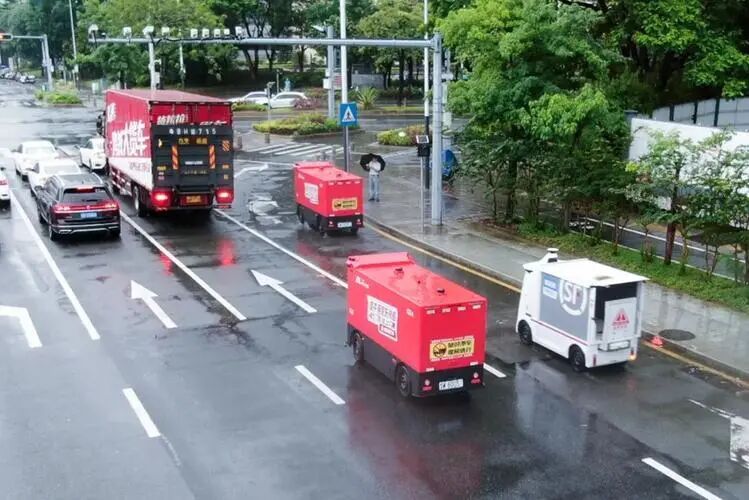
This integrated approach enables Shenzhen to successfully transform the deployment challenges of cutting-edge technology (autonomous driving) into a systemic governance and public service proposition that modern cities excel at.
It provides a clear 'infrastructure blueprint' for hundreds of other cities nationwide that are observing with interest.
IV. Sobering Reflections and Hot Prospects: Challenges After 1,000 Units and a Trillion-Dollar Future
Standing at the new starting point of a 1,000-unit network, Shenzhen and even the national unmanned vehicle industry, while celebrating, must also calmly confront the challenges of the next phase:
First is the health of the business model.
The RMB 73 million commercial value, distributed across 1,122 vehicles and 8.66 million orders, raises questions about the revenue and profit levels per vehicle and per order.
Can self-sufficiency and healthy expansion be achieved without relying on continuous capital infusions?
This is the critical inquiry for 'sustainable development.'
Second is the deep waters of technology and scenarios.
The current network growth primarily relies on relatively structured road segments.
As vehicle density further increases, requiring deeper penetration into older neighborhoods, coping with more extreme weather, and more complex human-vehicle mixed scenarios, will system reliability and costs face new bottlenecks?
Finally is ecosystem inclusivity and balance.
In the efficiency-prioritized large-scale expansion, how to balance sidewalk rights, the transition of traditional practitioners, and public psychological acceptance to achieve a balance between technological inclusivity and social harmony will be a more long-term issue.
However, problems and challenges cannot overshadow the tremendous achievements!
Shenzhen's 2025 practice firmly points to a future where functional unmanned vehicles are evolving from a 'technological innovation product' into a vital component of 'smart city core infrastructure.'
They are not just tools for cargo delivery and cleaning but also 'mobile sensor networks' that enable real-time perception of urban traffic flow, road conditions, and environmental quality.
In summary, Unmanned Vehicle Cometh (WeChat Official Account: Unmanned Vehicle Cometh) believes:
As Shenzhen's unmanned vehicles flow through the city's 7,191-kilometer network day and night, they transport not just packages but also a systemic methodology on how to integrate cutting-edge technologies into modern urban governance blueprints.
The value of this annual report far exceeds its impressive data.
It declares to the nation through a full year of large-scale practice in a first-tier mega-city that the technological, policy, and operational preparations for large-scale commercialization of autonomous driving are now complete.
What do you think, dear reader?
#UnmannedVehicleCometh #AutonomousDriving #SelfDriving #UnmannedVehicles
-
![]()
Net Profit Surges 13.65% Year-on-Year! Yutong Optics Reports RMB 1.782 Billion in H1 Revenue
-
![]()
Q2 Net Profit Slashes Losses by 80%! Has Costar Emerged from Its Darkest Hour?
-
AI Agents: The Paradigm Shift from 'Conversation' to 'Execution'
-
NVIDIA Takes Bold Strides to Lead in Both Hardware and Software Realms
-
![]()
It's Hard to Build Cars, Even Harder to Build Humans, and XPENG is Doing Both
-
![]()
Valuation Soars by $57 Billion: Three Entrepreneurs Born in the 1980s Forge an AI Unicorn Now Suddenly on the Market
-
![]()
How Can We Achieve the Goal of 100,000 Hydrogen Vehicles by 2030?
-
![]()
July Online Market for Consumer-Grade Sports Cameras: Robust Double-Digit Growth in Sales Volume and Value, Mid-Range Products Fuel Market Expansion