Hainan Sets 2030 Deadline for Phasing Out Fuel Vehicle Sales: Which Regions Will Be Next to Follow Suit?
 07/14 2026
 672
672
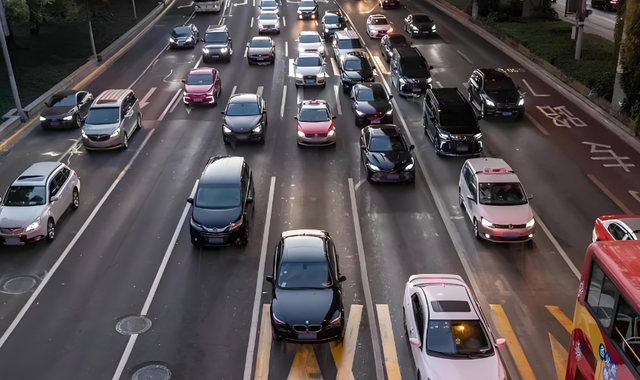
Hainan Province recently unveiled the <"15th Five-Year Plan" for Hainan's National Ecological Civilization Pilot Zone (Beautiful Hainan Construction "15th Five-Year Plan")>, explicitly outlining a "steady progression" towards banning fuel vehicle sales by 2030. This move positions Hainan as China's first provincial-level region to establish a definitive timeline for a complete prohibition on fuel vehicle sales across its entire jurisdiction, thereby expediting the electrification transition of China's automotive sector.
According to the plan, by 2030, all newly added and replaced vehicles in Hainan's public services, social operations, and private sectors will be new energy vehicles (NEVs). The proportion of NEV ownership is projected to surge from 23.75% in 2025 to 45% by then. Importantly, the policy clarifies that "a sales ban does not equate to a travel ban"—existing licensed fuel vehicles can still undergo annual inspections, remain on the roads, and be transferred without mandatory scrapping after 2030. Only the sale of new pure fuel-powered passenger vehicles will be prohibited.
In terms of implementation, Hainan adopts a "three-step" phased approach: The first phase is nearly complete, with full electrification of public sector vehicles such as buses, taxis, and sanitation vehicles. The second phase (2026–2029) will focus on incentivizing private vehicle replacement through government measures like purchase subsidies and parking discounts, during which fuel vehicles will still be available for sale. The third phase, commencing in 2030, will impose a complete ban on selling new pure fuel-powered passenger vehicles province-wide.
Additionally, the policy specifies that plug-in hybrids and extended-range electric vehicles fall under the NEV category and are exempt from the ban. This means Hainan consumers can still purchase hybrid models with engines after 2030, though pure fuel vehicles will exit the new car market. This arrangement strikes a balance between consumer demand and transitional space for traditional automakers' technological shifts.
Why Hainan Became the Pioneer
Hainan's status as China's first province to ban fuel vehicle sales is not coincidental but the result of multiple synergistic factors. From market foundations and geographical conditions to policy positioning, Hainan possesses unique advantages for implementing this ambitious policy.
Solid Market Foundations and Leading NEV Penetration: Data indicates that Hainan's NEV promotions reached 116,800 units in 2025, accounting for 62.9% of new vehicle sales. By April 2026, this penetration rate soared to 74.5%, consistently ranking first nationwide.
This implies that over seven out of every ten new vehicles sold in Hainan are NEVs. The market share of pure fuel vehicles has dwindled to around 40%, reducing resistance to policy implementation. As of early 2026, Hainan's NEV ownership reached 544,600 units, representing 23.95% of total vehicle ownership, also leading the country.
Geographical Advantages: As a relatively closed island economy, Hainan's automotive market has natural boundaries. With a land area of 35,400 km² and a ring-island highway of approximately 600 km, mainstream NEV driving ranges fully cover daily travel needs within the island.
Meanwhile, the island's stringent air quality requirements make fuel vehicle emissions more visibly impactful, amplifying the ecological benefits of a sales ban. Additionally, Hainan's high-temperature climate enhances electric vehicle battery performance, reducing technical challenges like range degradation in cold weather.
Limited Market Impact: Hainan's annual automotive sales volume of approximately 150,000–180,000 units accounts for just 0.5% of China's total 28 million annual sales. Even if policy implementation encounters setbacks, the impact remains contained within a minimal scale, avoiding systemic shocks to the national automotive industry. This makes Hainan an ideal "policy laboratory"—successes can be replicated nationwide, while issues allow for timely adjustments with controllable risks.
Strategic Policy Positioning: As China's National Ecological Civilization Pilot Zone and Free Trade Port, Hainan shoulders strategic missions to explore new green development models. The fuel vehicle sales ban serves as both a landmark ecological civilization initiative and a crucial component of building a green, low-carbon transportation system within the Free Trade Port framework.
The central government has granted Hainan full policy autonomy and pilot permissions, enabling it to lead the country in NEV promotion and charging infrastructure development. Currently, charging stations cover 100% of Hainan's townships, laying a solid infrastructure foundation for full electrification.
Market Impact: Limited Scale but Significant Signaling Effect
From a direct market perspective, Hainan's fuel vehicle sales ban will have a relatively limited impact on China's traditional automotive industry. After all, Hainan's annual auto sales account for just 0.5% of the national total. Even a complete halt to fuel vehicle sales in Hainan would barely affect national fuel vehicle sales volumes.
However, the policy's true significance lies in its strong signaling effect—it officially initiates the countdown to fuel vehicles' phase-out, profoundly influencing industry expectations.
Guiding Automakers' Production Planning: After Hainan clarifies it will no longer procure new fuel-powered commercial and private vehicles, OEMs will further adjust product strategies and capacity layouts. While Hainan's single market volume cannot alter corporate global plans, the policy signal will accelerate capacity reductions for fuel vehicles, channeling more resources toward NEV and hybrid models.
It is foreseeable that new fuel vehicle models will become increasingly scarce in the market, with dwindling configuration options. Fuel vehicles will gradually shift from mainstream products to niche supplements.
Influencing Consumer Purchasing Decisions: Although no unified national sales ban timeline exists yet, Hainan's policy implementation will accelerate shifts in consumer expectations. More buyers will begin considering fuel vehicles' residual value risks and long-term operating costs, favoring NEVs instead.
This transformation in consumer expectations will, in turn, push automakers to accelerate electrification transitions, creating a virtuous cycle where policies guide consumption, and consumption drives industrial upgrades. After the sales ban announcement, Hainan's second-hand fuel vehicle buyer pool will gradually shrink, with residual values likely declining continuously.
After 2030, pure fuel second-hand vehicles in Hainan will likely face depreciation pressures, with some vehicles requiring interprovincial circulation to find buyers. This decline in second-hand fuel vehicle values will further weaken their appeal to new car consumers, accelerating the market shift toward NEVs.
Industrial Reshuffling: From "Three Big Components" to "Three Electric Systems"
While impacts on complete vehicle manufacturers remain expectation-based, supply chain restructuring is already underway. The automotive industry is undergoing disruptive reshuffling—from traditional fuel vehicles' "engine, transmission, chassis" to NEVs' "battery, motor, electric control" systems. Hainan's sales ban policy will further accelerate this process.
Sharp Reduction in Component Quantities: Traditional fuel vehicles require approximately 30,000 components, while pure electric vehicles need only around 10,000. EVs eliminate intake/exhaust systems, fuel pathways, cooling systems, complex transmissions, and other components, rendering many traditional suppliers obsolete.
Engines, transmissions, fuel injection systems, and exhaust systems—once core and high-margin components—are being replaced by motors, batteries, and electric control systems. Market research predicts that between 2024–2026, the global markets for traditional internal combustion engines, fuel injection systems, mechanical transmissions, and conventional exhaust systems will shrink by 18%, 12%, 10%, and 15% respectively.
Accelerated Phase-out of Internal Combustion Engine Supply Chains: With domestic NEV retail penetration exceeding 60% and fuel vehicle markets continuously contracting, engine and transmission suppliers face plummeting orders.
These companies' production lines and R&D are highly tied to fuel routes, making transformation costs prohibitively high. Sustained heavy losses are accelerating industry tail-end eliminations. Thousands of domestic engine block manufacturers, transmission gear factories, and exhaust pipe producers are undergoing a silent culling. Small and medium-sized component makers unable to transition in time will gradually exit the market within three to five years.
Shift in Supply Chain Bargaining Power: In the fuel vehicle era, OEMs held absolute dominance over the supply chain, with component suppliers in relatively weak positions. In the NEV era, power batteries account for about 40% of EV costs, elevating battery companies to core supply chain positions.
CATL, BYD, and other leading battery firms now wield significantly enhanced bargaining power, even influencing OEMs' product planning and pricing strategies. The automotive supply chain's value distribution is shifting from powertrain components to battery systems, with traditional Tier 1 suppliers facing marginalization risks.
Global Supply Chain Reshaping and Chinese Companies' Overtaking Opportunities: During the traditional fuel vehicle era, core technologies were controlled by European, American, and Japanese companies, with giants like Germany's Bosch and ZF, Japan's Denso and Aisin dominating the supply chain.
In the NEV era, Chinese companies have achieved comprehensive breakthroughs in "three electric systems," controlling over 70% of global power battery capacity and leading in motor and electric control technologies. Hainan's sales ban policy, as another signal of China's accelerated electrification, will further consolidate China's advantageous position in NEV supply chains, driving profound reshaping of global automotive supply networks.
The German Automotive Industry Association predicts that by 2035, Germany's automotive sector will lose approximately 225,000 jobs, with suppliers bearing the brunt. Traditional component giants like ZF also face immense pressure from layoffs and transformations.
Dealer Network Rebirth and Aftermarket Restructuring
The fuel vehicle sales ban's impact extends beyond production, profoundly reshaping automotive distribution and aftermarket ecosystems. From 4S dealerships to maintenance networks, from gas stations to second-hand vehicle markets, the entire automotive service chain faces deep restructuring.
Accelerated Transformation of Traditional Fuel Vehicle 4S Dealerships: After 2030, Hainan's complete ban on new fuel vehicle sales means traditional fuel vehicle 4S stores will lose their core profit source—new vehicle sales.
Numerous dealerships focusing on fuel vehicles and their sales teams must fully transition to NEVs. Small stores and dealers unable to keep pace will be eliminated. Hainan's automotive market will enter an era dominated by NEV dealerships. This trend is not limited to Hainan—with rising national NEV penetration, traditional dealers nationwide face transformation pressures. Those operating single fuel brands without NEV service capabilities will confront severe survival challenges in the coming years.
Maintenance System Restructuring and Technician Skill Transitions: Fuel vehicle maintenance focuses on mechanical systems, requiring regular oil changes, filter replacements, spark plug replacements, and transmission fluid changes. These frequent, complex services constitute major profit sources for 4S stores. EVs, with their simplified structures lacking engines and transmissions, mainly require battery and motor inspections, drastically reducing maintenance items and extending service intervals.
This means traditional fuel vehicle maintenance businesses will see sharp declines. EV aftermarket maintenance value is estimated at just one-third that of fuel vehicles. Numerous traditional mechanics must transition to "three electric systems" maintenance, with those unable to upgrade being phased out by the market. Meanwhile, the parts supply system will shift—demand for engine and transmission components will continuously contract, while new businesses like battery and motor repairs emerge.
Urgent Gas Station Transformations and Energy Terminal Reshaping: As fuel vehicle ownership peaks and declines, gas station traffic and sales will enter an irreversible downturn. Hainan's sales ban policy casts further shadow over local gas stations' futures.
It is foreseeable that Hainan's gas stations will face large-scale transformations—either adding charging services to become "gas + charging" hybrid stations or shutting down entirely to make way for charging stations. This trend will spread nationwide, turning gas stations—once prime assets—into "depreciating assets." Regulators now factor in sales ban policies during asset merger reviews, and capital markets are quietly downgrading valuations of gas station assets.
Simultaneous Adjustments in Insurance and Second-hand Vehicle Markets: NEV insurance pricing and claims models differ significantly from fuel vehicles, requiring insurers to rebuild risk control systems and pricing models for NEV insurance. The second-hand vehicle market also faces restructuring, with fuel vehicle residual values continuously declining and NEV residual assessment systems yet to be established. With increasing cross-regional second-hand vehicle flows, a unified national NEV residual assessment standard is urgently needed.
Which Regions Will Follow? Nationwide Sales Ban Timeline Projections
After Hainan fired the first shot in banning fuel vehicle sales, a key question arises: Will other provinces follow? When will a nationwide sales ban timeline emerge? Current policy directions and market trends suggest China will not adopt Hainan's "one-size-fits-all" model but will likely pursue a phased, differentiated approach.
MIIT Clarification: No Nationwide Uniform Ban; Localized Approaches as Priority: In response to market speculation about a potential nationwide ban on fuel vehicle sales, the Ministry of Industry and Information Technology (MIIT) has officially stated that, given China's vast regional disparities in development between the east and west, north and south, a one-size-fits-all national sales ban timeline is impractical.
Cui Dongshu, Secretary-General of the China Passenger Car Association, has also publicly stated on multiple occasions that "China should not implement a blanket fuel vehicle sales ban." He cited challenges such as the high heating energy consumption of electric vehicles (EVs) in northern cold regions and the uneven distribution of charging infrastructure. This indicates that the Hainan model will not be simply replicated across the country. Instead, each region will develop tailored strategies based on its economic development, climate conditions, and infrastructure.
Phased, Regional, and Sector-Specific Progression: National policy suggests a likely "three-step" approach: first, conducting pilot programs in economically developed regions with high new energy vehicle (NEV) penetration and comprehensive charging infrastructure, such as Hainan; second, achieving full electrification in public sectors, including buses, taxis, sanitation vehicles, and official vehicles (a goal already largely accomplished in most Chinese cities); third, gradually extending electrification to the private vehicle sector. Other provinces are expected to follow Hainan's phased strategy by initially setting staged targets for NEV market share in new vehicle sales rather than directly announcing sales ban timelines.
First-Tier Cities Likely to Lead, with Timelines Around 2035: Industry consensus suggests that Beijing, Shanghai, Shenzhen, Guangzhou, and other first-tier cities, along with economically developed regions like the Yangtze River Delta and Guangdong-Hong Kong-Macao Greater Bay Area, may gradually introduce fuel vehicle sales ban timelines between 2030 and 2035.
This aligns with the national Energy-Saving and New Energy Vehicle Technology Roadmap 3.0 goal of "traditional pure fuel vehicles gradually exiting mainstream new vehicle markets by 2035." These regions boast high NEV penetration, comprehensive charging infrastructure, and receptive consumers, meeting the conditions for early sales bans. Second- and third-tier cities may extend their transition periods to 2035–2040, while resource-based and remote regions may delay further based on the progress of industrial transformation.
Nationwide Comprehensive Ban Implementation Will Take Time; Fuel Vehicles Will Not Disappear Suddenly: The industry generally predicts that the period from 2035 to 2040 will be a critical window for phasing out new fuel vehicle sales nationwide. By then, the penetration rate of NEVs is expected to exceed 70%, with fuel-powered new vehicles accounting for less than 10%.
However, this process will not involve forced elimination but rather a gradual transition driven by market choices, policy guidance, and infrastructure development. Older, high-fuel-consumption, and low-emission fuel vehicle models will be phased out first, while technologically upgraded, energy-efficient fuel vehicles and hybrid models will continue to exist for a considerable time.
In regions with weak infrastructure, such as cold northern areas, remote counties, and mountainous regions, issues like reduced winter range for EVs and insufficient charging infrastructure are unlikely to be fully resolved in the short term. Fuel vehicles will continue to play a significant role in these areas for an extended period.
The True Significance of Hainan's Ban: A Policy Test Case for the Nation: The true value of Hainan's ban lies not in other provinces copying its timeline but in providing a comprehensive policy test case for the entire country. The experience Hainan gains in implementing the ban, including designing transition periods, balancing consumer interests, improving charging infrastructure, addressing existing fuel vehicles, and driving industrial chain transformation, will offer crucial references for other provinces.
When Hainan's practice demonstrates that banning fuel vehicles is feasible and stable, resistance to similar policies in other provinces will significantly decrease. In this sense, Hainan serves as China's "first domino" in the automotive electrification transition. Its fall will trigger a chain reaction, but the timing and manner of each subsequent domino's fall will vary.
"Accelerated Progress" of Independent Automakers vs. "Slow Response" of Joint Ventures
Facing the declining trend of fuel vehicles, the transition progress of domestic traditional automakers shows significant divergence. Independent brands have seized early advantages in electrification through strategic determination and rapid response, while joint ventures, constrained by global strategies and technological dependencies, are notably slower. The implementation of Hainan's ban policy will further amplify this divergence and accelerate the reshaping of the industry landscape.
Among independent automakers, BYD has been the most thorough in its transition. As early as 2022, BYD announced the discontinuation of pure fuel vehicle production, fully focusing on new energy. Since then, its sales have surged, with NEV sales expanding from 1.79 million in 2020 to 4.545 million in 2025, ranking first globally for several consecutive years.
Leading independent automakers like Geely, Changan, and Chery are also accelerating their transitions. In 2025, Geely's NEV sales grew by 90% year-on-year, Changan's by 51%, and Chery's by 54.9%. This trend continued into 2026. Geely set a 2026 NEV sales target of 2.22 million, aiming for a 64.3% penetration rate; Changan's NEV sales exceeded 1.1 million. These companies have successfully capitalized on the electrification wave through rapid decision-making and a deep understanding of the Chinese market.
Central state-owned enterprises like SAIC and FAW prioritize "stable growth and transformation." SAIC Motor maintained its industry leadership with 4.5075 million annual sales, focusing on both NEVs and overseas markets; FAW Group sold 3.302 million vehicles annually, with independent NEV sales growing by 71.4%. These companies, burdened by their size, transition at a steady pace but are improving their NEV product portfolios through technology introduction and independent R&D, leveraging their strong resource integration and systemic advantages.
In stark contrast to the rapid progress of independent brands, joint ventures lag in electrification. Data shows that the electrification rates of major joint ventures generally remain in the single digits, with Volkswagen peaking at just 7.7% in 2024.
Traditional joint venture giants like Volkswagen, Toyota, and Honda, constrained by global strategic coordination, dependence on fuel vehicle technology, and China's joint venture systems, are slow to launch NEV products and lack market competitiveness. Their market share in China's NEV sector continues to shrink.
Hainan's ban policy will particularly impact these brands. In a market like Hainan, where NEV penetration exceeds 70%, joint ventures' fuel vehicle sales already face immense pressure. After the 2030 ban, if they fail to quickly introduce competitive NEV products, they will essentially lose this market.
The divergence in transitions between independent and joint venture brands essentially reflects differences in strategic determination and organizational flexibility. Independent brands, unburdened by historical constraints, can fully commit to NEVs, allocating all resources to electrification and intelligent R&D. In contrast, joint ventures, weighed down by massive fuel vehicle assets and global coordination challenges, transition like "elephants turning," with long decision chains and slow execution.
Additionally, independent brands better understand Chinese consumers' needs, investing heavily in areas like intelligent cockpits, in-vehicle systems, and assisted driving, which are highly valued by Chinese consumers. This leads to continuous improvement in product competitiveness. As ban policies advance in provinces like Hainan, the market environment will increasingly disadvantage slow-transitioning enterprises. Joint ventures face not just declining market share but the risk of marginalization in the new technological revolution.
Notably, China's automotive industry profit margin fell to its lowest in a decade in 2025. This is not a sign of industry decline but a typical feature of the transition period, as companies convert profits into massive R&D investments, accumulating long-term assets like intelligent chassis and autonomous driving algorithms.
For traditional automakers, electrification is a high-investment, long-cycle process that significantly drags on short-term profitability. However, this investment is necessary. Only companies that successfully navigate the transition pain can secure a place in the future NEV market. The signal effect of Hainan's ban policy will prompt automakers to further increase NEV R&D investments, accelerate the elimination of outdated fuel vehicle production capacity, and drive industry-wide transformation and upgrading.
A Prelude, Not an Epilogue, to Industrial Transformation
The implementation of Hainan's 2030 ban on fuel vehicle sales is a landmark event in China's automotive industry development. It does not mark the end of the fuel vehicle era but the beginning of the NEV era.
In the short term, Hainan's single-market size limits the policy's direct impact, and the national fuel vehicle market will not experience severe turmoil. However, in the medium to long term, the policy's signaling effect far exceeds its actual market impact. By establishing a clear timeline for fuel vehicle exit through provincial legislation, it sets a definitive expectation for the entire industry.
For traditional automakers, this means the transition window is narrowing rapidly, and any hesitation may come at a heavy cost. For parts suppliers, it is the final transition alert, and those unable to keep pace will be ruthlessly eliminated by the market. For dealers and aftermarket players, it is a transformation that must be actively embraced; passive waiting leads only to dead ends.
From a broader perspective, Hainan's fuel vehicle ban is a concrete practice of China's "dual carbon" strategy in the transportation sector and a crucial step for China's automotive industry to overtake competitors through technological innovation.
In the traditional fuel vehicle era, China's automotive industry long followed a "market-for-technology" approach, with core technologies controlled by others. In the NEV era, China has achieved a historic leap from following to running alongside and then leading. In 2025, China's NEV exports exceeded 3 million, with brands like BYD competing head-on with traditional giants in the global market.
Hainan's pilot program will accumulate valuable experience for China's NEV industry, further solidifying China's leading position in the global automotive industry transformation. Of course, fuel vehicles will not disappear overnight. The normal use of existing fuel vehicles will be ensured, and hybrid models will continue to exist as a transitional solution for a long time. The fuel vehicle market in vast inland and northern regions will also have a considerable lifespan.
This is a gradual, gentle, and people-centric transition process, not a revolutionary upheaval. Policy designers have fully considered consumers' practical needs, the industrial chain's capacity, and regional development disparities, providing ample buffer periods for the transition.
Looking back from 2026, China's automotive industry is undergoing a historic transformation, from Hainan's initial plan to nationwide industrial change. Traditional automakers' transition pains, supply chain restructuring, dealers' rebirth, and employment market adjustments will unfold over the next decade. Hainan, as the "test field" for this transformation, will provide valuable experience and lessons for the entire industry. For every enterprise and individual involved, embracing change and actively transitioning is the only correct choice to navigate this industrial transformation.
The era of fuel vehicles will eventually end, but the story of the automotive industry is far from over. On the new track of electrification, intelligence, and connectivity, an even more exciting competition has just begun.
-
![]()
Net Profit Surges 13.65% Year-on-Year! Yutong Optics Reports RMB 1.782 Billion in H1 Revenue
-
![]()
Q2 Net Profit Slashes Losses by 80%! Has Costar Emerged from Its Darkest Hour?
-
AI Agents: The Paradigm Shift from 'Conversation' to 'Execution'
-
NVIDIA Takes Bold Strides to Lead in Both Hardware and Software Realms
-
![]()
It's Hard to Build Cars, Even Harder to Build Humans, and XPENG is Doing Both
-
![]()
Valuation Soars by $57 Billion: Three Entrepreneurs Born in the 1980s Forge an AI Unicorn Now Suddenly on the Market
-
![]()
How Can We Achieve the Goal of 100,000 Hydrogen Vehicles by 2030?
-
![]()
July Online Market for Consumer-Grade Sports Cameras: Robust Double-Digit Growth in Sales Volume and Value, Mid-Range Products Fuel Market Expansion