Lobster Craze Persists, So Why Has Muse Gone Viral Once Again?
 09/29 2026
 503
503
The Tipping Point for AI Agent Commercialization: From the Lobster Bubble to Muse's Meteoric Rise
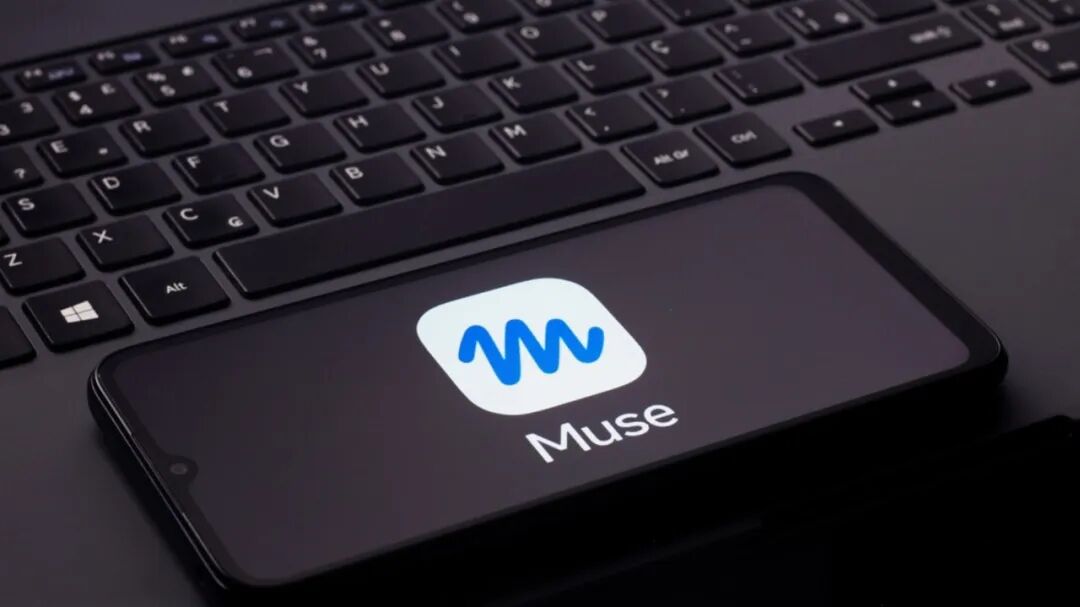
The hottest topic in the AI community lately is Meta's Muse. What's your take?
The inquirers range from investment professionals to former colleagues heading product teams, and entrepreneurs dabbling in AI Agents. Everyone shares a common concern: the Lobster craze, spearheaded by OpenClaw earlier this year, has barely died down, and now Muse is all the rage. Will it also fade into obscurity after two months of buzz?
To address this question, we must delve into Muse. On the surface, its feature set is indistinguishable from Lobster's: browsing the web, logging into email, filling out forms, booking flights, and placing orders. What sets Meta's approach apart lies at the foundational level.
For every Muse user, Meta allocates a dedicated virtual machine in the cloud, equipped with a browser, file storage, and program execution capabilities. When you assign a task, such as "Help me find cheaper car insurance," Muse operates autonomously within this virtual environment: navigating web pages, comparing plans, filling out forms, and completing transactions. Even if you close the app, it continues running. In contrast, Lobster operates on your local computer and halts when you shut it down; Muse's virtual machine runs in Meta's data center, working even while you sleep.
According to Sensor Tower data, Muse was downloaded 730,000 times within five days of its launch, topping the U.S. App Store free chart a week later, surpassing ChatGPT, Gemini, and Claude. By September 21, cumulative downloads exceeded 2.5 million, with 642,000 daily active users in the U.S. mobile market, compared to ChatGPT's 231,000 at the same time. Meta's stock price soared 11.43% in a single day, adding nearly $200 billion to its market value.
Zuckerberg described this as a "home run" in an interview.
01 Why Did the Lobster Craze Fizzle Out?
OpenClaw in early 2026 had all the hallmarks of a viral sensation. It was open-source, ran on users' local computers, and received instructions via WhatsApp or Telegram. A single sentence in the chat box would prompt it to open browsers, operate software, and organize files on the computer. In February, Meituan launched a company-wide "Lobster Farming Campaign," with deployed employees voluntarily sharing screenshots, rapidly fostering a sense of identity. Its skill marketplace, ClawHub, had accumulated over 18,000 skills by March.
Then, issues emerged. The first was cost. Lobster was online 24/7, constantly maintaining context, invoking models, and retrying failed tasks. Users subscribing to Claude for $20 a month through Lobster consumed more computing power than serious users spending hundreds of dollars on APIs. Anthropic finally succumbed to the pressure. On April 4, Anthropic notified users via email that Claude subscriptions would no longer cover usage through third-party tools like OpenClaw; continuing required purchasing usage-based packages. Users found that a $16 token package could be exhausted in an hour.
The second issue was security. On March 11, the National Network and Information Security Information Notification Center issued a formal risk alert, stating that OpenClaw posed severe security risks, potentially leading to leaks of core business data and code repositories in the financial and energy sectors. Security researchers also discovered that Lobster's gateway trusted all traffic from localhost by default, allowing attackers to hijack the entire Agent within minutes via a single email. More absurdly, Lobster's founders had their GitHub and X accounts phished, with scammers using their old identities to issue a fake Solana token, making off with $16 million.
The third problem was the most fundamental: most people didn't actually have much for it to do. Wang Puzhong, CEO of Meituan's Core Local Commerce, later reflected that AI was crammed into countless daily scenarios, burning millions of dollars in bills daily. Some erroneous judgments generated by "lobster farming" even began interfering with real operations. By August, OpenClaw's traffic had halved, and the activity of derived Agents had plummeted. But it didn't die; the project is still maintained, skills remain on ClawHub, but it retreated from mass hysteria to the developer circle, becoming a niche yet beloved geek toy.
After completing a full cycle in eight months, the lessons left by Lobster are clear: self-deployment, users burning their own tokens, and recklessly exposing computer permissions have a ceiling within the geek community. Ordinary users, after crunching the numbers, heeding risk warnings, and realizing they had no specific tasks to solve, naturally walked away.
02 What Did Muse Get Right at the Product Level?
On the surface, Muse and Lobster highly overlap in features: browsing the web, filling out forms, booking flights, and placing orders. However, the difference in product design becomes apparent upon use, with Meta addressing nearly every pitfall Lobster encountered.
Let's start with the most critical difference at the architectural level.
Every Muse user has a dedicated virtual machine in the cloud, housing the browser, files, and programs. After assigning a task, it executes autonomously within this virtual environment, continuing even if you close the app. A netizen tested it by asking it to compare prices for a down jacket; it spent over ten minutes scanning dozens of websites, automatically applying discount codes, and completing the purchase at the lowest price available.
In contrast, Lobster runs on local computers and stops when shut down, while Muse's virtual machine operates 24/7 in Meta's data center. This difference transforms it from a tool into an assistant.
Security design is Meta's most noteworthy innovation this time.
This virtual machine, dubbed Secure VM, strongly isolates user data within an independent virtual environment. Inside, a security agent named Sentinel monitors data flows, intercepting high-risk operations for user confirmation. Passwords and payment information are processed through an independent module, invisible to Muse. For payments, it partners with Stripe to generate one-time virtual card numbers, eliminating the need to share real card details with the Agent. Compared to Lobster's security vulnerabilities, this design adheres to the product logic of letting the Agent work without giving it the ability to harm you.
Zuckerberg mentioned in an interview that this virtual machine is akin to a computer exclusively yours, hidden under your desk.
Meta also adopted a smart distribution strategy. Lobster required self-deployment, environment configuration, and error troubleshooting, while Muse is integrated into WhatsApp. You can assign tasks by simply @-ing it in the chat box you already use daily, with registration and immediate usability. Combined with a free tier and two subscription options at $20 and $100, Meta shoulders the computing costs, freeing users from token anxiety.
However, Muse is far from celebrating victory. Recently, Amazon revoked its shopping privileges, displaying a popup stating that unauthorized AI Agent access violates usage terms. Behind this is Amazon's $68 billion advertising business last year; Agents don't scroll or view sponsored listings, leaving no room for the advertising model in Agent transactions.
Interestingly, Shopify announced a partnership with Muse. Along with Google's Universal Commerce Protocol launched in January this year, they've brought on over 20 retailers and payment networks, including Etsy, Target, Walmart, Visa, Mastercard, and Stripe. While Amazon blocks the door, Shopify opens it, reflecting differing attitudes toward Agents between the traffic-based and commission-based business models.
Trust in data also remains a concern. An Oppenheimer survey of 1,500 U.S. consumers found that only 8% trusted Meta with their passwords, while 58% were unwilling to entrust their passwords to any Agent. On September 28, a zero-day vulnerability was discovered in the macOS version, allowing local malware to hijack dictation and identity tokens. Meta released a hotfix the same day. A deeper contradiction lies in Meta's core advertising business; its promise to keep user data out of advertising systems may not hold long. As Agents become more successful, users browse less, eroding Meta's own advertising revenue.
03 The Answer for the Chinese Market Lies in the Operating System, Not Apps
In the U.S., Apps are isolated islands, forcing Agents to open browsers and navigate independently, only to be blocked by walls like Amazon's. The Chinese landscape is different, with super Apps like WeChat, Alipay, Meituan, and Taobao forming a walled city from the outset, telling all outsiders that the browser route is a dead end.
Thus, the answer for the Chinese market lies at the operating system level, not the App level.
ByteDance's approach is to build a new phone. On June 24, the professional version of Doubao with office task mode went live, transforming AI from a Q&A assistant into a tool capable of operating local computers, organizing files, controlling browsers, and writing weekly reports on schedule. On September 14, the consumer version of Doubao Mobile Assistant was released, followed two days later by the launch of the Nubia NaviX Ultra, priced starting at 5,999 yuan, with over 360,000 pre-orders across the web.
This phone embeds large-model Agents into the deepest layers of the operating system. AI on this phone no longer exists as a standalone App; it is the system itself, featuring a dedicated AI button with fingerprint recognition on the side. Press it, speak, and it handles tasks across Apps.
ByteDance's confidence stems from its user base. QuestMobile's 2026 mid-year report shows that Doubao has 382 million monthly active users, a 172.1% year-over-year increase, more than double the 167 million of the second-place Tongyi Qianwen.
Tencent took a different path. Tencent Yuanbao had around 9 million daily active users in Q1 2026, failing to catch up with Doubao despite a $1 billion investment. However, Tencent holds WeChat. According to 36Kr, Tencent has partnered with Huawei, Honor, Xiaomi, OPPO, and Vivo to launch WeChat's A2A assistant capabilities, excluding ByteDance from this cooperation list.
Tencent's intention is clear: Agents don't need to be embedded in the operating system; having them grow within WeChat is sufficient. WeChat offers user relationships, payments, Mini Programs, and official accounts.
Behind these two approaches lies the same question: who can get the super Apps to open their doors first?
In the U.S., Amazon closes the door while Shopify opens it, with the UCP alliance gradually expanding. In China, Tencent has partnered with five phone manufacturers to shut ByteDance out, while ByteDance bypasses WeChat by building its own phone and integrating AI into the system's core. The Doubao team also released a screen automation operation declaration protocol called SAEP, giving Apps a 30-day notice period to decide whether to accept AI operations. Real-world tests show that mainstream Apps like WeChat, Meituan, and Taobao still cannot be automated, with only ByteDance's own products flowing smoothly.
Lobster taught the industry how to build a functional Agent, while Muse is answering how to make the public trust it with their passwords. However, actions over the past two weeks reveal that the true decisive factor has emerged. Model intelligence is no longer the key; the real variable is who holds the keys. On September 28, OpenAI was urgently developing a personal assistant named "o" to counter Muse, expected to launch at Dev Day. On the same day, reports surfaced that Wall Street was revaluing winners and losers in the wake of Muse's rise.
Lobster hasn't retired; it's merely retreated to the geek community. Whether Muse can break out remains to be seen, but one thing is clear: the Agent battle has just entered the second half.
— END —
-
![]()
Baolong Technology: Air Suspension Supports All Growth, But 2.6 Billion in Short-Term Debt Looms—Can Quality Be Sustained?", "Baolong Technology, Revenue, Profit, Air Suspension, Short-Term Borrowings
-
![]()
Why Does the Beijing-Tianjin-Hebei Region, Boasting a Trillion-Yuan Automotive Industry, Aspire to Become a World-Class Automotive Hub?
-
![]()
China’s Wealthiest Entrepreneur Zhang Yiming Leads in Computing Power, Outpacing Alibaba, Tencent, Baidu, and Huawei
-
![]()
Two Major Auto Brands Officially Merge!
-
![]()
AMD Acquires Li Feifei's Spatial Intelligence Startup World Labs: Accelerating the Deployment of Physical AI
-
![]()
Mistral, the second largest AI company in Europe, completes €3 billion Series D funding round, with valuation rising to €21.3 billion
-
![]()
Huawei’s Tri-Fold Phone Is a Sensation, But Another Buzz Is Even More Electrifying
-
![]()
National Day & Double 11 Refrigeration and Laundry Market Outlook: Navigating Growth Amid Structural Shifts