Two Major Auto Brands Officially Merge!
 09/29 2026
 351
351
The shakeout within the new energy vehicle (NEV) sector has now rippled through to the internal operations of Changan Automobile.
On September 28, an exclusive report from Yicai revealed that Changan Automobile issued an internal notice to establish the AD Collaborative Development Department. The acronym AD is derived from the initials of Avatr (AVATR) and Shenlan (DEEPAL). The long-rumored integration of these two brands has transitioned from a strategic concept to a substantive implementation phase.

Many are aware that Avatr and Shenlan are sibling brands under Changan, but their developmental trajectories in recent years have diverged significantly. One brand boasts top-tier resources yet grapples with sales pressure and sustained losses, while the other, independently nurtured by Changan, has witnessed soaring sales. Now, as these two brands embark on deep collaboration, will it result in a joint breakthrough or a silent organizational consolidation?
Same Root, Different Fates: The Widening Gap Between the Two Brands
Let's first delve into the origins of these two brands.
Avatr can be likened to the 'ultimate rich second-generation' in the NEV sector. The brand was initially established in 2018 as Changan NIO, with Changan and NIO each holding a 50% stake, and Li Bin serving as chairman. Subsequently, NIO withdrew, and in 2021, Changan NIO was officially renamed Avatr Technology. Changan then brought in Huawei and CATL to form the CHN tripartite collaboration model: Changan is responsible for vehicle manufacturing, Huawei provides intelligent cockpit and driving technologies, and CATL supplies the battery systems.
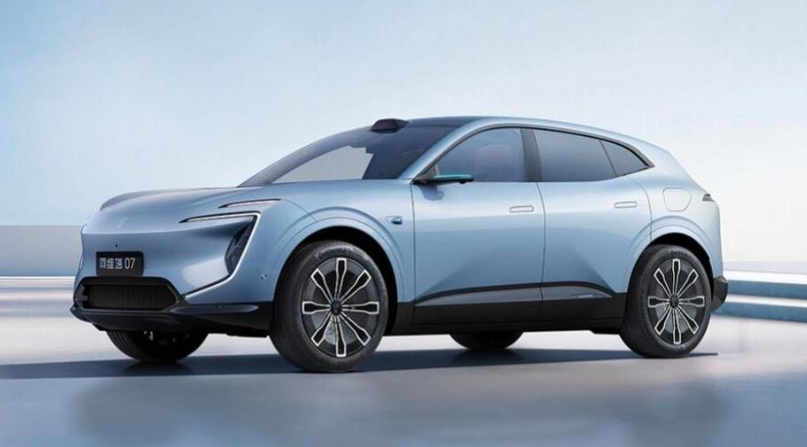
In terms of equity structure, Changan is the controlling shareholder, and CATL is the second-largest shareholder. Although Huawei did not take a stake, in 2025, Avatr invested 11.5 billion yuan to acquire a 10% stake in HiNova, the independent company spun off from Huawei's automotive BU, indicating a high degree of technical binding. Avatr is positioned as a high-end intelligent electric vehicle brand, with prices ranging from 200,000 to 700,000 yuan, generating significant industry expectations.
However, the star-studded lineup failed to translate into stable sales. In 2023, Avatr delivered only about 27,600 units. By 2025, it reached its peak with over 120,000 units delivered annually. However, by 2026, pressure mounted sharply, with 27,619 units delivered in the first half, representing a year-on-year plunge of 51.3%. The profit outlook is equally bleak, with Avatr reporting a net loss of 1.16 billion yuan in 2025, and the prospectus warning of a high likelihood of continued losses in the 2026 fiscal year.
On the other hand, Shenlan Automobile is Changan's independently nurtured NEV mainstay. It originated from Changan's 'Shangri-La Plan' new energy project in 2018, with the Shenlan brand officially launched in 2022 and renamed and independently operated in 2023. Positioned as a young, tech-driven sports brand, with prices ranging from 100,000 to 300,000 yuan, it follows a dual route of pure electric and super extended-range technologies, targeting the mass consumer market.
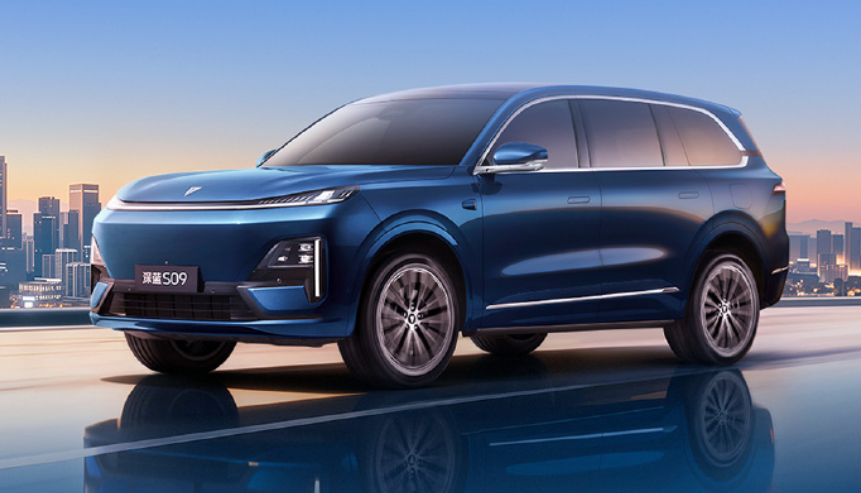
Without the backing of external giants, Shenlan has achieved remarkable results. Sales surpassed 220,000 units from January to August 2026, and on September 28, the same day the AD Collaborative Department was officially announced, Shenlan celebrated the rollout of its one-millionth vehicle.
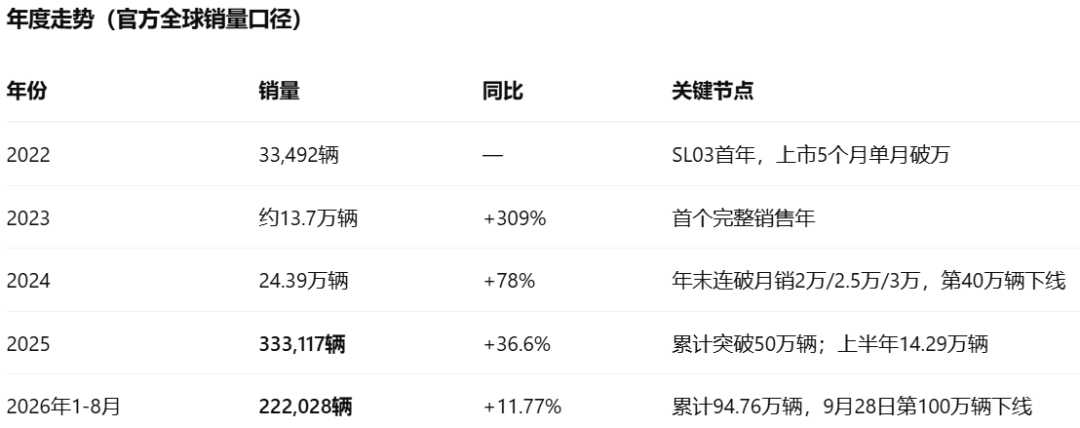
One high-end brand continues to burn money, while the other volume-focused brand supports the overall sales. These two sibling brands, operating independently with duplicated investments in R&D, supply chain, and back-office functions, have led to severe internal resource consumption, making integration a logical next step.
AD Collaborative Department Officially Established: Organizational Restructuring as the Core of This Integration
As early as April this year, Changan publicly announced the integration plan of the two major brands, incorporating it into its '1445' global strategy. The goal is to build a mid-to-high-end brand group with annual sales of 1.5 million units by 2030, with Shenlan contributing 1 million units and Avatr 500,000 units, and overseas sales accounting for over 40%. The entire integration plan is scheduled to be completed by the end of 2026.
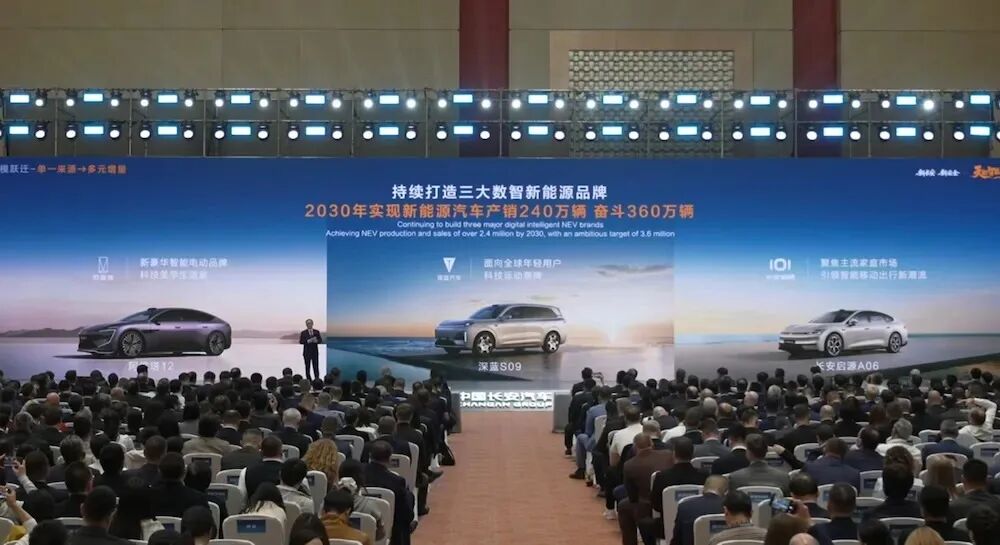
Changan's Chairman Zhu Huarong set the '2 Unchanged, 2 Shared' principles at the time: unchanged strategies and brand operations; shared system capabilities and resources such as technology and supply chains. In simpler terms: the front-end sales and brand images remain independent; the mid-to-back-end R&D, manufacturing, supply chain, and HR and finance functions are integrated and shared. Official estimates suggest that resource sharing could reduce overall costs by 20%-30%.
The establishment of the AD Collaborative Development Department is the most critical aspect of this reform. The department is designated as a first-tier department within the group, overseeing the collaborative business of the two brands. It consists of five second-tier departments: Planning and Cooperation Department, Market and Product Department, HR Shared Services Center, Finance Shared Services Center, and General Affairs Department, uniformly handling back-office operations entrusted by Avatr and Shenlan.
The details of the structural adjustments provide clearer insight into the integration direction: Changan proposes that Avatr will establish shared collaboration centers for styling design, product development, and platform technologies to undertake relevant Shenlan businesses; Shenlan, in turn, will dismantle multiple business units and subordinate organizations.
While emphasizing brand independence verbally, the actual actions involve Avatr taking charge of building the technical platform while Shenlan streamlines its internal business units. This has led to market speculation: nominally a bidirectional collaboration, but in essence, Shenlan's back-office system is gradually being consolidated to serve as the scale foundation for Avatr.
Clashing with Avatr's IPO Window: Uncertainties Loom Over the Listing Progress
One of the most closely watched aspects of this organizational restructuring by the capital market is its timing, coinciding with Avatr's critical phase of sprinting for a Hong Kong IPO.
Avatr's journey to going public has been fraught with twists and turns. In November 2025, it submitted its initial Hong Kong IPO prospectus. According to the Hong Kong Stock Exchange's six-month validity rule, this submission expired in May of the following year. On June 30, 2026, Avatr updated and resubmitted its prospectus, which will expire by the end of 2026, leaving limited time for review.
In April, when asked whether the integration would affect the listing, Avatr's President Chen Zhuo responded that the plan for Avatr Technology's main body to go public in Hong Kong would not be affected by the restructuring. During an August communication session, he reiterated that the IPO process was progressing steadily in accordance with regulatory requirements.
However, capital market reviews place significant emphasis on the independence of the main business and the stability of the organizational structure. The establishment of a new first-tier coordinating department within the group, the transfer of business functions between the two brands, and the restructuring of back-office organizations are all significant changes that could potentially trigger inquiries from the Hong Kong Stock Exchange and prolong the hearing period. Whether the integration will delay the listing schedule remains uncertain. As of press time, Yicai had not received a response from Avatr regarding inquiries about the AD Collaborative Development Department.
It is worth noting that among Changan's three NEV brands, this integration only involves Avatr and Shenlan. Qiyuan will not participate in this collaborative reform and will continue to operate independently, safeguarding its position in the mainstream mass market.
Industry Playbook Reversed: While Others Expand with Multiple Brands, Changan Chooses Internal Collaboration
Looking at the domestic NEV sector, the mainstream approach is to operate multiple brands independently. For example, BYD has several brands operating independently and being financially self-sufficient, each vying for different price segments in the market.
Changan has taken a completely opposite route this time. The underlying logic is pragmatic: the elimination phase in the NEV industry has entered its deep waters, where scale determines cost, and cost determines survival.
Avatr holds high-end intelligent technologies but lacks sufficient sales volume to amortize its hefty R&D costs, resulting in prolonged losses. Shenlan, while capable in sales, maintains a separate set of R&D, platform, and supply chain systems, leading to resource wastage. The collaboration aims to use Shenlan's sales scale to share Avatr's high-end R&D investments and leverage Avatr's intelligent driving and platform technologies to enhance Shenlan's product competitiveness, achieving cost reduction and efficiency improvement.
However, the risks associated with integration cannot be overlooked.
First, there is a risk of diluting the high-end brand value. Avatr's core selling point is its high-end intelligent positioning. If a significant amount of its platforms and technologies are shared with Shenlan, consumers may question: What justifies Avatr's premium pricing when the technologies are shared? The high-end brand barrier could easily be weakened.
Second, there is a risk of internal brand cannibalization. The price ranges of the two brands overlap, and if product boundaries become blurred, it could easily lead to situations where their own products compete for the same customers, resulting in internal conflict.
Third, there is the pain of organizational integration. Merging two mature teams and two operational systems, accompanied by the reallocation of positions and responsibilities in back-office functions, presents significant internal integration challenges.
Conclusion
Changan's move this time is not a simple business collaboration but a bold internal organizational transformation. The establishment of the AD Collaborative Development Department marks the official transition of the 'independent front-end brands, shared back-end resources' model from concept to implementation.
The 2030 sales target of 1.5 million units is ambitious, but whether it can be achieved hinges on whether this integration can deliver a 1+1>2 outcome. Two future possibilities exist: Avatr leverages Shenlan's scale to emerge from its loss-making quagmire, while Shenlan breaks through to the high end with the support of advanced technologies, achieving a win-win situation; or, while maintaining the appearance of dual brands, Shenlan gradually weakens its independent operational capabilities and becomes a sales pillar for Avatr.
In the NEV sector, sales volume remains the ultimate yardstick. The final outcome of this major internal integration within Changan's NEV division will ultimately be determined by the market and time.
Interactive Topic: Do you think the integration of Avatr and Shenlan represents a strong alliance, or is Shenlan being quietly absorbed? Share your thoughts in the comments section!
Disclaimer: This article is solely a commentary by Zhicaijing and does not constitute any investment advice. The corporate data and regulatory events mentioned herein are sourced from publicly available information and are for reference only, with the official releases prevailing. Images are sourced from the internet; if there are any copyright issues, please contact us for removal.
-
![]()
Baolong Technology: Air Suspension Supports All Growth, But 2.6 Billion in Short-Term Debt Looms—Can Quality Be Sustained?", "Baolong Technology, Revenue, Profit, Air Suspension, Short-Term Borrowings
-
![]()
Why Does the Beijing-Tianjin-Hebei Region, Boasting a Trillion-Yuan Automotive Industry, Aspire to Become a World-Class Automotive Hub?
-
![]()
China’s Wealthiest Entrepreneur Zhang Yiming Leads in Computing Power, Outpacing Alibaba, Tencent, Baidu, and Huawei
-
![]()
Two Major Auto Brands Officially Merge!
-
![]()
AMD Acquires Li Feifei's Spatial Intelligence Startup World Labs: Accelerating the Deployment of Physical AI
-
![]()
Mistral, the second largest AI company in Europe, completes €3 billion Series D funding round, with valuation rising to €21.3 billion
-
![]()
Huawei’s Tri-Fold Phone Is a Sensation, But Another Buzz Is Even More Electrifying
-
![]()
National Day & Double 11 Refrigeration and Laundry Market Outlook: Navigating Growth Amid Structural Shifts