DeepSeek Reportedly Raises 80 Billion in Latest Funding Round, Preparing for IPO
 10/10 2026
 419
419
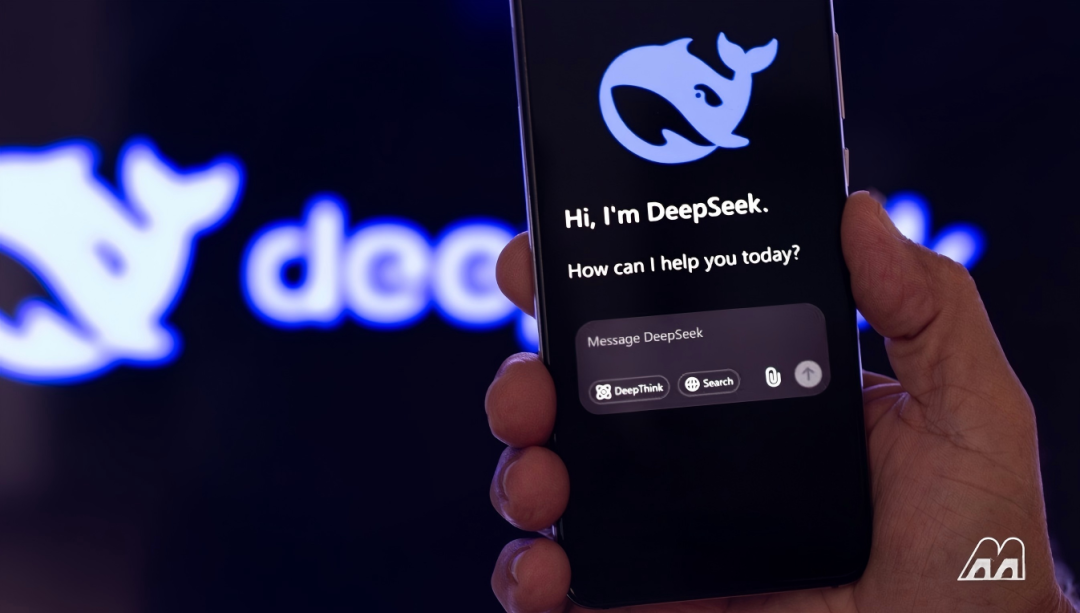

From 'Rejecting Capital' to Billion-Dollar Funding: The Shift in Liang Wenfeng's Attitude Reflects an AI Race That Cannot Be Lost
Image Source | Internet (Please contact for removal if infringing) Partially AI-generated
On October 6, Bloomberg, citing sources familiar with the matter, reported that DeepSeek is close to securing at least 80 billion yuan (approximately $12 billion) in its latest funding round, far exceeding the company's initial target of around 50 billion yuan and paving the way for a potential blockbuster IPO in early 2027.
What has captured market attention even more is that, according to signed investment term sheets, the total funding for this round could approach 100 billion yuan, with the company's initially targeted valuation set at approximately 500 billion yuan.
Sources revealed that Contemporary Amperex Technology Co. Limited (CATL) and Tencent are the top investors in terms of committed capital. The funding process is nearing completion, though the relevant transactions have not been finalized, and specific terms may still change.
This is not DeepSeek's first time rewriting funding records. To understand the context of this 80 billion yuan funding round, we need to rewind to April of this year.

From Self-Sufficiency to Embracing Capital
Founded on July 17, 2023, by renowned quantitative asset management giant High-Flyer Quant, DeepSeek was established with a strict mandate from founder Liang Wenfeng: no external financing, no equity dilution, and no surrender to anyone's commercialization timeline.
Its confidence stemmed from High-Flyer Quant. In 2025, High-Flyer Quant achieved an average annual return of 56.6%, managing over 70 billion yuan in assets and generating hundreds of millions of yuan in annual profits to support DeepSeek's R&D expenditures.
However, multiple pressures converged in 2026, forcing Liang Wenfeng to make strategic adjustments.
The first pressure came from competitors. According to Stanford University's "2026 AI Index Report," the performance gap between top U.S. models and China's strongest contenders had narrowed to just 2.7 percentage points, with diminishing returns on pursuit. Meanwhile, competitor OpenAI had just completed a $40 billion funding round, further widening the capital gap.
The second pressure arose from talent attrition. According to public information, at least five core R&D personnel have left DeepSeek, including "AI prodigy" Luo Fuli, who was recruited by Xiaomi to lead its AI business; post-95 researcher Guo Daya, who joined ByteDance; and Wang Bingxuan, a core author of DeepSeek LLM, who was poached by Tencent. These departures covered four core technical areas: base models, reasoning, OCR, and multimodality.
The third pressure stemmed from the development of the next-generation flagship model, V4. As model parameters scaled from hundreds of billions to trillions, costs for computing expansion and data annotation grew exponentially, making it difficult to sustain solely through High-Flyer Quant's internal support.
Under these mounting pressures, DeepSeek officially launched its first external funding round in April 2026, targeting a valuation of no less than $10 billion and planning to raise at least $300 million.
On April 28, DeepSeek completed industrial and commercial registration changes, increasing its registered capital from 10 million to 15 million yuan. Liang Wenfeng's subscribed capital rose from 100,000 to 5.1 million yuan, with his direct shareholding increasing from 1% to 34% and his ultimate beneficial ownership reaching 84.29%, giving him 100% of the voting rights.
By June, the first round of funding was formally completed, raising a total of 51 billion yuan and valuing the company at nearly 400 billion yuan post-investment—a record for the largest single funding round in China's AI industry at the time.
The investor lineup for this round was stellar:
Founder Liang Wenfeng personally contributed approximately 20 billion yuan, becoming the largest single investor and accounting for 40% of the total funds raised;
Tencent invested approximately 10 billion yuan;
The CATL ecosystem, including CATL and Puquan Capital, contributed approximately 5 billion yuan;
NetEase, JD.com, Monolith Capital, and IDG Capital each invested approximately 3 billion yuan;
Zhenxin Valley Investment and Shixiang Technology each invested approximately 1.5 billion yuan;
The National Artificial Intelligence Industry Investment Fund made a strategic follow-on investment, holding approximately 0.28% of the shares.
The transaction adopted a limited partnership structure, with most external investors lacking voting rights and their shares subject to a five-year lockup. Liang Wenfeng retained nearly 100% of the voting rights.
Notably, after the first round of funding, Liang Wenfeng's net worth more than doubled to $36 billion, making him the wealthiest founder among global AI model developers.

From 50 Billion to Nearly 100 Billion: A Quantum Leap
After completing the first round of funding, DeepSeek swiftly launched its second funding round in mid-July 2026, simultaneously initiating IPO preparations.
The initial target for this round was to raise approximately 50 billion yuan at a valuation of around 500 billion yuan.
However, the successful release of DeepSeek's latest AI model significantly boosted investor enthusiasm, leading to repeated upward revisions of the funding target.
Breakthroughs in product development provided the core confidence for oversubscription. On April 24, DeepSeek released and open-sourced the V4 series preview under the MIT license; by late July to early August, the V4-Flash official version was launched; and on September 10, DeepSeek released V4.1-Flash under a new architecture, featuring native multimodal visual understanding capabilities and scoring 90.9 on the GPQA Diamond benchmark.
According to a Bloomberg Intelligence report released on October 5, since the launch of V4.1 Flash, the benchmark score gap between top U.S. and Chinese models has narrowed to approximately 3%, down from around 9% in May and about 15% at the beginning of the year.
In September, V4.1 Flash ranked sixth on the LiveBench leaderboard with a score of 81.1, becoming DeepSeek's highest-ranked Chinese model since the R1 model gained fame in 2025. Its performance now rivals leading systems from Anthropic and OpenAI, while its API pricing remains significantly lower.
In the second funding round, Tencent and CATL continued to lead the investment. Tencent aims to integrate AI capabilities across its platforms, while CATL sees opportunities in supplying components for the AI industry and providing data center solutions—a increasingly profitable business.
As of now, representatives from CATL declined to comment, Tencent has not responded, and DeepSeek has not replied to requests for comment.
However, funding is not the finish line—the IPO is.
According to previous Reuters reports, DeepSeek has engaged CITIC Securities as its Tutoring institution (sponsor) to prepare for a listing on the Science and Technology Innovation Board (STAR Market) of the Shanghai Stock Exchange. CITIC Securities has already engaged with DeepSeek and entered the due diligence phase.
The company aims to submit its listing application as early as the end of 2026 and officially list in early 2027.
The opening of policy windows has provided crucial support for DeepSeek's IPO. On June 17, 2026, the Shanghai Stock Exchange released guidelines titled "Applicability of the Fifth Listing Standard for Science and Technology Innovation Board to Enterprises with Large AI Models," specifically targeting AI companies with self-developed large models that have not yet achieved stable profitability.
This policy has opened the door for A-share listings for AI companies like DeepSeek that have not yet achieved stable profitability.
Nevertheless, DeepSeek's commercialization still faces challenges. In the first seven months of 2026, DeepSeek reported revenue of 475 million yuan, a tenfold increase from its full-year revenue in 2025, but it still incurred a net loss of 715 million yuan during the same period.
Industry analysts in the capital markets suggest that, based on DeepSeek's current valuation of 500 billion yuan, its overall market capitalization after listing could range between 1.5 trillion and 2.5 trillion yuan.
After completing the funding, one of DeepSeek's primary tasks is to expand its team.
During the National Day holiday, Cui Tianyi, head of DeepSeek Harness, posted on social media that a significant portion of his daily work involves recruiting and interviewing for DeepSeek, with target positions concentrated in engineering fields such as server-side development and Agent elastic computing. The company plans to hire approximately 150 people globally.

Betting on the Huawei Ecosystem
Notably, a substantial portion of DeepSeek's funding will be invested in computing power infrastructure.
According to reports, DeepSeek plans to build a large-scale data center in Inner Mongolia, deploying at least 160,000 Huawei high-end AI accelerators. If realized, this would become one of the largest known Huawei AI chip clusters to date.
At the same time, DeepSeek has officially open-sourced infrastructure components for Huawei's Ascend computing power platform, including compilation tools, computing libraries, and distributed communication libraries, further deepening its integration with the Huawei ecosystem.
From "rejecting external financing" to a billion-dollar funding round and an IPO sprint, DeepSeek's transformation has been significant.
The AGI race is a typical "capital black hole," requiring continuous investment in computing power, chips, data centers, and talent.
As the U.S.-China AI competition intensifies, DeepSeek's decision to embrace capital may not be a compromise but rather another form of acceleration.
-
![]()
Xpeng Unveils 'Xpeng Youyou': Chinese Automakers Accelerate into Robotaxi Era
-
![]()
Dongchedi Tests Zunjie V800: Brake Pedal Fractures in Three Cars—Is This a Design Flaw?
-
![]()
Huawei's HarmonyOS Aims for Global Market Competition
-
![]()
DeepSeek Reportedly Raises 80 Billion in Latest Funding Round, Preparing for IPO
-
![]()
Global AI Consumption Survey: Only 1% of Super Users Are Supporting the AI Ecosystem
-
![]()
Does Meeting Standards Equal Safety? Is the Baseline the Upper Limit? Does Passing Inspection Mean Peace of Mind?丨When Brakes Fail Even While Speeding
-
![]()
AI Home Appliances Shine During Golden Week
-
![]()
Muse Goes Viral: Who Will Be China's Version of Muse?