Xpeng Unveils 'Xpeng Youyou': Chinese Automakers Accelerate into Robotaxi Era
 10/10 2026
 549
549
Produced by Zhineng Technology
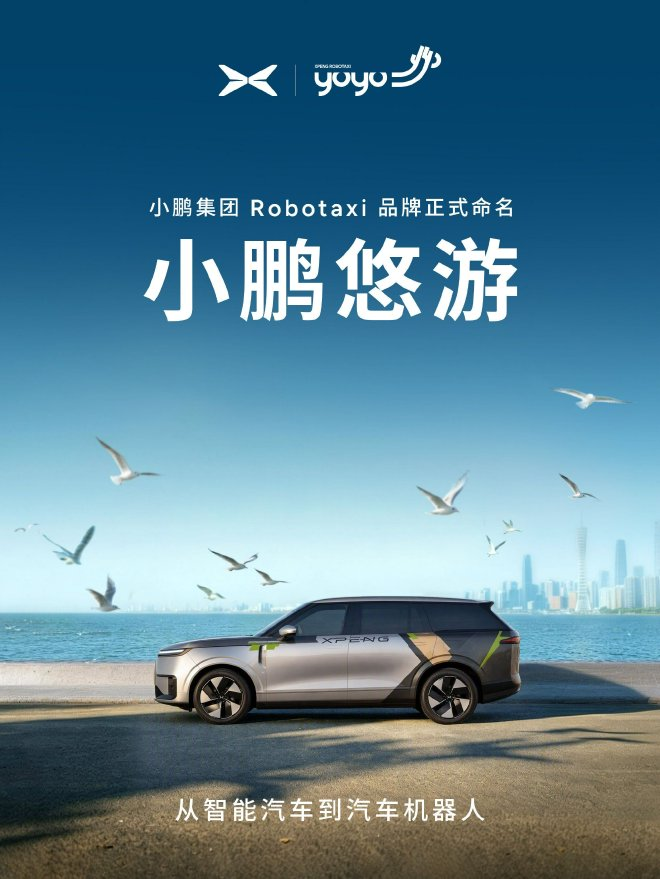
On October 8, Xpeng introduced its Robotaxi service brand, 'Xpeng Youyou,' along with the simultaneous launch of its official website and a mini-program.
In 2026, a surge of automakers is set to enter the Robotaxi market, with autonomous driving pioneers like Baidu, Pony.ai, and WeRide leading the way. Now, with Tesla's foray, automakers are gearing up to seize their share of this burgeoning sector.
01 Five Strategies for Automakers in Robotaxi
Xpeng Youyou: Full-stack Self-Research, Technology Licensing Without Fleet Ownership
Xpeng's approach is the most all-encompassing.
In January, it secured approval for road tests in Guangzhou; in March, it established a dedicated Robotaxi department; in May, the first mass-produced vehicle based on the GX model rolled off the production line; in July, it completed end-to-end internal testing for ride-hailing, pickup, and delivery services; in August, it obtained remote testing qualifications without a safety driver in the main seat; and on October 8, the brand and mini-program went live—all within a single year.
From establishing an independent business unit to engaging external users, Xpeng has condensed this process into just one year.
The model is built on the flagship GX, featuring four self-developed Turing AI chips with 3000 TOPS of effective computing power at the vehicle level. It is equipped with the second-generation VLA model, following a pure vision route without relying on LiDAR or high-definition maps.
A key distinction from most established platforms is its aim to maximize the sharing of AI technology and vehicle platforms between Robotaxi and passenger vehicles.
Commercially, Xpeng positions itself as a technology provider and ecosystem enabler, generating revenue through hardware sales, software and services, and operational profit-sharing, while outsourcing offline operations to partners. It seeks to dominate the vehicle platform and autonomous driving technology without initially bearing the heavy asset burden of an entire fleet.
GAC: Collaboration Among Automakers, Autonomous Driving Firms, and Mobility Platforms
GAC's strategy revolves around cooperation.
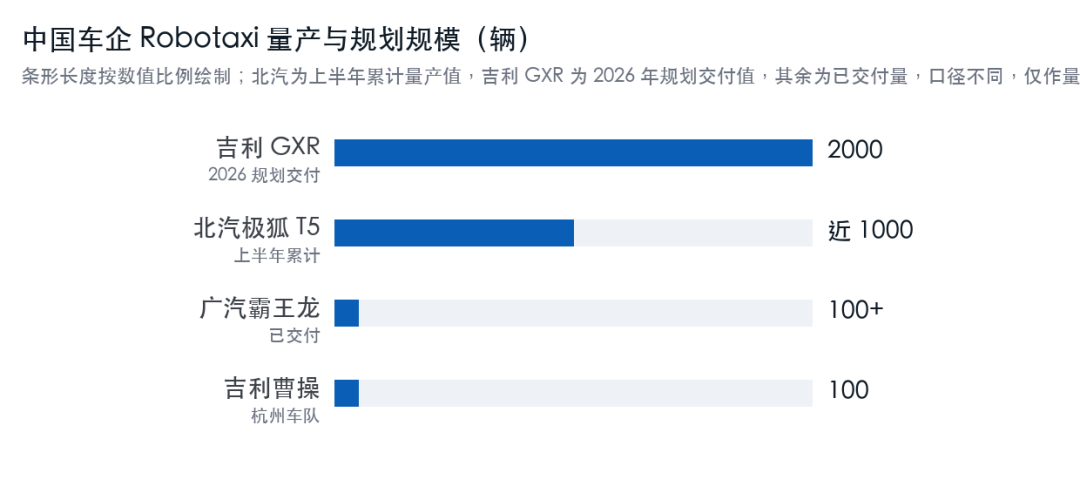
In January, GAC Aion and Didi Autonomous Driving jointly developed and launched the Robotaxi R2; in March, Pony.ai delivered over 100 Aion Vampire Dragon Robotaxis, equipped with the seventh-generation autonomous driving system, to join the OnTime fleet for mixed operations of manned ride-hailing and Robotaxi in Guangzhou.
Vehicle manufacturing, autonomous driving technology, and mobility operations are divided among three entities.
Automakers are relieved from independently developing a full L4 software stack; autonomous driving companies leverage mature vehicle production capabilities, while mobility platforms manage passenger flow and dispatch.
The mixed operations of manned and driverless vehicles in Guangzhou validate the coexistence of two systems within the same fleet, providing a smoother transition for regulators and passengers. GAC participates in vehicle manufacturing, technical cooperation, and platform construction, but the pressure is distributed.
Geely: Expanding from Vehicle Manufacturing to Fleet Operations
Geely holds the strategic advantage of Cao Cao Mobility.
In February, Cao Cao's Robotaxi fleet in Hangzhou reached 100 vehicles; in July, main-seat driverless testing commenced in Binjiang District; the Eva Cab model, specifically designed for Robotaxi, is slated for mass production in 2027.
Meanwhile, Geely Remote Commercial Vehicles is collaborating with WeRide to deliver 2,000 factory-fitted GXR models in 2026.
Geely's resources span vehicle manufacturing, intelligent driving cooperation, ride-hailing operations, battery swapping, and vehicle maintenance. Cao Cao's integration of battery swapping, cleaning, inspections, and dispatch in Hangzhou aims to slash daily operational costs for driverless fleets.
Such centralized maintenance centers consolidate dispatch, energy replenishment, cleaning, and inspections, previously scattered across manual operations, marking a pivotal step for Robotaxi to transition from demonstration to daily operations.
For Geely, large-scale Robotaxi operations could spur additional business in vehicle manufacturing, energy replenishment, and mobility sectors.
BAIC, SAIC: Leveraging Mature L4 Companies for Rapid Progress
BAIC New Energy and Pony.ai's Arcfox Alpha T5 Robotaxi achieved cumulative mass production of nearly 1,000 units in the first half of the year, operating in Beijing and Shenzhen, and even conducting road tests in Zagreb, Croatia, in March, bringing China-made L4 technology to Europe.
This partnership combines an automaker with an L4 company, leveraging the latter's technical expertise to advance mass production and global expansion simultaneously.
SAIC follows a similar path with Momenta and Enjoy Ride: Momenta provides L4 technology, SAIC manufactures the vehicles, and Enjoy Ride handles operations, with a new factory-fitted custom vehicle planned to debut in 2027.
Momenta aims to reuse data and algorithm systems from mass-produced passenger vehicle assisted driving to enrich Robotaxi training and validation with complex scenario data from passenger vehicles.
BYD is also pursuing this path, appearing on NVIDIA's L4 autonomous driving development partnership list in March. This enables automakers to enter the autonomous driving arena through chip and platform collaborations, even without building their own L4 teams.
Before automakers entered the fray, some players had already achieved significant scale.
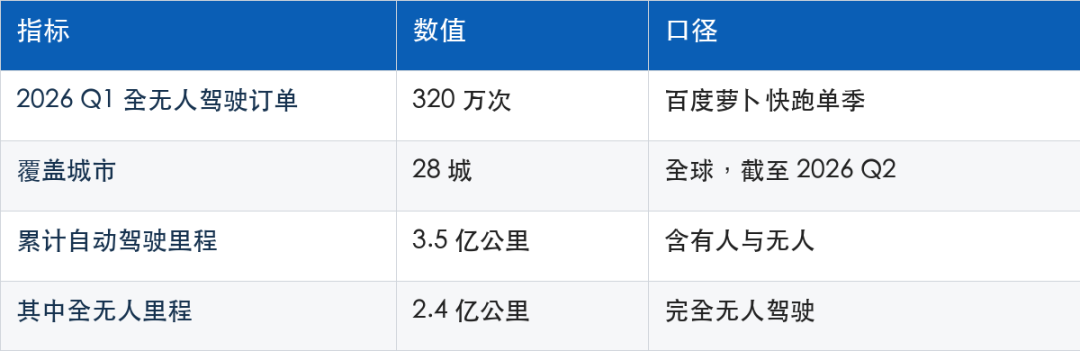
Baidu's Apollo Go completed 3.2 million fully driverless orders in Q1 2026, disclosed coverage of 28 global cities in Q2, with cumulative autonomous driving mileage exceeding 350 million km, including over 240 million km in fully driverless mode. Pony.ai and WeRide are also expanding their commercial operations and going global.
02 Why 2026? Can We Leap from L2 to L4?
In recent years, Xpeng, Huawei, Li Auto, NIO, and Momenta have continuously refined urban navigated assisted driving, with increasing investments in algorithm models, vehicle-end chips, and data training platforms.
Visual perception, end-to-end models, and world models are gradually being integrated into mass-produced vehicles, with some algorithms, training infrastructure, and hardware designs beginning to have the potential for expansion to L4.
Scenario data from passenger vehicles, such as suburban roads, temporary construction, cut-ins, and mixed traffic with non-motorized vehicles, can, when abundant, enrich the training and validation of autonomous systems.
L4 is Not Just an Upgrade from L2
Two significant barriers separate L2 assisted driving from L4 autonomous driving: safety liability and technical requirements. L4 must complete all dynamic driving tasks within specified operational conditions and independently take safety measures in case of failure or boundary violations. This is fundamentally different from the "driver always ready to take over" setup in passenger vehicles.
Xpeng Youyou's 3000 TOPS computing power provides room for large models, but computing power alone does not guarantee system safety.
What matters is whether essential functions can be maintained during computing platform failures, whether steering, braking, power, and communication meet safety requirements, and the extent of system validation.
Not relying on high-definition maps does not mean immediate operation in any city; each new city requires fresh road risk assessments, operational area validations, and regulatory approvals.
For automakers, Robotaxi's appeal lies in new vehicle demand and technology revenue.
For operators, the evaluation of a driverless taxi begins with operational efficiency.
Robotaxi reduces driver costs but still incurs depreciation, insurance, energy, tires, maintenance, cleaning, remote safety, dispatch, and platform fees.
Vehicle procurement costs are a major consideration: when two solutions have similar safety levels, the party that can reduce procurement and maintenance costs through mass production platforms and factory integration has a long-term depreciation advantage. This is a key reason why automakers are eager to enter the field.
However, cost advantages must be evaluated based on actual full-vehicle accounting. The Xpeng GX is a consumer-oriented SUV; Robotaxi also involves dedicated computing platforms, redundant controls, and operational equipment, so ordinary GX retail prices are not applicable.
For the same vehicle, running 8 hours versus 16 hours a day makes a significant difference in depreciation per km, but extending operating hours does not necessarily bring proportional revenue, as empty runs and waiting times reduce utilization.
Thus, Robotaxi must also address a challenge often overlooked by engineers: when and where a vehicle can consistently receive orders. This is precisely the value of platforms like Didi, Cao Cao, and OnTime, which possess real order data, regional supply-demand information, and dispatch systems.
Robotaxi must also gradually develop automatic energy replenishment, cleaning, and maintenance systems. If daily operations still heavily rely on manual dispatch, charging, and exception handling, the saved driver costs will be partially offset by other expenses.
Summary
Three New Business Categories for China's Auto Industry
Robotaxi may bring the following opportunities for Chinese automakers:
Robotaxi Vehicle Sales: As fleets expand from hundreds to thousands of vehicles, automakers secure sustained B-end orders, with models placing greater emphasis on durability, maintenance, cabin stain resistance, energy replenishment efficiency, and whole-life cycle costs, leading to more dedicated operational vehicles.
These vehicles will, in turn, drive automakers to redefine seating, flooring, and interiors, diverging from ordinary passenger cars in product philosophy.
Autonomous Driving Hardware and Software Solutions: Companies holding chips, algorithms, and vehicle control platforms gain additional technology sales channels. Examples include Xpeng's hardware sales plus service revenue sharing and Momenta extending passenger vehicle algorithms to autonomous driving. Automaker competition may shift from selling whole vehicles to selling platforms and ongoing software services.
This transition from selling hardware to selling capabilities aligns with the software-as-a-service trend that automakers have been promoting in intelligent driving in recent years.
Groups with ride-hailing platforms, energy replenishment networks, and after-sales systems can participate more deeply in operations, which is especially crucial for Geely, GAC, and SAIC. Robotaxi offers a way to activate their existing mobility assets.
-
![]()
Xpeng Unveils 'Xpeng Youyou': Chinese Automakers Accelerate into Robotaxi Era
-
![]()
Dongchedi Tests Zunjie V800: Brake Pedal Fractures in Three Cars—Is This a Design Flaw?
-
![]()
Huawei's HarmonyOS Aims for Global Market Competition
-
![]()
DeepSeek Reportedly Raises 80 Billion in Latest Funding Round, Preparing for IPO
-
![]()
Global AI Consumption Survey: Only 1% of Super Users Are Supporting the AI Ecosystem
-
![]()
Does Meeting Standards Equal Safety? Is the Baseline the Upper Limit? Does Passing Inspection Mean Peace of Mind?丨When Brakes Fail Even While Speeding
-
![]()
AI Home Appliances Shine During Golden Week
-
![]()
Muse Goes Viral: Who Will Be China's Version of Muse?