AI Home Appliances Shine During Golden Week
 10/10 2026
 556
556
"
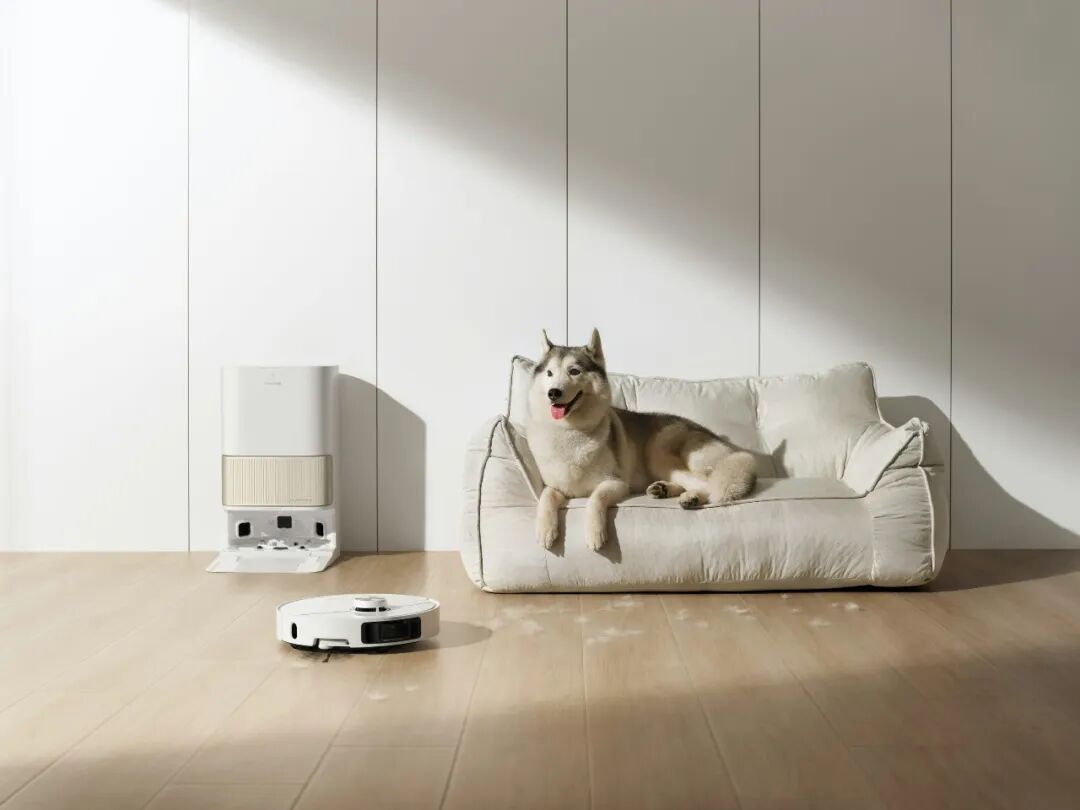
There’s no denying that AI home appliances are on the rise, with consumers willing to pay a premium for AI-driven features. However, what truly matters to consumers isn’t just the “AI” label, but AI functions that genuinely address their needs. For the home appliance industry to truly capitalize on the AI trend, crafting high-quality products remains a fundamental lesson.
Cover image source: Unsplash"

Traditionally, September to October marks the peak sales season for traditional home appliances, but this year has seen a notable shift.
On the eve of National Day, Aowei Cloud Network forecasted a decline in sales for categories like refrigerators, washing machines, and air conditioners during Golden Week. Industry insiders predicted that home appliance sales would remain at historically low levels during this period.
Yet, in stark contrast to the overall downturn in the home appliance market, AI home appliances have experienced an upward trajectory. During National Day, Suning.com reported a year-on-year increase of over 40% in sales of AI-enabled smart home appliances, while at JD MALL, smart home appliances accounted for 60% of total sales.
For the home appliance industry, this National Day Golden Week defies simple categorization as either “booming” or “cold.”
On one hand, traditional home appliance products have lost their former vibrancy; on the other, AI home appliance products have taken center stage, signaling a new trend: consumers are not unwilling to spend money, but they are unwilling to spend it merely for the sake of “cheapness.” To retain consumers, companies must focus on understanding their needs better and integrating home appliances seamlessly into home life.
1. AI Home Appliances Shine During Golden Week
To comprehend this year’s “Golden September and Silver October” in the home appliance industry, we must look back in time.
Since the beginning of the year, the overall performance of home appliance consumption has been lackluster. According to Aowei Cloud Network data, from January to August, the domestic home appliance market size reached 547.7 billion yuan, a year-on-year decline of 9.7%. It is expected that annual domestic home appliance retail sales will decrease by 7.6% year-on-year to 825 billion yuan.
Over the past two years, influenced by factors such as adjustments in the real estate market and the pace of consumer confidence recovery, demand for home appliances has remained under pressure.
Some industry insiders had predicted a rebound in home appliance consumption during the National Day period. However, in the longer term, overall consumption is still expected to remain at historically low levels, with the market yet to escape the downward trend.
According to data from the Ministry of Commerce’s business big data, in the first three days of National Day, 1.511 million home appliances were traded in for new ones, driving sales of 6.5 billion yuan; 1.709 million digital and smart products were purchased, driving sales of 4.9 billion yuan.
Despite these impressive figures, it is evident that home appliance consumption still heavily relies on “national subsidies,” and the market is still “digging up” new growth from the “old pool.”
Against this backdrop, the performance of AI home appliances has been particularly noteworthy.
During National Day, many home appliance brands, stores, and shopping malls set up dedicated AI home appliance experience zones, which were as lively as traditional commercial districts.
Suning.com launched the Suning NEXT future space on the eve of the holiday, creating a super entrance for AI-powered home life; JD.com collaborated with various home appliance brands to jointly promote AI home appliances, forming a multi-channel communication and sales network.
Core commercial districts in several cities also launched AI consumption festivals, showcasing AI consumer products through centralized displays and creating immersive interactive experiences.
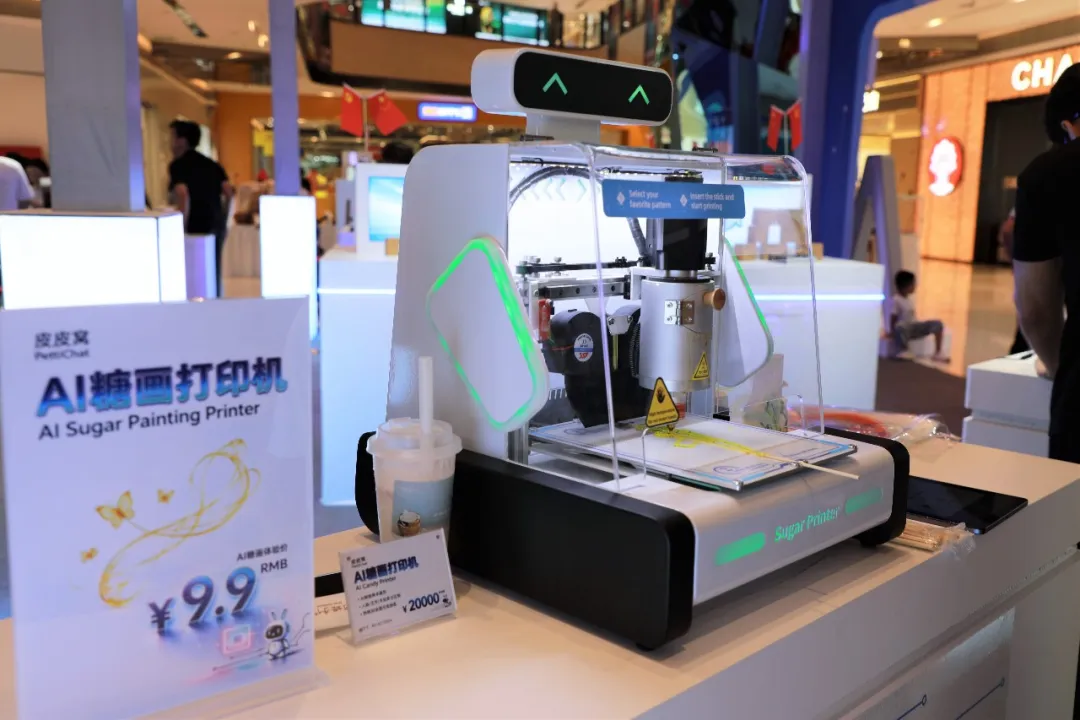
According to Suning.com data, during National Day, customer traffic in core stores nationwide increased by 50% year-on-year, sales of AI-enabled smart home appliances increased by over 40% year-on-year, and the proportion of AI product sales exceeded 70% for the first time; at JD MALL, smart home appliances accounted for 60% of total sales.
This National Day Golden Week, AI home appliances took center stage in the industry, sending a positive signal.
For offline shopping malls, whose traffic is constantly being eroded by online channels, there is an urgent need for new attractions to draw consumers. The novel experience brought by AI home appliances is precisely something that online channels cannot replicate.
For home appliance manufacturers, the Golden Week is not just a window for selling goods but also an excellent opportunity to showcase products. Those who can provide a thorough AI home appliance experience will gain an advantage in the upcoming competition for existing market share.
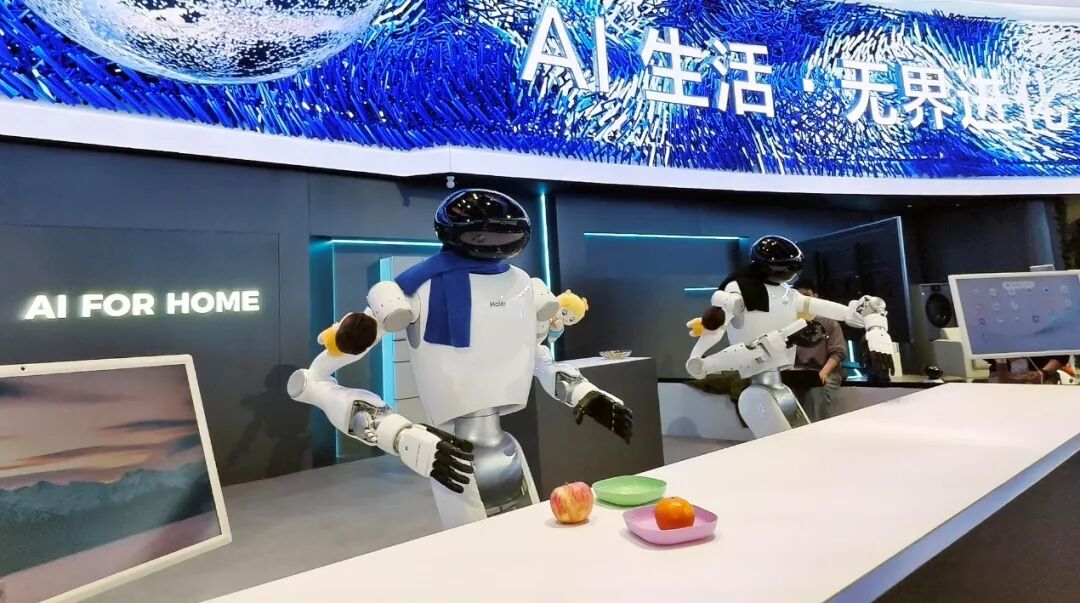
Currently, merchants are eager to showcase, and consumers are eager to try new things.
According to a report by Zhejiang Online, a responsible person from a home appliance store stated, “Smart homes have become the core growth point for home appliance sales. Many consumers already had purchase plans, and with national subsidies, many made appointments to visit the store during National Day.”
This indicates that the reasons consumers buy home appliances have changed. In the past, consumers bought home appliances for cheapness and affordability; now, they buy them for convenience and usability. AI home appliances happen to meet this turning point in demand.
2. Home Appliance Manufacturers “Exchange Intelligence for Profit”
As AI home appliances gradually mature, intelligence has become an indispensable selling point for home appliance products. Both consumers who want to try something new and those who want to upgrade to smarter, more user-friendly products have reasons to buy AI home appliances.
Understanding this change, home appliance manufacturers have begun to seize new markets through AI home appliances.
However, the problem is that for companies willing to produce and consumers willing to buy, there must be a premise: the experience of smart home appliances must genuinely improve and not just be a gimmick to deceive consumers.
In recent years, AI home appliances have indeed made significant progress. On the one hand, AI has lowered the user threshold.
Today’s home appliance manufacturers introduce more and more functions to increase product selling points. Taking AI washing machines as an example, they offer cleaning methods for different fabric types and various functions such as drying and disinfection.
However, the more functions there are, the more difficult it is for users to operate. This is where AI functions play a significant role. They can detect information such as clothing weight and washing status and automatically adjust water volume, washing time, and drying temperature, making it easier for users.
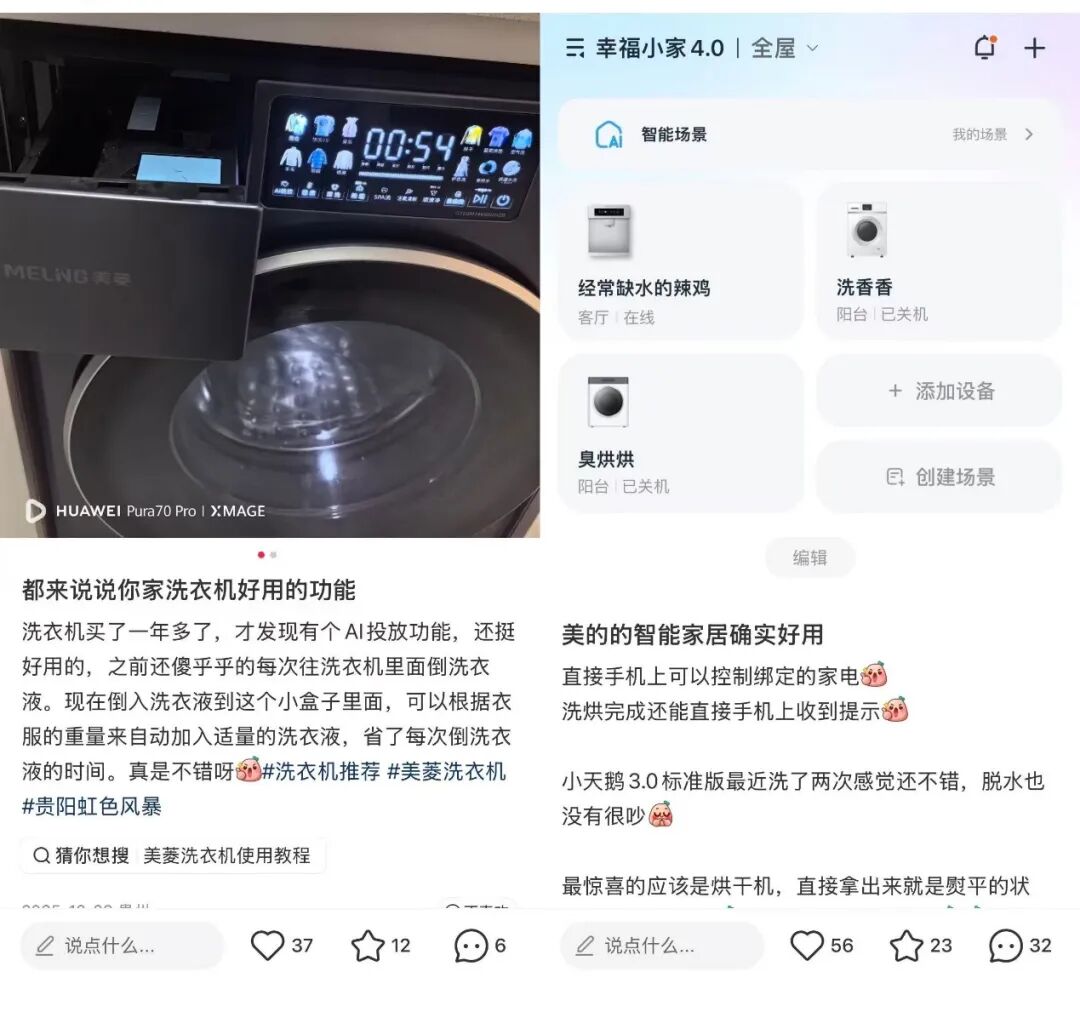
On the other hand, AI can more accurately understand user intentions.
When a user starts an AI washing machine and simply describes “the clothes are quite dirty,” AI can automatically adjust the washing program based on this statement. Interacting with home appliances using natural language is the most user-friendly way to use them.
Finally, it enhances user experience.
Currently available AI air conditioners and AI lighting systems can adjust product programs based on indoor temperature, humidity, and user activity status. In simple terms, it used to be “people control home appliances,” but now it can genuinely achieve “home appliances serve people.”
These experiences are indeed much more substantial than past home appliance products that were smart for the sake of being smart. However, even so, not all AI functions in home appliances are satisfactory. In the eyes of some consumers, some functions are still quite useless.
On social media platforms, some consumers complain about the voice interaction of AI fans, saying, “No one in the family was speaking, but the AI fan suddenly responded.” Others criticize the touch screen design of small home appliances, stating that the touch sensitivity is poor, and elderly users find it difficult to use.
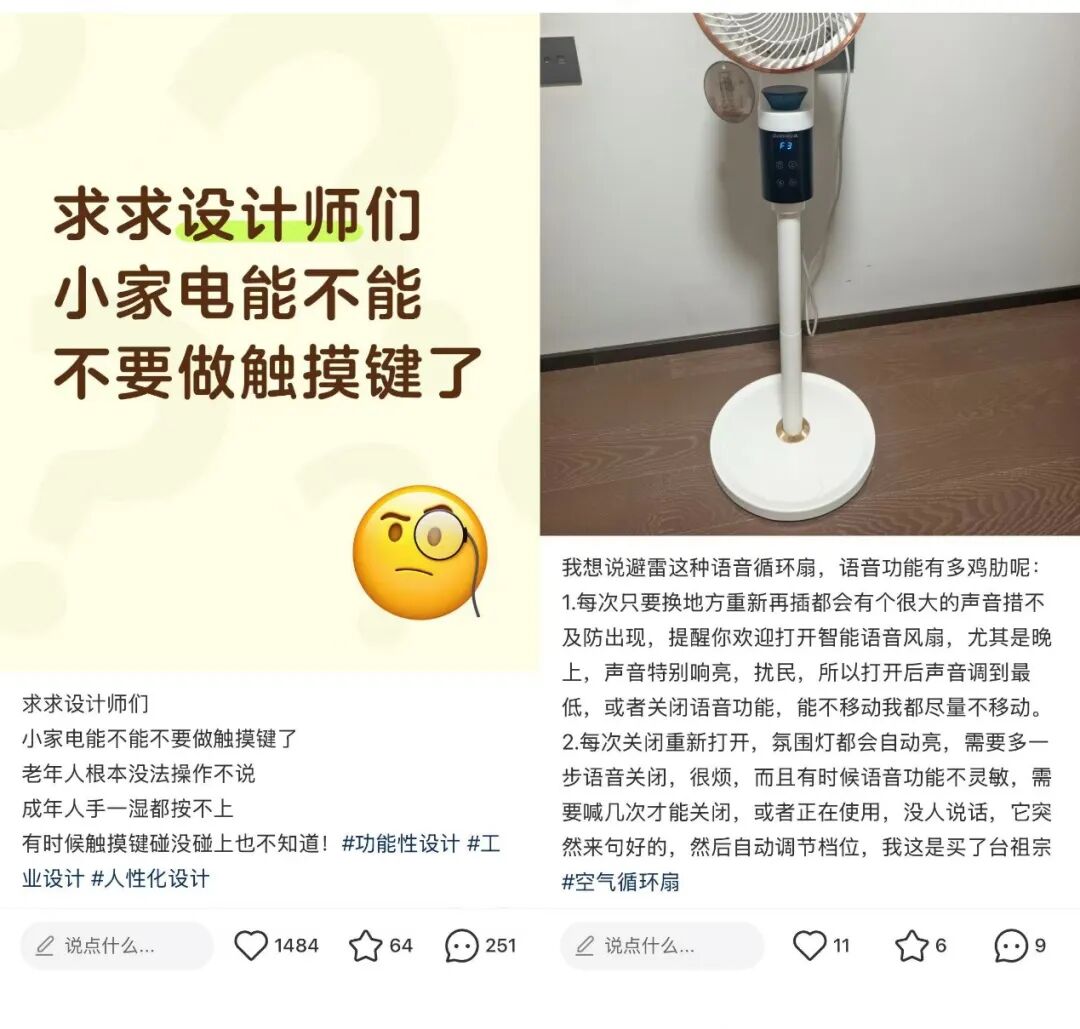
Currently, user complaints about AI home appliances mainly focus on two categories:
One category is small home appliances, such as fans, ovens, and air fryers. The smart functions of these appliances are usually relatively simple. As long as the product can connect to the internet, it can access cloud-based AI large models.
However, because the deployment cost is not high, the AI functions of these products often lack appeal to users.
After all, the operating logic of small home appliances is not complex. Even without AI, users can complete operations by pressing a few buttons. If manufacturers pursue intelligence for the sake of intelligence, it is likely to make home appliances more difficult to use, as mentioned above with AI fans.
The other category consists of products whose AI functions are not yet fully mature but are eager to enter the market.
Some time ago, Samsung’s Bespoke AI refrigerator in South Korea experienced a situation where the refrigerator could not cool after a system update, even after being unplugged and replugged.
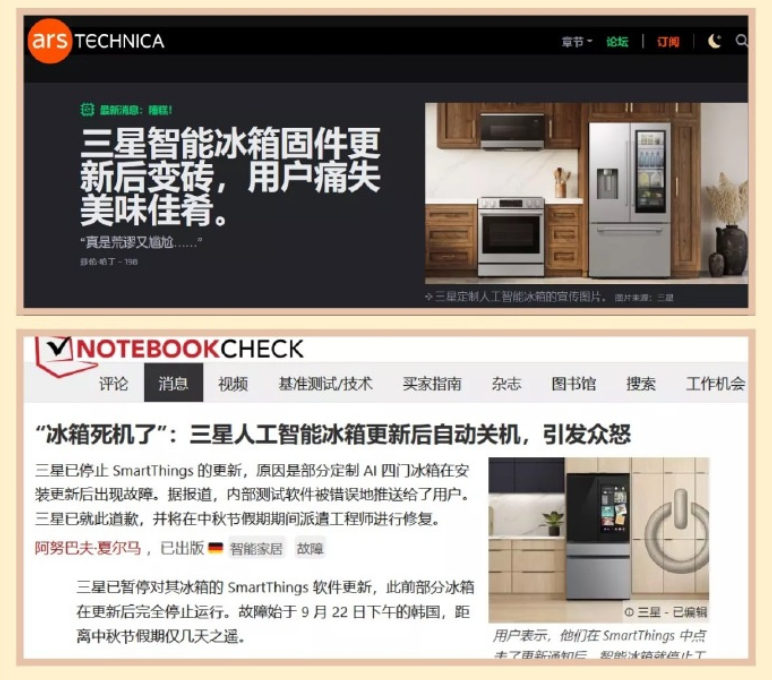
This serves as a reminder to the home appliance industry that the core function of home appliances is their original purpose. If home appliances become AI-enabled but fail to maintain their basic functions, it would be putting the cart before the horse.
There’s no denying that AI home appliances are continuing to develop, and consumers are willing to pay more for AI functions. However, what consumers need is not just the “AI” label, but AI functions that can genuinely help them solve problems. For the home appliance industry to truly seize the opportunity of AI, crafting high-quality products remains a fundamental lesson.
3. The Industry Collectively Rejects Involution
Over the past decade or so, the period from September to October has been the core battleground for home appliance manufacturers. Sales from September to December can account for half or more of the manufacturers’ annual sales. Home appliance manufacturers are also willing to offer more discounts to achieve a sales surge during these two months.
However, this familiar scene did not materialize during this year’s National Day.
When the price war in the home appliance industry has driven profits to be as thin as paper, all home appliance manufacturers understand that relying on price cuts to boost sales is tantamount to drinking poison to quench thirst. Only by improving and upgrading home appliances can they secure greater profit margins.
In September this year, the China Household Electrical Appliances Association reviewed and approved the “Self-Discipline Pact for Fair Competition in the China Household Electrical Appliances Industry.” Leading companies such as Midea, Gree, and Haier took the lead in stating their commitment to abandon low-level price competition and turn “anti-involution” from tacit understanding into an open strategy.
At the same time, with the gradual normalization of e-commerce promotions, manufacturers no longer focus solely on the National Day Golden Week for sales. Instead, they integrate daily promotions into the annual promotional rhythm.
For example, leading brands such as Haier, Midea, Gree, and Hisense are actively empowering retailers by organizing various themed promotional activities such as brand days, home decoration seasons, and winter festivals to drive more traffic to franchisees’ daily operations.

From this perspective, the popularity of AI home appliances during the Golden Week represents a collective shift among home appliance manufacturers.
In recent years, the product functions and appearance parameters of mainstream categories such as air conditioners, refrigerators, and televisions have become increasingly homogeneous. When the industry has to compete on product functions to the point where “everyone has them,” manufacturers can only compete on who can sell them cheaper.
However, this approach is undoubtedly “killing a thousand enemies while harming oneself by eight hundred.” At this point, AI becomes the key to breaking the deadlock.
For home appliance manufacturers, doing AI well is tantamount to redoing the product. Companies must not only understand hardware but also software; they must not only understand products but also scenarios. Only in this way can they create products that others cannot and provide services that others cannot.
As a result, home appliance manufacturers have begun to focus on longer-term operations, emphasizing refined operations centered on users, products, and channels.
On the one hand, they achieve cross-scenario linkage through AI to create more scenario entry points.
For example, many home appliance brands have introduced smart kitchens that cover the entire process from purchasing ingredients, storing them, managing them, to cooking. Users can check inventory, place orders for replenishment, and plan menus through an app, transforming the refrigerator from a passive storage device into an active service provider.
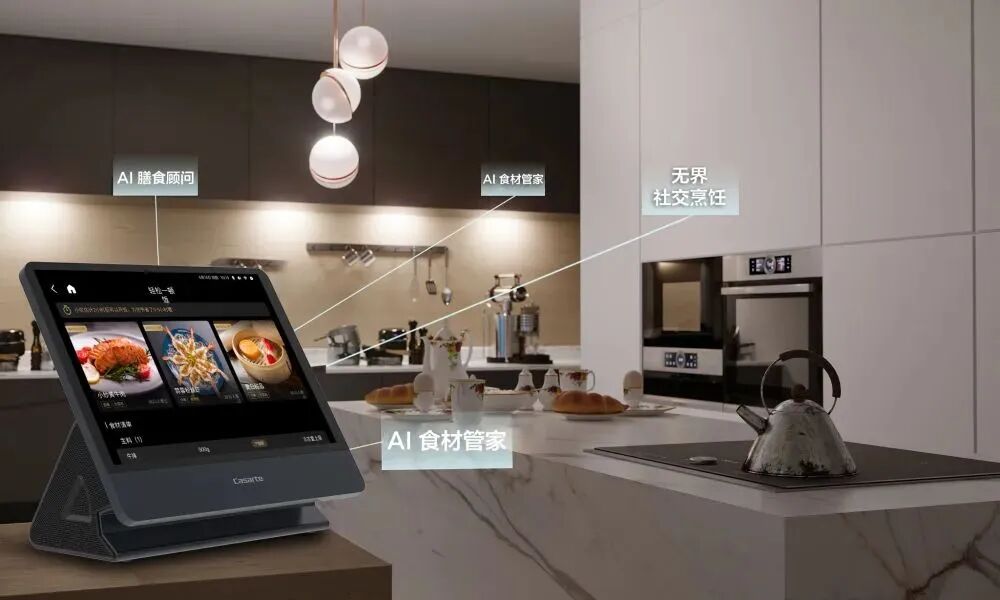
On the flip side, they leverage AI to tap into new incremental markets, such as developing silver-haired friendly home appliances tailored for the elderly.
Gas stoves can be integrated with door lock systems. Should the system sense that a door is opened while the gas is in use, it promptly sends out a reminder. Voice-interactive products, as previously discussed, can effectively lower the barrier for the elderly to utilize AI-powered home appliances.
Certainly, the advent of AI-driven home appliances also signifies that the competitive threshold within the future home appliance sector will escalate considerably.
Firms that solely engage in price wars and imitation strategies will find it progressively arduous to sustain themselves. Only those enterprises that genuinely comprehend consumer needs and can seamlessly translate AI technology into tangible experiences will be poised to command a premium market position.
This transformation will not materialize overnight; however, we have already witnessed its nascent stages during this year's National Day Golden Week.
Nevertheless, for the home appliance industry, this scenario does not necessarily present a detrimental opportunity—provided that you can genuinely address consumer pain points, consumers are inclined to reward you with higher returns.
In order to weather the frigid winter of the home appliance industry, how can home appliance companies afford not to redouble their efforts?
-
![]()
Does Meeting Standards Equal Safety? Is the Baseline the Upper Limit? Does Passing Inspection Mean Peace of Mind?丨When Brakes Fail Even While Speeding
-
![]()
AI Home Appliances Shine During Golden Week
-
![]()
Muse Goes Viral: Who Will Be China's Version of Muse?
-
![]()
PE Giant with Hundreds of Billions Excels in Aviation Investment This Year
-
![]()
Brake Pedal Bracket Fractures: Not Isolated Incidents—A Comprehensive Review of Global Recalls by Ford, Porsche, and GM
-
![]()
The 2026 Flagship Imaging Ranking Race Kicks Off: Who Will Be Crowned the National Champion of Imaging Smartphones?
-
![]()
Controversies Surrounding Dongchedi and Harmony Intelligent Auto, Zunjie V800 Pedal Fracture, and Ford Recall
-
![]()
Bentley, Maserati, Rolls-Royce: The Ebb and Flow of Seven Ultra-Luxury Foreign Brands in China, From 21,000 Annual Sales to a Mere 3,000 Now