Dongchedi Tests Zunjie V800: Brake Pedal Fractures in Three Cars—Is This a Design Flaw?
 10/10 2026
 549
549
Produced by Zhineng Technology
The Zunjie V800 has sparked widespread discussion online after three brand-new vehicles suffered brake pedal bracket fractures during Dongchedi's emergency braking tests. Is this a design issue? A manufacturing defect? Let's delve deeper!
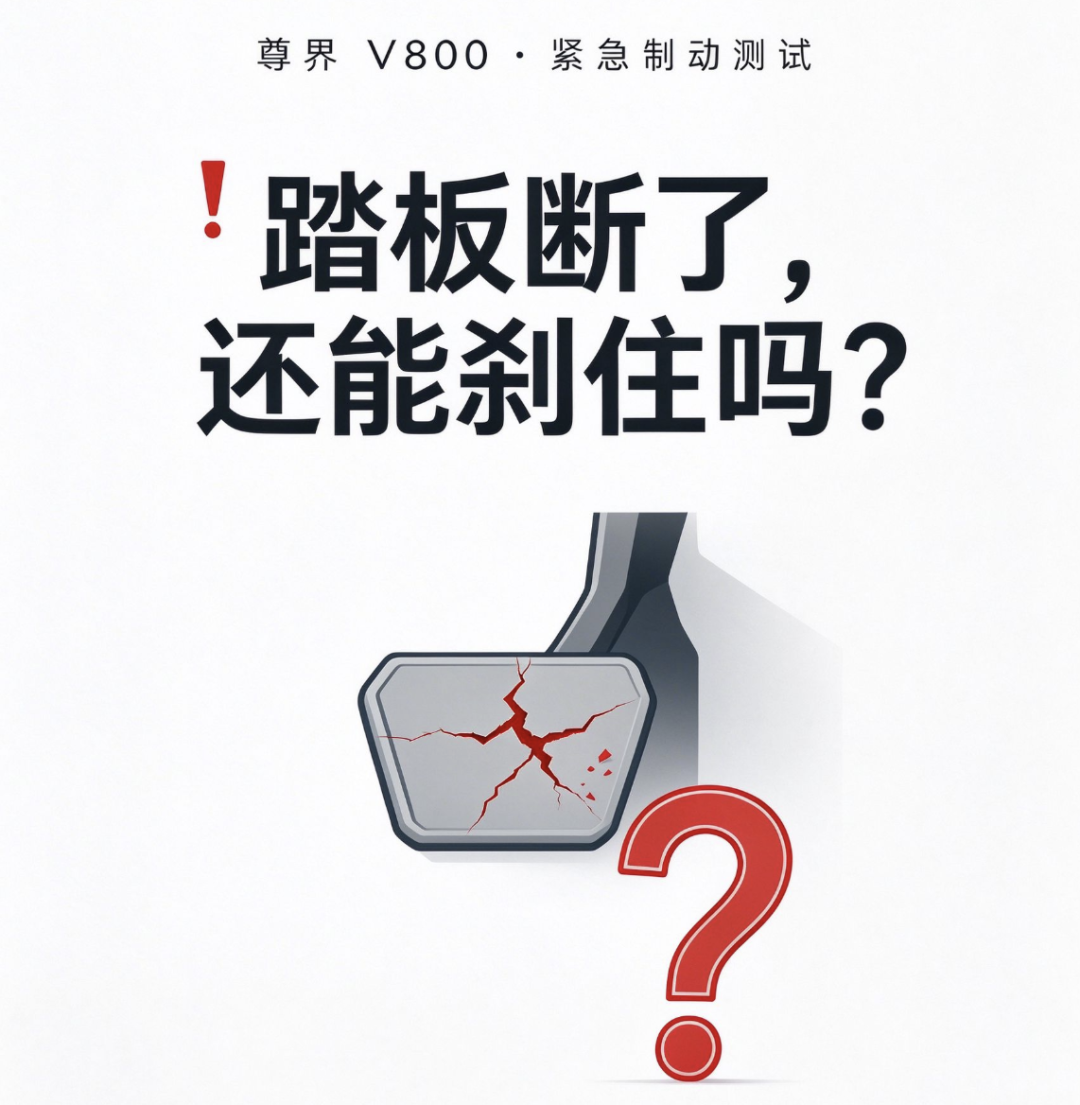
I) Reconstructing the Zunjie Brake Pedal Bracket Incident
Dongchedi conducted emergency braking tests on the Zunjie V800 at a closed test site, decelerating from 100 km/h to a complete stop. In all three test vehicles, the pedal brackets fractured during the initial high-force braking attempts.
The first vehicle's bracket fractured on the third brake application, the second on the fourth, and the third on the second. The third vehicle was included as a verification sample after abnormalities were detected in the first two.
All three vehicles were brand-new with minimal mileage, shifting focus toward potential design, manufacturing, or material consistency issues rather than isolated incidents.
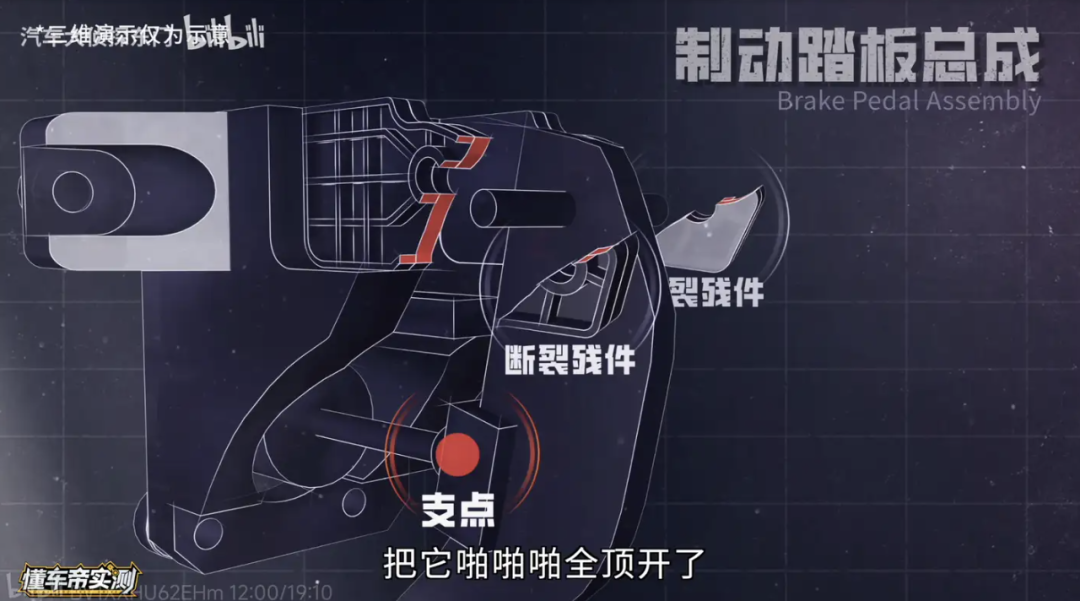
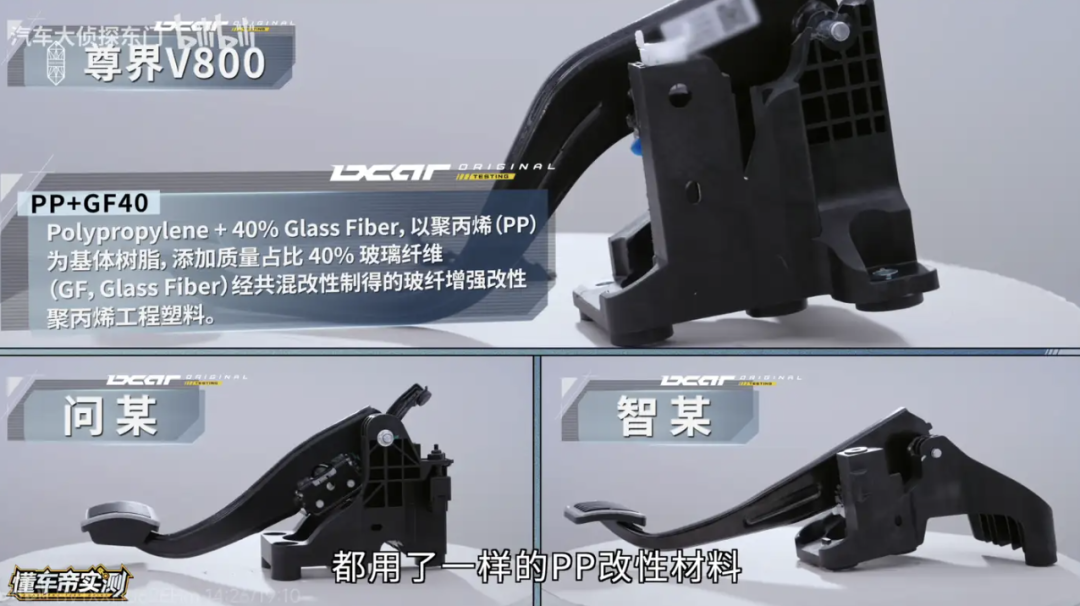
Dongchedi highlighted that factors such as the number of reinforcing ribs, local material thickness, and weld line placement in the plastic bracket's pivot area could affect its load-bearing capacity. Reports noted that the distance from the pedal center to the pivot was approximately 130 mm, contrasting with the more robust reinforcement seen in Aito and Luxeed models at the same location.
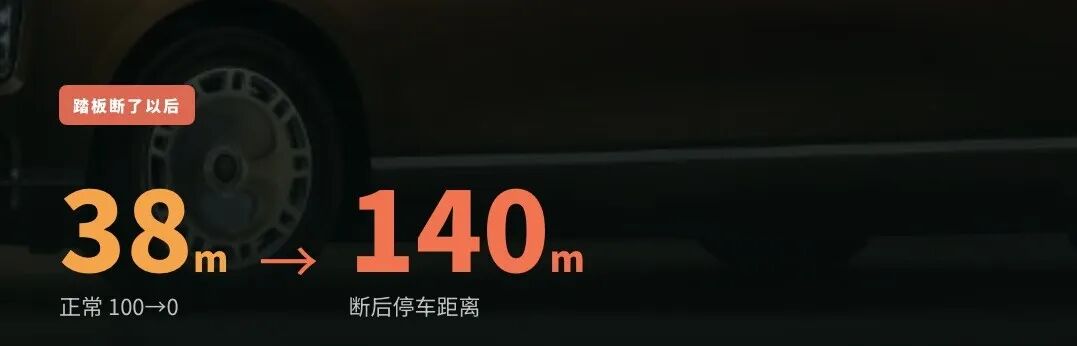
After pedal failure, the test team resorted to alternative braking methods, increasing the stopping distance from roughly 38 meters under normal conditions to about 140 meters. As of now, neither Zunjie, JAC, nor authoritative institutions have released comprehensive technical evaluations.
Key standards include GB 7258, which governs vehicle braking performance inspections; QC/T 788, which addresses pedal structural strength; and GB 21670-2025 (effective January 1, 2026, replacing the 2008 version), which mandates testing of emergency braking capability after service brake failure.
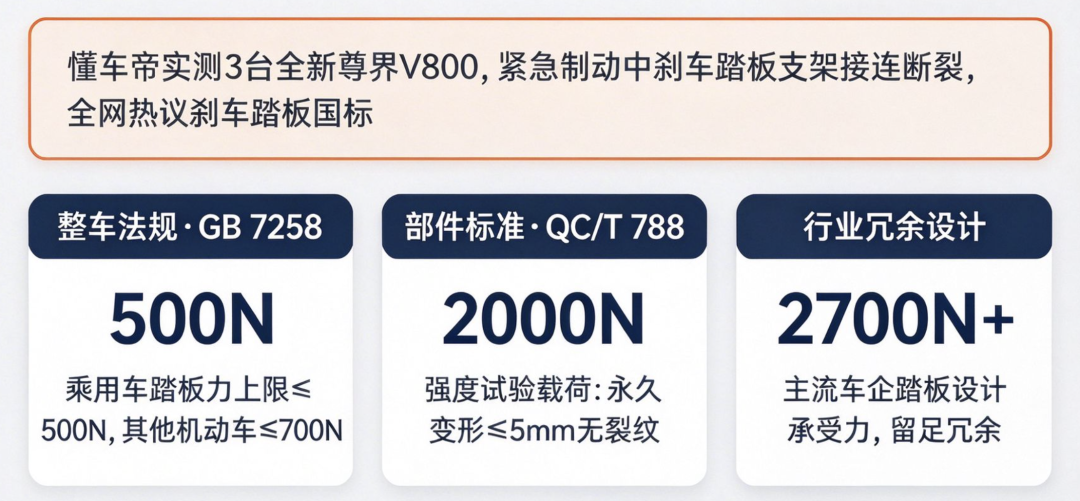
500N, derived from GB 7258-2017, represents the pedal force limit for passenger vehicles during loaded braking performance inspections, ensuring braking effectiveness within the specified pedal force range.
2000N, from QC/T 788-2018, is a widely referenced static load and 5-second hold strength benchmark in the industry. However, Clause 1.2 of the standard explicitly targets mechanically hinged metal pedals, with other types referenced for guidance.
4589N and 1612N are disputed readings from the third vehicle's fracture. Dongchedi reported a 1612N reading at fracture, while the video simultaneously showed a 4589N transient display. Both figures originated from dynamic emergency braking.
II) Issues with the Plastic Bracket
The fractures occurred primarily on the support structure behind the pedal, which maintains the pivot position, transmits pedaling loads, and ensures braking travel. Pedaling force generates a bending moment at the pivot via the lever arm, with longer arms increasing stress at the root. The V800's pedal center-to-pivot distance of approximately 130 mm, combined with a thin single-layer rib, may subject the root to high tensile and bending stresses under large moments and eccentric loading.
During injection molding, molten plastic converges to form weld lines. When these lines fall within high-tensile stress zones, compounded by glass fiber orientation, molding temperature, moisture content, and process variations, local strength decreases, explaining variations in load-bearing capacity across the same plastic component. Identifying weld lines requires fracture surface microscopic analysis, material identification, and manufacturing records. While glass fiber-reinforced engineering plastics are widely used in structural components, proper material selection can meet strength, stiffness, and durability requirements. The investigation must trace the specific material grade, fiber content, injection quality, and vehicle operating conditions. The key comparison is why similar pedals use different reinforcing structures and how much design margin the V800 bracket leaves under expected and extreme conditions.
III) Can the Vehicle Still Brake After Fracture?
New energy vehicle braking systems have evolved from hydraulic assistance to electro-hydraulic and brake-by-wire systems, often featuring hydraulic-mechanical backups, independent power supplies, and redundant controllers. The driver's braking intent must first be transmitted to the control system via the pedal assembly.
When the pedal bracket fractures, three scenarios may occur: abnormal pedal travel prevents foot input from reaching sensors or pushrods; abnormal pedal position signals prevent the controller from recognizing valid commands; or the mechanical backup path is compromised by structural failure. The specific outcome depends on the V800's actual braking architecture and fault records. Assuming the vehicle has dual power supplies and controllers, both may still rely on the same pedal signal mechanism, meaning pedal mechanical failure could disable both control paths. While dual power supplies and controllers enhance system reliability, they cannot cover all mechanical structural failures. Manufacturers must clarify whether the system incorporates dedicated fail-safe designs for pure mechanical failures like pedal bracket fractures.
Returning to the 140-meter stopping distance, compared to the normal 38 meters, the gap is significant if initial speeds and road loads are identical.
Based on publicly available information, a serious safety investigation must be initiated promptly, and recall decisions cannot be based solely on third-party videos. China's "Regulations on the Recall of Defective Automotive Products" establishes a defect investigation and recall mechanism, requiring manufacturers to fulfill investigation, reporting, and handling responsibilities upon discovering potential defects.
For Zunjie and JAC, reasonable steps include sealing the involved parts, conducting batch tracing of mass-produced brackets, organizing independent retesting, disclosing applicable design and testing bases, and verifying post-fracture emergency braking capability. If mass-produced vehicles are confirmed to have common defects that may endanger personal or property safety, corrective measures—including recalls if necessary—should be taken in accordance with regulations.
Summary
The Zunjie V800 incident has escalated beyond routine testing disputes, drawing widespread attention.
What must be disclosed is complete engineering evidence.
Dongchedi should release full force records, instrument settings, installation positions, test conditions, and synchronized data before and after fracture for all three vehicles.
Zunjie and JAC should disclose the design validation basis for the pedal assembly, part strength and durability test results, production consistency investigations, and actual emergency braking performance after pedal mechanical failure.
-
![]()
Xpeng Unveils 'Xpeng Youyou': Chinese Automakers Accelerate into Robotaxi Era
-
![]()
Dongchedi Tests Zunjie V800: Brake Pedal Fractures in Three Cars—Is This a Design Flaw?
-
![]()
Huawei's HarmonyOS Aims for Global Market Competition
-
![]()
DeepSeek Reportedly Raises 80 Billion in Latest Funding Round, Preparing for IPO
-
![]()
Global AI Consumption Survey: Only 1% of Super Users Are Supporting the AI Ecosystem
-
![]()
Does Meeting Standards Equal Safety? Is the Baseline the Upper Limit? Does Passing Inspection Mean Peace of Mind?丨When Brakes Fail Even While Speeding
-
![]()
AI Home Appliances Shine During Golden Week
-
![]()
Muse Goes Viral: Who Will Be China's Version of Muse?